The best things to do in Bhutan range from hiking to Tiger's Nest Monastery and exploring Punakha Dzong to attending sacred Tsechu festivals and walking the Gangtey Nature Trail. Most visitors start in the Paro–Thimphu–Punakha corridor, but the hidden valleys of Bumthang and Gangtey are where the trip really deepens. Beyond the landmark sites, activities like traditional archery, farmhouse stays, and sharing a meal of ema datshi give a truer sense of everyday Bhutanese life. Spring and autumn are the most rewarding seasons for first-time visitors.
Prayer flags snap in the wind on a high mountain pass. Somewhere across the valley, a long horn sounds from a monastery you cannot quite see. The air smells of pine and juniper, and for a moment, nothing in the world feels urgent. That is Bhutan. And the honest answer to "what to do in Bhutan" is, mostly, slow down enough to notice it.
This is the last great Himalayan kingdom, the only carbon-negative country on Earth, and the only nation that measures success in Gross National Happiness rather than GDP. Tucked between India to the south and Tibet to the north, it is small, quiet, and deliberate. Most "top 10 things" lists for Bhutan run through the same handful of famous sites; this guide goes further. It covers the iconic landmarks, the lesser-visited valleys, and the everyday experiences that turn a Bhutan trip into something genuinely memorable, and earns its place near the top of any thoughtful travel wish list.
Why Bhutan Rewards a Slower Pace
Bhutan does not work like most travel destinations. The country opened its doors to foreign visitors only in 1974, and television did not arrive until 1999. Even now, you cannot simply wander in with a backpack and a map. Visits are arranged through a licensed tour operator, with a local guide, a planned route, and a Sustainable Development Fee that helps fund the country's free healthcare, free education, and conservation work. It is a system designed to keep numbers low and the experience deep.
A Country That Opened Its Doors Slowly
Few places have protected themselves from the rougher edges of mass tourism this carefully. The result is a country where the air is clean, the rivers run clear, and the monasteries still feel like monasteries rather than ticket gates. Many Bhutanese will tell you they prefer it this way, and the warmth of the welcome you receive often reflects that pride. You travel with intention here, not on impulse. That is the trade-off, and most travellers find it well worth making.
Gross National Happiness as a Travel Philosophy
Gross National Happiness, or GNH, is more than a tourism slogan. It is a national framework that weighs cultural preservation, environmental health, and community wellbeing alongside economic growth. Bhutan’s long-standing focus on cultural and environmental preservation has also drawn international recognition through organisations such as UNESCO. For visitors, it shapes the whole tone of a trip. Schedules are gentler. Meals are taken slowly. Guides will often suggest you sit with a view for half an hour rather than push on to the next stop. Bhutan rewards travellers who lean into that rhythm — which is why choosing when to go to Bhutan matters more here than almost anywhere else.
Sacred Sites and Iconic Bhutan Landmarks
If you only have a week, these are the must see places in Bhutan that anchor every itinerary, and rightly so. The country's most famous Bhutan landmarks are not just photogenic. They are living, working sites that have shaped Bhutanese culture for centuries, and they remain the top attractions in every serious itinerary.
Hike to the Tiger's Nest Monastery (Paro Taktsang)
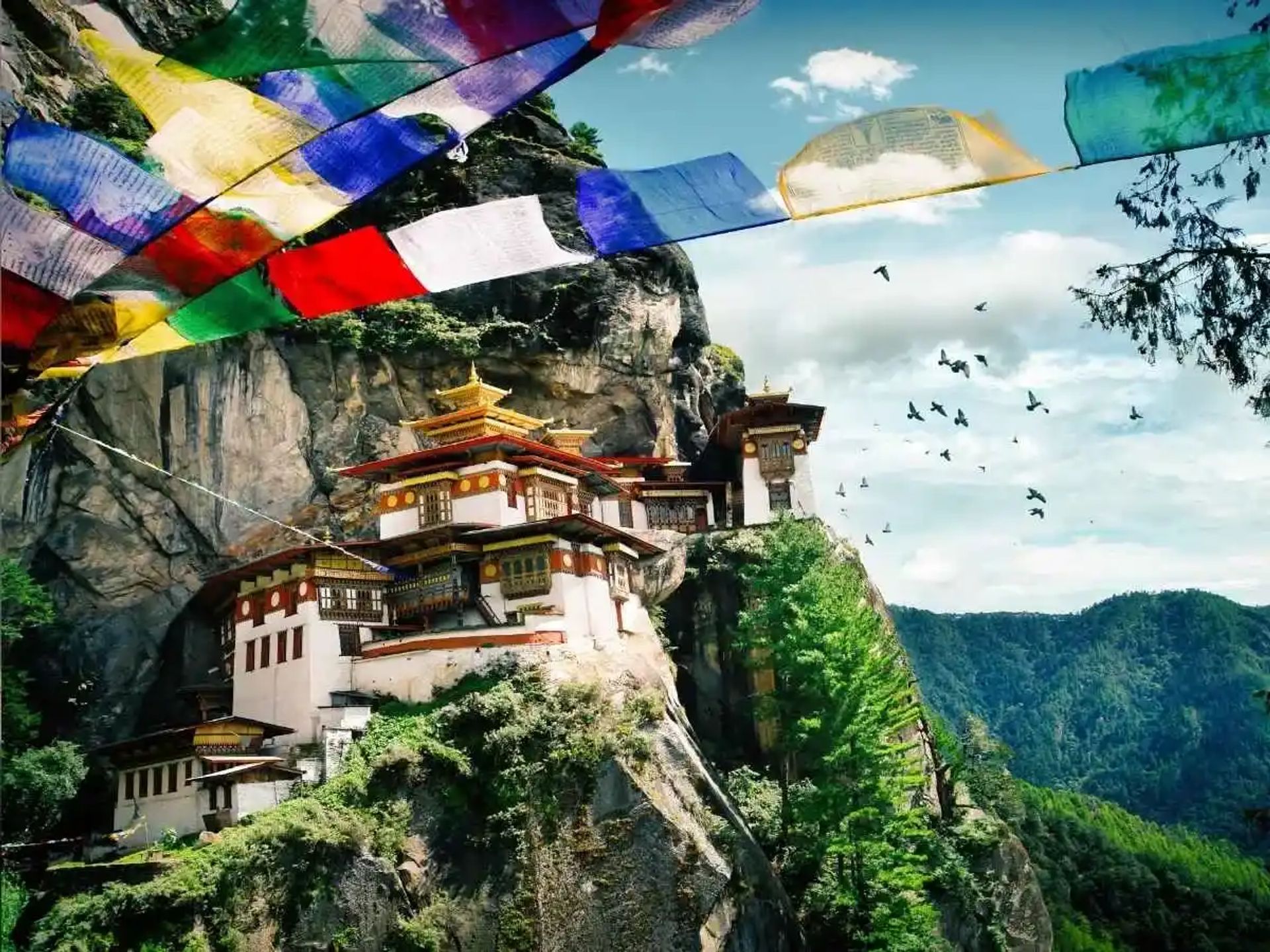
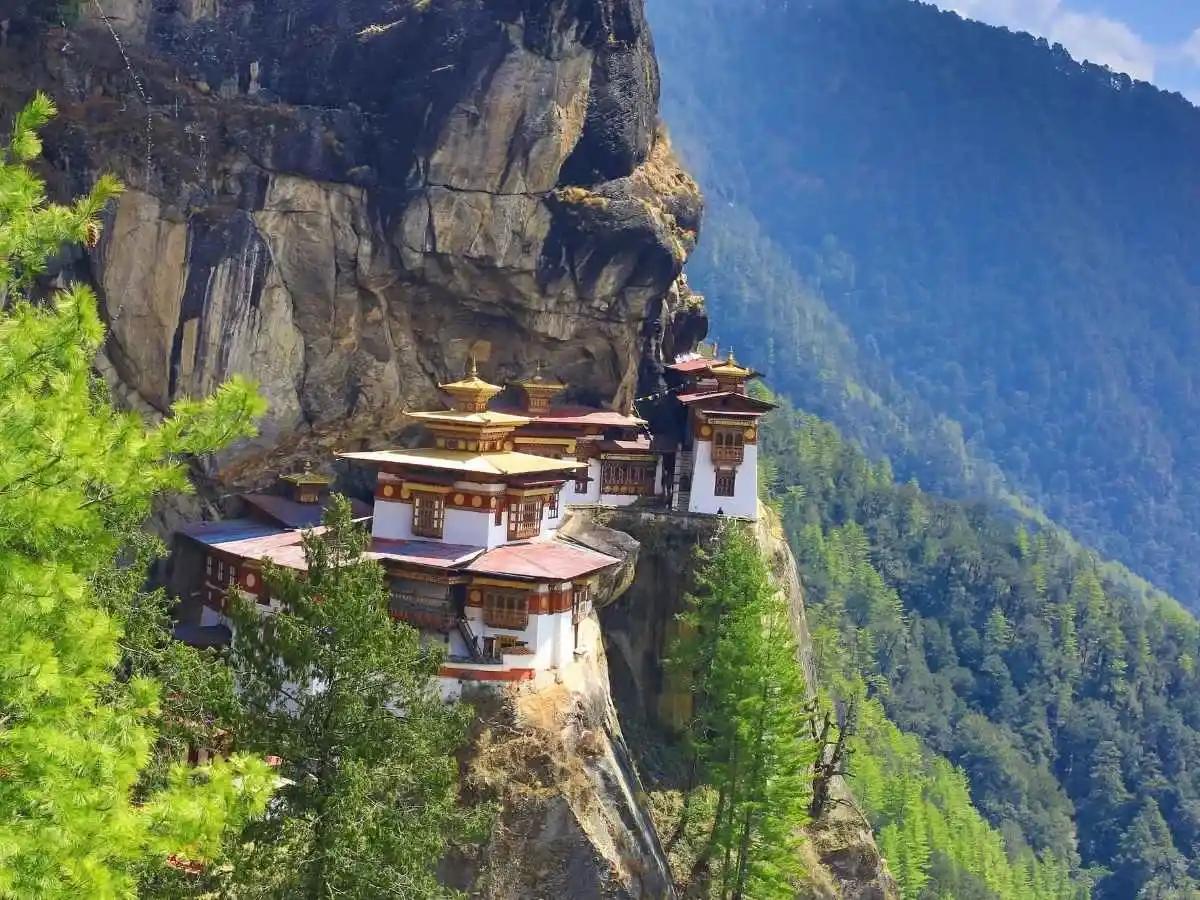
Paro Taktsang, also known as Taktsang Monastery or simply the Tiger's Nest, clings to a cliff face roughly 3,120 metres above sea level. Legend says Guru Rinpoche, the saint who brought Buddhism to Bhutan from Tibet, flew here on the back of a tigress and meditated in the cave the monastery now wraps around. The hike up takes most visitors four to five hours return, with a tea house roughly halfway and a final stretch of stone steps that earns its drama. For many travellers, it is both one of the top Bhutan tourist attractions and a deeply personal pilgrimage. Go early. The first light catching the white walls against the cliff is the image you came for.
Punakha Dzong, the Fortress at the River Confluence
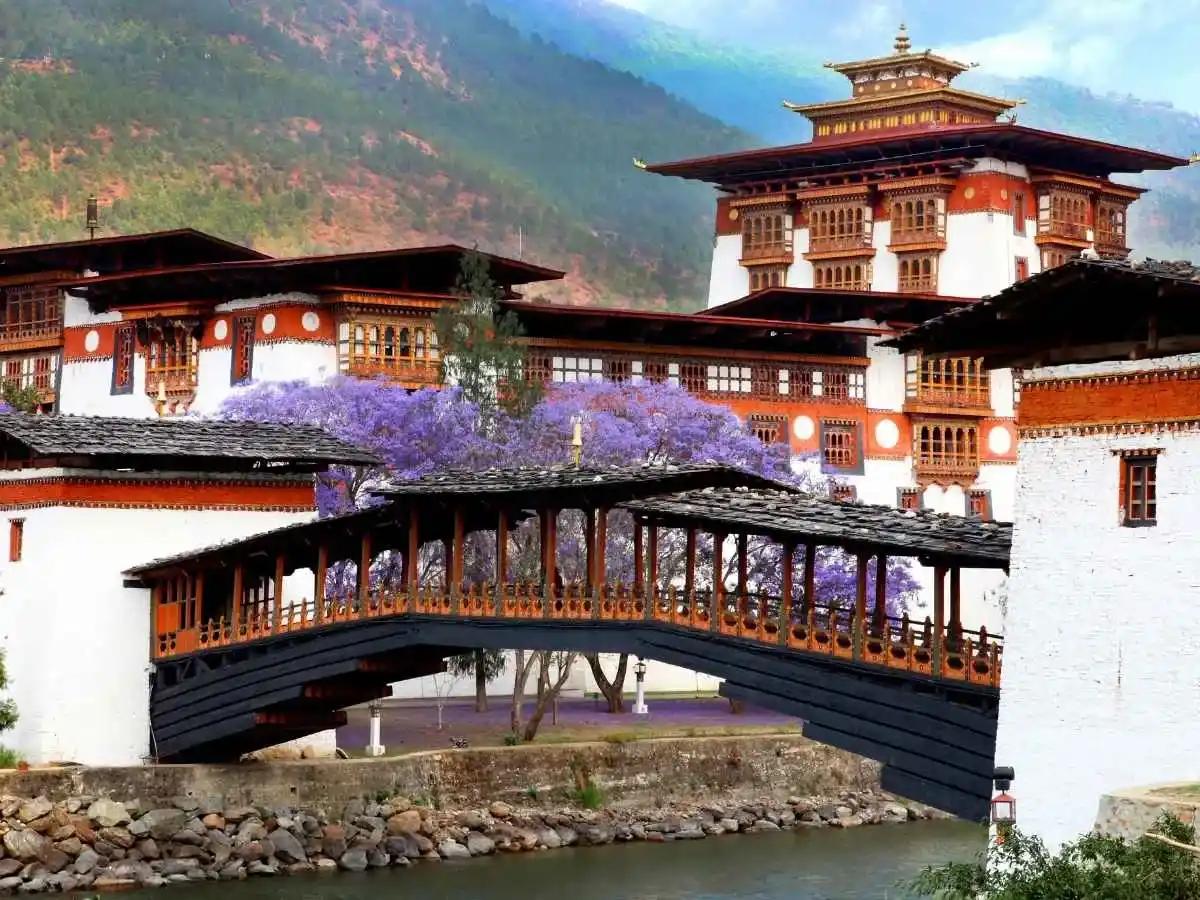
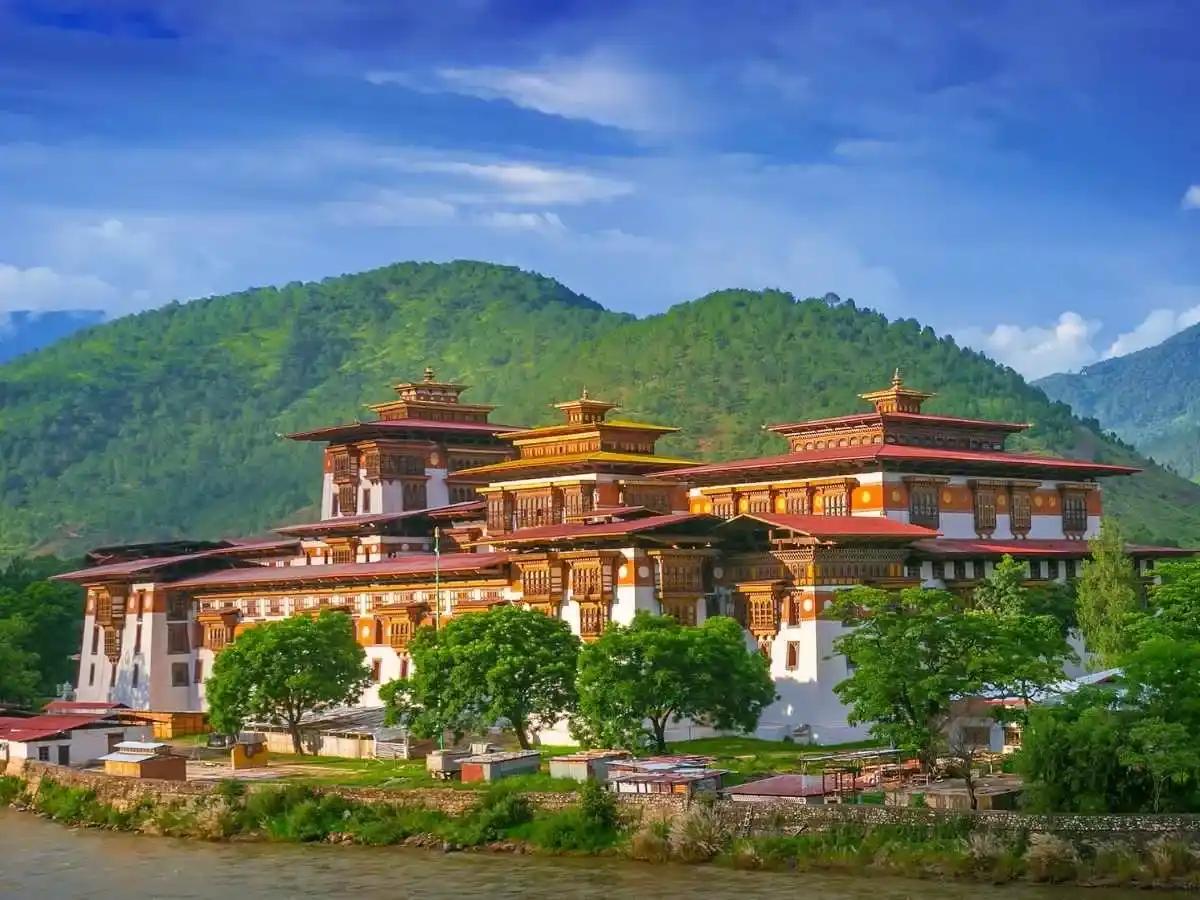
Punakha Dzong sits at the meeting point of the Pho Chhu and Mo Chhu rivers, and many travellers find it the most beautiful dzong in the country. The wider Punakha valley is gentler and warmer than the highland passes, with terraced rice fields running down to the water. In spring, the jacaranda trees in the courtyard bloom into a soft purple haze. Inside, the painted woodwork, the gold-leaf ceilings, and the cool stone floors give a sense of how dzongs once functioned as fortresses, monasteries, and government seats all at once. They still do.
Chimi Lhakhang and the Fertility Temple Tradition
A short walk from the dzong, set in a small village across the rice fields, sits Chimi Lhakhang, the famed fertility temple founded in honour of the "Divine Madman." Couples travel from across the country to receive a blessing here. It is one of the more colourful corners of the Punakha valley and a popular stop on any tour centred around Bhutan's sacred sites and cultural heritage.
Rinpung Dzong and the National Museum in Paro
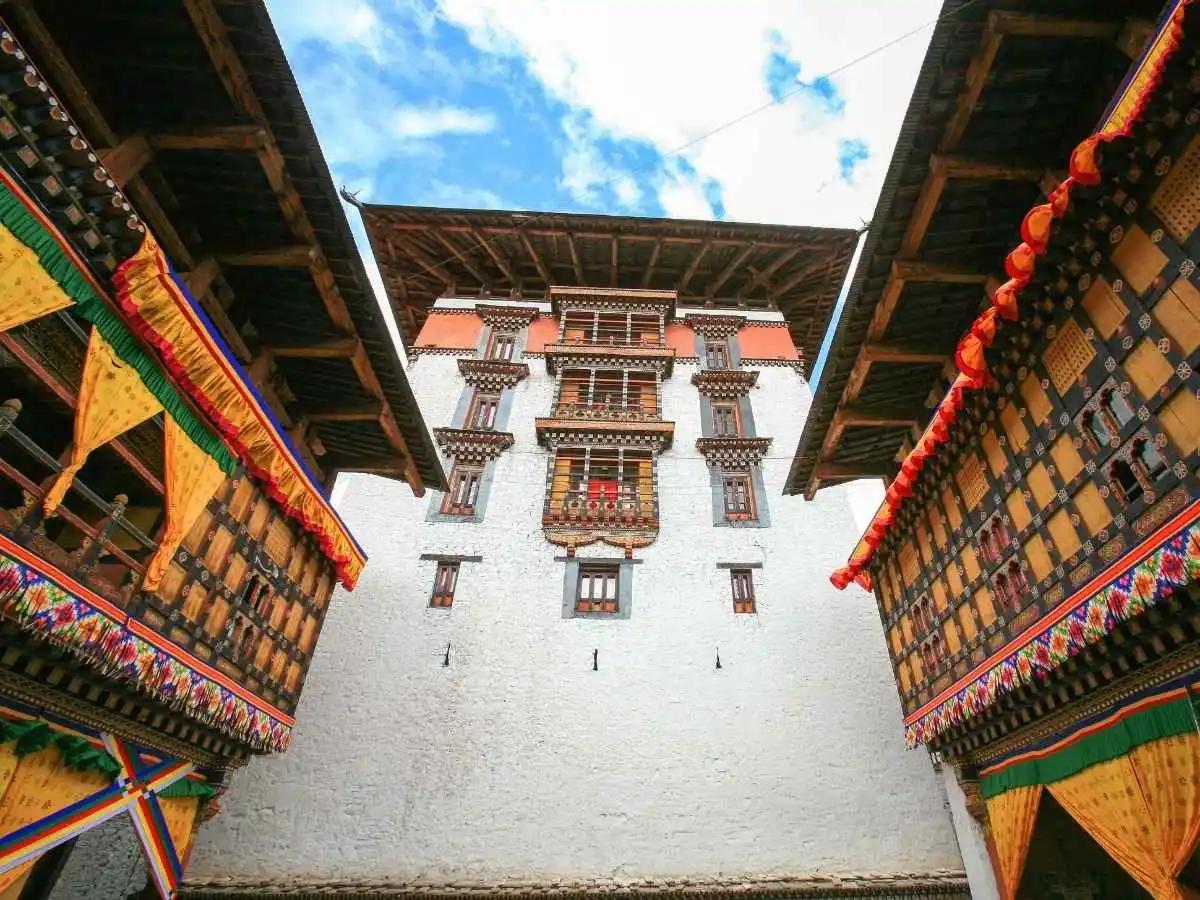
Rinpung Dzong stands above the Paro valley, all whitewashed walls and dark timber, still in active use as both a working Buddhist monastery and an administrative seat. Just up the hill, the National Museum of Bhutan occupies the old watchtower and houses thangka paintings, ceremonial masks, and historic textiles. Together, the dzong and the museum make for a quiet, layered morning that grounds the rest of your trip in the country's rich culture and history.
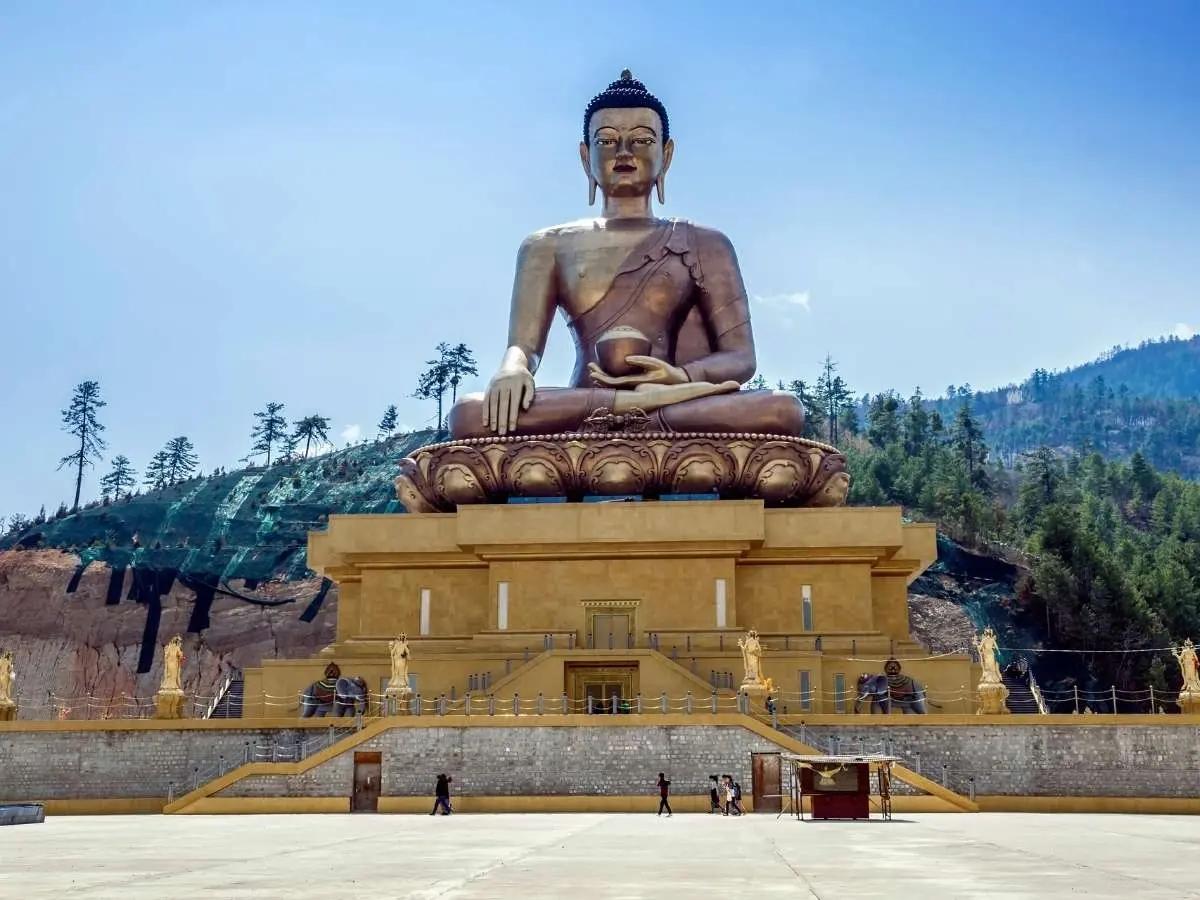
The Great Buddha Dordenma Temple Above Thimphu
Above the capital, a 51-metre gilded Buddha looks out over the city. The Great Buddha Dordenma is one of the largest seated Buddha statues in the world, and the temple complex around it includes 125,000 smaller Buddha figures inside. (You will sometimes see the capital written as Thimpu, an older spelling occasionally used by visitors from India and Nepal; Thimphu is the modern romanisation you will find on every road sign.) Come at sunrise, before the coaches arrive, and the views over the Thimphu valley feel almost private.
Visiting Changangkha Lhakhang
While you are in the area, Changangkha Lhakhang is worth the short detour. This 12th-century hilltop temple is one of Thimphu's oldest, and local families still bring newborn babies here for a blessing and to receive their first name.
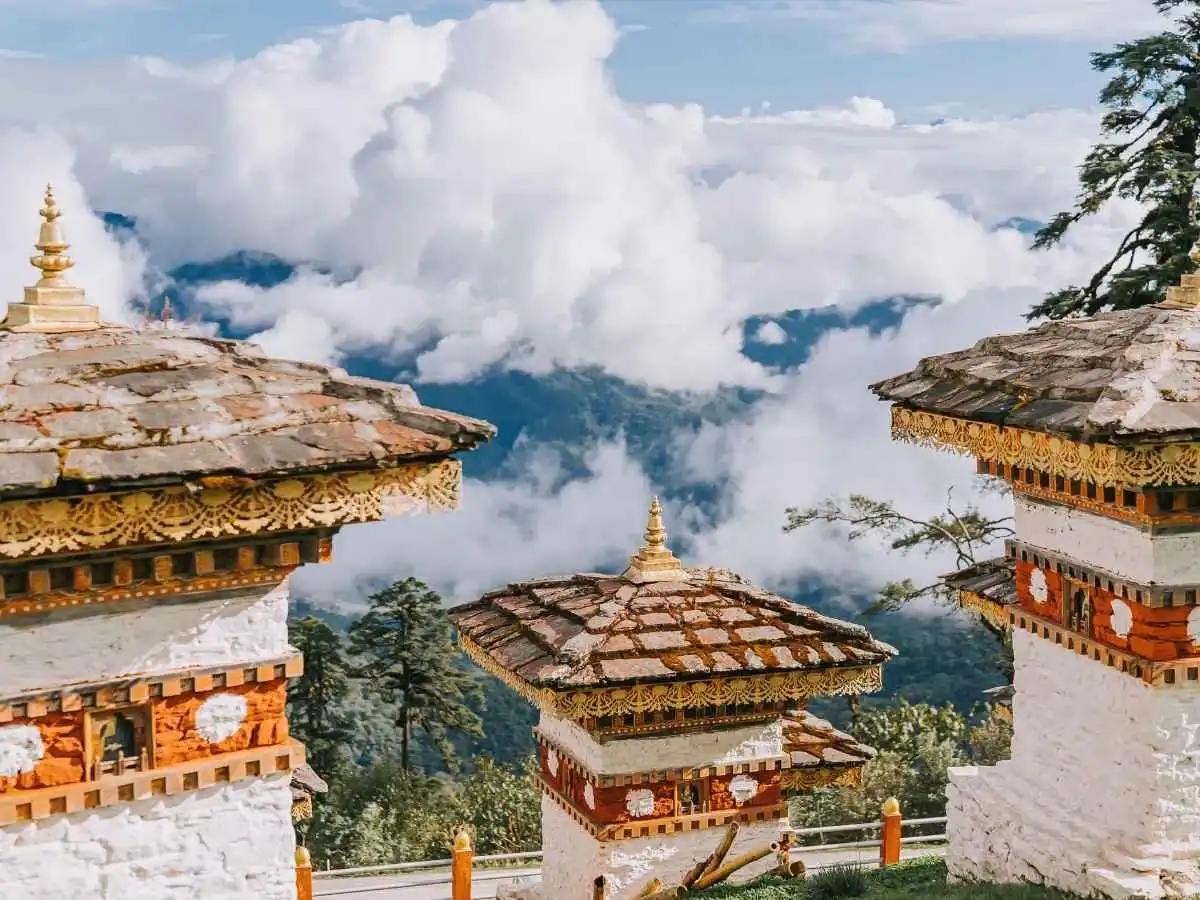
Dochula Pass and the 108 Chortens with Himalayan Views
The drive from Thimphu to Punakha climbs over Dochula Pass at around 3,100 metres. The 108 chortens here were built in memory of Bhutanese soldiers, and on a clear morning the eastern Himalayas stretch out in a wide white line behind them. The scenic views from the pass are some of the most stunning views in the country, especially at first light when the snow-capped peaks of the border ranges (China lies just beyond) catch the early sun. Bring a warm layer. The wind at the pass has its own opinions.
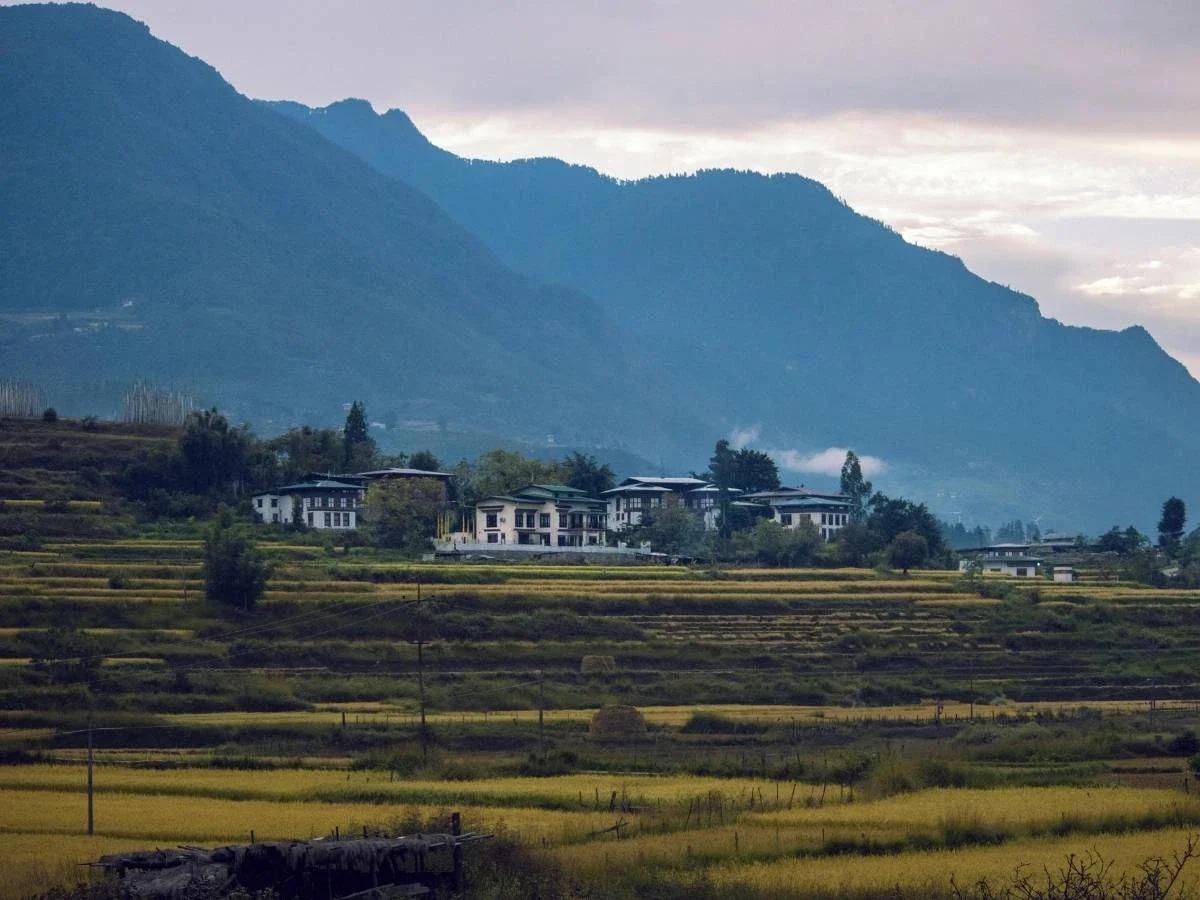
Hidden Valleys & Quiet Places to Visit in Bhutan
This is where most guidebooks stop, and where many of the best places to visit in Bhutan begin to reveal their quieter side.. The richest answer to where to go in Bhutan lies past the Paro–Thimphu–Punakha circuit, in valleys that see a fraction of the visitors but offer twice the quiet.
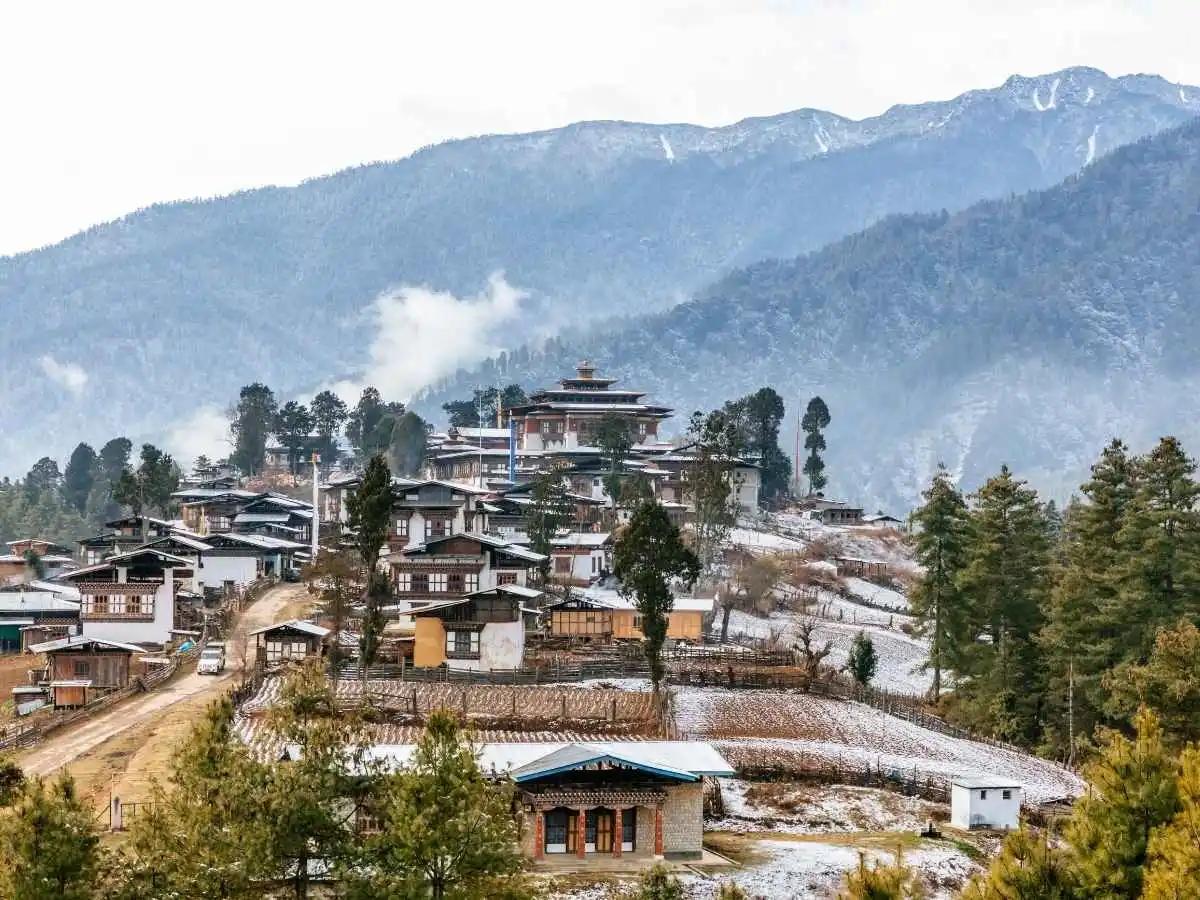
Phobjikha and Gangtey Valley, the Glacial Bowl
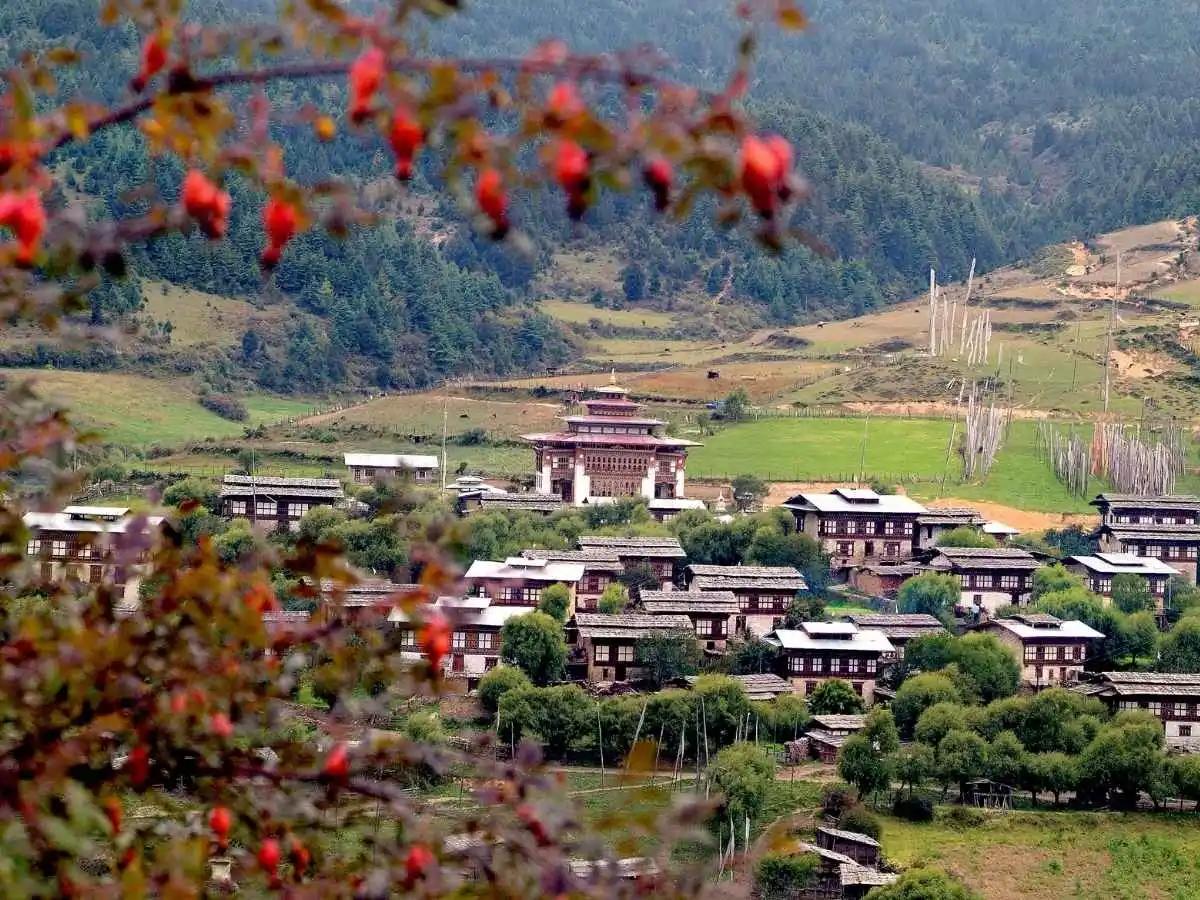
Wide, flat, and ringed by forested hills, the Gangtey Valley (also known as Phobjikha Valley) is one of the most photographed valley landscapes in central Bhutan. From late October to February, the endangered black-necked crane flies in from the Tibetan Plateau to winter here. The valley plays an important role in Bhutan’s conservation efforts, supported by organisations including the Royal Society for Protection of Nature Bhutan, and the valley fills with a slow, soft drama of birds against grass. Gangtey Monastery sits on the rim, looking out over the whole bowl, its scenic beauty difficult to overstate. Walk the Gangtey Nature Trail in the morning before the mist lifts.
Bumthang, Bhutan's Spiritual Heartland
Bumthang is really four valleys: Choekhor, Tang, Ura, and Chumey. Together they hold some of the oldest and most beautiful monasteries in the country, including Kurjey Lhakhang, where Guru Rinpoche is said to have left the imprint of his body in a rock. Jakar Dzong, the "Castle of the White Bird," sits on a ridge above Choekhor and is the administrative heart of the region. Buckwheat fields, apple orchards, and hand-woven yathra cloth give Bumthang a softer, more lived-in feel than the western valleys. Plan at least two nights here, especially if you want to experience one of the most rewarding places to go in Bhutan beyond the main tourist circuit. One is never enough.
If you are thinking about a wider Himalayan adventure, our combined small group tour across Nepal and Bhutan pairs Bumthang and the western valleys with Nepal's highlights in a single journey.
Unique Cultural Activities in Bhutan
Some of the best activities in Bhutan are the small, ordinary ones. They are also the experiences that tell you most about the country. If your question is what to do in Bhutan beyond the famous sites, this is the answer.
Watching (or Trying) Traditional Bhutanese Archery
Archery is Bhutan's national sport, and weekend matches are held in town grounds across the country. The targets sit 145 metres apart, the archers wear traditional Bhutanese dress (the gho for men, woven in checked patterns), and the games are loud, songful, and full of friendly heckling. Visitors are welcome to watch, and many guides can arrange a chance to try a shorter shot. Hitting the target is harder than it looks.
Attending a Tsechu Festival
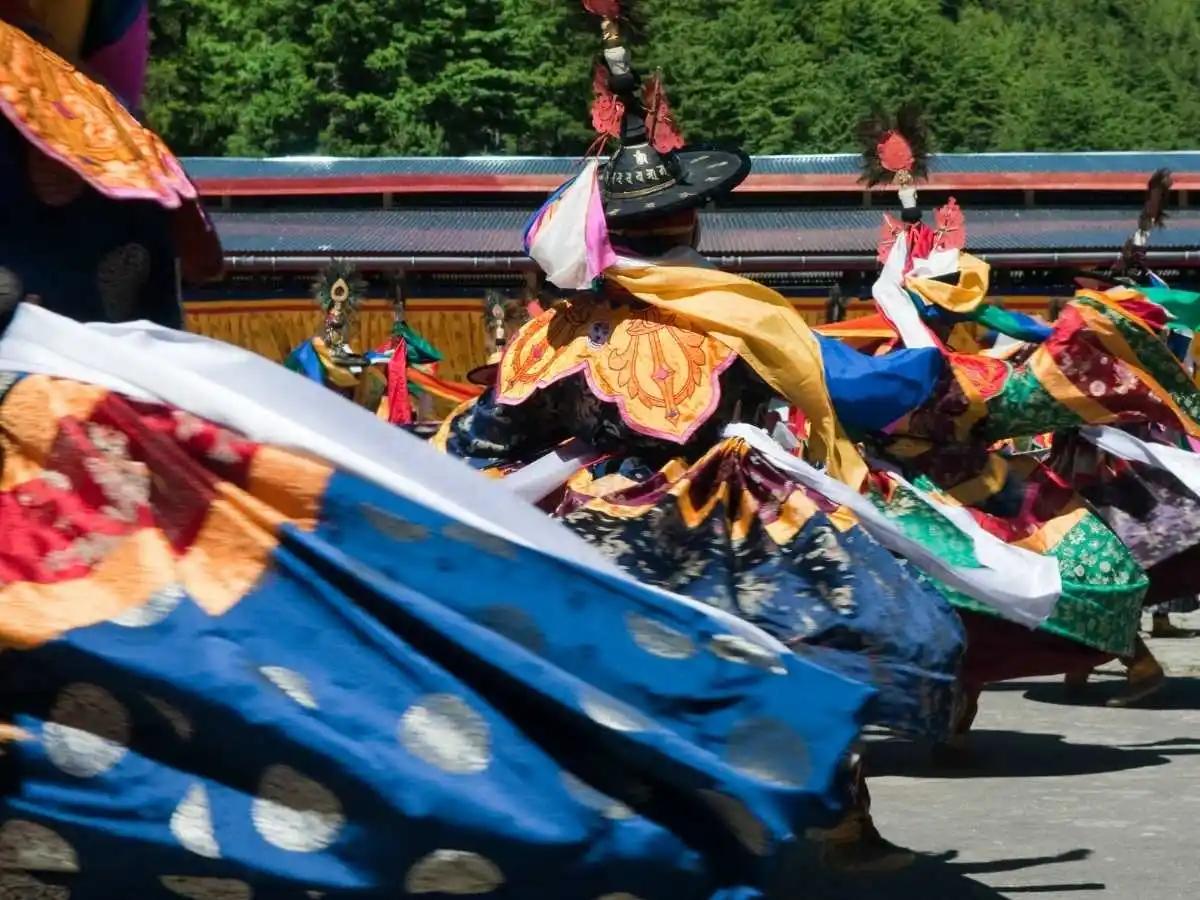
Tsechus are sacred mask-dance festivals held at dzongs and monasteries to honour Guru Rinpoche. Monks and laymen wear elaborate costumes, some made over months, and dance out stories drawn from Buddhist scripture. The biggest tsechus take place in Paro (spring), Thimphu (autumn), Wangdue, and Punakha. Smaller festivals mark the harvest, the new year, and key dates in the lunar calendar. If you can build your trip around one, do — our small group Bhutan festival tour is timed to put you inside the courtyard for the masked dances that define the Bhutanese calendar.
Experiencing a Traditional Hot Stone Bath
A farmhouse visit in rural Bhutan often ends with a traditional hot stone bath, which is exactly what it sounds like. River stones are heated in a fire until red-hot, then dropped into a wooden tub filled with water and fresh artemisia leaves. The minerals released into the water are said to ease aches and tired muscles. After a day on the Tiger's Nest hike, it is hard to think of a better idea.
Eating Ema Datshi & Bhutanese Cuisine
Bhutan's national dish, ema datshi, is a stew of green chillies and yak or cow's milk cheese. It is served at almost every meal, often with red rice grown in the Paro valley. Try suja, the salted butter tea, and if you fancy a small adventure, ara, the local rice or millet spirit. The food is plain, warm, and made for mountain weather.
Easy Day Hikes and Scenic Places to Visit in Bhutan
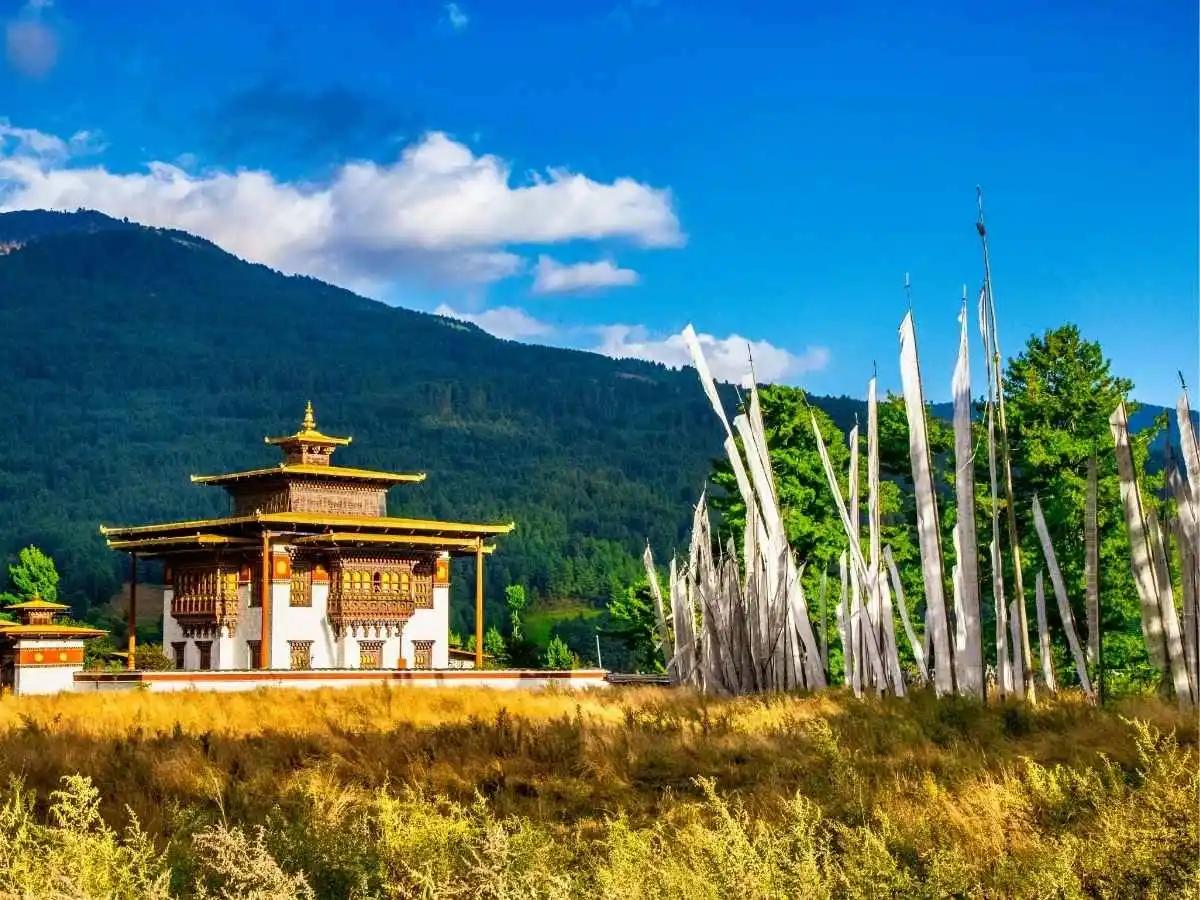
You do not need to be a hardened mountain walker to enjoy Bhutan on foot. Some of the most rewarding places to visit in Bhutan are reached on short day hikes that fit comfortably into a cultural itinerary, with scenic views earned in a morning rather than a week. The Himalayas form a constant backdrop, but the walks themselves are gentle.
The Hike to Tiger's Nest
The Tiger's Nest hike is the walk every visitor remembers. Four to five hours return, a clear forest trail, a halfway tea house with a fine view of the monastery across the gorge, and that final stretch of stone steps. Older visitors and slower walkers manage it with patience and an early start. A pony can carry you part of the way up. The reward at the top, watching prayer flags flutter against the cliff face, is the same for everyone.
The Gangtey Nature Trail
The Gangtey Nature Trail is a gentle two-hour walk that loops through the Phobjikha valley floor, starting just below Gangtey Monastery. The path passes farmhouses, potato fields, and the fringes of the wetland where the black-necked cranes roost in winter. There is barely any climbing involved, and the scenic beauty of the wide glacial bowl unfolds with every step. Pack a flask of butter tea and take your time.
Valley Walks in Bumthang
Bumthang is made for walkers who prefer monasteries to mountain passes. Short paths link Kurjey Lhakhang, Jambay Lhakhang, and the village of Wangdicholing across the Choekhor valley floor, and you can string several together into an easy half-day on foot. The terrain is flat to gently rolling. The views are of buckwheat fields, prayer flags, and the soft outline of forested hills.
Slow Travel Experiences & Everyday Bhutanese Life
Not every Bhutan tourist attraction needs to be famous. Some of the most rewarding moments come from quieter days where the schedule is loose and the conversations are unhurried. Some travellers find these sightseeing-light days the most rewarding part of the whole trip.
Spending a Day in Thimphu
Thimphu is the world's only capital with no traffic lights. A white-gloved policeman directs cars at the main junction, and somehow it works. One of the more relaxed activities in Bhutan is simply spending time in Thimphu at places like the Memorial Chorten, where elderly Bhutanese people walk slow clockwise circuits with prayer beads. Visit the Folk Heritage Museum to see how a traditional farmhouse is laid out, and time your visit for the weekend market on the banks of the Wang Chhu river.
Staying in a Working Farmhouse
A night in a rural farmhouse is one of the experiences travellers talk about for years. Buckwheat pancakes for breakfast, butter tea by the wood stove, a host family who may not speak much English but will feed you generously and laugh easily. It is the closest most visitors get to the rhythm of everyday Bhutanese life.
A Morning at a Quiet Monastery
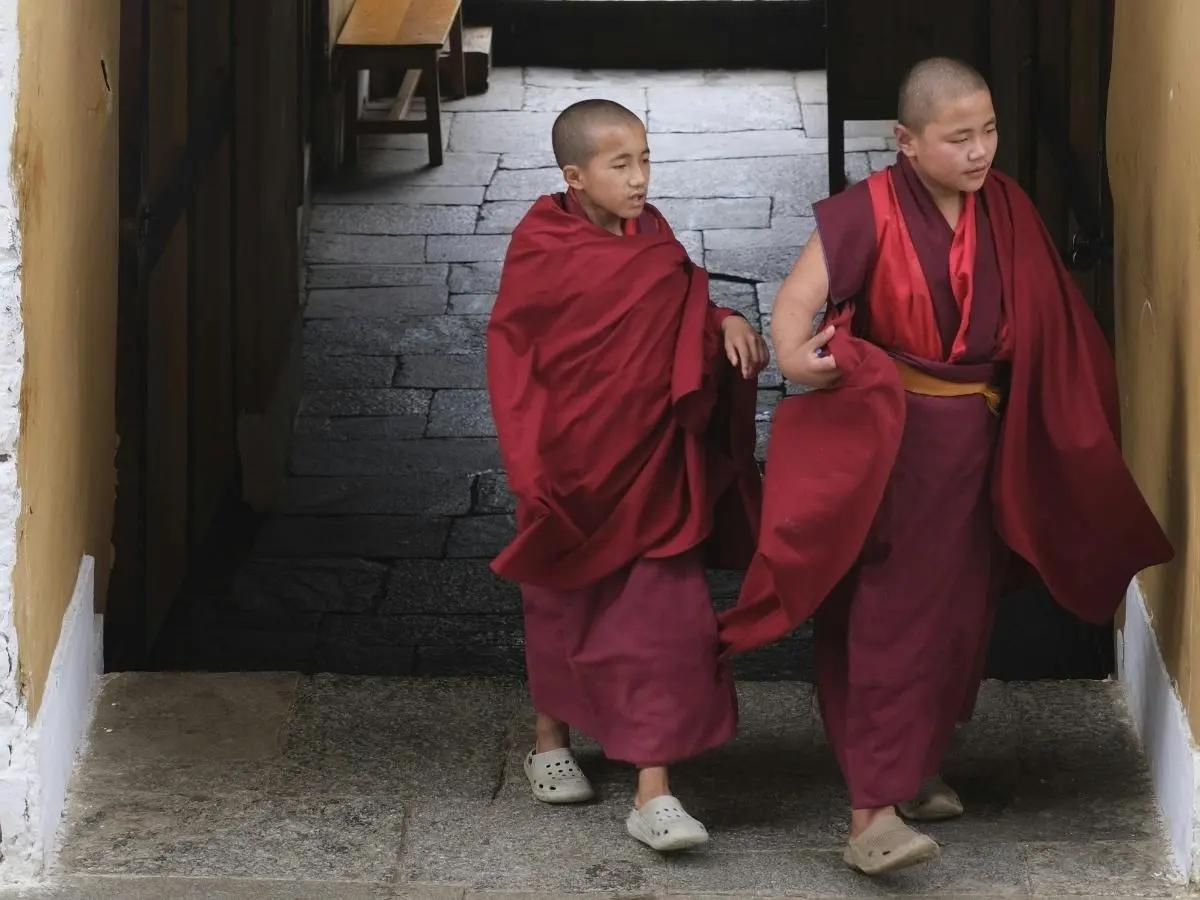
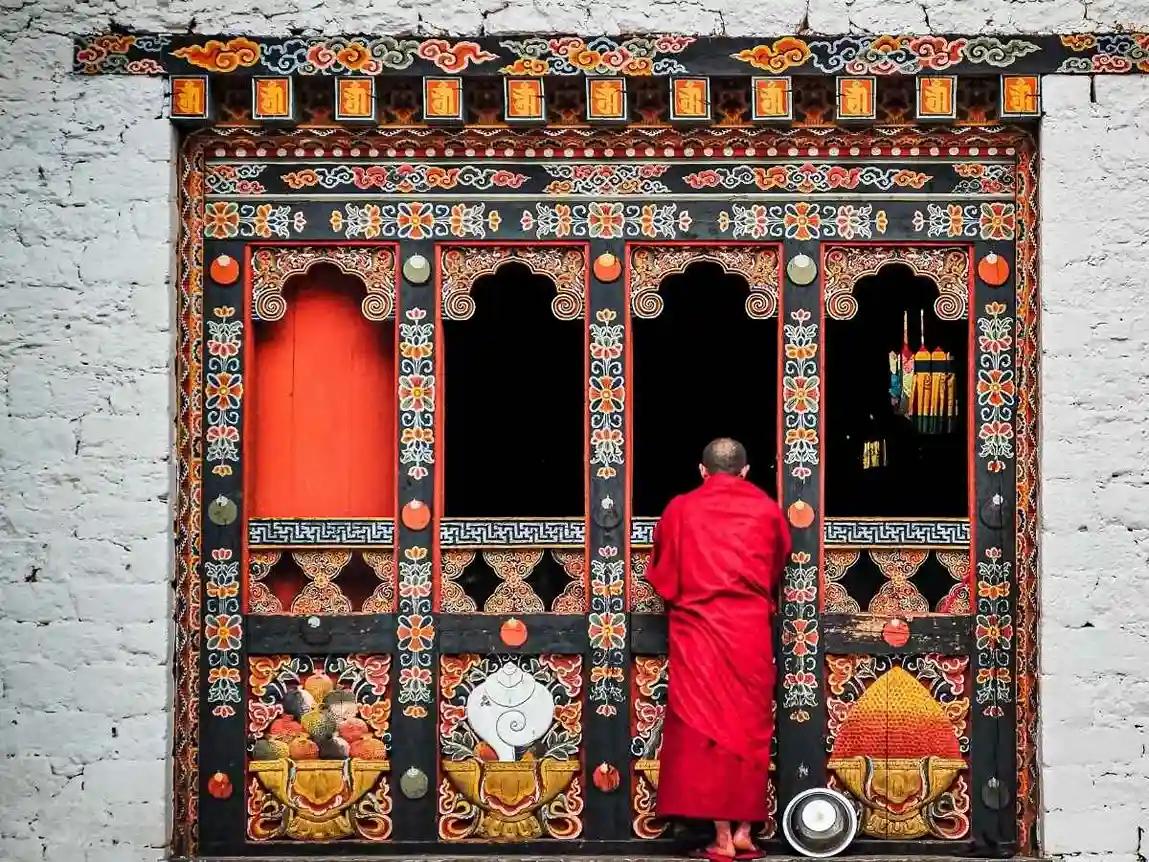
At smaller monasteries, it is often possible to sit in on the morning chanting. The sound carries through the carved wooden halls in a low, steady wave. Afterwards, with permission, you can ask the monks questions. The answers are often shorter and kinder than you expect. For some travellers, a half-day excursion to a quieter site like this is the moment the trip really lands.
When to Go & How to Plan Your Bhutan Tour
This is the trip-planning context most articles skip, and it matters more in Bhutan than most places.
The Best Seasons for Visiting Bhutan
Spring (March to May) brings rhododendrons in bloom, the Paro Tsechu, and clear views before the summer monsoon. Autumn (September to November) is the most popular season, with crisp Himalayan visibility and the Thimphu Tsechu in early autumn. Winter is quieter and cheaper, with cold nights but bright skies in the valleys. Summer brings the monsoon to the south, but central Bhutan stays drier than you might expect. Our full season-by-season guide to Bhutan's weather & festivals covers each month in detail to help you pick the right window.
Permits, the SDF & How Bhutan Trips Work
All visitors travel via a licensed tour operator. The Sustainable Development Fee is paid per person per night and goes directly towards the country's environmental and social programmes. Rates change from time to time, so it is worth confirming the current figure through the official Bhutan tourism website when planning your trip. Children under five are usually exempt, with discounted rates for older children.
Small Group Tours vs Tailor-Made Itineraries
Small group tours offer the company of like-minded travellers and a fixed itinerary built around the highlights. Solo travellers in particular benefit from operators who do not charge a compulsory single supplement, which makes the trip far more accessible for those travelling alone. Women travelling solo may want to look at our women-only tour, a small group journey led by a local female guide with access to cultural experiences rarely open to mixed or independent groups.
Slow Down, Look Up, Stay a Little Longer
The best things to do in Bhutan are not really "things" at all. They are moments. A monk's quiet smile in an empty courtyard. The first glimpse of Tiger's Nest emerging from pine mist. The taste of buckwheat pancakes in a Bumthang farmhouse, eaten by the wood stove while rain falls outside. A trip done well does not tick off landmarks. It changes the pace at which you see the world.
Whether you want monastery hikes, cultural festivals, quiet valley walks, or a deeper introduction to Himalayan life, Bhutan rewards travellers who move slowly and stay curious. Explore our small group Bhutan tours to find the journey that fits your travel style and season.