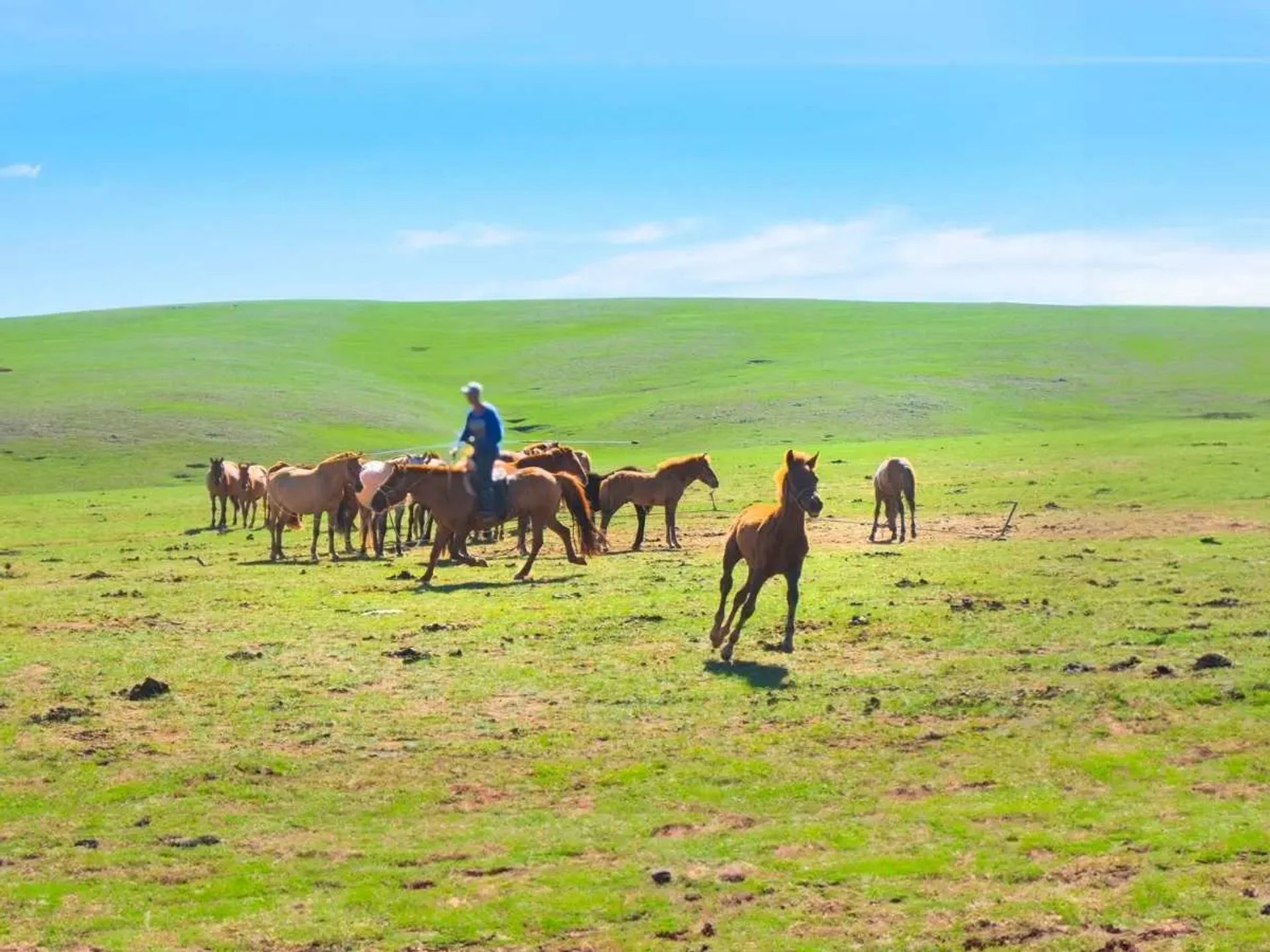

Mongolia is not the easiest country to reach, and that is precisely the point. Stretching across 1.56 million square kilometres of Central Asia, it is a land where the sky seems wider than anywhere else on earth, where the steppe rolls endlessly to the horizon, and where nomadic life is not a relic of the past but a living, breathing reality. The places to visit in Mongolia reward patience and curiosity in equal measure. This is a country that does not hand its secrets over lightly.
For travellers who have grown tired of the same well-worn destinations, Mongolia is a remarkable alternative. Whether you plan to spend a week or a month, there are no long queues at its natural wonders, no souvenir stalls blocking the view of its ancient ruins, and no cruise ships anchored in its rivers. What you will find instead is space, silence, and some of the top places to visit anywhere in Central Asia.
Mongolia's Places of Interest — A Destination Worth Discovering
To understand why the places of interest in Mongolia feel so different from anywhere else, it helps to understand the country itself. Mongolia is landlocked between Russia and China, and with a population of approximately 3.3 million spread across that enormous landmass, it is one of the most sparsely populated nations on earth. Around 30% of the population still lives a nomadic or semi-nomadic lifestyle, moving with the seasons and the herds across the open steppe.
The landscape shifts dramatically from region to region. In the south, the Gobi Desert stretches across vast plains of rock and sand. In central Mongolia, rolling grasslands and ancient river valleys carry the weight of imperial history. In the west, the Altai Mountains rise steeply from the steppe. The richness of Mongolian culture — from its nomadic traditions and Buddhist faith to its extraordinary festivals and ancient ruins — is woven into every part of the landscape. Mongolia places to visit are as varied as the terrain itself, and no single journey can cover it all.
Popular Places to Visit on a Mongolia Trip
Mongolia's finest destinations are spread across the country, and while the journey between them can be long, the landscapes you pass through are reward enough. From the bustling capital to the silence of the Gobi, here are the popular places to visit on a Mongolia trip, from the city outwards. As with any trip to a remote and sparsely populated country, comprehensive travel insurance is strongly recommended before you depart.
Ulaanbaatar — The Gateway City That Surprises
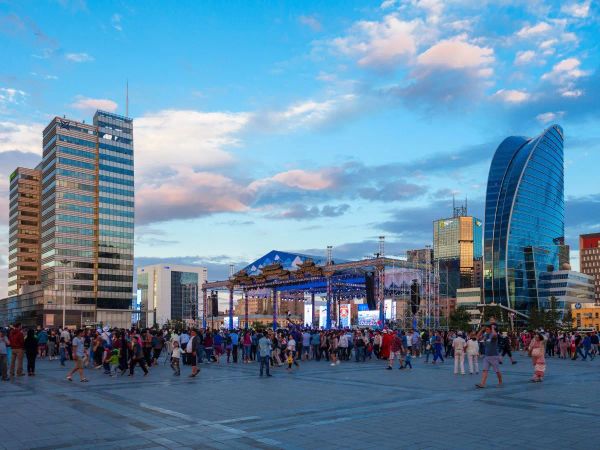
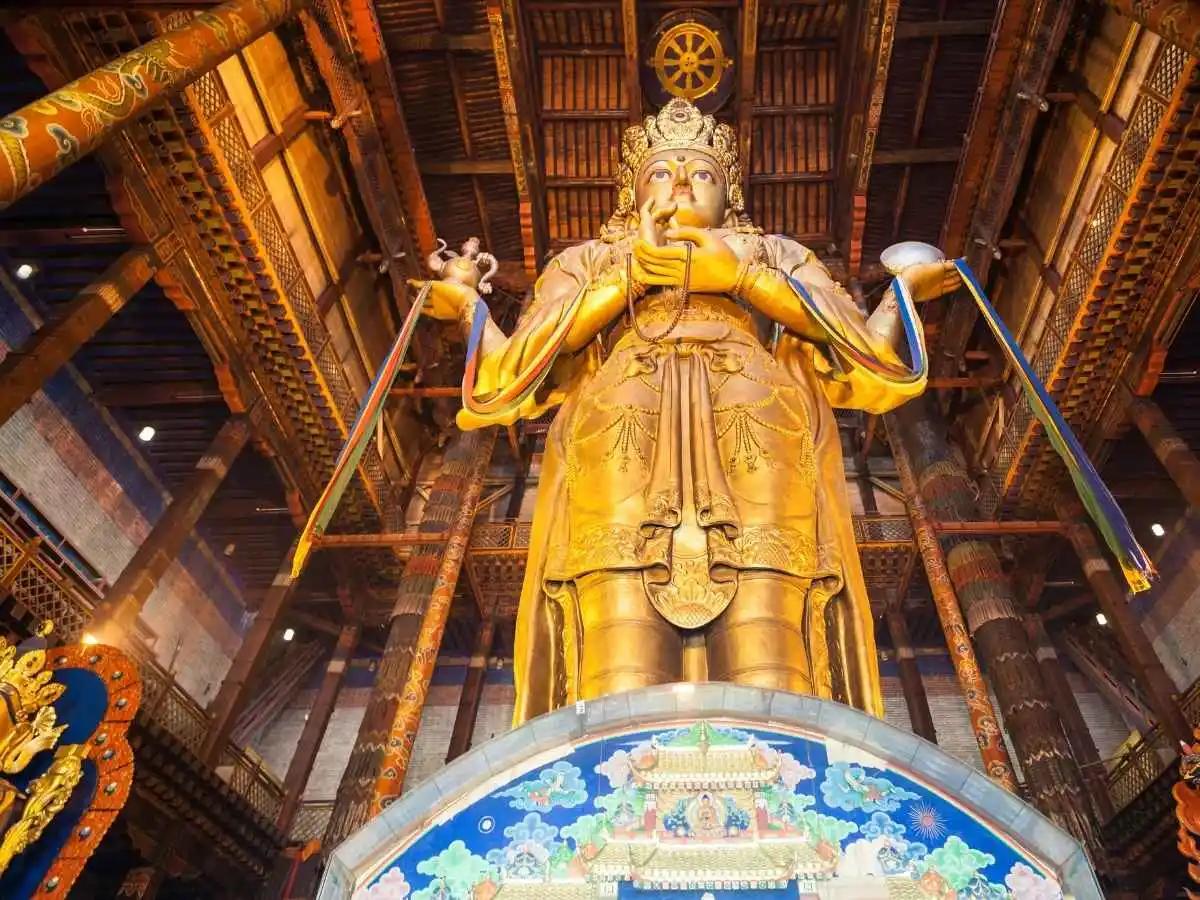
Most visitors begin in Ulaanbaatar, and it is worth spending at least a couple of days here before heading out into the Mongolian countryside. The capital is a great place to immerse yourself in Mongolian culture before the wider journey begins — Soviet-era apartment blocks stand beside golden-roofed Buddhist temples, and traditional gers are pitched on the hillsides above modern streets.
Gandan Monastery is the country's largest and most important religious complex, and one of the finest expressions of Tibetan Buddhism practised outside Tibet. The tradition of Tibetan Buddhism has deep roots in Mongolia, and watching monks gather for morning chanting ceremonies is one of the most peaceful experiences the city offers. Gandan is also one of several Buddhist monasteries in and around the capital that remain active places of worship today.
The National Museum of Mongolia traces the history of the nomadic tribes, the era of Genghis Khan, and the country's path through revolution and into the modern era. Exhibits covering the life and campaigns of Genghis — one of the most significant figures in world history — give a compelling sense of the forces that once shaped this part of the world. Sukhbaatar Square, the symbolic heart of the capital, is a good place to sit, watch the city move, and begin to understand its rhythms.
A short drive away, the Chinggis Khaan Equestrian Statue stands 45 metres tall — the largest equestrian monument in the world. Its museum and viewing platform make it a great place to spend a morning before heading further into the country. Accommodation in Ulaanbaatar ranges from comfortable city hotels to smaller guesthouses, and standards in the centre are generally good. For a fuller picture of what to do across the country, our complete Mongolia activity guide covers the full range of experiences available.
Terelj National Park — A Popular Place to Visit Near the Capital
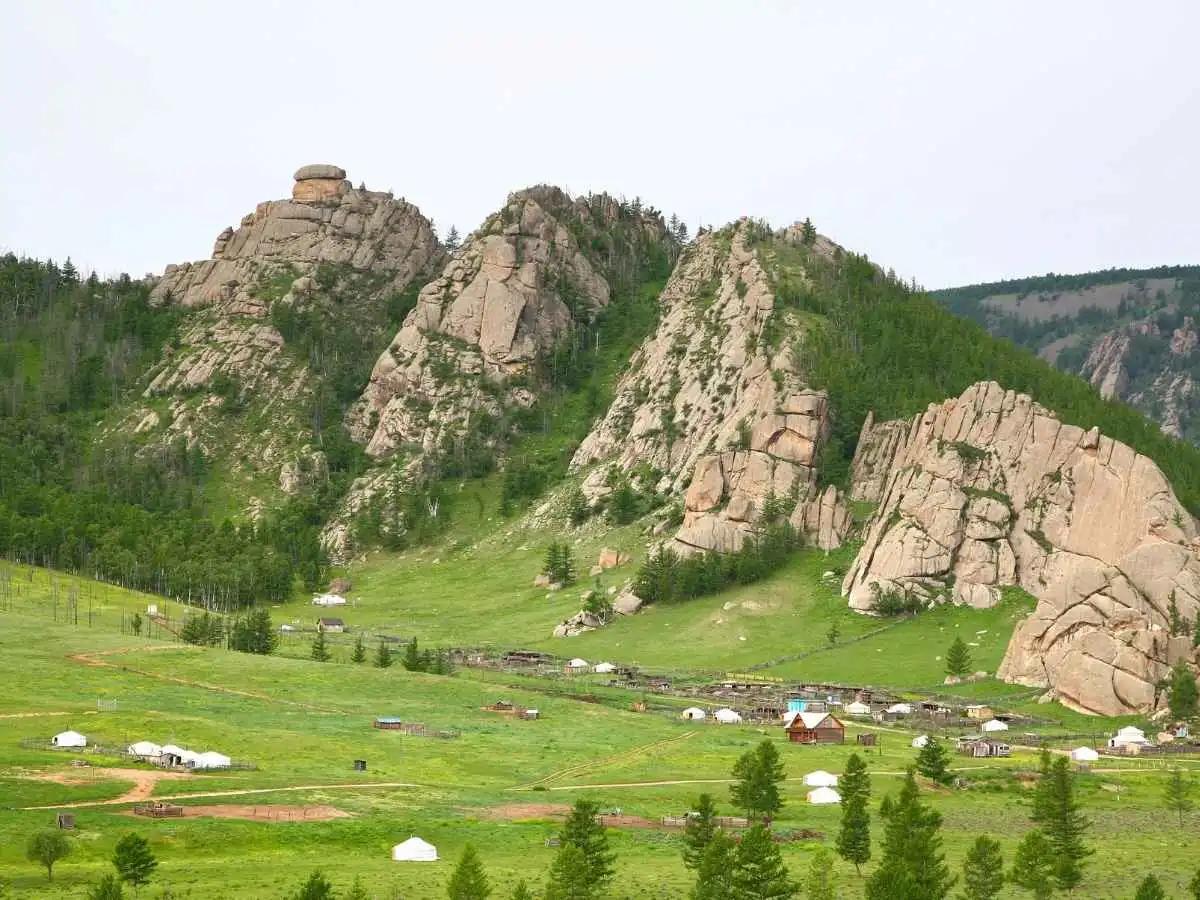
Around 90 minutes from Ulaanbaatar, Gorkhi-Terelj National Park is one of Mongolia's most accessible natural landscapes. Also known simply as Gorkhi, or Terelj National Park, the park is popular with tourists looking for an early taste of the Mongolian countryside without the long drives required to reach more remote destinations. The landscape here is defined by distinctive granite outcrops, rolling hills, green river valleys, and wide open meadows.
Gorkhi-Terelj National Park is also a great place to visit nomadic families living in traditional gers, and several camps within the park offer overnight accommodation alongside horse riding and short guided walks. It makes for a natural first stop on any route through the country.
Into the Gobi Desert
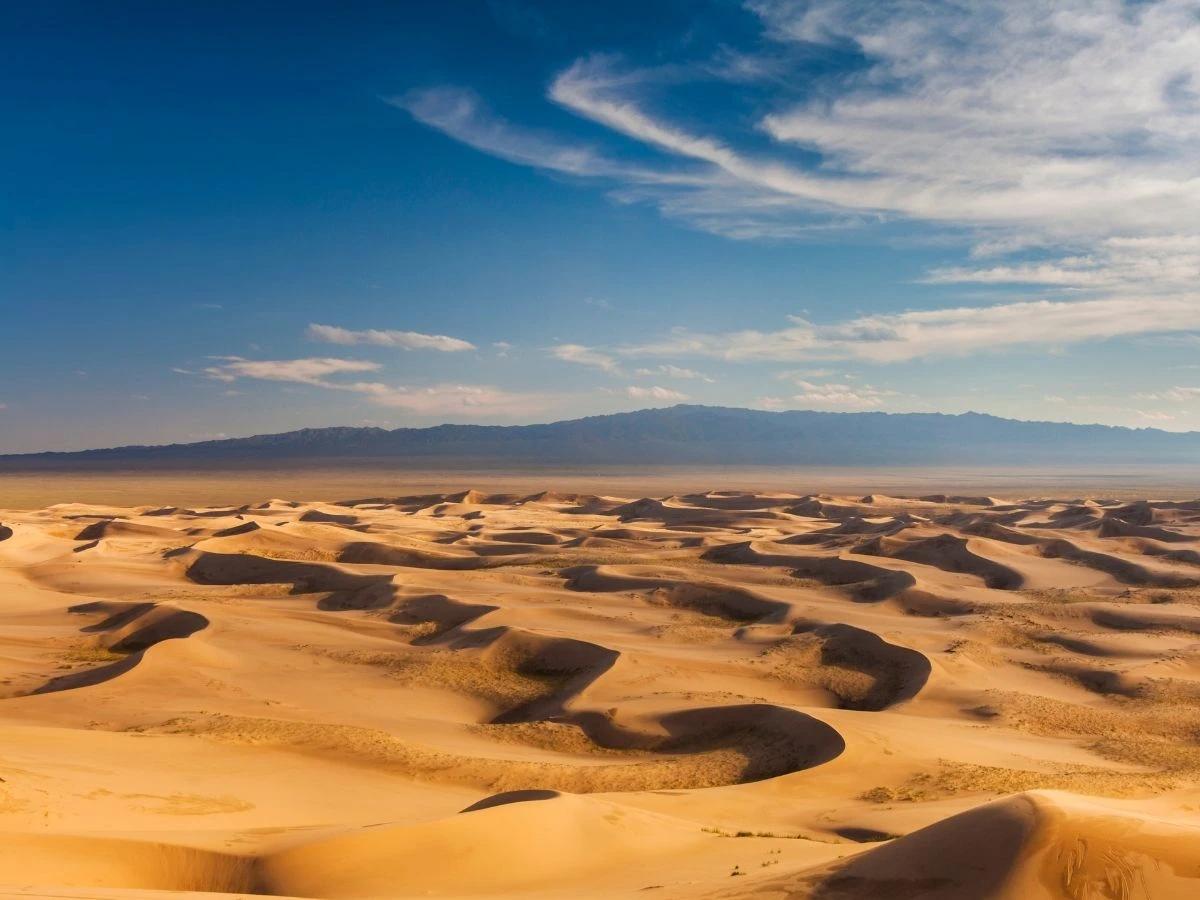
South of Ulaanbaatar, the landscape shifts dramatically as grasslands give way to the Gobi Desert. Covering roughly a third of Mongolia's total landmass, the Gobi is not the sea of rolling dunes that many visitors expect. It is a diverse terrain of gravel plains, rocky outcrops, dry river beds, and striking geological formations — with sand dunes appearing only in certain areas. The route south from the capital takes you through some of the most dramatic and least-visited scenery in Asia. What the Gobi consistently delivers is scale: a sense of space so absolute that it takes time to adjust to.
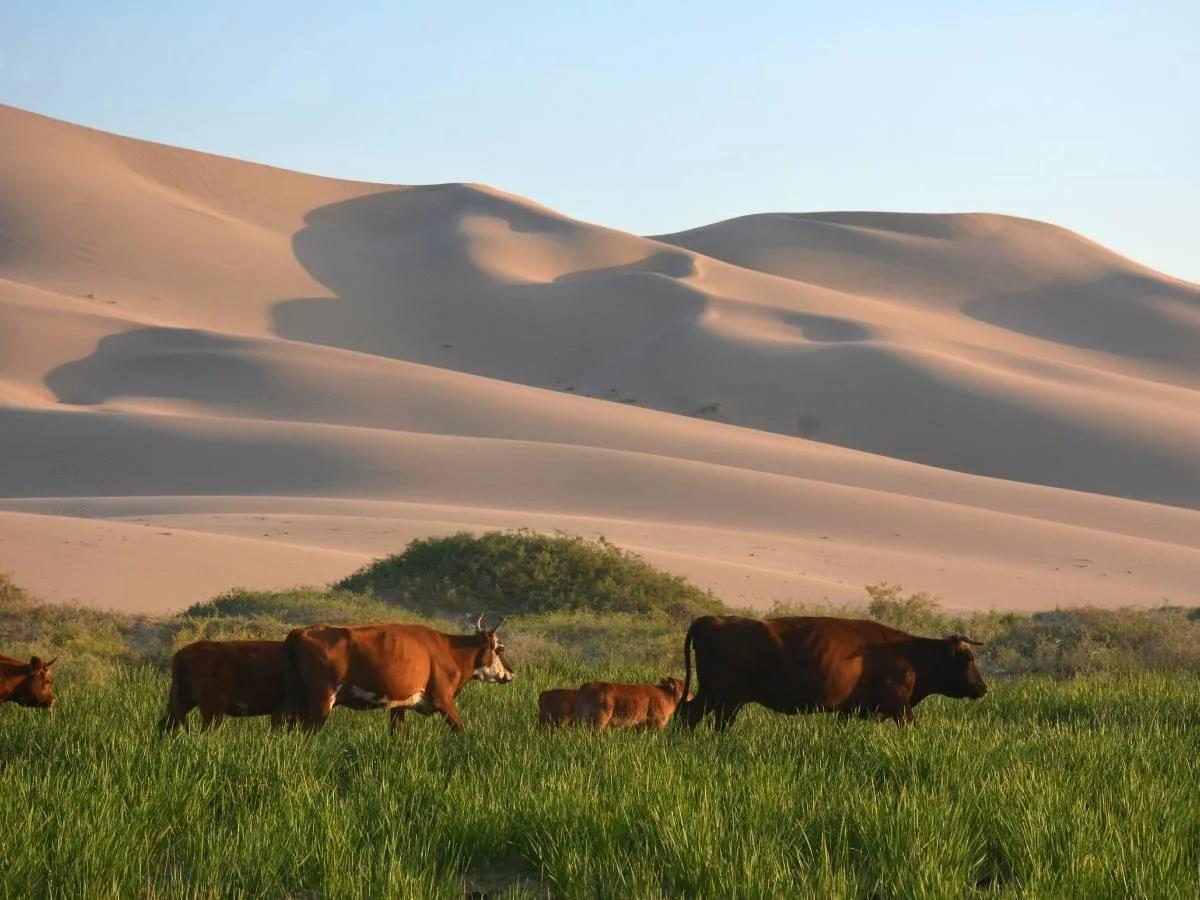
Khongor Sand Dunes — The Gobi's Singing Dunes
Few first-time visitors to Mongolia expect to find themselves standing at the foot of a 300-metre sand dune, yet that is precisely what awaits at the Khongor Sand Dunes. Known locally as the Singing Dunes, the name comes from the deep, resonant hum that the shifting sands produce in windy conditions — a sound that carries across the desert with an almost musical quality.
The dunes stretch for 180 kilometres and rise in places to heights that rival small mountains. From the summit, views extend across the surrounding desert to the distant line of the Khongoryn River. Camel riding across the sand is a natural addition to any visit, and watching the light change across the dunes at dusk is something that stays with you long afterwards.
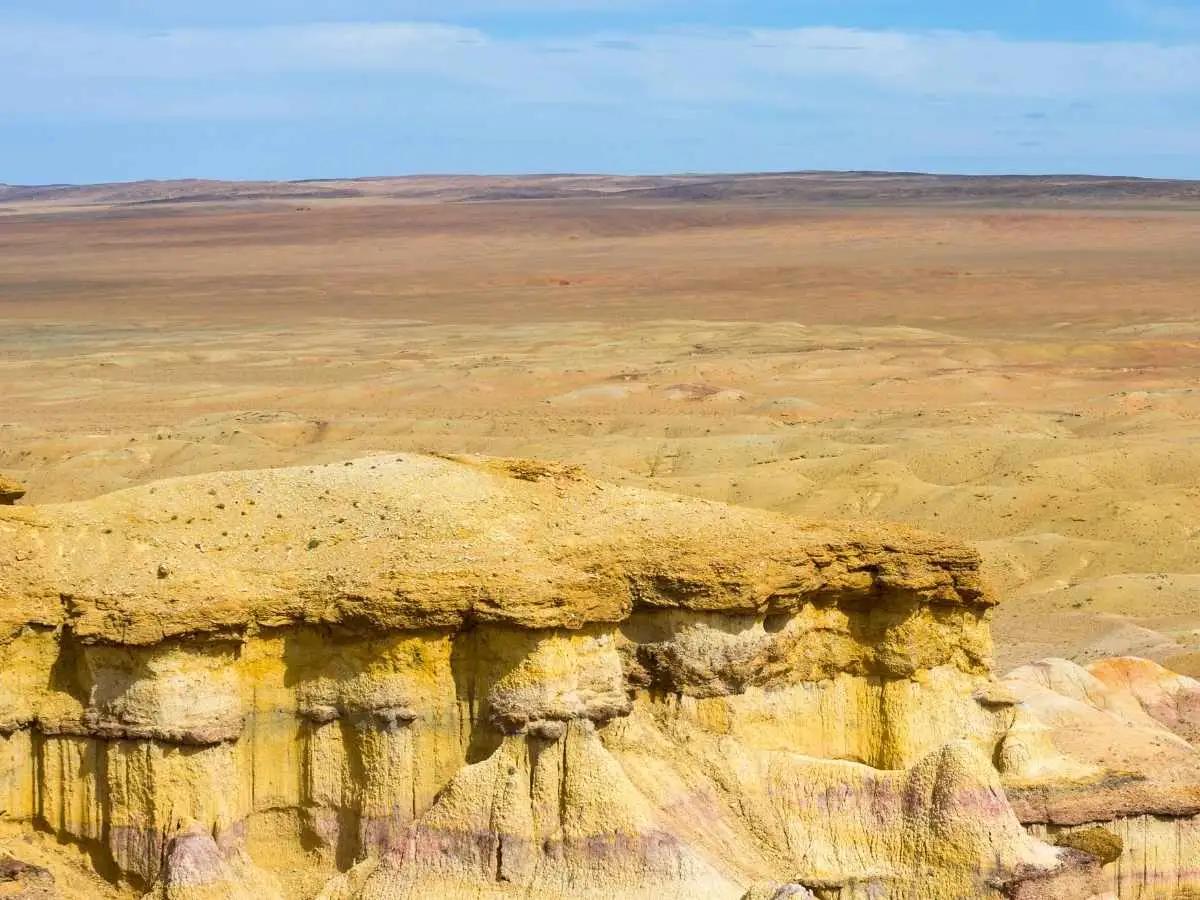
Bayanzag — Mongolia's Flaming Cliffs
In the 1920s, Roy Chapman Andrews’ expeditions to the Gobi Desert led by the American Museum of Natural History made major paleontological discoveries at Bayanzag, including Protoceratops, Velociraptor, and some of the first scientifically recognized dinosaur eggs. The Flaming Cliffs name comes from the red sandstone glowing at sunset, and the site’s importance in paleontological history is widely recognized
Bayanzag sits within Gobi Gurvansaikhan National Park, a protected area of rugged mountains and dramatic desert scenery. Walking among the cliffs as the sun drops low is one of the most atmospheric experiences in the country. The fossil history of this place gives it a significance that extends well beyond its visual spectacle.
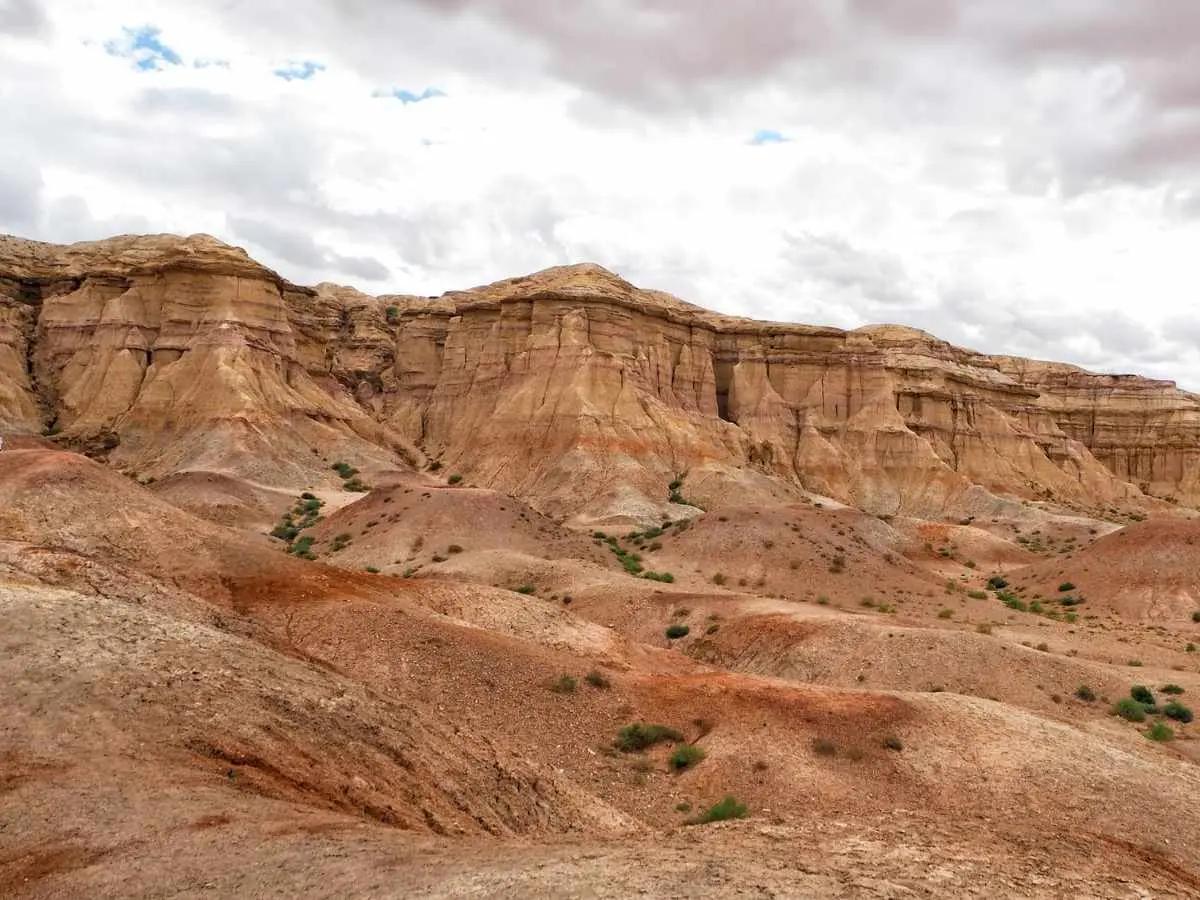
Tsagaan Suvarga — The White Stupa
If Bayanzag is one of the Gobi's better-known highlights, Tsagaan Suvarga remains almost entirely off the radar. Known in English as the White Stupa, this formation was once an ancient seabed. Over millions of years, environmental change has produced vivid horizontal bands of colour — ochre, white, grey, and red — across a sheer slope more than 50 metres high.
Standing before it, the formation resembles the ruins of a great ancient city, which adds to its quiet strangeness. It is one of the most visually compelling natural sites in the Gobi, and one of the most rewarding for those who make the effort to find it.
Yolyn Am — Ice in the Desert
At 2,800 metres above sea level in the Gurvansaikhan Mountains, Yolyn Am is named after the Lammergeier, the bearded vulture that nests in these cliffs. The gorge is narrow and deeply shaded, and thanks to the cold air that pools in its lower reaches, it holds thick ice well into the summer months.
The contrast is remarkable. Outside the gorge, the Gobi bakes in the summer heat. Inside, the air is cool and the ground is frozen solid. Few sights in Mongolia illustrate the drama and variety of this landscape quite so clearly. Timing your Gobi visit well matters — our month-by-month Mongolia guide explains when each region is at its best.
Interesting Places to Visit in Mongolia — Mountains, Valleys, and Ancient Sites
Moving north from the desert, Mongolia reveals an entirely different character — one shaped by ancient empires, Buddhist faith, and the long, layered sweep of Central Asian history. These are among the most interesting places to visit in Mongolia, and among the least visited by travellers who stick to the standard itinerary.
Kharkhorin and Erdene Zuu Monastery — The Ancient Capital
Known historically as Karakorum, Kharkhorin was once the most powerful city in the world. At its height in the 13th century, it served as the capital of the Mongol Empire, drawing ambassadors and traders from as far as Beijing in the east and Istanbul in the west. It was here that Ögedei Khan, son of Genghis Khan, consolidated an empire that would come to span much of the known world. Kublai Khan later moved the imperial capital to what is now Beijing, and Kharkhorin was destroyed in 1380 by Ming forces. Today, only scattered archaeological remains survive.
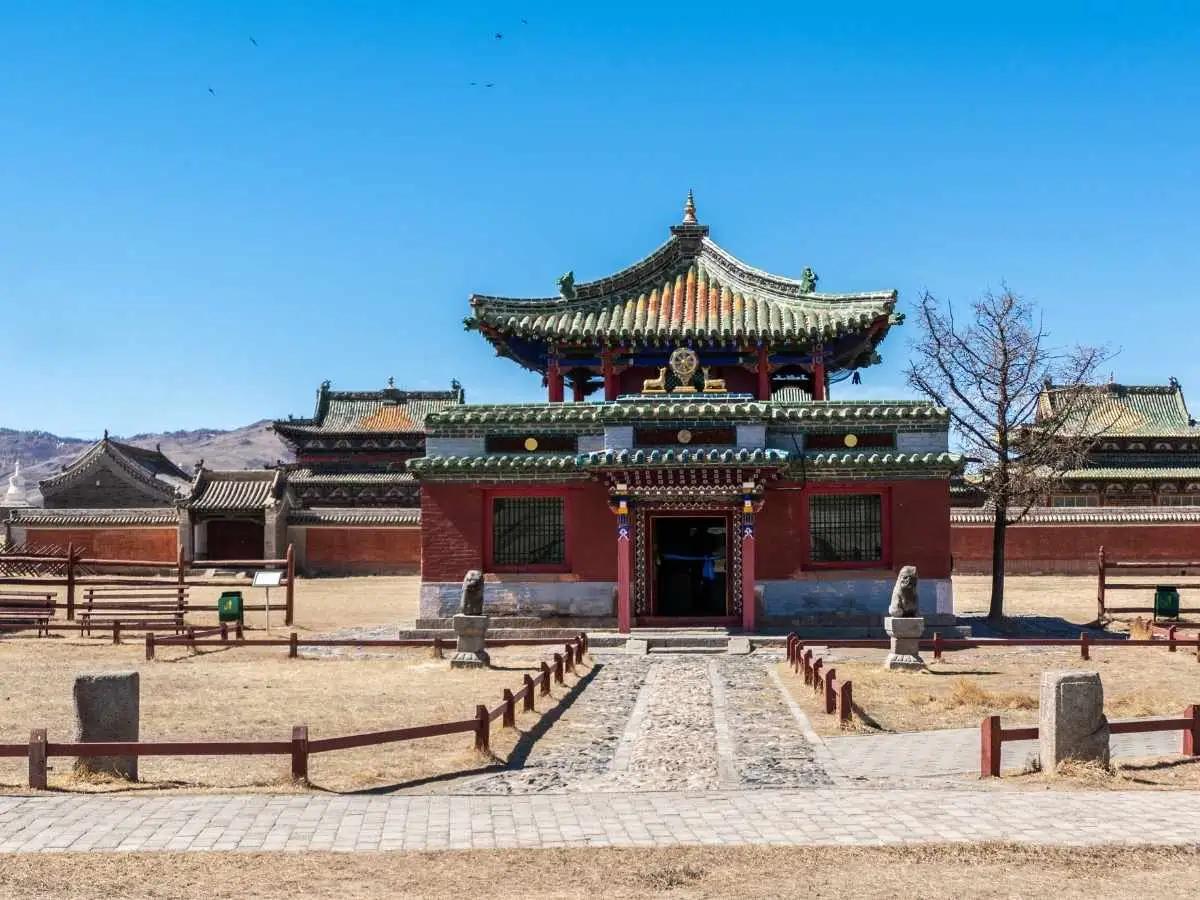
Alongside those ruins stands Erdene Zuu Monastery — a sacred place built in the 16th century using stones taken from the ancient capital itself. It is Mongolia's oldest surviving Buddhist monastery and a UNESCO World Heritage Site, and its white walls and golden spires make it one of the most striking sights in central Mongolia.
The Orkhon Valley — A UNESCO Cultural Landscape
The Orkhon Valley holds a special place in Mongolian history. This is the land where the first Turkic and Mongol empires rose and fell, where ancient inscriptions record the deeds of long-dead khans, and where the river has sustained nomadic life for thousands of years. The valley carries a UNESCO designation as a cultural landscape, recognising its layered historical and natural significance.
The Ulaan Tsutgalan Waterfall is one of the valley's most striking natural features, dropping into a basalt canyon formed by ancient volcanic activity. The volcanic formations scattered across the valley floor add to the sense that this is a landscape shaped by forces far older than human history. There are gentle walks to enjoy, sweeping views to take in, and very few other visitors to share them with.
Ongi Monastery — A Ruin With a Profound Story
At the height of its importance, Ongi Monastery was one of the largest monastic complexes in Mongolia, home to thousands of monks. A sacred place of great significance within Mongolia's tradition of Tibetan Buddhism, it was destroyed in 1939 during the anti-religious purges carried out under Soviet-backed rule. The monks were killed or sent to labour camps, and the buildings were razed to the ground.
What remains today is atmospheric and genuinely moving. The ruins sit above a quiet river valley, and the surrounding landscape has a stillness that feels appropriate to a place of such sorrow and historical significance. Ongi is not a comfortable sight, but it is an honest one. It offers an insight into Mongolia's Buddhist heritage and its 20th-century trauma that few other sites can match.
Top Places to Visit in Mongolia — Wildlife, Festivals, and Living Culture
No guide to the top 10 places to visit in Mongolia would be complete without its wildlife and its festivals. These are not museum pieces or historical monuments. They belong to the living landscape of the country, and they change the way you understand everything else you have seen.
Hustai National Park — Where the Wild Horse Roams
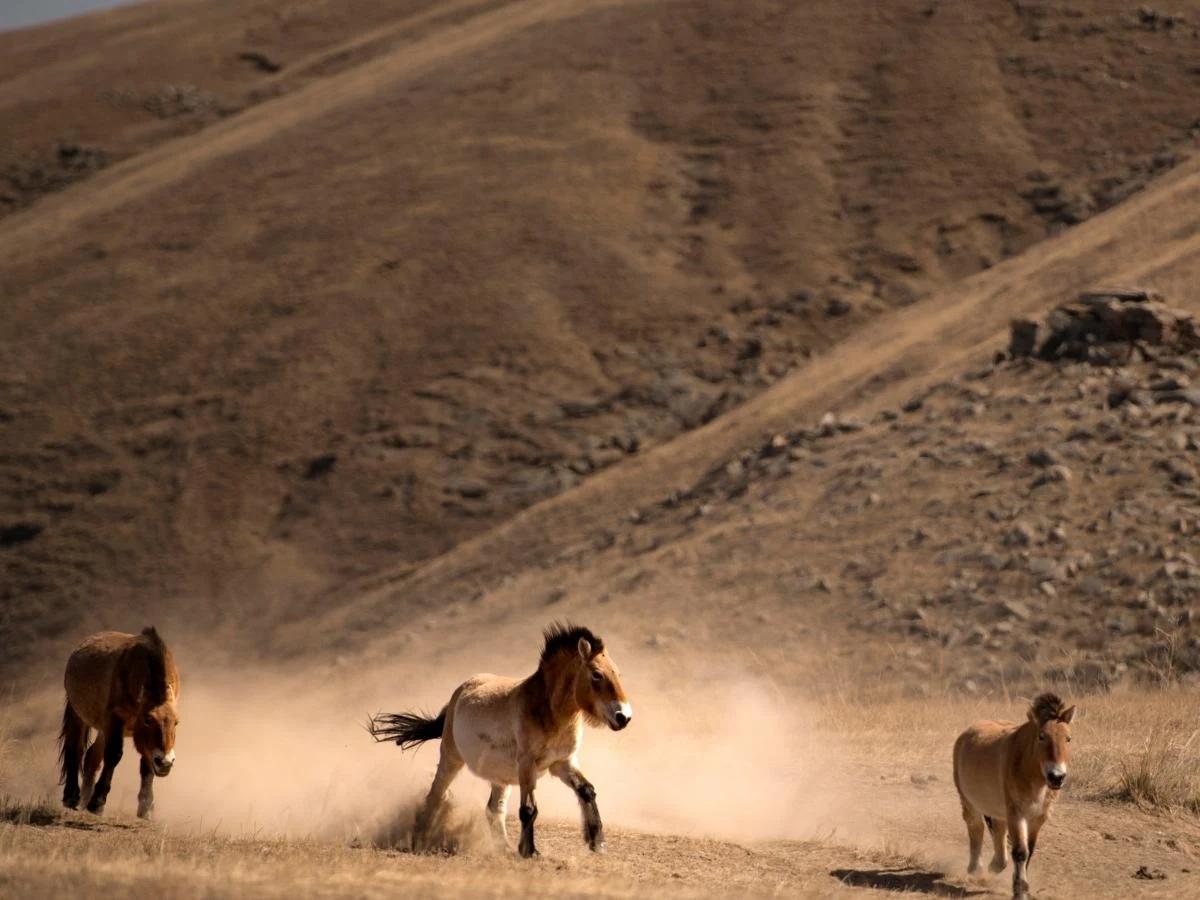
Hustai National Park, located around 100 kilometres from Ulaanbaatar, is one of the great conservation success stories of recent decades. The park is home to the Takhi — also known as Przewalski's horse — the world's only truly wild horse. Once extinct in the wild, the Takhi was carefully reintroduced to Hustai beginning in the 1990s. The park is also home to wolf, lynx, and steppe gazelle.
Watching a small herd of Takhi move across the open steppe carries a quiet emotional weight. These are not domesticated animals. They are genuinely wild, and the sight of them is a reminder of what the natural world looks like when given the space to recover.
The Naadam Festival — Mongolia's Greatest Celebration
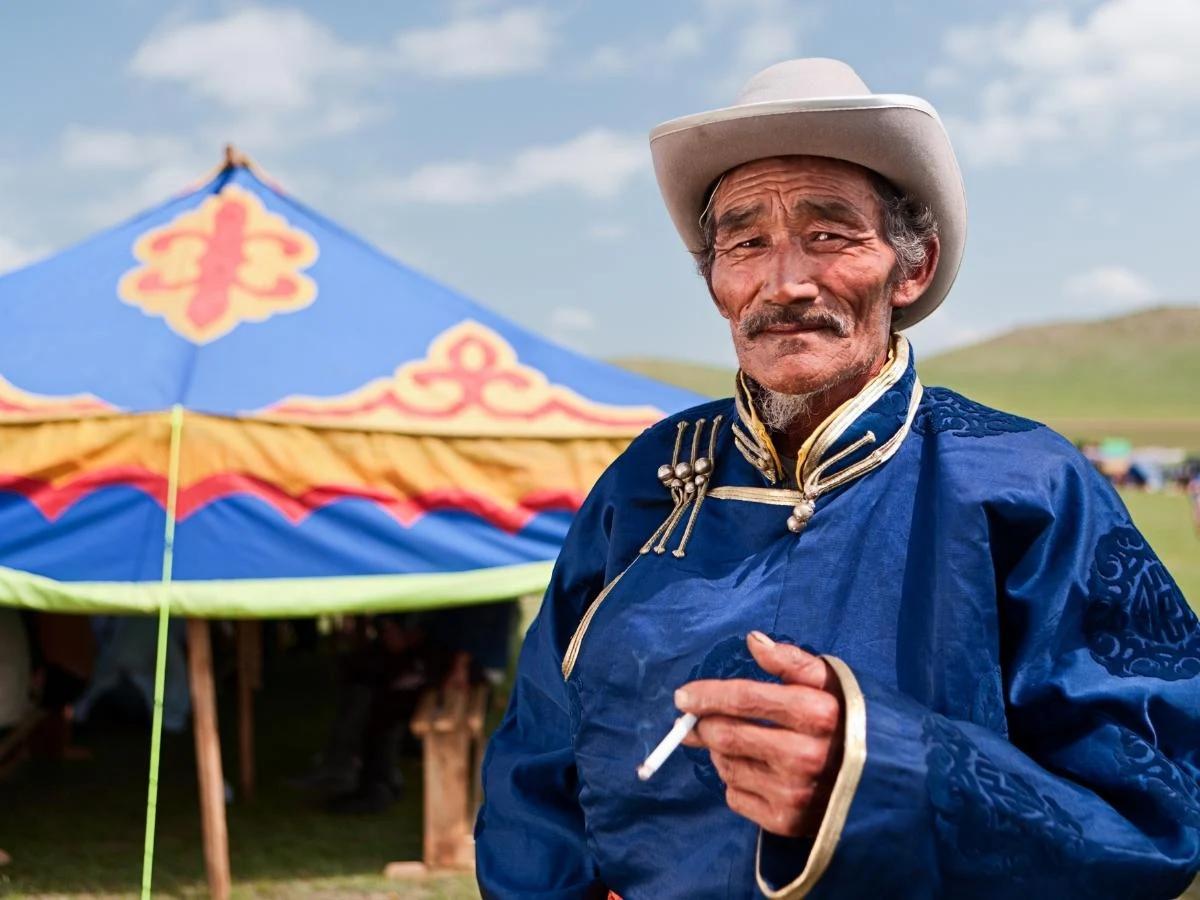
Every July, Mongolia celebrates Naadam, the country's most iconic cultural event. The festival centres on the Three Manly Sports — wrestling, archery, and horse racing — competitions that have been used to test Mongolian strength and skill for centuries. The horse races are particularly remarkable, with children as young as five or six serving as jockeys, riding across the open steppe in age-category races that can cover up to 30 kilometres.
The most authentic experience of Naadam is found not in the capital but in smaller provincial towns such as Arvaikheer, where the festival belongs to the local community. The atmosphere is vivid, joyful, and entirely genuine. We run a dedicated small-group Naadam tour that puts you at the heart of the celebration, away from the crowds.
The Eagle Festival of the Altai Mountains
In the far west of Mongolia, near the shores of Tolbo Lake and against the dramatic backdrop of the Altai Mountains, the ancient tradition of eagle hunting is celebrated each autumn at the Eagle Festival. The Kazakh eagle hunters who take part — known as burkitshi — work with golden eagles trained from birth, building bonds of trust and precision over years and sometimes over a lifetime. Many trace their heritage to Kazakhstan, and the tradition they practise is one of the most enduring cultural links between western Mongolia and the wider Kazakh world.
At the festival, competitors in traditional attire call their eagles from high ridges and demonstrate skills refined over centuries. It is one of the most visually striking events in Central Asia, and those drawn to living heritage can join our Eagle Festival journey through the Altai. For a broader look at what Mongolian celebrations involve across the calendar year, our guide to Mongolia's annual celebrations covers the full festival season in depth.
Conclusion
Mongolia has a rare quality that very few destinations can claim: it feels genuinely untouched. Its landscapes are immense, its history profound, and its people among the most welcoming on earth. The places to visit in Mongolia are not simply dots on a map — they are experiences that stay with you long after you return home.
From the fossil-rich cliffs of Bayanzag to the haunting ruins of Ongi Monastery, from the singing dunes of the Khongor to the wild horses of Hustai, there is something here for every kind of traveller. What unites all of these places is a sense of scale and quietude that is increasingly rare in today's world.
The window to experience Mongolia at its most authentic is still wide open. More travellers are discovering this country each year, and the intimacy of that experience will change as the numbers grow.
If there was ever a time to explore the land of the eternal blue sky, it is now. Undiscovered Destinations offers small group tours and holidays to Mongolia designed to take you well beyond the tourist trail — into the real Mongolia, on your own terms. The adventure is ready when you are — explore your options now.