
Laos is South East Asia's best-kept secret. While its neighbours draw millions of visitors each year, this landlocked country slips quietly by, content with its crumbling temples, slow rivers and hill tribe traditions that stretch back centuries. Those who make the journey find something increasingly rare in modern travel — a place that still feels genuinely undiscovered. Whether you are using this as a Laos travel guide for your first trip or looking for something the guidebooks have missed, you will find a country that rewards slow travel and curious minds in equal measure.
From the colonial streets of Vientiane to the jungle highlands of the north, from the golden city of Luang Prabang to the volcanic plateau of the south and the river islands where the Mekong fans out to a width of 14 kilometres, Laos offers experiences that stay with you long after you leave. Bordered by Thailand, Vietnam, Cambodia, China and Myanmar, it sits at the crossroads of mainland South East Asia, yet remains far less visited than any of its neighbours. Travellers who have already explored the beaches of Indonesia, the city-state of Singapore or the famous temples of Bangkok often find Laos to be the most quietly revelatory discovery of all. Here is your guide to visiting Laos and where to start.
Life in Laos has a gentler rhythm than in many other Asian countries. Villages in rural Laos look much as they did a generation ago, local traditions are practised not for visitors but because they always have been, and this is the perfect place for those who want to experience South East Asia at its most authentic.
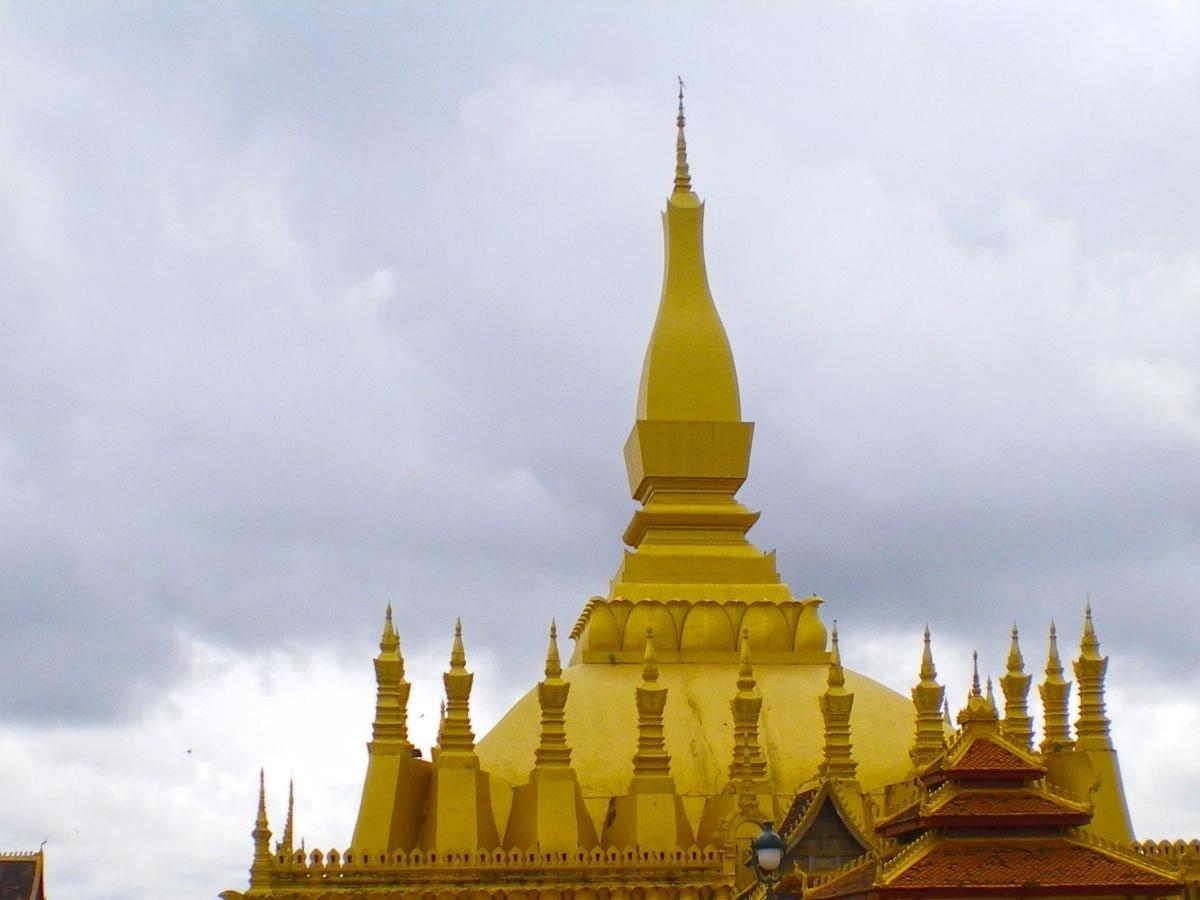
Start in Vientiane — Temples, History and Life by the Mekong
Vientiane is unlike any other capital in South East Asia. It moves at its own unhurried pace, somewhere between a large town and a small city, with wide boulevards, crumbling French colonial mansions and steaming noodle stalls tucked beneath bougainvillea-draped archways. Knowing what to do in Laos begins here, in a city that hides its beauty quietly and reveals it slowly to those willing to spend a few days wandering its streets. The compact centre is easy to explore on foot, and the riverside district offers a relaxed base from which to take in the city at your own pace.
Sacred Temples and the Story of the Secret War
Wat That Luang is the first place to visit — a golden stupa of deep national significance, said to contain a relic of the Buddha. It is the most sacred structure in all of Laos and an unforgettable sight, especially in the soft light of late afternoon. Nearby, Wat Sisaket and Wat Ho Pha Kheo offer two of the city's most atmospheric temple experiences, their cloister walls lined with hundreds of small Buddha images and quiet shrines that remain active centres of worship. Patouxai, the Lao Victory Monument, stands at the end of the main boulevard and offers good views over the city from its upper galleries.
Set aside time for the COPE Visitor Centre. It provides a moving and essential insight into the Secret War, which left Laos as the most heavily bombed country per capita in history between 1964 and 1973 according to COPE Laos. Large quantities of unexploded ordnance remain in the ground to this day, and the centre explains the ongoing work to make the land safe once more. Understanding this history changes the way you see the country and the extraordinary resilience of its people. It is one of the most important cultural experiences in the whole of Laos.
Food Markets and Sunset on the Mekong
Begin the day with a visit to a local fresh market, where the aromas of traditional Lao coffee and fresh produce fill the air. Lao coffee, grown on the Bolaven Plateau, is rich and full-bodied and quite unlike anything you will have tried at home. Laotian food is among the most underrated in the region. The country's Laotian cuisine is built on fresh herbs, sticky rice, chilli and lime, and Laotian dishes such as Kao Piak, a hearty noodle soup, and a sharp papaya salad made with green papaya and chilli reflect the honest flavours that define eating well in this country.
In the evening, make your way down to the Mekong riverside as the sky turns shades of orange and pink over the water, with the Thai shore visible on the far bank. A cold Beer Lao in hand as the sun sets over the Mekong is one of those simple pleasures that stays with you long after the trip is over.
A Stop at Vang Vieng on the Road North
Located in central Laos, Vang Vieng is a popular stop for travellers arriving from Bangkok, Chiang Mai or other regional hubs after flying into Vientiane. It sits in a dramatic karst landscape along the banks of the Nam Song River, with limestone peaks rising sharply from the surrounding rice paddies. The town has grown into a lively base for outdoor activities including kayaking, cycling and cave exploration. For those continuing north, it marks the beginning of a Laos that grows quieter and more remote the further you travel — and part of the journey covered on the Secret Heart of Asia tour.
The Best Places to See in Laos' Remote North
Away from the capital, the things to see in Laos change entirely. In northern Laos, the landscape transforms into a world of mountain ridges, jungle villages and ethnic communities who have lived in these highlands for generations, largely untouched by mass tourism.
Hill Tribe Villages Around Luang Namtha
Luang Namtha is the most ethnically diverse region in Laos. The Akha, Hmong, Khmu and Lanten peoples each have their own languages, customs and traditional dress, and visiting their villages offers a depth of cultural immersion that is genuinely rare. The friendly locals of the region are generous with their time and welcome visitors with an openness that is characteristic of rural Laos. Watch traditional weaving being practised by hand, see bamboo paper made using techniques passed down through generations, and take time to observe daily life in a way that feels unhurried and authentic. As sunset falls and the mountain ridges form layered silhouettes on the horizon, the local night market comes to life with colour, food and the sounds of the evening.
From Luang Namtha, jungle walks lead into Nam Ha National Park — one of the most biologically diverse ecosystems in the country — with the chance to spot tropical birds, learn about medicinal plants from a local guide, and enjoy a picnic lunch at Nam Dee Waterfall, where the forest opens up around a quiet cascade deep in the trees.
The Two-Day Mekong River Cruise
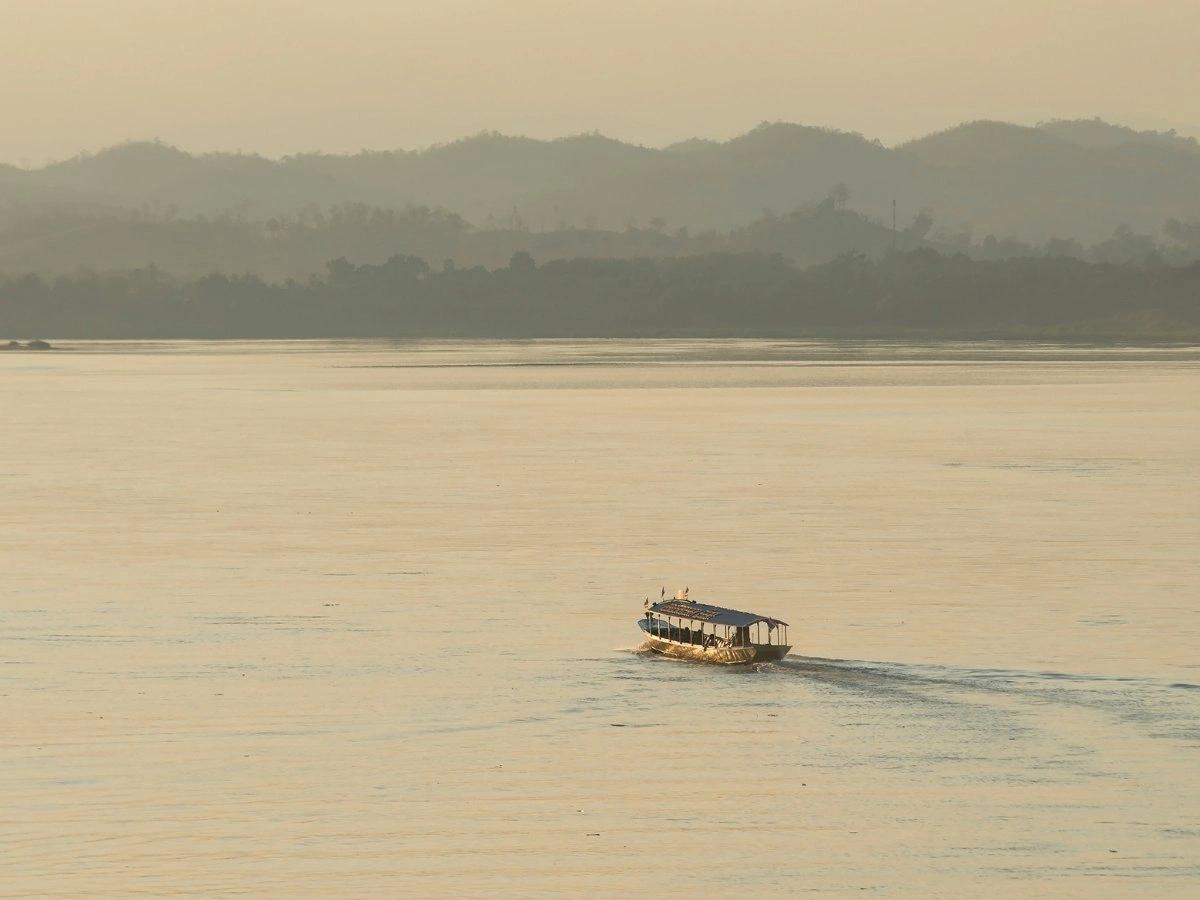
One of the great journeys in South East Asia begins at the small river town of Huay Xai. From here, a traditional slow boat drifts downstream along the Mekong over two unhurried days, passing unspoilt forest, remote countryside and riverside villages, and the occasional elephant and mahout on the bank. There is a particular rhythm to the slow boat — the engine hum, the passing forest, a Lao buffet lunch served on board — that makes the journey as memorable as the destination. This is slow travel at its most rewarding — no rushing, no agenda, just the river and everything it reveals.
Along the way, the boat stops at a Hmong village to explore local homes and ancient temples. The journey ends with a visit to the Pak Ou Caves, an ancient pilgrimage site tucked into a limestone cliff at the confluence of the Ou and Mekong rivers. Inside, thousands of gold-lacquered Buddha images fill every niche and shelf, left by worshippers over hundreds of years. The boat then carries you on into Luang Prabang as the light begins to lower over the hills.
Things to Do in Luang Prabang — Laos' Jewel on the Mekong
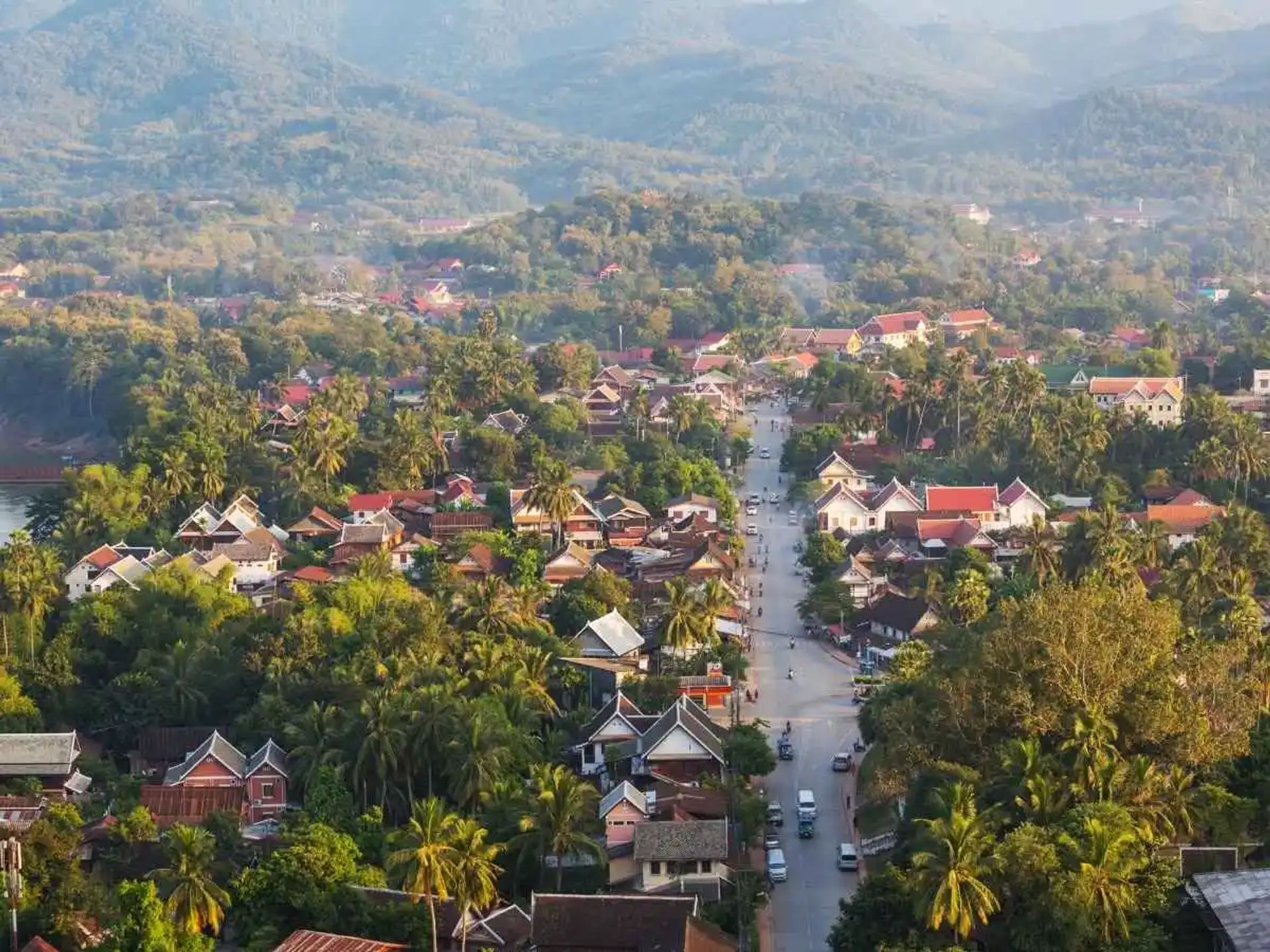
What to see in Laos often comes down to one answer: Luang Prabang. Set at the confluence of the Nam Khan River and the Mekong, encircled by mountains and sitting some 700 metres above sea level, this former royal capital is Laos at its most beautiful. The top attractions of the city range from ancient temples and the morning almsgiving ceremony to the Kuang Si Waterfalls and the famous Luang Prabang night market. The city also has a growing range of accommodation, from simple guesthouses to boutique luxury hotels within restored French colonial buildings — all explored in our guide to the best places to see in Laos. Golden temple roofs catch the morning light, hundreds of monks in burnt sienna robes walk the quiet streets, and the whole city carries a calm that is rare and precious.
Wat Xieng Thong, Monks and the Morning Almsgiving Ceremony
Luang Prabang is a UNESCO World Heritage Site and is home to dozens of Buddhist wats, ancient shrines and temple complexes, many of them centuries old. Wat Xieng Thong, built in the sixteenth century, is considered the finest example of traditional Lao religious architecture in the city, its sweeping roofline reaching almost to the ground and its walls decorated with intricate mosaic work. Buddhist monks and novices can be seen throughout the day moving between the temples, but the most profound experience is Sai Bath — the sacred morning almsgiving ritual in which long lines of barefoot Buddhist monks walk through the streets at dawn to receive rice from local villagers. Observe from a respectful distance, without flash photography, and you will witness one of the most quietly spiritual rituals you are ever likely to see anywhere in the world.
For a view over the whole city, climb Mount Phousi — a sacred hill at the heart of Luang Prabang with 329 steps leading to a hilltop stupa and panoramic views across the Mekong and the surrounding mountains. It is one of the most rewarding short walks in the country.
A Day Trip to Kuang Si Waterfalls and Wildlife Conservation
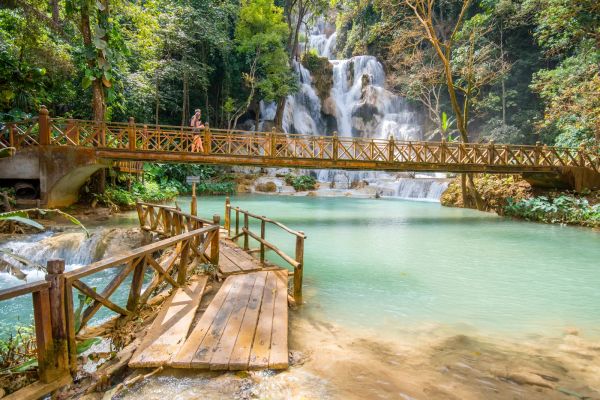
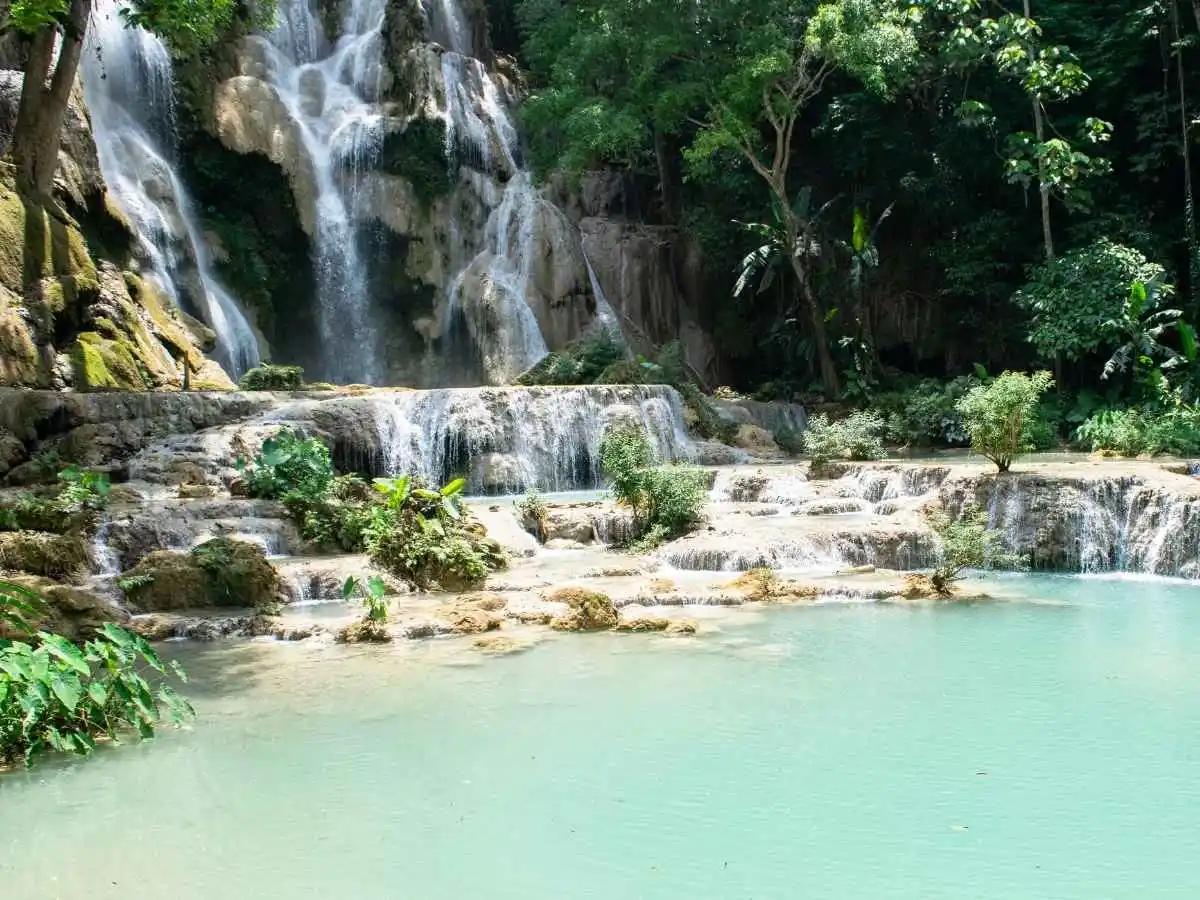
About 45 minutes from the city, the Kuang Si Waterfalls cascade in white ribbons over limestone formations and collect in a series of brilliant turquoise pools. On the way, it is worth stopping at the Living Crafts Centre to watch skilled local weavers at work — a quiet reminder that traditional crafts are very much alive in Laos. This is a place to slow down entirely — swim in the cool water, walk the forest trails and enjoy a picnic lunch in the shade of the surrounding trees. On the way back to Luang Prabang, the Sun Bear Refuge provides a real insight into conservation efforts to protect these endangered animals from poaching. The nearby Buffalo Dairy Farm offers an equally grounded look at sustainable local farming.
Lao Food, the Luang Prabang Night Market and the Baci Ceremony
Before heading out for the evening, take a stroll through the Luang Prabang night market, which stretches along the main road each evening with handmade textiles, silverware and local crafts from communities across the region.
Cross the Mekong to the home of a local guide for a private Lao cooking lesson, preparing traditional specialities in a family kitchen with friendly villagers for company. Afterwards, drift back downstream by boat, watching river life pass by at the pace of the current.
Later in the day, the Baci ceremony in the village of Ban Mano offers one of the most intimate cultural experiences Laos has to give. Led by the village chief, local people gently tie cotton cords around visitors' wrists, each one carrying a wish for luck, friendship and good health. It is a ritual of genuine warmth, held in a private family home, and unlike anything you will find in a conventional tourist attraction.
Visit Southern Laos: Ancient Temples, Coffee and the 4000 Islands
The best things to do in Laos are not all concentrated in the north. The south is where ancient history, volcanic highland scenery and one of the natural wonders of mainland South East Asia come together. Those wanting to combine Laos with its neighbours will find the Laos and Cambodia Encompassed tour takes in both regions in depth. The range of activities and hotels across the region reflects its diversity — from simple riverfront lodges to tented camps deep in the jungle.
Champasak and Wat Phou — An Ancient Temple That Predates Angkor Wat
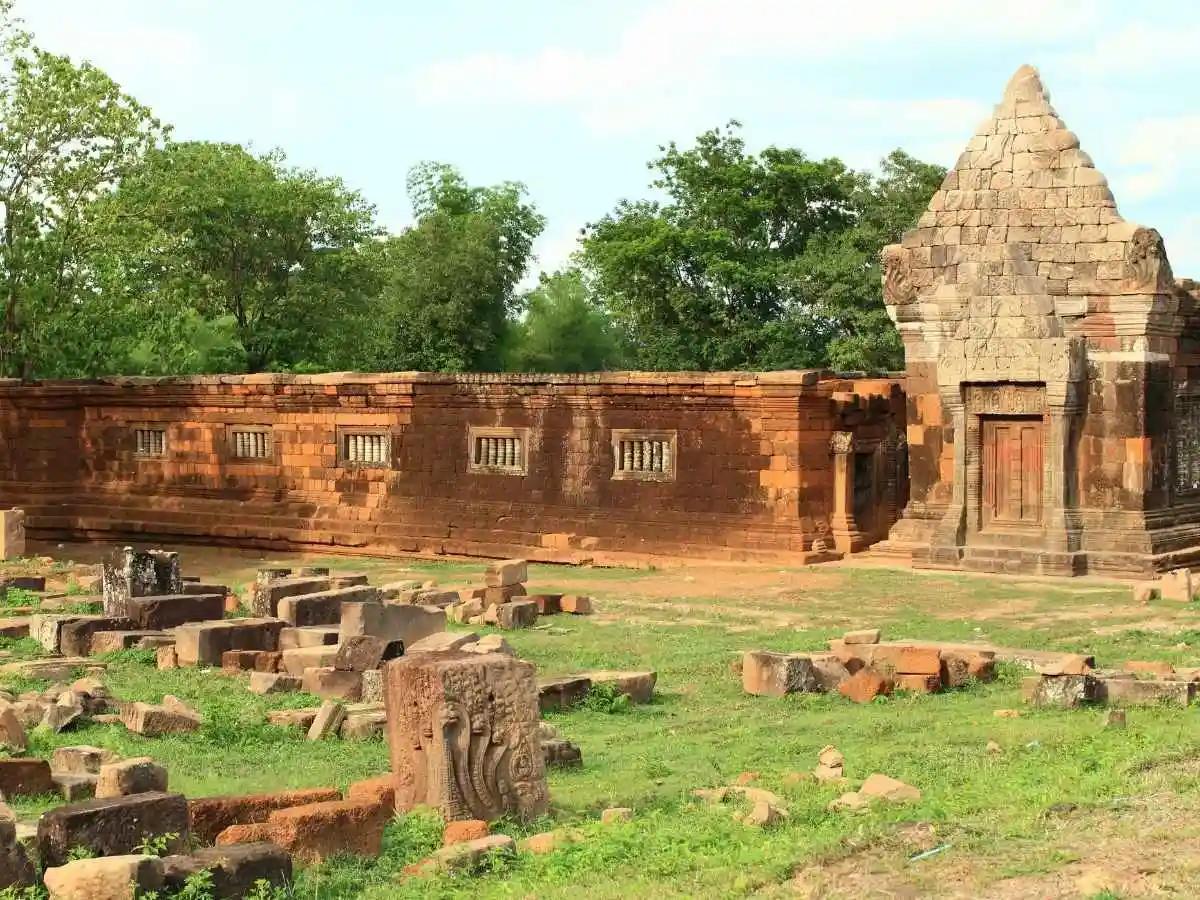
Built across three levels on a hillside above the Mekong near Champasak, Wat Phou is a pre-Angkorian Khmer temple complex of extraordinary age and atmosphere. It is a UNESCO World Heritage Site and predates Angkor Wat in Cambodia, having once been the most important political and economic centre in the region. Reservoirs, galleries, pavilions and a hilltop sanctuary form the site, which sits in a dramatic landscape of mountains and river. Stay the night on Don Daeng Island, a short private boat ride across the Mekong, and watch the sun sink behind the mountains surrounding Wat Phou from your terrace.
Coffee, Volcanoes and Waterfalls on the Bolaven Plateau
The Bolaven Plateau sits atop a highland formed by an ancient super volcano, with dramatic scenery at every turn and a cooler climate that comes as a relief after the heat of the lowlands. The coffee grown here is some of the finest you will find anywhere in South East Asia. At Mystic Mountain Coffee, you can meet a local producer who has been growing and roasting Bolaven coffee for seventeen years, tour the plantation and watch a coffee roasting demonstration that puts your morning cup in an entirely new light.
The plateau is also home to a series of spectacular waterfalls. Tad Moun offers a secluded spot for a swim in crystal-clear water before continuing into the highland interior. Tad Fan plunges more than 100 metres into a deep jungle gorge — one of the most striking natural sights in the country. Tad Yeung, smaller and more intimate, brings the day to a peaceful close.
The Enchanting 4000 Islands — Must-Do Experiences on the Mekong
The must-do experience of southern Laos is Si Phan Don — the 4000 Islands. Here the Mekong River spreads out to a width of 14 kilometres, creating a maze of forested islands where life moves at an extraordinary pace of calm. Don Khone is the heart of it: rice paddies, cycling paths through the countryside, quiet villages and narrow lanes connecting it all. The ruins of an old French railway — built to carry goods around the falls — stand as a reminder of the colonial past.
Nearby, Khone Phapheng Falls thunders with the full weight of the Mekong behind it, making it the largest waterfall by volume in South East Asia and a truly remarkable spectacle. In the afternoon, join a local fisherman on the river to try your hand at casting nets, and settle in at dusk beside a bonfire on the riverbank while your guide shares the myths and legends of the Mekong over a village-style barbecue dinner.
Conclusion
Laos does not announce itself loudly. It does not have the famous beaches or the backpacker energy of its neighbours. What it has is something quieter and rarer — ancient temples, deep jungle, a river that has shaped civilisations for thousands of years, and a people whose warmth is something you carry home with you. From the sacred streets of Vientiane to the hill tribe villages of the north, from the slow magic of the Mekong cruise to the waterfalls and coffee of the Bolaven Plateau, a journey through Laos leaves you with the distinct feeling that you have found something most travellers never will.
If that sounds like exactly the kind of travel you are looking for, Undiscovered Destinations has been taking small groups to the secret heart of Asia since 2004. Browse our small group tours to Laos and take the first step towards a journey that will change how you think about South East Asia.