South America has a way of making even experienced travellers feel underprepared. The continent is enormous, the highlights are scattered across half a dozen countries, and almost every destination seems to demand more time than a single trip can give. Few regions in Latin America reward the patient traveller as consistently as the Andes, and for those drawn to ancient civilisations, dramatic highland landscapes, and cultures that feel genuinely alive, one pairing stands apart: Peru and Bolivia.If you are planning a trip to Bolivia, you can explore our Bolivia tours for detailed itineraries and travel options across the country.
This is not a route that found its reputation by accident. These two countries share a long, tangled history rooted in the Andean world, and travelling through them together on a single trip reveals connections that neither country could offer alone. The ancient ruins here are not isolated monuments — they are the remnants of a civilisation that stretched across an entire continent, and the people who carry that heritage forward are still here, living and working in the same high valleys. It is also one of the most demanding and most rewarding adventure itineraries you can build in South America, and whether it is right for you depends on a few honest questions worth asking before you book.
What Makes Peru and Bolivia Such a Natural Pairing?
Two countries, one continuous story
Unlike many neighbouring countries in South America, Peru and Bolivia do not ask you to shift gears completely when you cross their shared border. Language, food, and culture all continue in recognisable form from one side to the other. Both countries share deep roots in the Inca Empire, and the traces of that world are visible everywhere, from the stone terraces cut into Peruvian hillsides to the textile traditions kept alive in Bolivian markets. The Quechua and Aymara languages are still spoken across both countries. The food changes in small ways but stays rooted in the same Andean pantry of maize, potatoes, and quinoa. Even the landscape flows continuously, the altiplano rolling from one country into the next without the sharp break you might expect at a border crossing.
This shared cultural inheritance is what makes a combined Peru and Bolivia itinerary feel coherent rather than fragmented. You are not simply visiting two different countries back to back on a single trip. You are following a thread through a civilisation that predates the borders drawn across it. That continuity gives the journey a depth that most multi-country itineraries cannot match.
Landscapes that contrast and complement
Where the two countries diverge is in what they offer visually, and the scenery across this route is where the combination becomes genuinely exceptional. Peru moves you through extraordinary variety: the Pacific coastline with its desert cliffs and marine wildlife, the deep river canyons of the Andes, the lush green of the cloud forest descending toward the Amazon basin, and the high plateau shared with Bolivia. Each transition feels significant. The country is not just a sequence of highlights — it is a series of entirely different worlds stacked within a few hundred kilometres of each other.
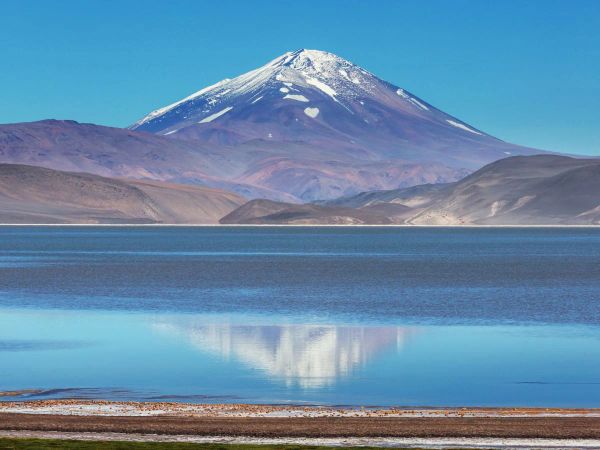
Bolivia then takes that plateau and intensifies it. The altiplano reaches elevations that make the air thin and the light strange. Colours are more vivid at altitude. Shadows are sharper. The sense of being somewhere remote and extraordinary is difficult to shake. The Salar de Uyuni, the world's largest salt flat at approximately 10,582 square kilometres, produces a landscape so flat and white that it distorts depth and distance in a way that photographs struggle to capture. La Paz, the world's highest administrative capital at over 3,600 metres, spills down a canyon in a way that no other city in the world manages.
Together, the two countries offer more geographical and cultural variety than almost any other two-country combination in South America. That breadth is the main reason this route has become the benchmark against which other South American itineraries are measured.
The Highlights: Peru
Lima and the Huacachina Desert
Lima is a city that consistently surprises people who have not given it much thought. It is a modern, coastal capital with a food scene that has earned global recognition, and its historic centre carries layer upon layer of colonial and pre-Columbian history. A guided tour of the Larco Museum is one of the best ways to spend a first morning in Lima — its collection of pre-Columbian art spans thousands of years and gives arriving travellers a foundation for everything they are about to visit in the mountains ahead. The Miraflores and Barranco districts sit above the Pacific on limestone cliffs, and a walking tour through their streets — past street art, clifftop gardens, and restaurants with sea views — gives a very different impression of Lima to its historic centre.
Lima also rewards those who take time to visit Huaca Pucllana, a pre-Inca adobe pyramid sitting in the heart of the Miraflores district. It is one of the most accessible archaeological sites in Lima and stands in striking contrast to the modern city buildings surrounding it. In the evenings, the restaurants along the waterfront are the place to try a pisco sour — Peru's most celebrated drink, made from the country's native pisco brandy — before a dinner that showcases why Lima has become one of the great food capitals of the world.
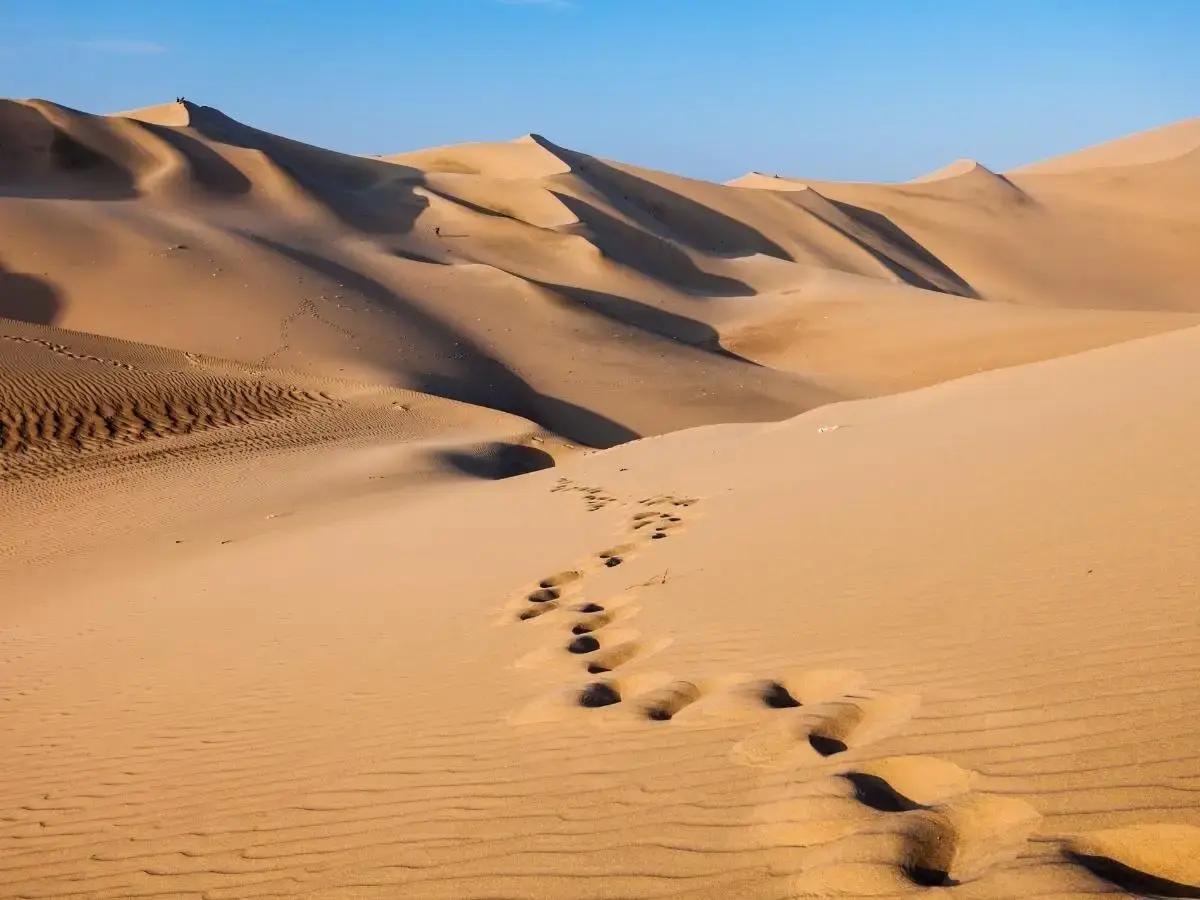
A few hours south of Lima, the Huacachina desert oasis is one of Peru's more unexpected highlights. A natural lagoon sits at the base of enormous sand dunes, surrounded by palm trees and small guesthouses. The dune buggy tour at Huacachina is a genuine adventure — fast, loud, and unlike anything else on the trip — and sandboarding down the dune faces at sunset adds a physical element to a journey otherwise dominated by history and culture. It works well as an overnight stop between Lima and Arequipa.
Arequipa and Colca Canyon
Arequipa is one of Peru's most beautiful cities, built largely from sillar, a white volcanic stone quarried from the flanks of the El Misti volcano that dominates the skyline to the east. The Cathedral, the monastery of Santa Catalina — which visitors can tour for half a day without covering every corner — and the surrounding streets reward unhurried exploration. The food in Arequipa is widely considered some of the finest in Peru, which in a country with that culinary reputation is saying something significant.
Colca Canyon lies a few hours north of Arequipa and is one of the deepest canyons in the world, roughly twice the depth of the Grand Canyon. The canyon is home to the Andean condor, and the Cruz del Condor viewpoint in the early morning is one of the most reliable places on the continent to visit if you want to watch these birds at close range, rising on thermals from the canyon floor. A short hike down into the valley from the rim reveals Inca-period agricultural terraces still in use today, and the communities at the canyon bottom offer a slower pace and a striking change of perspective from the high road above.
Cusco and the San Pedro Market
Cusco is the heart of any Peru itinerary. It was the capital of the Inca Empire and remains one of the most compelling cities in South America. The Plaza de Armas, Cusco's main square, is one of the finest in the continent — ringed by colonial arcades, the Cathedral, and the Church of La Compañia, all built on Inca stone foundations visible along the base of the walls. Cusco rewards time, and two nights is rarely enough to do it justice.
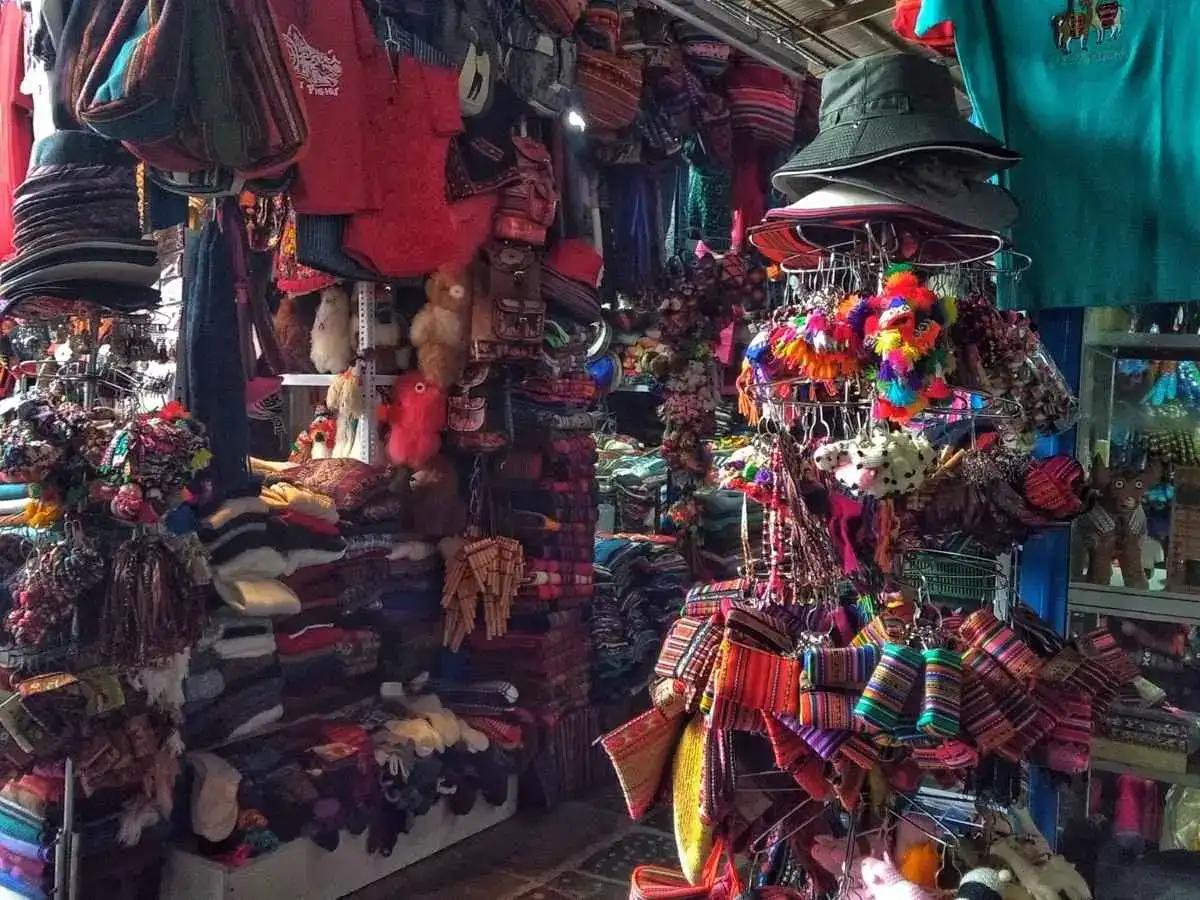
Walking tours of Cusco's streets reveal the architectural layering that makes the city so distinctive — Inca stonework on the lower courses, Spanish colonial construction above. Guided tours of the Qorikancha, the Inca Temple of the Sun, tell the story of the conquest more powerfully than any guidebook. The San Pedro Market is a working market, not a tourist attraction, and wandering through it among locals buying produce, textiles, and herbal remedies gives a more honest picture of Cusco than the cathedral square does. For those wanting to understand Cusco's pre-Columbian past in depth, the city's Regional History Museum offers well-curated exhibits at a pace that suits independent visitors.
The Sacred Valley
The Sacred Valley stretches north of Cusco and is dotted with Inca sites, agricultural terraces, and villages that feel largely unchanged by tourism. A tour of the Sacred Valley typically covers Pisac, with its hilltop fortress and colourful market, and Ollantaytambo at the valley's western end — one of the best-preserved Inca towns anywhere in Peru. The fortress above Ollantaytambo gives a sense of the engineering and strategic thinking that made the empire work at the scale it did.
The Sacred Valley sits at a lower altitude than Cusco, which makes it a more comfortable place to spend time while acclimatising to the elevation. It is also the main departure point for the train to Aguas Calientes and Machu Picchu, and most travellers pass through it at least once on their way to or from the citadel.
The Inca Trail Trek to Machu Picchu
The Inca Trail is one of the most famous trekking routes in the world, and it earns that reputation honestly. The classic four-day Inca Trail trek covers approximately 43 kilometres through cloud forest and high mountain passes, arriving at the Sun Gate above Machu Picchu on the final morning. The landscape along the Inca Trail includes ruined Inca ceremonial sites, extraordinary views across the Urubamba valley, and a level of physical challenge that makes the arrival feel genuinely earned. The hike is demanding but manageable for reasonably fit travellers, and walking the same route used by Inca messengers adds a dimension that a train journey simply cannot replicate.
Permits for the Inca Trail trek sell out months in advance, particularly for the May to September dry season. For those unable to secure a permit, alternative routes offer their own rewards. The Salkantay Trek takes five days and passes through more remote terrain. The Humantay Lake hike, often done as a day hike from the Salkantay trailhead, leads to a brilliant turquoise glacial lake at around 4,200 metres and is achievable without multi-day trekking experience. Organised tours along all these routes are available from Cusco, ranging from fully supported guided groups to more independent arrangements.
Aguas Calientes — Base for Your Visit to Machu Picchu
Aguas Calientes is the small town at the base of Machu Picchu, reachable by train from Ollantaytambo or on foot via the Inca Trail. Most travellers pass through Aguas Calientes rather than linger, but staying overnight allows an early morning visit to Machu Picchu before the day crowds arrive. The difference in atmosphere between a 6am entrance and a 10am one at Machu Picchu is considerable.
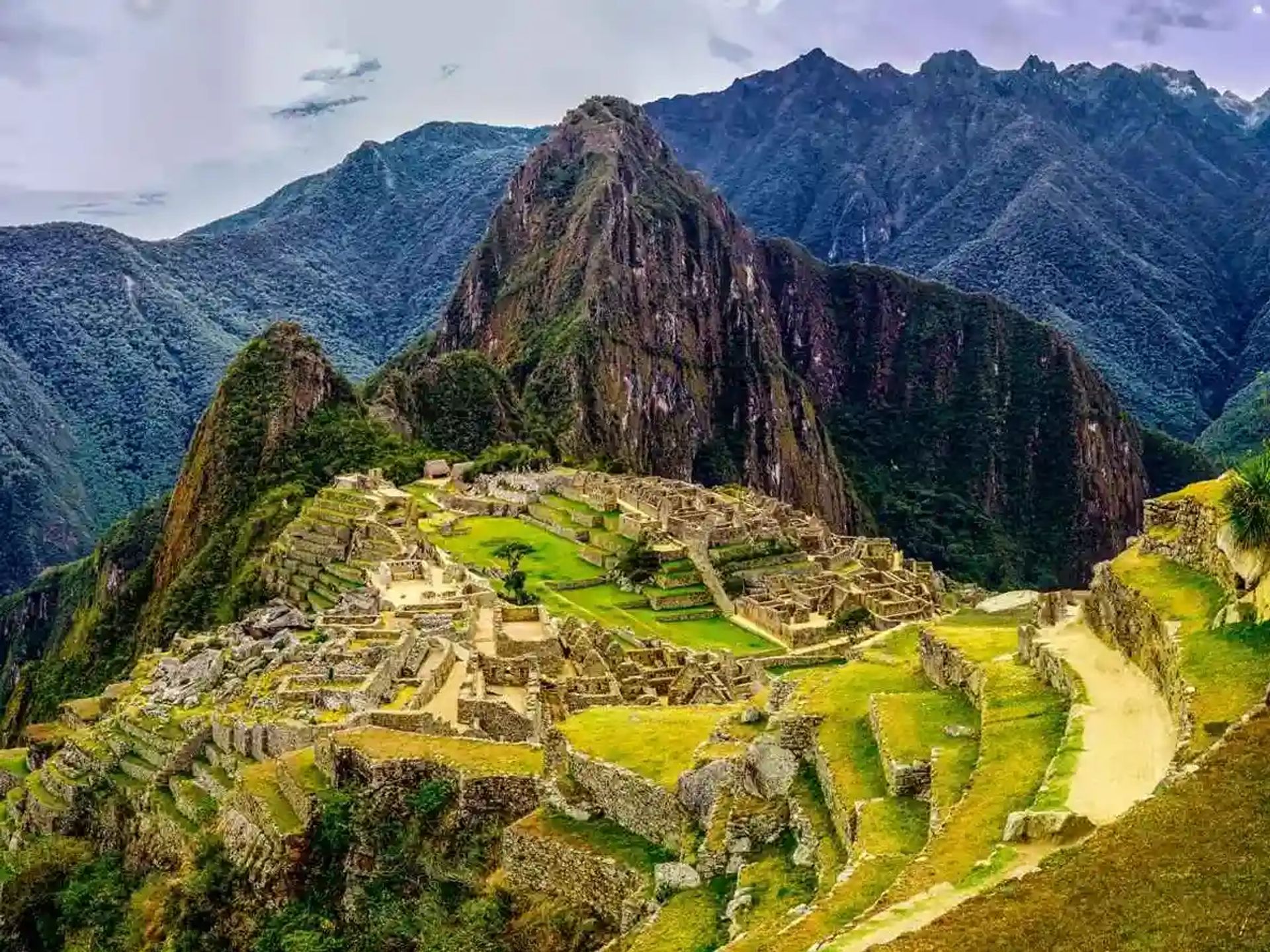
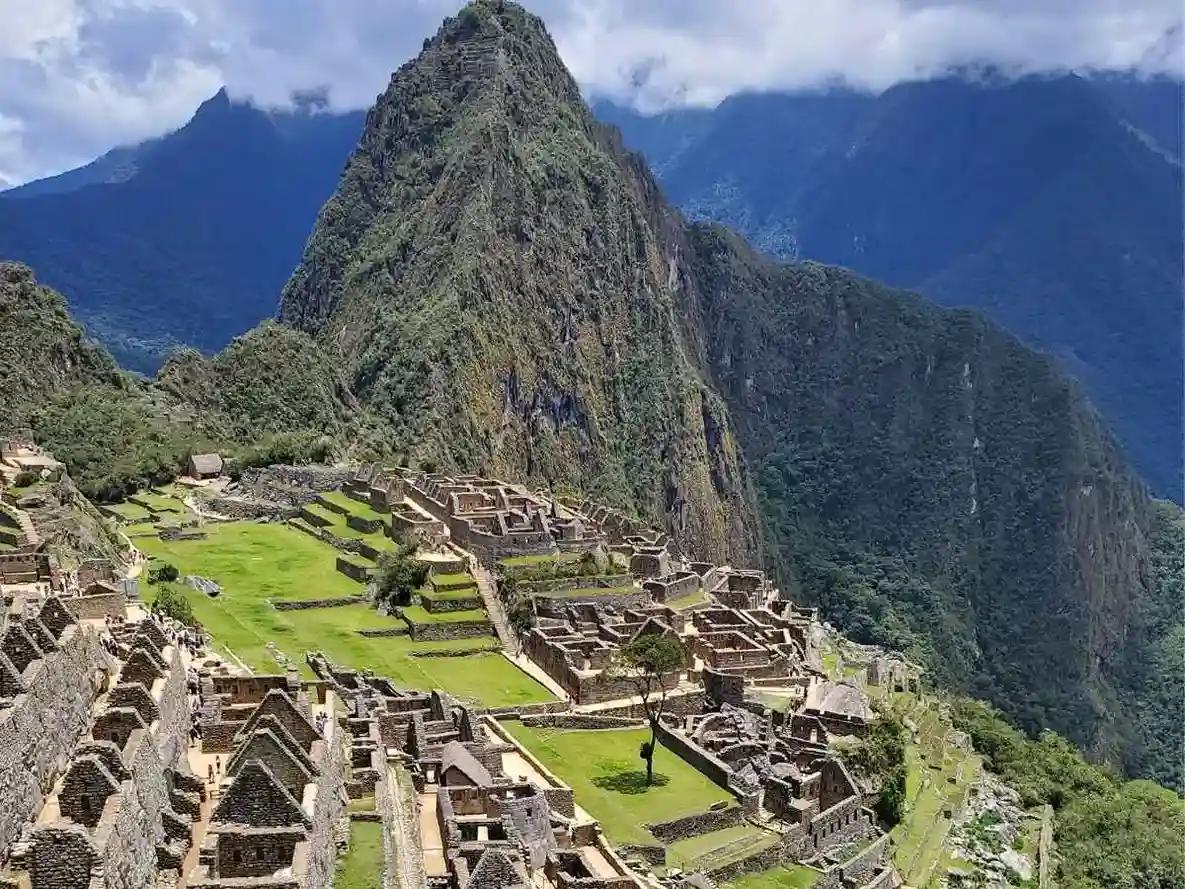
The bus from Aguas Calientes to the Machu Picchu entrance takes around 20 minutes and runs from dawn. Once inside, the citadel unfolds across a ridge in a way that demands time to appreciate properly. For those who want to hike above the main site, Huayna Picchu — the steep pyramid-shaped mountain visible in most photographs of Machu Picchu — offers a more challenging climb with views that look down over the entire complex. Permits for Huayna Picchu are separate and limited, so booking well in advance is essential.
Machu Picchu was rediscovered by Hiram Bingham in 1911, and the position it occupies — above the cloud line, surrounded by steep forested peaks — still manages to be astonishing even when you know what is coming. It is the single most visited archaeological site in South America for good reason. Machu Picchu is a UNESCO World Heritage Site and almost no one who makes the journey to Machu Picchu describes it as a disappointment.
Rainbow Mountain — A Day Hike Above the Clouds
Rainbow Mountain, known locally as Vinicunca, is one of the most striking landscapes in Peru. The Rainbow Mountain hike begins at a trailhead at around 4,300 metres and climbs to the summit at approximately 5,200 metres above sea level. The ascent takes around two hours at altitude, and the colours — vivid bands of red, gold, green, and purple running through the rock face — become visible as you crest the final ridge.
The Rainbow Mountain tour from Cusco typically departs around 4am to allow time on the summit before cloud cover builds in the afternoon. The Rainbow Mountain hike requires no technical skills but is physically demanding, and horses are available for hire along the trail for those who find the altitude difficult. The return journey passes a viewpoint overlooking the Ausangate massif, one of the most sacred mountains in Andean cosmology.
Puno and Lake Titicaca
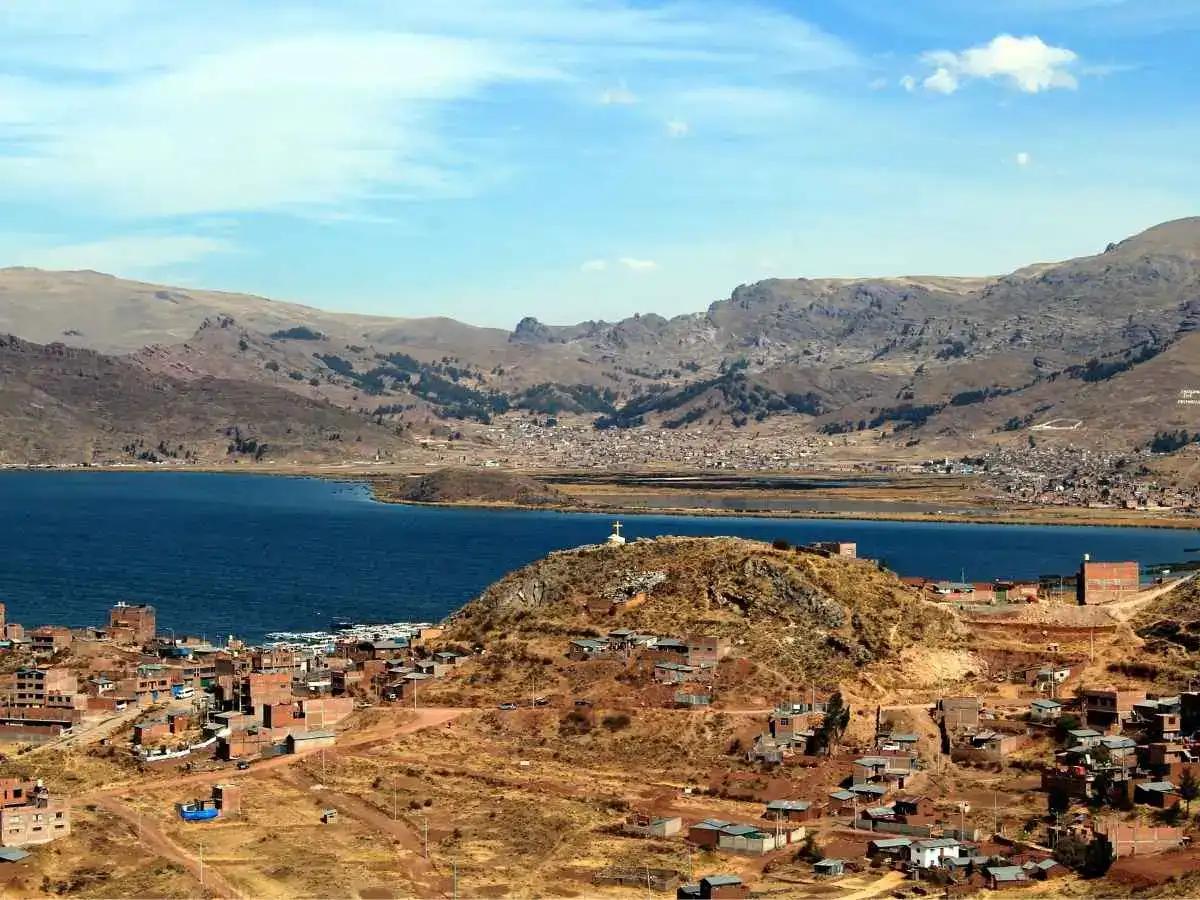
Puno is the main Peruvian gateway to Lake Titicaca, the highest navigable lake in the world at around 3,800 metres above sea level. Arriving in Puno after the mountains of Cusco and the Sacred Valley, the expanse of open water comes as a visual surprise — the lake is vast, and its colour shifts from deep blue to silver depending on the light and weather. A guided boat tour from Puno's harbour visits the floating Uros islands, constructed entirely from totora reeds, and takes around half a day.
Lake Titicaca also connects to the legend of the first Inca king, Manco Capac, who according to Andean mythology emerged from the lake's sacred waters at the beginning of the Inca world. The legend places particular importance on the Bolivian shore of Lake Titicaca, which makes the crossing from Puno into Bolivia feel like a continuation of the same story rather than a fresh departure.
Puerto Maldonado and the Amazon
Puerto Maldonado is the main gateway to the Peruvian Amazon in the south-east of the country, and it offers access to one of the most biodiverse regions on earth. The Amazon jungle surrounding Puerto Maldonado sits within the Tambopata National Reserve, where wildlife tours bring travellers into close contact with macaws, giant river otters, river dolphins, and an extraordinary range of bird species. The contrast between the high Andes and the low jungle is extreme, and for travellers with the time, a detour to the Amazon adds a dimension to the trip that the highlands cannot replicate.
The Highlights: Bolivia
Copacabana and Isla del Sol
Crossing into Bolivia from Puno brings you to Copacabana, a quiet town on the Bolivian shore of Lake Titicaca with a very different feel to its Peruvian counterpart. The pace slows considerably in Copacabana, and the town's Baroque cathedral — home to the Dark Virgin of the Lake — is worth a visit for anyone with an interest in Andean religious tradition.
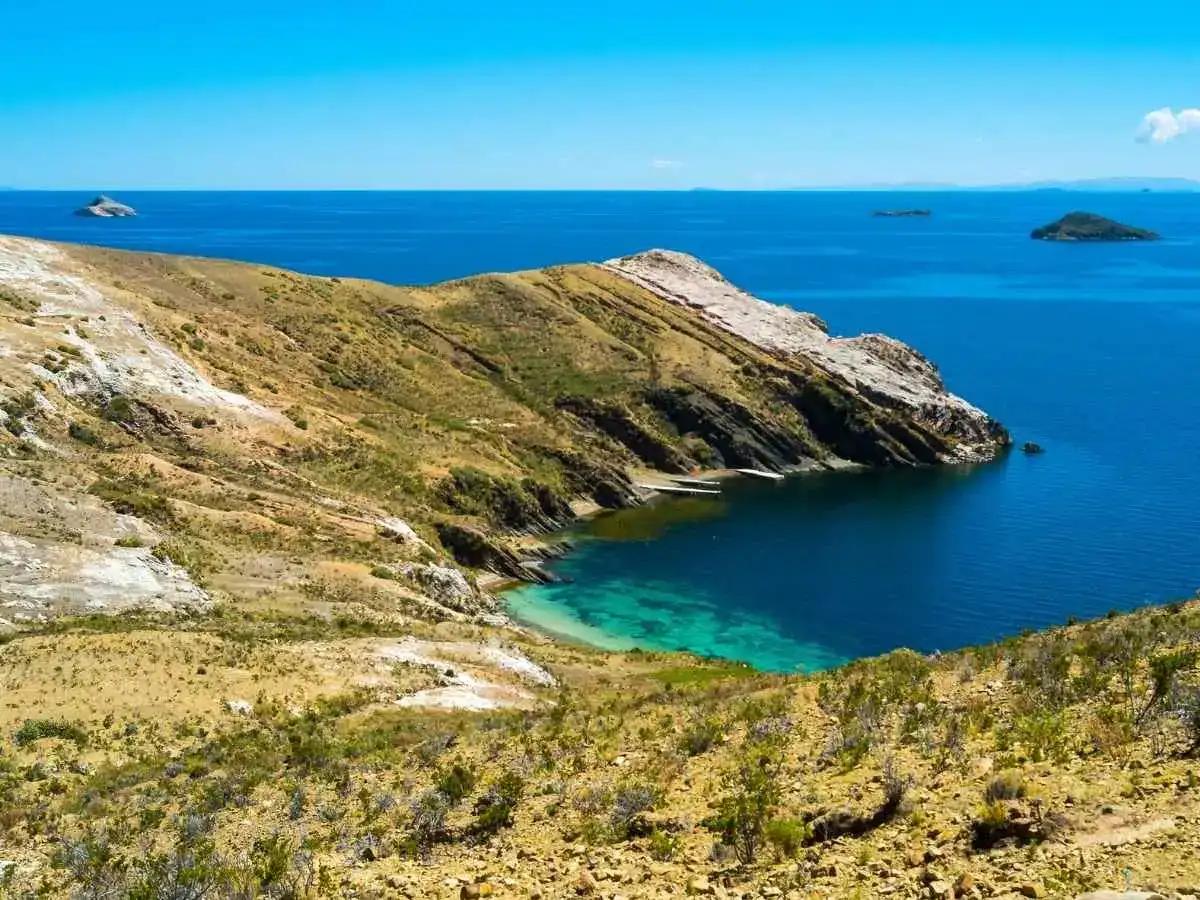
Isla del Sol, reachable by boat from Copacabana in around an hour and a half, is one of the most sacred sites in Andean mythology. It was here that Manco Capac, the first Inca king, was said to have been born from the waters of the lake to found the Inca civilisation. Walking the island's trails, passing stone gateways and terraced hillsides above the deep blue water, is one of those experiences that stays with you long after the more famous sites have blurred together in memory.
La Paz and Valle de la Luna
La Paz is unlike any other city on the continent. It descends into a canyon in layers, with the wealthiest neighbourhoods at the bottom and the indigenous suburb of El Alto spreading across the canyon rim above. A city tour of La Paz typically covers the Witches' Market, the old town, and the cable car across to El Alto, and takes around half a day. Plaza Murillo, La Paz's main civic square, is flanked by the Government Palace, the Legislative Assembly, and the Metropolitan Cathedral — and gives a clear sense of how central Bolivia's indigenous and colonial identities sit alongside each other in the capital. For those who prefer to explore on foot, a walking tour through the Sopocachi neighbourhood in the afternoon gives a quieter, more local perspective on La Paz.
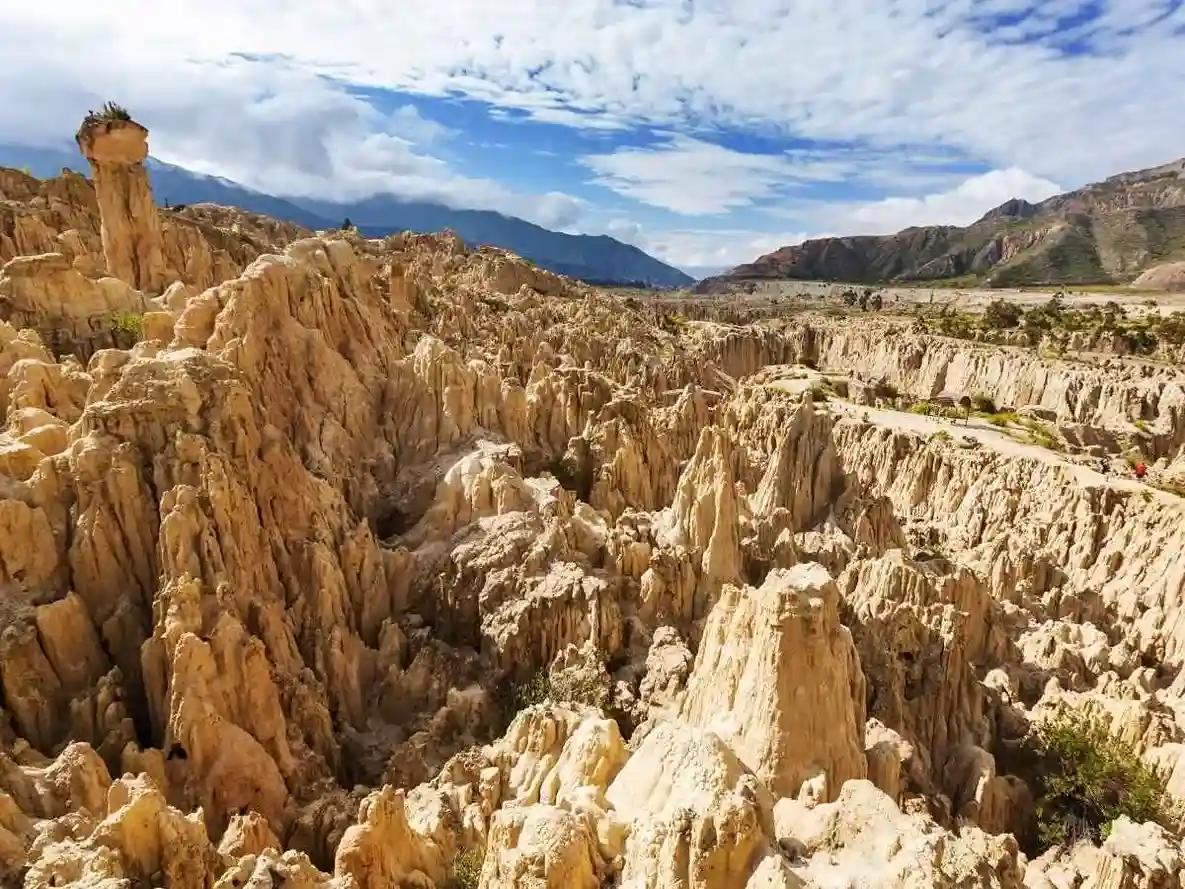
A short drive from La Paz brings you to Valle de la Luna, also known as Moon Valley. The valle is a landscape of eroded clay spires and labyrinthine paths, formed over thousands of years by wind and rain working on soft rock. La luna is an evocative name for a place that genuinely resembles a lunar surface at close range. A day tour from La Paz to the Moon Valley takes no more than a morning and is one of the most accessible natural sites near the capital.
The Salar de Uyuni and the Uyuni Salt Flats
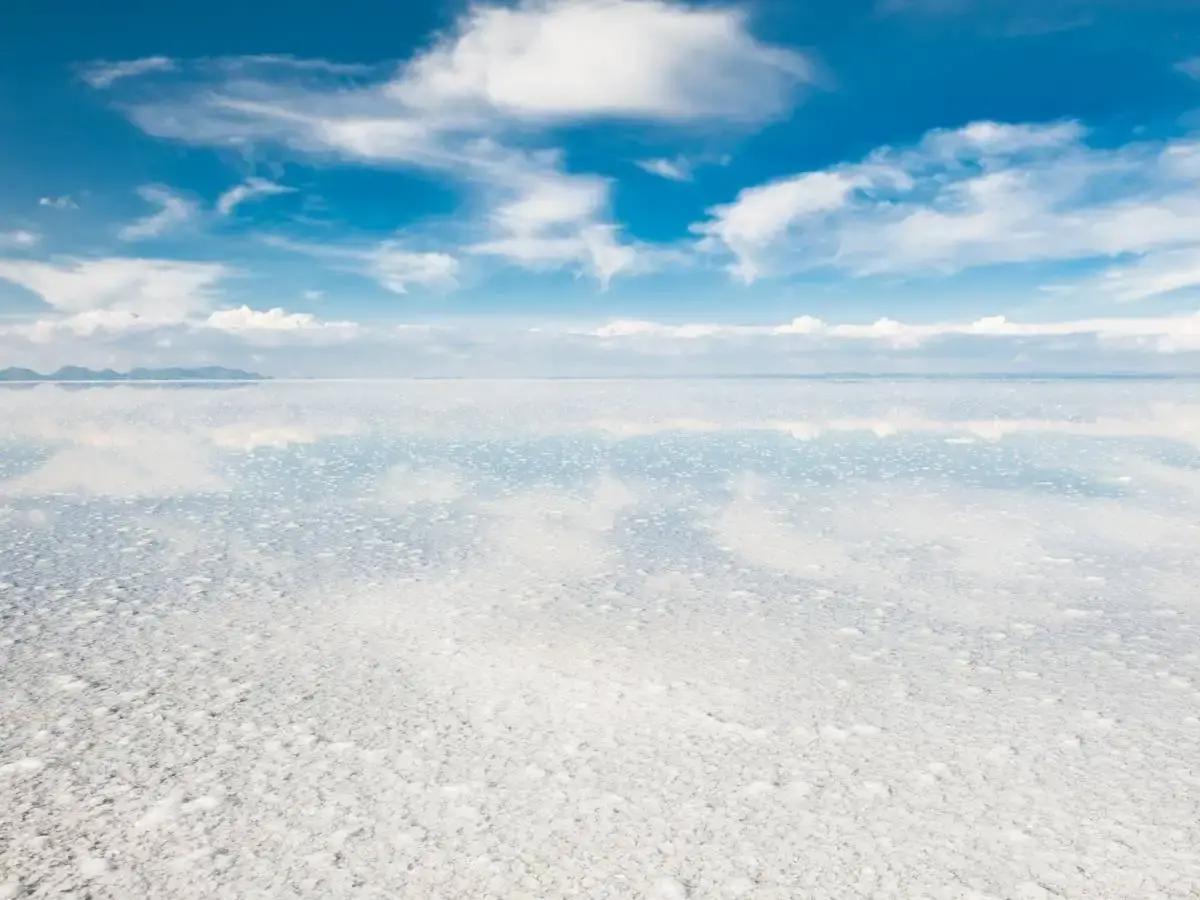
The Salar de Uyuni is the world's largest salt flat and one of the most visually extraordinary places on earth. The Uyuni salt surface stretches to the horizon in every direction at over 3,600 metres above sea level, producing a landscape of total flatness that the eye struggles to process normally. The Uyuni salt crust in the dry season is firm and bright white, and crossing it by jeep produces the surreal impression of driving on cloud. In the wet season a thin layer of water transforms the uyuni salt flats into a mirror that reflects the sky so perfectly that the boundary between earth and atmosphere disappears. Our Uyuni Salt Flats travel guide covers when to visit, what to expect on a multi-day tour, and how to plan your time on the flats.
Multi-day tours of the salt flat typically run over two or three days, moving south from the town of Uyuni through the flat itself, past cactus islands rising from the white surface, and on into the high desert of the Bolivian southwest. One of the highlights of this circuit is Laguna Colorada, a striking red-coloured salt lake whose colour comes from algae and mineral sediments in the water. Tours continue from Laguna Colorada through geyser fields and several more coloured lagoons at high altitude, passing near volcanic peaks that add a dramatic backdrop to what is already one of the most visually varied landscapes in South America.
How This Route Compares to the Rest of South America
What Peru and Bolivia offer that other routes cannot
Argentina and Chile are extraordinary countries, but their strengths lie in landscape and lifestyle rather than ancient culture. Patagonia is raw and wild. Buenos Aires is electric. What they cannot replicate is the depth of Indigenous culture and pre-Columbian history that runs through Peru and Bolivia. No other trip in Latin America offers this level of access to living Andean civilisation alongside dramatic natural scenery. The Inca Empire was the largest empire in pre-Columbian America, and its heartland sits precisely on this route. For travellers whose primary interest is cultural immersion in living, breathing communities, there is no substitute for it in South America.
The Indigenous cultures that make this route unique
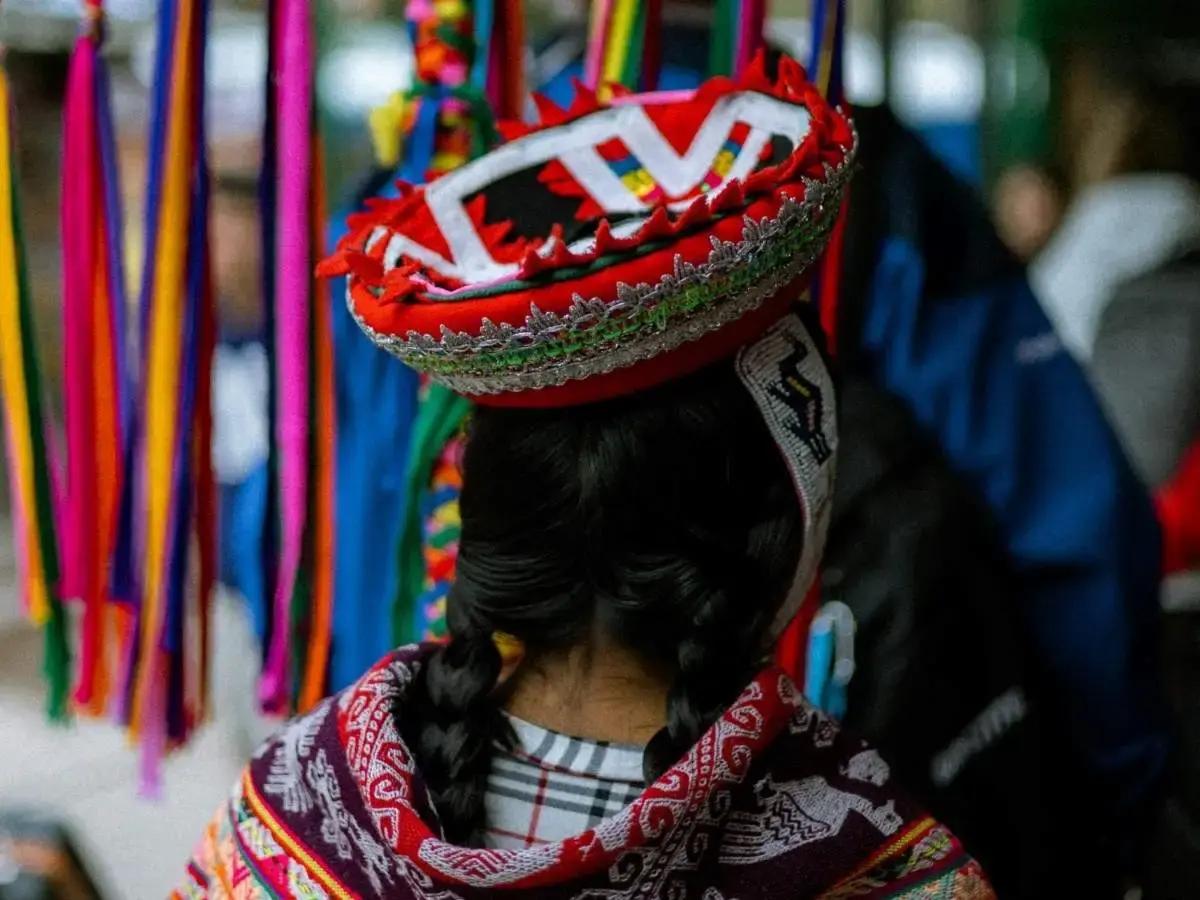
This is not heritage tourism in the sense of visiting preserved ruins and moving on. The indigenous communities of the Andes are present, active, and proud. You will see it in the clothing worn in Cusco's markets, in the ceremonies held in Bolivian villages during festival season, in the way Quechua is spoken on buses and in restaurants, and in the agricultural practices that have continued largely unchanged for centuries. Cultural immersion on this route does not require seeking it out. It is simply the texture of daily life.
Planning the Route
The classic direction: Lima to Uyuni
Most travellers begin in Lima and end at the Salar de Uyuni, flying out from Uyuni, La Paz, or Santa Cruz depending on onward plans. The trip from Lima to Machu Picchu and onward into Bolivia builds in natural stages, with each leg of the journey acclimatising you further as you rise into the Andes Mountains. Lima sets the scene, Cusco and Machu Picchu form the emotional centrepiece, and the salt flats of Bolivia provide a final, unforgettable send-off. Those wanting to explore Bolivia more deeply before or after the salt flats will find our 15-day Bolivia itinerary a useful companion, covering the country from Santa Cruz and the Jesuit Missions through to Lake Titicaca.
Crossing between the two countries
The border crossing between Peru and Bolivia most commonly takes place via the ferry crossing at Lake Titicaca between Puno and Copacabana. The process is straightforward for British passport holders, who do not currently require a visa for either country, though entry requirements can change and it is worth confirming the latest position before you travel.
Tailoring the route to your interests
No two travellers want exactly the same journey through Peru and Bolivia, and the route is flexible enough to accommodate very different priorities. History and archaeology enthusiasts will want to linger in Cusco, the Sacred Valley, and the lesser-visited sites around Lake Titicaca. Wildlife-focused travellers might prioritise Colca Canyon, an Amazon extension, and the Pampas wetlands near Rurrenabaque. A well-planned private itinerary can weight the route toward whatever matters most.
What to Know Before You Book
Altitude — the one thing you must prepare for
Altitude sickness is the one aspect of this route that catches people off guard. The condition does not discriminate by fitness level. Cusco sits at approximately 3,400 metres, La Paz above 3,600 metres, and the Salar de Uyuni at a similar elevation. Arriving with a full rest day before any physical activity, drinking plenty of water, eating lightly, and avoiding alcohol in the first 24 hours all help. Some travellers use altitude medication prescribed before departure, which is worth discussing with a GP.
When to go
The dry season across both Peru and Bolivia runs broadly from May to October. This is the most reliable period for highland travel, with clear skies and stable conditions on trekking routes including the Inca Trail and the Rainbow Mountain hike. The wet season, from November to April, brings afternoon rain but also fewer visitors and the extraordinary mirror effect on the Salar de Uyuni. April to May and September to October offer a balance of good weather and manageable visitor numbers. For a detailed month-by-month breakdown of conditions across the country, our guide to the best time to visit Bolivia covers weather, festivals, and trekking conditions in full.
What to pack for highland travel
Packing for this route requires thinking in layers rather than seasons. Temperatures at altitude can swing dramatically within a single day. A good-quality mid-layer fleece, a windproof outer jacket, and thermal base layers will serve you well across both countries. Sun protection is essential at altitude, where the thinner atmosphere offers less natural UV filtering.
Travel Insurance
Comprehensive travel insurance is not optional on this route — it is essential. A standard policy is unlikely to provide sufficient cover for a trip of this kind. You will need one that specifically includes high-altitude trekking, adventure activities, medical evacuation, and treatment for altitude-related illness. Medical facilities in remote areas of both Peru and Bolivia are limited, and the cost of emergency evacuation without adequate travel insurance is significant. Check the policy carefully for maximum covered altitude and whether activities such as the Inca Trail trek, Rainbow Mountain hike, or dune buggy tours are explicitly included.
How much time do you need?
Two weeks is the minimum to cover the core highlights of both countries without feeling rushed. A three-week trip allows a more relaxed pace, with room for off-the-beaten-track stops and a more genuine sense of the countries. Four weeks opens up the Amazon, longer trekking routes, and the more remote corners of Bolivia that most travellers never reach.
Solo travellers and small groups
The Peru and Bolivia route is well-suited to solo travellers. The infrastructure is well-established across both countries, and the culture in both is welcoming to independent visitors. Small group tours offer structured logistics and the knowledge of local guides without the rigid pace of larger organised groups.
Is This the Right Itinerary for You?
Who this trip suits
This trip works best for travellers with a genuine curiosity about history and living culture, who are comfortable at altitude, and who are prepared for travel days that are occasionally long and infrastructure that is occasionally basic. The rewards are real and lasting, but they come from engagement rather than ease.
Adding Chile: San Pedro de Atacama and Santiago
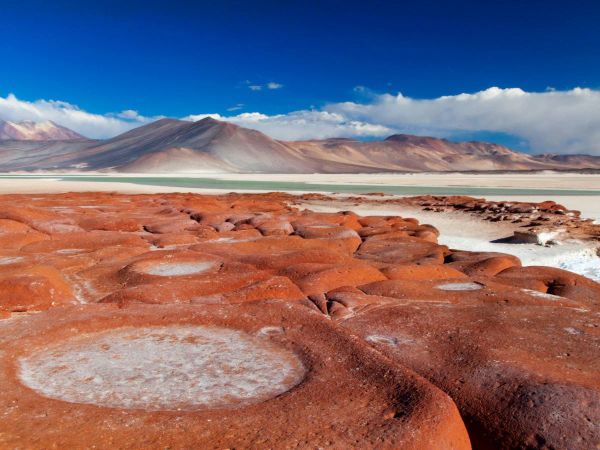
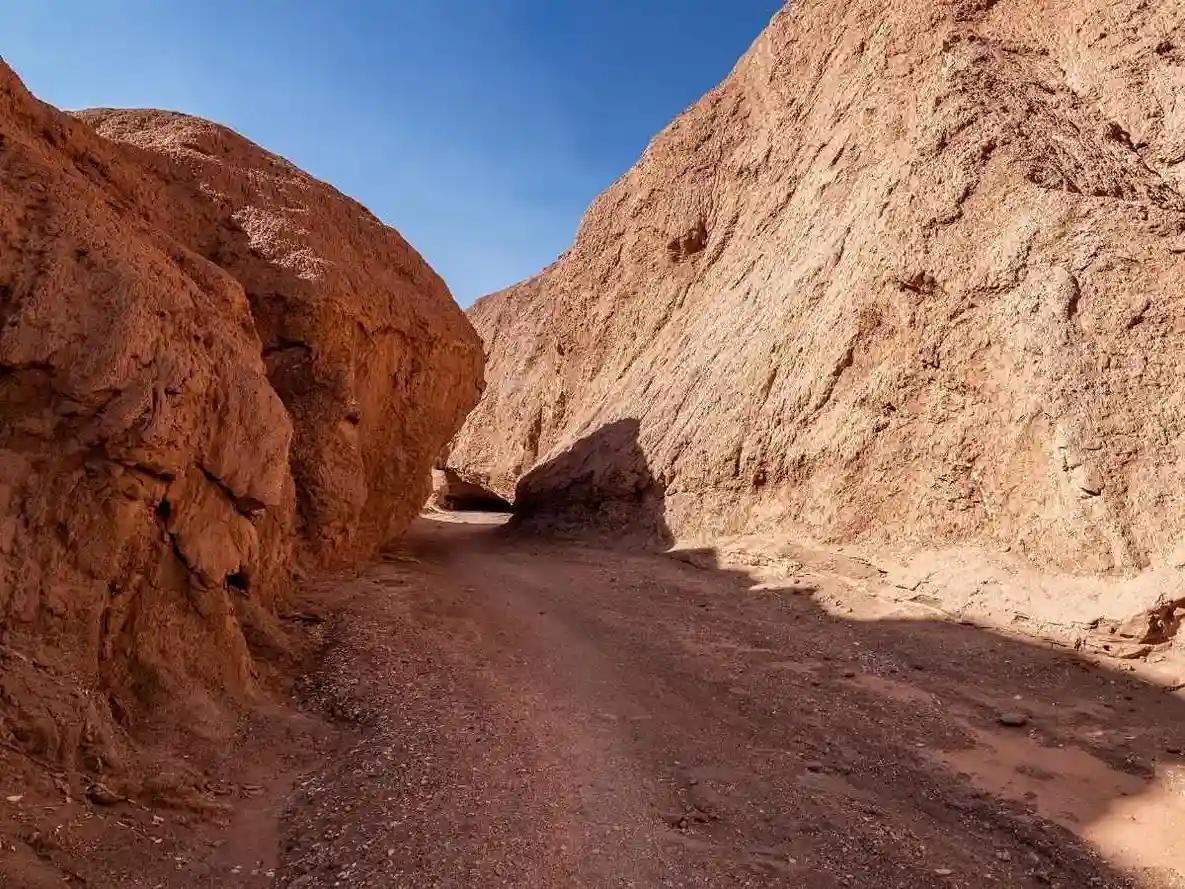
For some travellers, reaching the southern edge of Bolivia opens a natural question: what if you kept going? The Atacama Desert in northern Chile is one of the driest places on earth. San Pedro de Atacama, a small desert town in Chile, is the main base for exploring the region — geysers, coloured salt lakes, and volcanic peaks sit within easy reach of the town. The crossing from Bolivia into Chile is relatively straightforward, and San Pedro de Atacama works well as a natural extension for those with additional time.
Santiago, Chile's capital, sits in the country's long central valley and offers a very different energy to the rest of the trip — cosmopolitan, well-connected, and surrounded by vineyards and Andean foothills. It makes a strong endpoint for a longer South American journey, with good international flight connections.
The Bolivia Explorer — When You Want to Go Further
If researching Peru and Bolivia has left you wanting more of the continent, a longer itinerary that takes in Bolivia alongside Chile and Argentina gives you South America at a different scale. It asks for more time, but it delivers something different in variety and depth.
Conclusion
A Peru and Bolivia itinerary earns its reputation. Cusco, Machu Picchu, the uyuni salt flats, the adventure of the Inca Trail — very little in South America competes with what this route offers. But the best version of any trip is the one built around what you actually want, not just what ranks highest on a search page.
If you are looking for something more extensive, the 28-day Argentina, Chile and Bolivia Explorer combines the highlights of the Andes with Chilean Patagonia, the Atacama Desert, and the vineyards and cities of Argentina — creating a broader South America journey for travellers who want to see more in one seamless itinerary.
If South America keeps pulling you further south, it might be time to let it.