Laos is not a country that demands attention. It sits at the heart of Indochina, bordered by five countries, yet remains one of the most rewarding and least crowded destinations in all of South-East Asia. While much of South-East Asia has become increasingly commercialised, Laos has retained a slower and more authentic rhythm of life, Laos has remained something rare — a destination where the pace of daily life still belongs to the people who live it, where ancient Buddhist temples stand in genuine silence, and where the Mekong River carries you through landscapes that feel entirely untouched.
The best places to visit in Laos are not hard to find. But the places that stay with you longest often lie beyond the standard itinerary — require a little more than the standard itinerary. This Laos travel guide covers both: the destinations that have earned their reputation, and the places that most visitors never quite reach.
Why Laos Is Unlike Anywhere Else in Southeast Asia
- What Travel Guides Don't Always Say About Laos
Most travel guides to South-East Asia give Laos a chapter or two. They cover the UNESCO city, the adventure hub, the capital, and move on. In doing so, they miss most of the country. Laos is too layered, too diverse, and too quietly remarkable to be reduced to a short list of highlights. Understanding that is the starting point for any trip worth taking.
- A Country That Moves at Its Own Pace
Laos is both landlocked and deeply Buddhist, and those two characteristics shape much of the country’s culture and pace of life. The country has around 7 million people spread across a land of river valleys, jungle-covered mountains, and high plateaus. It has not followed the same path of rapid tourism development as its neighbours. There are no sprawling beach resorts or manufactured attractions here. What Laos offers instead is cultural depth, spiritual heritage, and a sense that time operates by different rules.
For independent travellers and those who find meaning in slow, considered journeys, this is precisely the point. Laos rewards people who are willing to stay a little longer, walk a little further, and pay attention to what they find. The experience of genuine cultural immersion here is not something that has to be engineered. It is simply how the country works.
- North, South, or Both — Where to Go in Laos Depends on How You Want to Travel
Laos divides broadly into two very different characters. The north is mountainous, forested, and home to a remarkable diversity of ethnic communities. Travel here feels more immersive, shaped by long river journeys, village treks through protected jungle, and mornings in highland markets where few foreign faces appear. Central Laos offers a dramatic middle ground of karst peaks, adventure activities, and the iconic Mekong valley. The south opens out onto wider, flatter landscapes, ancient Khmer heritage, vast coffee-growing plateaus, and the extraordinary river delta where the Mekong spreads across a width of 14 kilometres.
The two halves complement each other well, and A complete understanding of Laos requires experiencing both regions. Most travellers arrive via Bangkok or through one of the regional hubs served by direct international flights, with Vientiane and Luang Prabang the two main entry points. The best time to visit is between November and April, when the weather is dry and temperatures are comfortable for exploring.
Popular Places to Visit in Laos — Where Every Trip Should Begin
- Vientiane — A Capital City of Temples and Colonial Calm
Vientiane is one of the most understated capitals in South-East Asia. It is a city of wide, tree-lined boulevards, faded French colonial architecture, and riverside cafés where people sit for hours without any particular urgency. It is, by most measures, one of the quietest capitals in the world, and that quality is not a flaw. It is the thing that makes it memorable.
The city holds several of Laos's most important Buddhist temples. Pha That Luang is the national symbol — a towering golden stupa said to contain a relic of the Buddha, surrounded by gardens and approached along a broad ceremonial avenue. Wat Si Saket, the oldest surviving temple in Vientiane, houses thousands of small Buddha images in alcoves along its cloister walls. Wat Si Muang is the most spiritually active of the city's temples, always busy with worshippers leaving offerings and lighting incense. Morning markets, traditional coffee stops, and a sunset walk along the Mekong complete any visit here.
One stop that sets Vientiane apart from other South-East Asian capitals is the COPE Visitor Centre — a thoughtful and quietly affecting exhibition about the consequences of unexploded ordnance left from the Secret War of 1964 to 1973, and the ongoing work to make communities safe. It adds a layer of understanding to Laos that no temple visit alone can provide.
- Luang Prabang — A Guide to the Spiritual Heart of Laos
Luang Prabang is the destination most closely associated with Laos, and deservedly so. The city sits at the confluence of the Mekong and Nam Khan rivers in the mountains of northern Laos, and its UNESCO World Heritage status reflects a place that has been genuinely preserved rather than merely restored. The streets are lined with golden-spired temples, colonial-era villas wrapped in bougainvillea, and an atmosphere of calm that feels immediately noticeable.
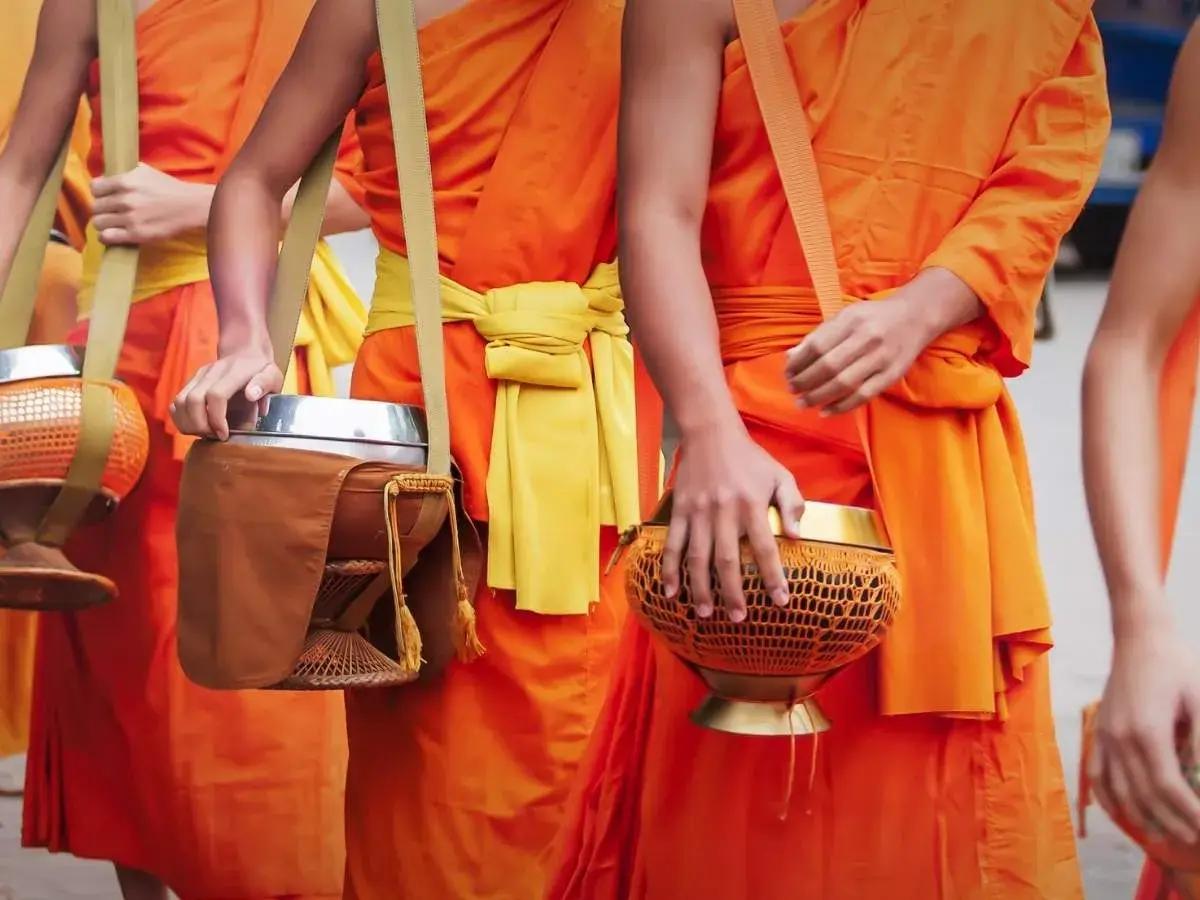
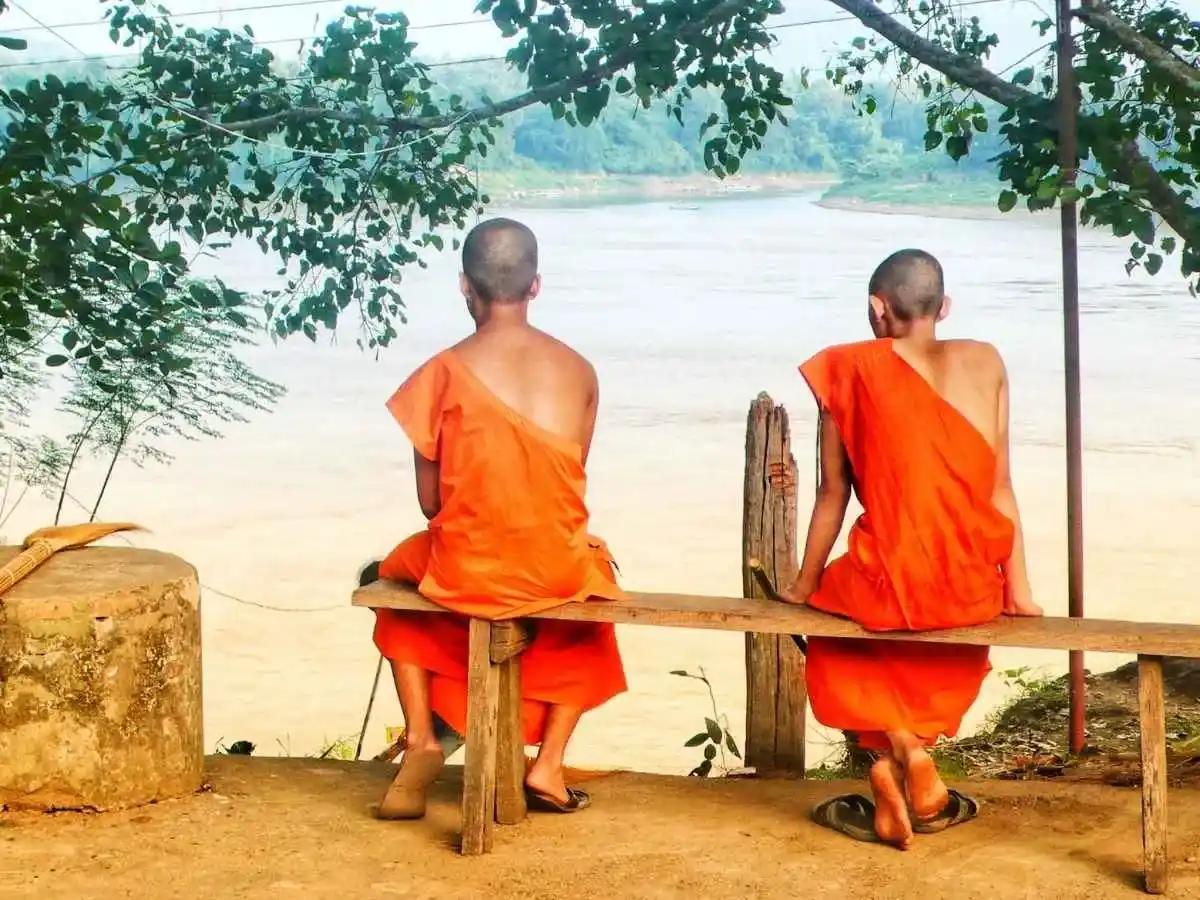
Among the best places to visit in Laos, Luang Prabang stands apart for the depth of its spiritual life. The Tak Bat alms-giving ceremony takes place at dawn each morning, when Buddhist monks move in silence through the streets collecting food from local residents. Wat Xieng Thong, built in 1560, is the finest temple in the city — its sweeping roof lines and intricate mosaic panels are extraordinary even by the standards of a city full of remarkable architecture.
The Pak Ou Caves, carved into a limestone cliff above the Mekong, contain thousands of Buddha statues left by pilgrims over centuries and are one of the most revered sacred sites in the country. The Kuang Si Waterfalls, 45 minutes from the city, are among the top attractions in all of Laos and deserve at least a full day — they are covered in detail further in this guide. Allow three to four nights in Luang Prabang — two is never quite enough. Our Secret Heart of Asia tour takes in the full depth of the north, with expert local guides and small groups of no more than twelve.
- Vang Vieng — Adventure and Karst Landscapes
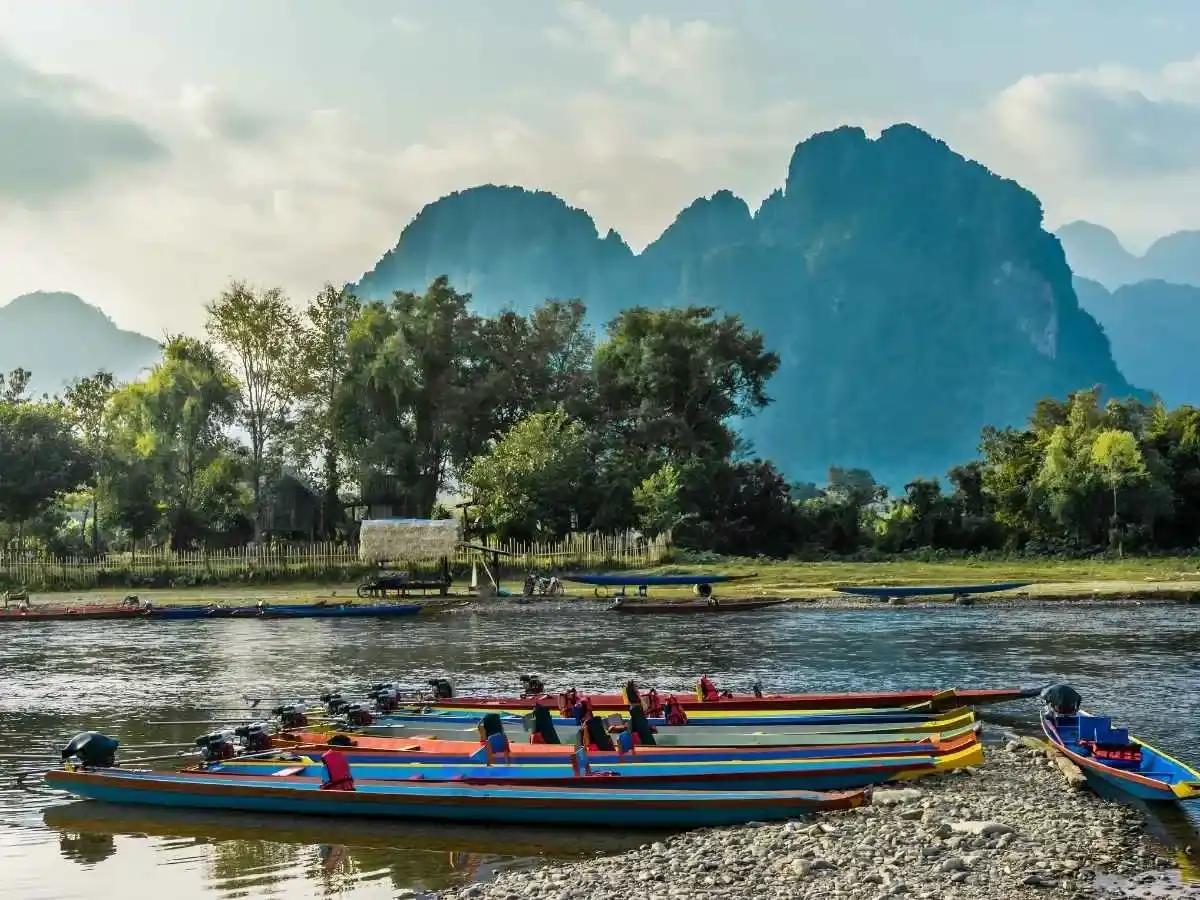
Vang Vieng is one of the best-known destinations in Laos, sitting in the heart of central Laos on the banks of the Nam Song River. The town has grown into one of the region's most popular destinations for outdoor activities, set against a dramatic backdrop of limestone karst peaks. Tubing on the river, exploring the surrounding blue lagoons — natural swimming holes set within jungle-covered hillsides — and hiking to viewpoints over the valley floor are the main draws. It is not a hidden gem, but as one of the most visually striking landscapes in Laos, the scenery alone justifies its reputation.
The Best Places to Go in Laos That Most Travellers Walk Past
- Mekong River Cruise Tours — When the Journey Is the Destination
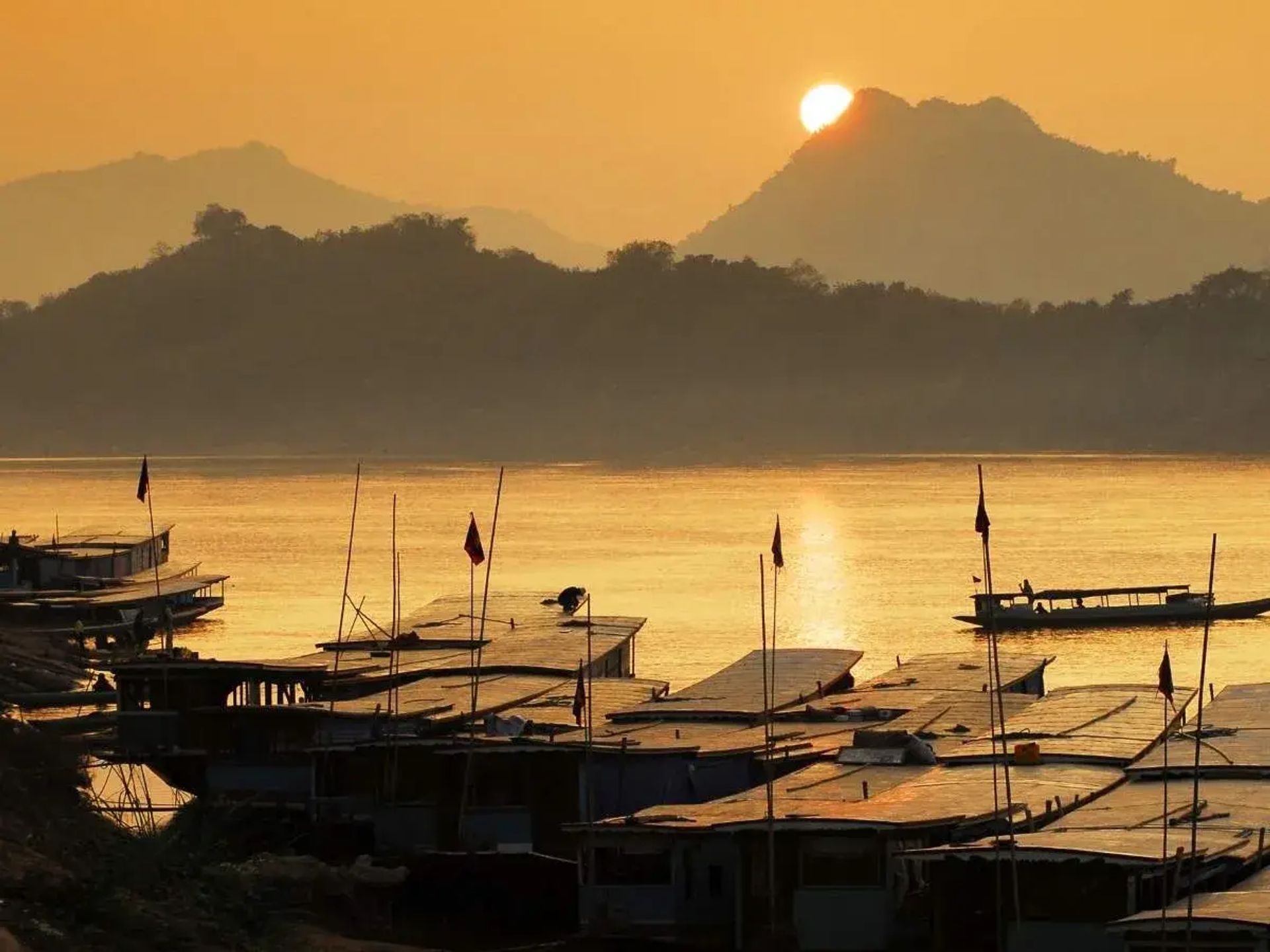
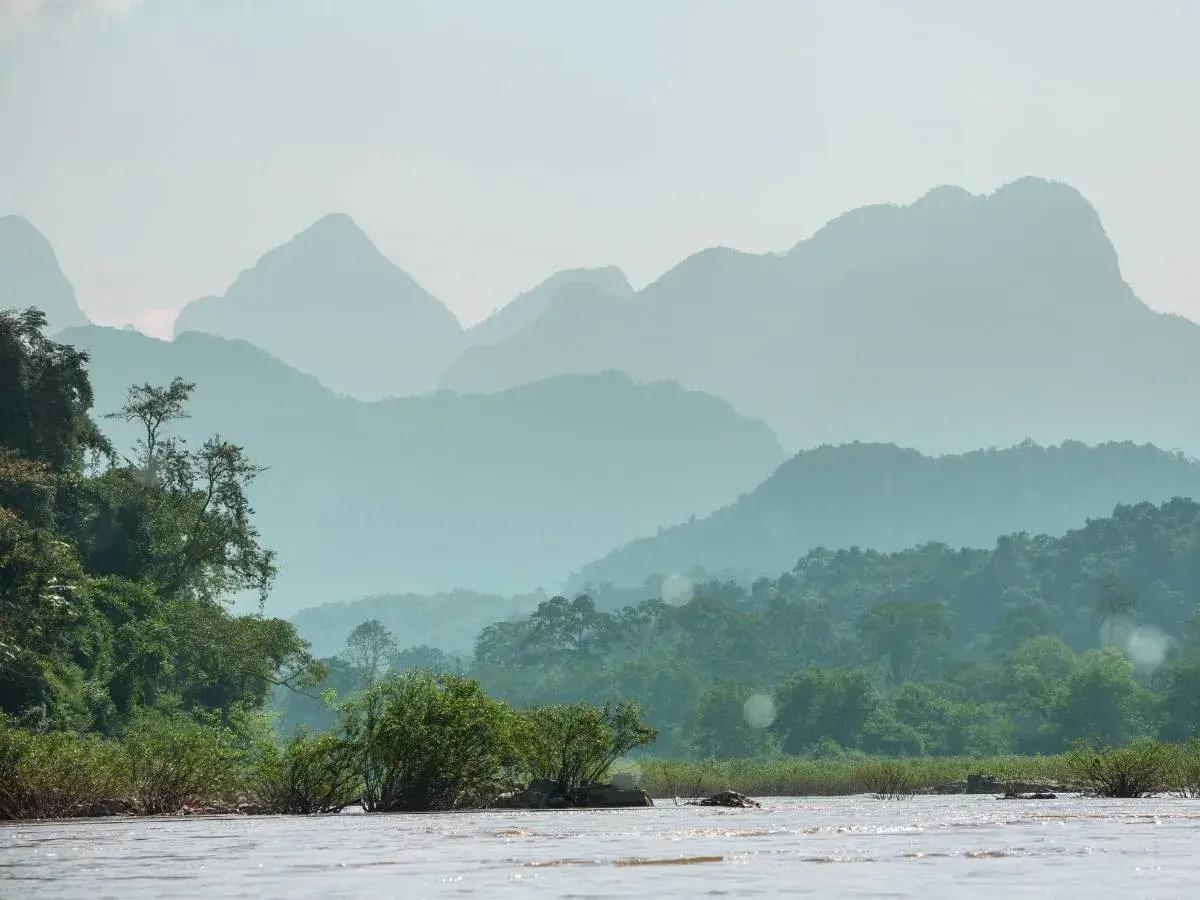
The two-day slow boat journey down the Mekong begins at Huay Xai, a small riverside town on the border with Thailand, and ends in Luang Prabang two days later. It is one of those travel experiences that people describe for years afterwards. The river here is wide and unhurried, cutting through forested hills and past isolated settlements where children wave from the banks. There is no schedule to keep and nowhere else to be, which is precisely the point.
Along the way, a stop at the Pak Ou Caves allows passengers to explore an ancient pilgrimage site before the final approach to Luang Prabang by water. Arriving into a city by river — watching its golden temple rooftops emerge through the mist — is a very different thing from arriving by road. It sets the tone for everything that follows.
- Nong Khiaw — Limestone Peaks and the Nam Ou River
Nong Khiaw sits on the banks of the Nam Ou River in northern Laos, surrounded by a landscape of near-vertical limestone cliffs that drop directly into the water. The village is small and the infrastructure is simple, but the setting is extraordinary. Trekking routes lead into the surrounding hills and to viewpoints that look out across a countryside of rice fields and forest with almost no sign of modern development. The Nam Xay viewpoint above the town is one of the most dramatic vistas in northern Laos — a panorama of river bends, cloud-wrapped peaks, and open valley floor that takes genuine effort to reach and is entirely worth it.
- The Bolaven Plateau — Coffee, Waterfalls, and Highland Life
The Bolaven Plateau rises to around 1,250 metres above sea level in southern Laos and is one of the country's most distinctive and undervisited landscapes. The combination of altitude, volcanic soil, and reliable rainfall makes it ideal for growing coffee, and Lao coffee culture here is serious and unhurried in equal measure. The Jhai Café in Paksong operates as a philanthropic enterprise supporting local farming communities, and the Mystic Mountain Coffee plantation offers an honest look at how the beans are grown, processed, and roasted by hand.
Between coffee stops, the plateau is home to some of Laos's most spectacular natural wonders. Tad Fan plunges more than 100 metres into a jungle gorge. Tad Yueng offers a quieter, more accessible cascade with natural swimming pools. A trek to the Dan Xinxay inactive volcano provides panoramic views across the highland landscape that very few visitors ever see.
Attractions in Laos That Reward the Genuinely Curious
- Kuang Si Waterfalls
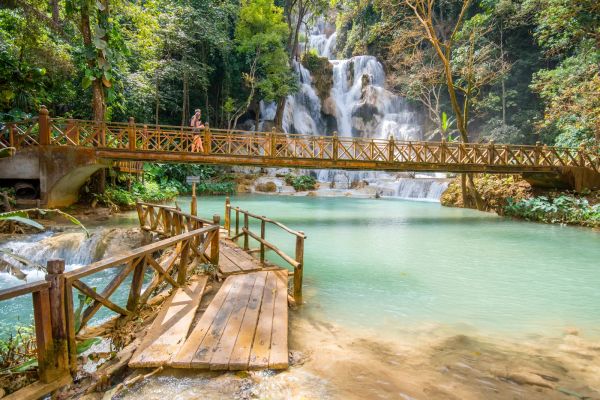
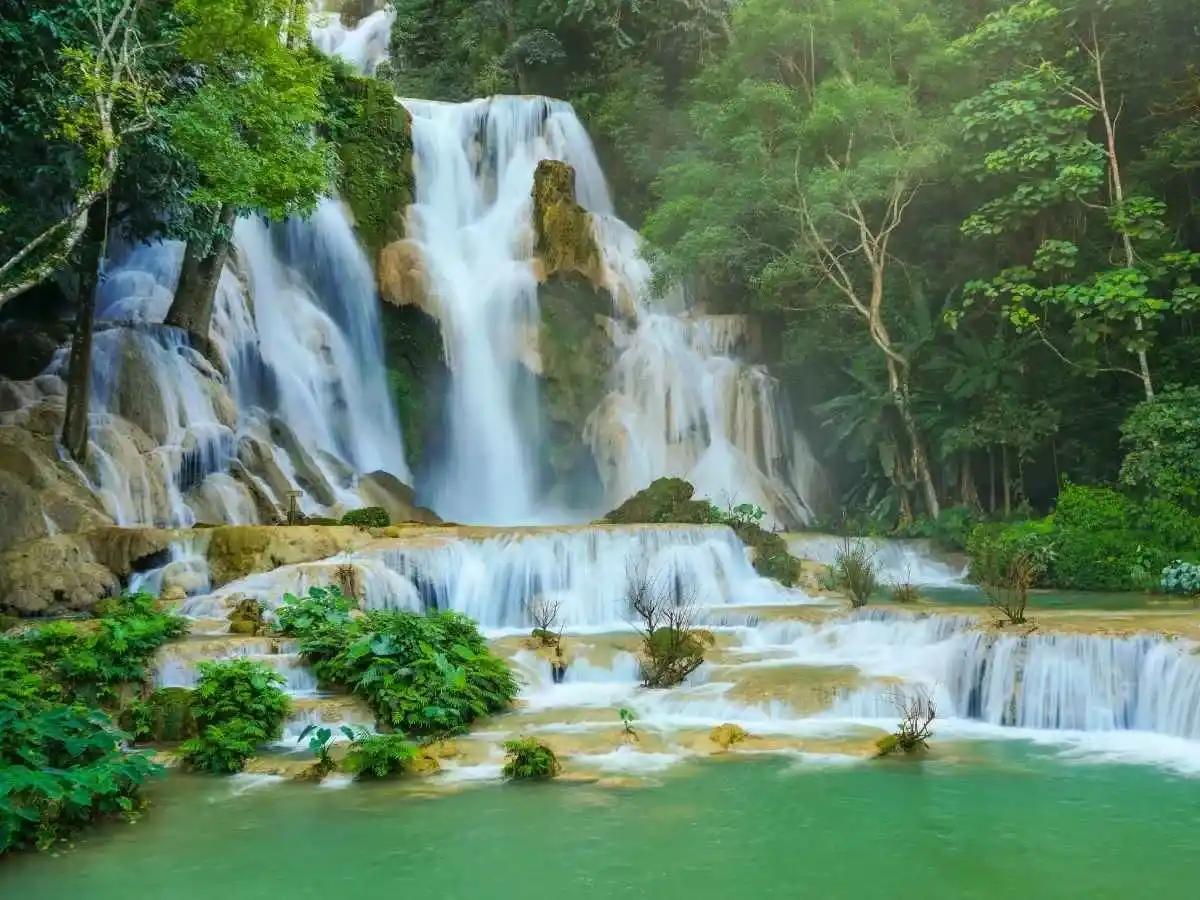
The waterfalls at Kuang Si sit approximately 45 minutes from Luang Prabang and are among the most celebrated natural attractions in the country. The falls cascade through a series of tiered pools whose colour — an almost implausible turquoise — comes from the limestone bedrock beneath and shifts with the light throughout the day. Visitors can swim in the lower pools, follow a trail through the forest to the top of the falls, and stop at the Sun Bear Rescue Centre on the approach road, where rescued bears are rehabilitated in a forested enclosure. Kuang Si is best visited early in the morning before the afternoon heat and crowds arrive. Allow a full day rather than a half — the setting rewards it.
- Si Phan Don and the 4000 Islands
Known in Laotian as Si Phan Don, the 4000 Islands are located in the far south where the Mekong widens dramatically before crossing into Cambodia. The river spreads to a width of 14 kilometres here, creating a maze of islands, inlets, and sandbars that shift with the seasons. Don Khone Island is the main base for most visitors, while the larger Don Khong Island offers a quieter alternative, with cycling routes through villages and open countryside that see very little tourist traffic. Both are reachable by a short boat crossing, and together they offer a travelling rhythm that is almost impossible to maintain anywhere else.
Nearby, Kon Phapheng Waterfall is the largest waterfall by volume in Asia. The scale of it — a wall of white water crashing across the full width of the river — is genuinely overwhelming. It is one of the most powerful natural attractions in Laos, and one of the least visited by travellers from outside the region.
- Luang Namtha and Phongsali — Gateways to Tribal Northern Laos
The far north of Laos — anchored by Luang Namtha near the borders with China and Myanmar, and extending to the remote province of Phongsali, which edges towards both China and Vietnam — is home to one of the most remarkable concentrations of ethnic diversity anywhere in South-East Asia. Phongsali is known for its ancient tea plantations and the Phu Noi and Akha communities who have cultivated the region for generations, though it remains among the least-visited corners of the country.
Luang Namtha itself is one of the best places to go in Laos for anyone interested in genuine cultural immersion. Village treks through Nam Ha National Park, led by local guides who know the forest and its people, take visitors through jungle trails to local villages where traditional weaving and bamboo paper-making are still practised daily. These are not staged demonstrations. They are glimpses into a way of life that continues largely on its own terms, and the encounters feel earned rather than arranged.
On the route south towards Luang Prabang, the village of Muang La is worth a stop. Set beside a river in the hills of Oudomxay province, it is best known for its natural hot spring — a quiet and restorative place that most passing travellers miss entirely.
- Wat Phou and Champasak — Ancient Khmer Heritage Near Pakse
Close to the gateway city of Pakse and beside the riverside town of Champasak in southern Laos, Wat Phou is a Khmer temple complex that predates Angkor in its origins, with construction dating to the 11th and 13th centuries. It was inscribed as a UNESCO World Heritage Site in 2001. The complex climbs a hillside above the Mekong, with stone causeways, ceremonial pools, and carved reliefs leading to a sanctuary that commands a remarkable view across the surrounding landscape.
What makes Wat Phou genuinely special, beyond its historical and architectural significance, is the near-total absence of crowds. This is a site of real weight and ancient history where it is entirely possible to sit in silence and absorb it fully. The contrast with other, more visited Khmer ruins in the region is striking, and the small riverside town of Champasak that anchors a visit here adds its own quiet charm. Those wishing to combine the ancient temples of southern Laos with a deeper journey into Cambodia can explore our Laos and Cambodia tour, which pairs Wat Phou with the full sweep of Khmer heritage across both countries.
Lao Culture Worth Travelling For
- Food That Deserves Far More Attention Than It Gets
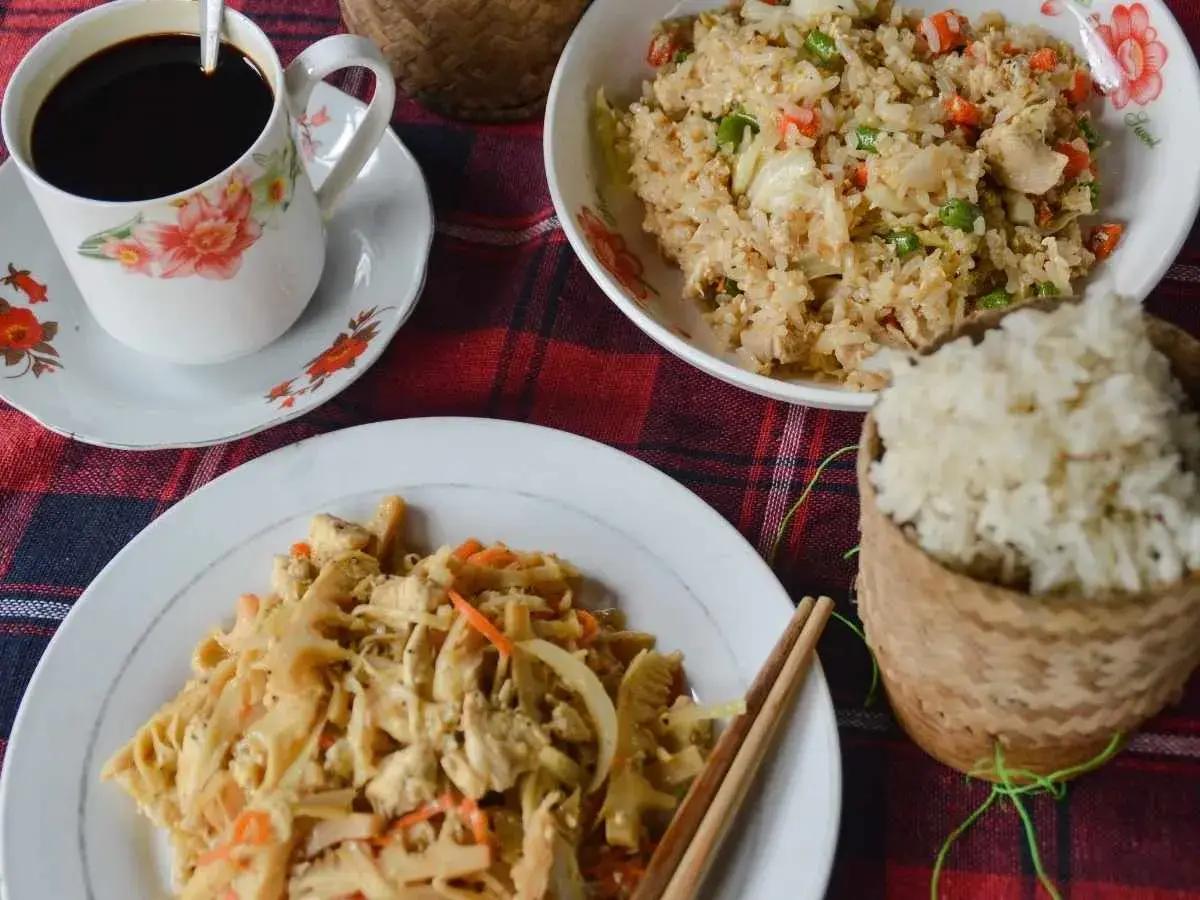
Lao cuisine is one of the most underrated in South-East Asia, and part of travelling well here is making time for it. Sticky rice is the foundation of almost every meal, eaten by hand and shared communally around a table. Laap — a salad of minced meat, fresh herbs, lime juice, and toasted rice powder — is the national dish in everything but name. Mok pa, fish steamed in banana leaf with lemongrass and galangal, is best eaten at a morning market where it has just come off the heat.
The market culture of Laos is one of its defining features. Morning markets are the social and culinary heart of every town, and an hour spent in one reveals more about daily life than any guided tour of the monuments.
- Festivals Worth Building a Trip Around
Timing a visit around a Lao festival transforms the experience entirely. Boun Pi Mai — the Lao New Year celebration in April — sees the whole country erupt in water fights, processions, and communal feasting. It is one of the most joyful events in South-East Asia and a genuinely memorable thing to be part of.
That Luang Festival, held in November at Vientiane's great golden stupa, draws thousands of pilgrims and is accompanied by a week of cultural performances, candlelit processions, and market activity. Boat racing festivals along the Mekong, typically held in October and November, bring communities together in a spectacle of colour and friendly competition that has nothing to do with tourism and everything to do with living tradition.
A Country That Rewards Those Who Look Closely
Laos does not compete for your attention. It does not present itself with billboards or bucket lists. What it offers instead is something harder to find and far more lasting — the feeling of moving through a country that is still, in the best possible way, itself. From the misty hills of Luang Namtha to the river silence of Si Phan Don, from the golden spires of Luang Prabang to the ancient stones of Wat Phou, the country carries a weight and a beauty that a rushed itinerary will never fully reveal.
The best places to visit in Laos are not always the loudest ones. They are the ones that take a little more time, a little more intention, and the right kind of guide. All of our Laos small group tours travel with a maximum of twelve people, led by guides who know the country beyond its highlights.
If you are ready to discover the real Laos, visit the Undiscovered Destinations website to start building a journey designed entirely around how you like to travel.