AITO 4.9 Excellent Rating
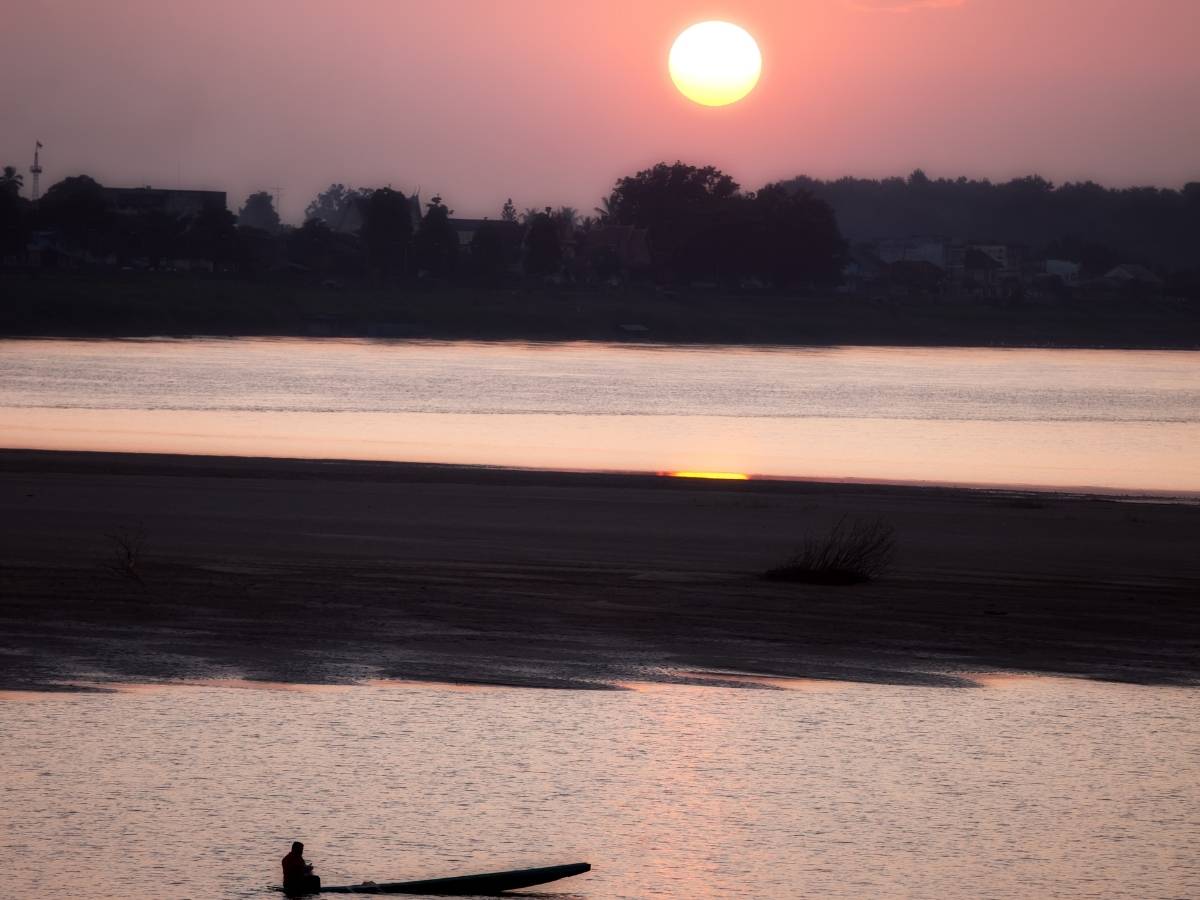

Vientiane is Laos’ quietly captivating capital — a compact, walkable city of golden Buddhist temples, French colonial streets, and one of the finest Mekong sunsets in South East Asia. Despite sitting in Luang Prabang’s shadow, the best things to do in Vientiane reward slow, curious travel: sacred stupas, living markets, humbling history at the COPE Centre, and evenings that end perfectly beside the river. This guide covers all of it.
No travel guide to Laos gives Vientiane quite the billing it deserves. Vientiane, Laos’ quietly captivating capital, sits in the shadow of Luang Prabang’s gilded reputation, and for many travellers it is little more than a transit point — somewhere to pass through on the way to somewhere more obviously spectacular. If you are planning a first trip and wondering what Laos actually offers beyond its famous northern city, our broader look at the country’s highlights is a useful place to start before you dive into the capital. That is a mistake worth correcting.
Vientiane is a city of easy charms and slow pleasures. It sits on a wide bend of the Mekong River, somewhere between a big town and a diminutive city, and it moves at a pace entirely its own. The novelist Graham Greene would have recognised it immediately: a place where the afternoons stretch out without apology and where the weight of history sits just beneath the surface of everyday life. Crumbling French mansions lean into bougainvillea. Monks in saffron robes pass noodle stalls that have served the same dishes for generations. The street grid is compact and walkable, and the friendly locals who inhabit it give the city a warmth that is immediately apparent. As the afternoon cools and the sky turns copper over the water, there is nowhere in South East Asia quite like it.
The Vientiane attractions that matter most are not always the ones that appear on the standard tourist circuit. Some of the best experiences here require only time and a willingness to wander. This guide covers both the unmissable and the overlooked — the Buddhist temples, the food, the history, the colonial streets and the riverside moment that will stay with you longer than any photograph.
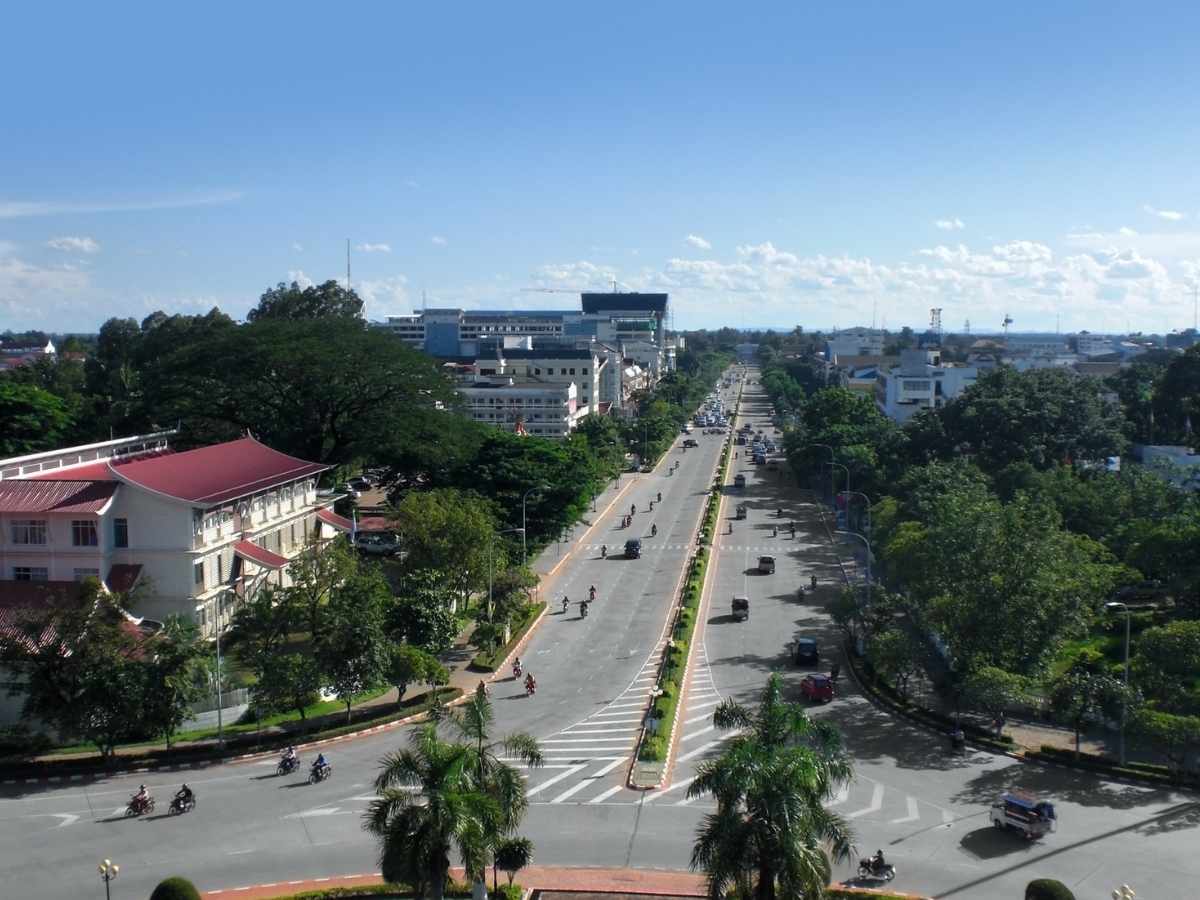
Vientiane: One of Asia’s Most Underestimated Capitals
Before getting into where to go and what to do, it is worth saying something about what Vientiane actually is. By the standards of most capital cities in Asia, it is remarkably small. The central area is compact enough to walk across in under an hour, and the pace of daily life here has more in common with a provincial river town than with a national capital.
This is not a criticism. It is the quality that makes Vientiane worth spending time in.
Laos sits at the heart of mainland South East Asia, flanked by Vietnam to the east, Cambodia to the south and Thailand to the west. Of the three neighbouring capitals — Hanoi, Phnom Penh and Bangkok — none is quieter or more approachable than Vientiane. The city grew under French colonial rule during the era of French Indochina, and the influence of that period remains deeply visible — in the colonial architecture, in the food and in the easy rhythm of the streets. Lao culture has absorbed that influence and made it entirely its own.
Since independence, and through the decades that followed, Vientiane has modernised at its own speed, absorbing change without being consumed by it. The result is a city with genuine character: not a museum piece, not a boomtown, but something in between that feels authentically itself. The Buddhist temples that rise above the rooftops are not relics. They are living places of worship, visited daily by people for whom faith is woven into the ordinary fabric of life.
Most of the things worth doing here are within easy reach of the centre. A tuk tuk, a bicycle or a pair of comfortable walking shoes will get you almost everywhere. There is no need to rush, and the city will reward you more generously the slower you allow yourself to go.
Vientiane’s Top Attractions — The Temple Circuit
No part of Vientiane rewards time more than its Buddhist temples. Spread across the compact city centre and its surrounding neighbourhoods, the wats here represent the top attractions of any visit and form the clearest expression of Vientiane’s spiritual and cultural identity.
Wat That Luang — The Sacred Golden Stupa
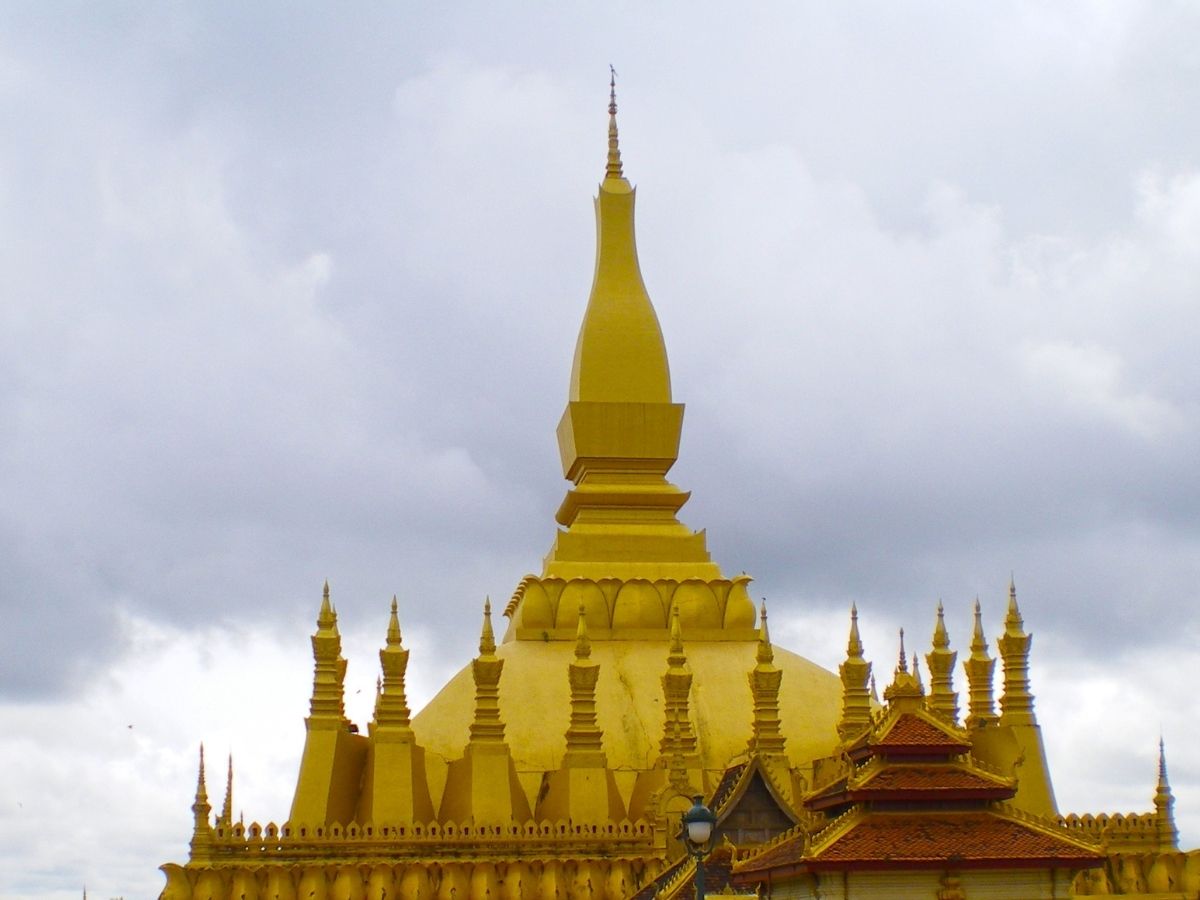
No visit to Vientiane is complete without time at Wat That Luang. The great golden stupa rises from the northern edge of the city and is, without question, the most sacred structure in all of Laos. Its original form dates from the third century, though the building was reconstructed several times over the following centuries and restored in the nineteenth century after a period of near-total ruin.
What strikes you first is the quality of the silence. Despite its status as both a site of deep spiritual significance and the national symbol of Laos — it appears on the national seal — Wat That Luang is rarely crowded with tourists. The surrounding complex includes a large open courtyard, a cloister wall and the stupa itself, which rises more than forty metres above the ground and is covered in gold paint that catches the afternoon sun with astonishing intensity.
Visiting in the early morning or late afternoon gives you the best of the light and the best of the atmosphere. Local people come to the temple throughout the day to pray and make offerings, and spending time here without hurrying is one of the finest experiences Vientiane has to offer. Allow at least an hour and resist the urge to move quickly.
Wat Sisaket and Wat Ho Pha Kheo — A Temple and Museum Worth the Visit
Wat Sisaket is the oldest surviving temple in Vientiane, and what makes it unlike anything else in the city are the thousands of tiny Buddha images set into niches along the cloister walls. In varying sizes and states of preservation, their cumulative effect is intimate and quietly overwhelming. The images range from delicate seated figures in terracotta to larger gilded forms, all arranged in the cool dimness of the gallery in a way that rewards slow looking rather than hurried photography. This is Lao cultural heritage at its most immediate.
Across the street, Wat Ho Pha Kheo served as the royal chapel of the Lao monarchy and once housed the Emerald Buddha — a figure of extraordinary religious significance that was taken to Bangkok centuries ago and remains there today. The building now functions as a museum of religious art and antiquities, offering an excellent introduction to the spiritual and artistic history of Laos. The Presidential Palace stands nearby, its colonnaded white facade visible above the trees — more understated in scale than the grand palace complexes found in Bangkok or Phnom Penh, but quietly imposing in its own right. Both sites can be seen comfortably in a single morning and together make a strong argument for Vientiane as a city of real depth.
Wat Si Muang — Where the Locals Come to Pray
Of all the Vientiane attractions, visiting Wat Si Muang is perhaps the experience that feels least curated for outsiders. It is an active place of worship where local people come daily to make offerings, light incense and tie wishes to the posts and pillars of the inner courtyard. The energy here is different from the more prominent temples on the tourist circuit — less formal, less distanced from the life of the place, and with a sense that the rituals happening around you are part of everyday Vientiane rather than being performed for an audience.
The temple is believed to be built on the site where a young woman sacrificed herself to protect the city’s foundations. The resident spirit is said to grant wishes, and the offerings left by devotees reflect the full breadth of human hope. This is a rare place to observe Lao culture and Buddhist daily life as they genuinely exist. If you visit only one temple that takes you off the beaten track, make it this one. For a wider sense of what these spiritual traditions look like across the country, our guide to travelling through Laos as a whole adds useful context.
The French Colonial Character of Vientiane
The Streets Worth Wandering
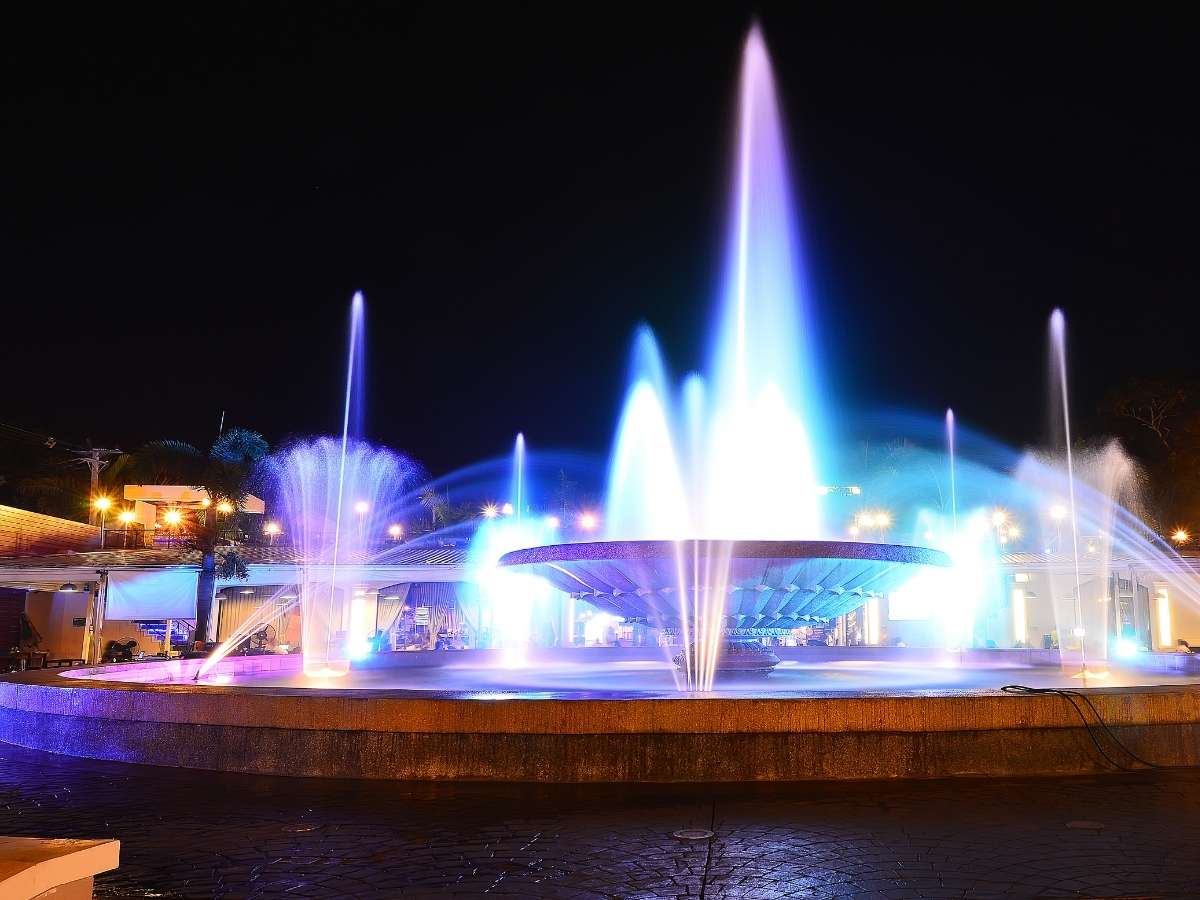
One of Vientiane’s defining qualities is the physical evidence of its French colonial past. Walking the streets around the Nam Phu fountain and along Samsenthai and Setthathirat roads, you could be forgiven for imagining yourself in a quieter, warmer corner of provincial Paris. The colonial architecture here ranges from grandly crumbling mansions to modest shophouses with shuttered windows and peeling plasterwork, all set behind wide verandas draped in bougainvillea. Some buildings have been restored and converted into hotels, restaurants or government offices. Others lean gently into disrepair in a way that seems almost deliberate — too characterful to knock down, too expensive to fix.
The Lao Textile Museum, which documents the remarkable weaving traditions of Laos’ many ethnic communities, is another worthwhile stop in this part of the city for those with an interest in traditional craft and material culture. The collection offers a thread of context that runs through much of what you encounter elsewhere in Vientiane.
Walking these streets in the cooler hours of the morning is one of the uncomplicated pleasures of the city. The light is soft, the pace is easy and the combination of French facades, Buddhist temples and Lao street life creates an atmosphere that is genuinely unlike anything else in South East Asia. The Nam Phu fountain area is particularly worth lingering around — a small square surrounded by restaurants and cafes where you can sit with a coffee and watch the morning go about its business.
A Food Scene Shaped by Two Cultures
The French left behind more than architecture. Vientiane has some of the best bread in South East Asia — proper baguettes, slightly chewy, served warm from bakeries that have been operating the same way for decades. The coffee is strong and takes its character from French café culture rather than the lighter brews found elsewhere in the region. Several of the best restaurants in the city are set inside restored colonial buildings, where you eat traditional Lao cuisine on wide verandas or in high-ceilinged dining rooms under slow-moving ceiling fans.
This Lao-French culinary identity is found nowhere else in the region. Whether you sit down for a formal dinner in a colonial villa or pick up a warm baguette stuffed with herbs and pâté from a street stall — the Lao version known locally as khao jii — the French influence is inescapable and entirely welcome.
The Lao Food Scene — Start at the Morning Market
A Morning at the Market
The best way to understand a city is to go where its people shop for food. In Vientiane, that means starting the day early at a local fresh market. The morning markets here are vivid, fragrant and full of produce that will be unfamiliar to most Western visitors — bundles of lemongrass, fresh galangal, river weeds dried on flat boards in the sun, whole fish on beds of ice and sticky rice steaming in bamboo baskets. The sensory richness of these places is one of the defining experiences of being in Laos, and it is almost entirely absent from the tourist circuit.
Going with a local guide who can name what you are looking at and explain how it is cooked transforms the experience from something merely visual into a genuine moment of cultural immersion. You are not looking at curiosities. Our first-timer’s guide to Laos covers exactly this kind of practical advice — how to approach markets, what to expect on the ground and how to make the most of your time. You are looking at somebody’s breakfast, somebody’s dinner, the raw materials of a cuisine that has fed this city for centuries. That shift in perspective is worth seeking out and impossible to replicate in a restaurant.
Dishes Worth Seeking Out
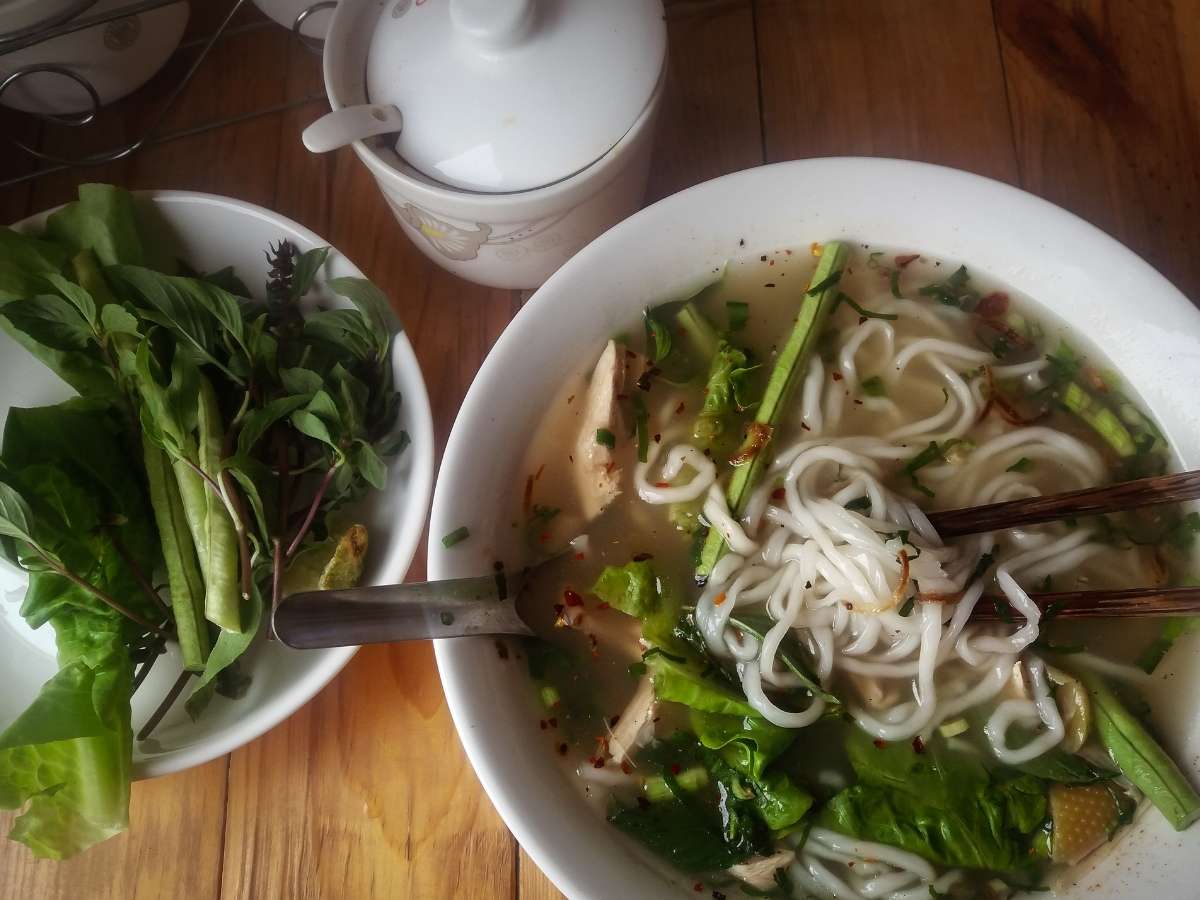
Kao Piak is the great comfort food of Laos — a rich noodle soup made with a thick, starchy broth that is warming and deeply satisfying in a way that lighter soups never quite manage. It is eaten for breakfast, for lunch and sometimes late at night, and the versions found at small family-run stalls are invariably better than those in formal restaurants.
Papaya salad — tam mak hoong in Lao — is spicier and more complex than the Thai version most travellers will have encountered elsewhere. The dressing is sharper, the chilli more assertive, and there is often a deep funkiness from fermented fish paste that takes some adjustment but rewards persistence. Eaten with sticky rice, which you roll into small balls and dip into the bowl, it becomes one of those meals you find yourself thinking about long after the trip has ended.
Lao coffee is a ritual as much as a drink. Dark and strong, often served with a layer of sweetened condensed milk at the bottom of a glass of ice, it is consumed slowly, in the shade, preferably near the river. Street food in Vientiane is a serious expression of Lao culture and culinary tradition, and it is worth seeking out on foot rather than retreating to the nearest international restaurant.
The COPE Visitor Centre — History That Demands Attention
Laos is the most heavily bombed country per capita in history. During the Secret War in South East Asia, the country was subjected to an extraordinary and largely undeclared campaign of aerial bombardment that continued for years. A significant proportion of the ordnance dropped did not detonate at the time of impact, and unexploded remnants continue to cause casualties and shape daily life across large areas of the country to this day. The Mines Advisory Group provides further context on the ongoing clearance work being carried out across Laos.
The COPE Visitor Centre in Vientiane was established to support survivors of unexploded ordnance injuries. The organisation provides prosthetics, physiotherapy and practical rehabilitation support to people whose lives have been altered by a conflict that ended before many of them were born. The visitor centre tells this story through film, photography and personal testimony, and it does so with clarity and humanity rather than sensationalism.
Allow at least an hour. Entry is free, though donations directly support the charity’s work and are warmly received. Do not skip this in favour of a third temple visit. The COPE Visitor Centre is not an optional add-on to a Vientiane itinerary. It is one of the essential reasons to come here.
The Laos National Museum — History and Heritage in Context
The Laos National Museum, located near the city centre, offers a broad overview of the country’s history from prehistoric times through to the modern era. The collection covers Laos’ ancient kingdoms, its colonial period under France and the events of the twentieth century that shaped the country as it exists today. Exhibits include archaeological finds, ceremonial objects, traditional dress representing the many ethnic communities of Laos and material relating to the country’s complex recent history.
The Laos National Museum is a useful complement to the temple circuit. Where the wats offer insight into the spiritual and artistic life of Laos, the museum situates that culture within a wider historical narrative. It is informative and worth an hour of any visitor’s time — particularly for those approaching Laos without much prior knowledge of the country’s story.
Patuxai Victory Monument — Vientiane’s Arc de Triomphe
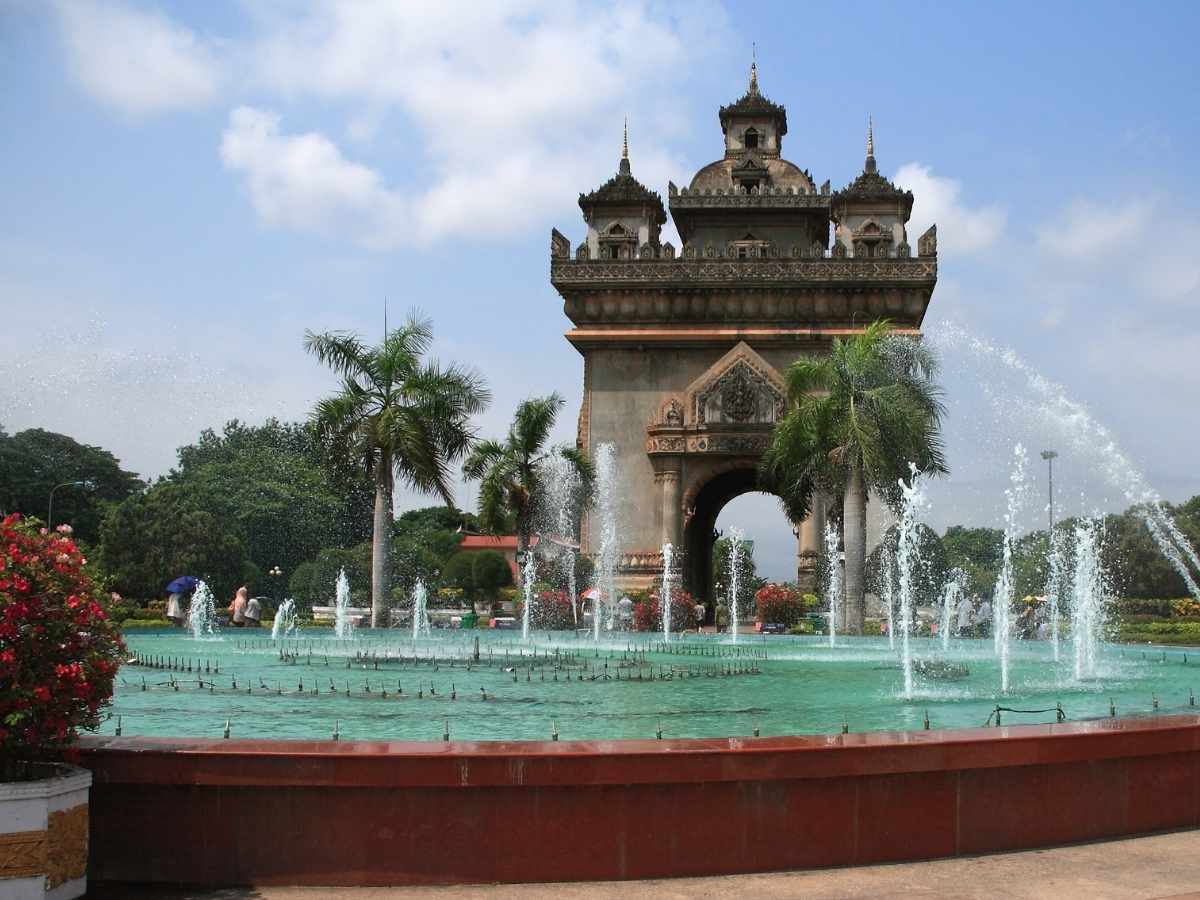
Standing at the end of Lane Xang Avenue, the Patuxai Victory Monument is Vientiane’s answer to the Arc de Triomphe. Built in the 1960s to commemorate those who died in the struggle for independence from France, the Patuxai Victory Monument is a substantial structure — imposing from the street and surprisingly detailed on closer inspection, its surfaces covered in traditional Lao decorative motifs that sit somewhat incongruously alongside its obviously European form.
The monument was famously constructed using concrete donated by the United States government, which had originally been intended for the construction of a new airport runway. The Lao people have never quite let this irony go, and the monument carries a local nickname that translates, with characteristic understatement, as the vertical runway.
Climbing to the upper levels costs a small entrance fee and is worth it for the views across Lane Xang Avenue and the surrounding city. From this height, the low-rise, tree-shaded scale of Vientiane becomes fully apparent, and the Buddhist temples scattered below take on a different kind of significance when seen from above.
Buddha Park — A Journey Worth Making
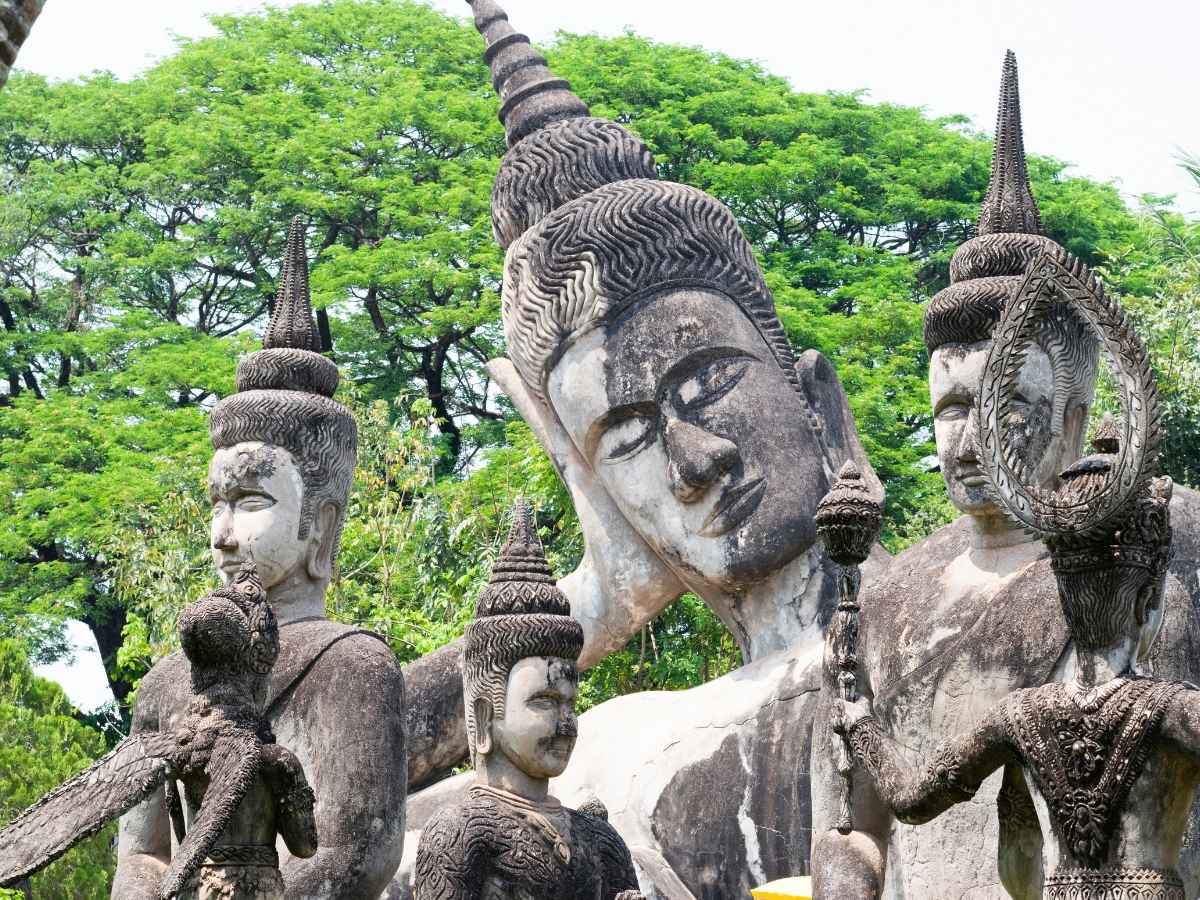
Around twenty-five kilometres from the city centre, Buddha Park — known locally as Xieng Khuan, meaning Spirit City — is one of the most unusual sights in South East Asia. Created in 1958 by the mystic monk Luang Pu Bunleua Sulilat, the park contains over two hundred Buddha statues and Hindu figures arranged across an open riverside setting in configurations that are by turns serene, surreal and occasionally unsettling. Drawing on both Buddhism and Hinduism, the collection reflects the syncretism of Luang Pu’s own spiritual philosophy, which blended these two great traditions into something entirely personal.
The largest of the Buddha statues is a giant reclining figure of considerable scale, its expression one of calm detachment that seems at odds with the theatrical size of the form itself. Elsewhere, enormous seated figures and multi-armed Hindu deities emerge from the trees without warning. A large pumpkin-shaped structure near the entrance can be climbed through three floors — each representing a different realm of existence — with views across the Mekong from the top that are unexpectedly beautiful.
The journey out to Buddha Park is part of the experience. A tuk tuk along the riverside road in the early morning, when the air is still cool and the river reflects the sky, is one of the more pleasant half-hours available in Laos. Allow a full morning and arrive before the midday heat makes the open grounds uncomfortable.
Vientiane Nightlife — Evenings Along the River
Vientiane nightlife is not what you will find in Bangkok or Ho Chi Minh City, and that is entirely the point. Vientiane at night is a quieter, more local affair — and considerably more pleasant for it.
The evening hours here are best spent along the Mekong riverfront, where the promenade shifts character as the sun goes down. Food stalls open along the water’s edge, grilling meat over charcoal and ladling soup into bowls for the steady stream of people who gather here each evening. The smell of lemongrass and smoke drifts across the water and plastic chairs fill steadily with families, couples and travellers who have worked out that this is a better evening than anything happening indoors.
For those who prefer a sit-down setting, the streets around Setthathirat road and the Nam Phu fountain area offer a good selection of bars and restaurants, many of them in restored colonial buildings where you can eat and drink in the warm evening air. Well-known hotels such as the Crowne Plaza Vientiane also provide comfortable options for an evening drink or dinner in more formal surroundings. The pace never picks up to anything approaching frenetic, but that is precisely the appeal of a Vientiane evening.
Sunset on the Mekong — Where Laos Meets Thailand
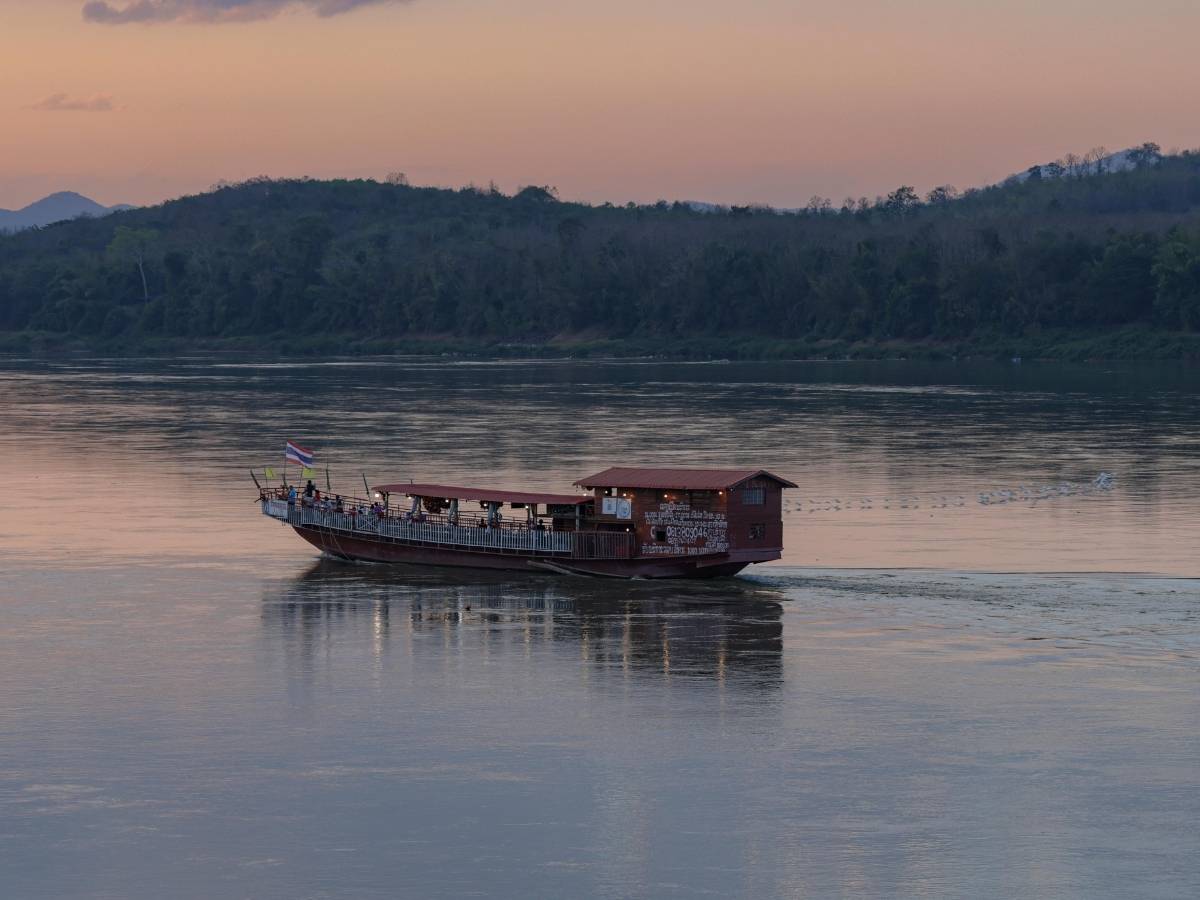
Everything in Vientiane leads to this. In the late afternoon, when the worst of the heat has passed and the light on the river softens towards gold, the riverside promenade fills slowly with local people — families with children, elderly couples walking without urgency, friendly locals sitting on the low wall with their feet dangling towards the water.
The ritual is simple, and it is the same every evening. Find a seat facing the water. Order a cold Beer Lao. Watch the sun drop behind the line of trees on the far bank. The Mekong is immense here — wide, brown and slow-moving, carrying the weight of the continent’s interior down towards the sea. On the other side of the river, Thailand is visible as a low green line, close enough to feel like a neighbourly presence but far enough away to remind you of where you are and why it matters.
Vientiane’s riverside promenade is not grand in the way that the riverfronts of larger Asian capitals are grand. There is no skyline competing for attention, no spectacle, no architecture asserting itself. What there is instead is simplicity — water, light, a cold drink and enough time to let the day finish properly. Stay for the first hour of darkness, when the evening market along the promenade begins to come alive. This is Vientiane at its most itself. Make time for it.
Trip Planning — Your Options for Touring Vientiane
A few practical tips before you go. Most itineraries allow one to two days in Vientiane, and while it is possible to see the key sights in a single day in Vientiane, two full days is closer to ideal for a first Laos trip. A first day might take in the temple circuit — Wat That Luang, Wat Sisaket and Wat Ho Pha Kheo in the morning, Wat Si Muang and the COPE Visitor Centre in the afternoon, with the riverside at sunset. A second day can move at a slower pace: a morning market visit and a long breakfast, the Laos National Museum, an afternoon at Buddha Park and a final evening along the Mekong.
For those who prefer structure, guided Vientiane tours are available as half-day and full-day options and are a good way to cover the key attractions with local context. Our Secret Heart of Asia small group tour covers Vientiane in depth alongside the country’s wider highlights — a good option for those who want guided knowledge without losing the flexibility to linger.
Vientiane is also a natural gateway for broader exploration of Laos. Vang Vieng, set among dramatic karst limestone scenery along the Nam Song River, is around three to four hours north and is a popular next stop for those travelling onward to Luang Prabang. Travellers extending their Laos trip further afield will find connections onward to Cambodia, Vietnam and Thailand all readily accessible from Vientiane’s international airport. Those combining Laos with a neighbouring country may want to look at our Laos and Cambodia together itinerary, which pairs the two countries into a single, coherent journey.
Vientiane — An Unmissable Stop in Southeast Asia
Vientiane will not overwhelm you. It will not compete with the grandeur of Angkor in Cambodia or the golden glow of Luang Prabang. But that is precisely the point. This is a city that asks you to slow down — to walk without a fixed destination, to eat without a reservation, to sit beside the Mekong as the light changes and let the afternoon become evening without apology.
The attractions are genuinely rewarding, each one different in atmosphere and meaning. The food is extraordinary — rooted in Lao culture, shaped by French influence and available on every corner in some form. The history, particularly at the COPE Visitor Centre and the Laos National Museum, is important and humbling and deserves more than a passing visit. And the French colonial character — crumbling, bougainvillea-draped and entirely its own — gives Vientiane a personality found nowhere else in Asia.
Come with patience and curiosity, and this quiet capital will give you far more than you expect.
Ready to experience Vientiane at its best? Discover small-group tours to Laos with Undiscovered Destinations and uncover a city — and a country — that will stay with you long after you leave.