
There are countries that fill a page in a travel guide, and there are countries that fill your imagination long after you have left. Mongolia is firmly the latter. These facts about Mongolia are the kind that tend to stop people mid-conversation — a sovereign state sitting at the crossroads of East Asia and Central Asia, covering a territory larger than Western Europe and home to fewer than four million people, where a nomadic lifestyle stretches back thousands of years and golden eagles answer to a human whistle. This article covers the geography, history, culture, and wildlife that make Mongolia one of the world's most remarkable destinations, and the facts that explain why travellers who visit rarely come back unchanged.
What Is Mongolia Famous For?
Ask most people what Mongolia is famous for and Genghis Khan will be the first answer. It is a reasonable one. In 1206, Temüjin united the scattered Mongol tribes and took the title of Genghis Khan, meaning "universal ruler." The ethnic Mongols he led had long been a nomadic people rooted in the steppe, and the empire he built on centuries of horsemanship and discipline grew into the largest contiguous land empire in history, stretching at its peak across 24 million square kilometres, from the Pacific coast of China to the borders of Eastern Europe.
But to reduce Mongolia to its most famous son is to miss most of the story. Mongolia is also famous for its extraordinary emptiness — one of the most sparsely populated countries on earth. It is famous for the Gobi Desert, stretching across its southern reaches in a landscape of dunes, cliffs, and fossil-rich red rock. It is famous for a way of life that has persisted for centuries: herder families living in traditional gers, moving with their animals across the open grassland steppe. And it is famous, among those who know it well, for the kind of silence that is almost impossible to find anywhere else. For a fuller picture of what the country offers on the ground, our guide to things to do in Mongolia covers the experiences that define a visit.
Mongolia Geography Facts — A Land of Extraordinary Contrasts
Population, Size and Location
Mongolia is the 18th largest country in the world, covering 1.56 million square kilometres — a scale comparable in area to the larger nations of Africa, and far greater than most European travellers imagine, including being larger than South Africa. As a landlocked country with no coastline, it is bordered by Russia and Siberia to the north and China to the south. It sits on the high Mongolian Plateau at an average elevation of approximately 1,580 metres above sea level, and the air has a clarity to it that visitors often notice immediately.
The terrain is far more varied than most people expect. Northeastern Mongolia rises into the Khentii Mountains — the birthplace region of Genghis Khan, forested and river-cut, quite unlike the open steppe further south. In central Mongolia, the Khangai Mountains form a dramatic spine of peaks and highland pasture running broadly east to west, their slopes home to wolves, wild deer, and rivers that feed the great Orkhon Valley below. To the west, the Altai Mountains mark the borders with Kazakhstan and Russia, their highest peaks glaciated and remote.
The Steppe, the Desert and a Landscape as Remote as Outback Australia
The great steppe is perhaps the image most associated with Mongolia — vast open plains rolling to a horizon that seems impossibly distant. Like the Australian outback, these landscapes carry a quality of wilderness that is increasingly rare: a vastness that humbles rather than overwhelms. The nomadic lifestyle of the Mongolian countryside has been sustained by this landscape for millennia, and crossing it by vehicle for hours at a time, with no road markings and no other travellers in sight, is an experience unlike anything else in Asia. The specific landscapes worth targeting on any itinerary — from the Gobi dunes to the northern forests — are covered in our overview of the key regions across the country.
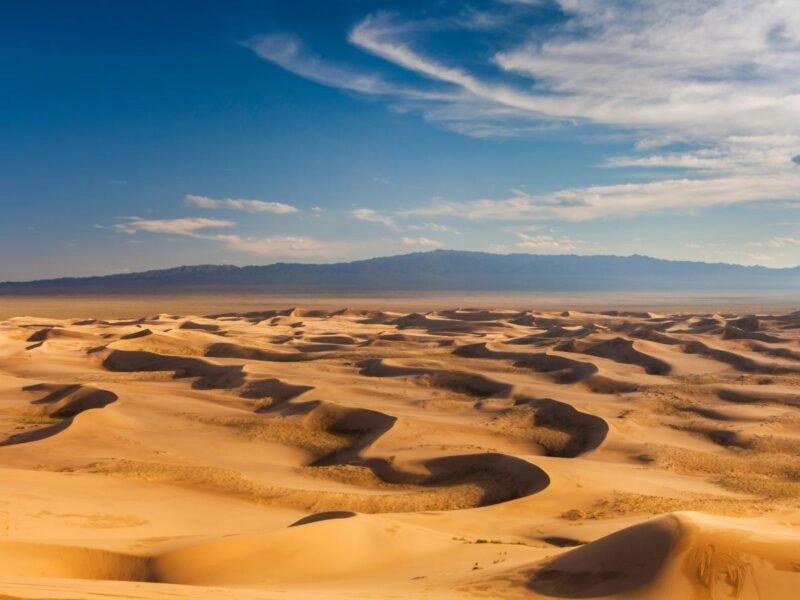
In southern Mongolia, the Gobi Desert dominates. One of the coldest deserts on earth, it covers roughly 500,000 square miles and contains some of Mongolia's most dramatic scenery. The Khongor Sand Dunes stretch for 180 kilometres and reach heights of up to 300 metres. Known locally as the Singing Dunes, they produce a deep, resonant humming when the wind moves across them — a sound unlike anything else in the natural world. In winter, temperatures across the Gobi can drop to minus 40 degrees Celsius, one of the most extreme seasonal contrasts found anywhere on earth. The Altai Mountains to the west rise to over 4,000 metres, their valleys home to communities that have maintained the ancient tradition of eagle hunting for centuries.
Ancient Valleys and UNESCO Landscapes
Some of Mongolia's most important landscapes carry formal recognition for their cultural significance. The Orkhon Valley, in central Mongolia, is a UNESCO cultural landscape that was once the political heart of the Mongol Empire. Today it is a place of waterfalls, volcanic formations, and sweeping pastoral views, its valley floor cut by a slow river and dotted with ger camps.
In the southern Gobi, Tsagaan Suvarga — known as the White Stupa — rises over 50 metres from the desert floor, its layered strata of reds, yellows, and greens visible for miles. Nearby, Yol Gorge sits at 2,800 metres above sea level in the Gurvansaikhan Mountains, a narrow, shaded canyon that holds ice well into summer despite the surrounding desert heat.
The History That Shaped a Nation
Nomadic Empires Before Genghis Khan
The story of Mongolia as a source of nomadic power stretches back long before the Mongol Empire. The Xiongnu Empire, established in the third century BC at the same time as the Qin Dynasty was first unifying China, was the first great nomadic state to emerge from the Mongolian steppe. So formidable was the Xiongnu threat that the Chinese undertook the construction of large defensive earthworks along their northern borders — an early precursor to what later became the Great Wall. The Xiongnu were eventually succeeded by the Xianbei, who rose to prominence across the eastern steppe from the first century AD and left a lasting mark on Chinese court culture and governance.
These were not isolated tribal groups but organised nomadic empires, capable of fielding large mounted armies and sustaining long-distance trade across Eurasia. The Tatar Confederation was one of the most powerful rival groupings of the pre-Genghis era, and the complicated hostility between the Tatars and the Khamag Mongols helped define the fractured political world that Genghis Khan was born into. The Mongol tribes of the eastern steppe had long existed amid competing confederations and blood feuds. What Genghis Khan did was end that instability by force of will and force of arms.
Genghis Khan and the Mongol Empire
In 1206, Genghis Khan united the fragmented Mongol tribes of the steppe and set in motion a campaign of expansion that would reshape the known world. Within a generation, the empire controlled trade routes from China to Persia, and under his successors it reached further still. What made it extraordinary was not just its scale but the speed of its growth — Genghis Khan conquered more territory in 25 years than the Roman Empire acquired in four centuries. The Mongolian horsemen who drove that expansion were among the most skilled cavalry soldiers in history, able to cover extraordinary distances and coordinate complex manoeuvres across vast terrain.
Kharkhorin, known in history as Karakorum, was the ancient capital of the empire — once a city that hosted ambassadors, craftsmen, and traders from across Asia and Europe. Destroyed by Ming forces in 1380, only scattered archaeological remains survive today. Beside the ruins stands Erdene Zuu Monastery, Mongolia's oldest surviving Buddhist monastery and a UNESCO World Heritage Site, built partly from the stones of Karakorum itself.
Kublai Khan, the Yuan Dynasty and the World Beyond Mongolia
Genghis Khan's grandson, Kublai Khan, extended Mongol rule into China and in 1271 founded the Yuan Dynasty, establishing his capital at Dadu — the city known today as Beijing. Under Kublai Khan the empire reached its greatest extent, and it was at his court that the Venetian traveller Marco Polo spent nearly two decades, recording a world of extraordinary sophistication. The Mongols also launched two naval invasions of Japan, in 1274 and 1281, both of which failed — the second fleet largely destroyed by a typhoon the Japanese called kamikaze, meaning "divine wind." The Yuan Dynasty ended in 1368 when Chinese forces drove the Mongol court back to the steppe.
From Manchu Rule to Modern Independence
Following the collapse of the Yuan Dynasty, Mongolia fell under the influence of the Manchu-led Qing Dynasty from the seventeenth century. The territory of modern Mongolia was referred to as Outer Mongolia under Qing administration, distinguishing it from the areas closer to China that became Inner Mongolia. After the Qing Dynasty fell in 1912, Mongolia declared independence, but Soviet influence shaped what came next. In 1924, the Mongolian People's Republic was established — one of the first communist states after the Soviet Union itself. The republic that followed remained aligned with the USSR for nearly seven decades, a period during which Buddhist monasteries were systematically destroyed and the traditional Mongolian script was replaced with a Cyrillic alphabet. Mongolia declared full independence in 1990 and adopted a democratic constitution in 1992. The country's official name in Mongolian is Mongol Uls — written in its genitive form as Mongol Ulsyn — meaning simply "Mongolian State." Today it is led by President Ukhnaagiin Khürelsükh, who has held the presidency since 2021.
The Flaming Cliffs and the Dinosaur Discovery
Among the most interesting facts about Mongolia is the role its desert landscape played in one of the most significant palaeontological discoveries of the twentieth century. In 1922, American explorer Roy Chapman Andrews arrived at the red sandstone cliffs of Bayanzag in the Gobi — a formation now known as the Flaming Cliffs for the deep crimson glow they take on at sunset. His expedition found the first dinosaur eggs ever recorded, along with fossils of Protoceratops and Velociraptor. The American Museum of Natural History's records on the Andrews expeditions provide further detail on one of the most consequential fossil discoveries in scientific history. The discovery transformed scientific understanding of dinosaur reproduction and made the Gobi one of the most important fossil sites on earth.
A Capital and a Statue That Break Records
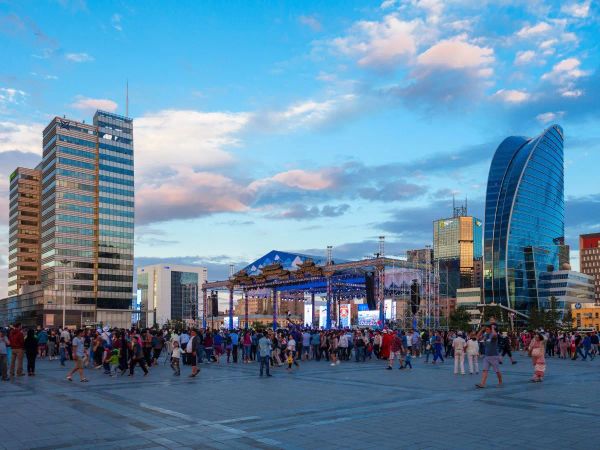
Mongolia holds two records that tend to surprise visitors. Ulaanbaatar is the world's coldest capital city by average annual temperature, sitting at around minus 1.3 degrees Celsius across the year. Roughly half of Mongolia's entire population now lives within its boundaries — a remarkable concentration for a country of such scale.
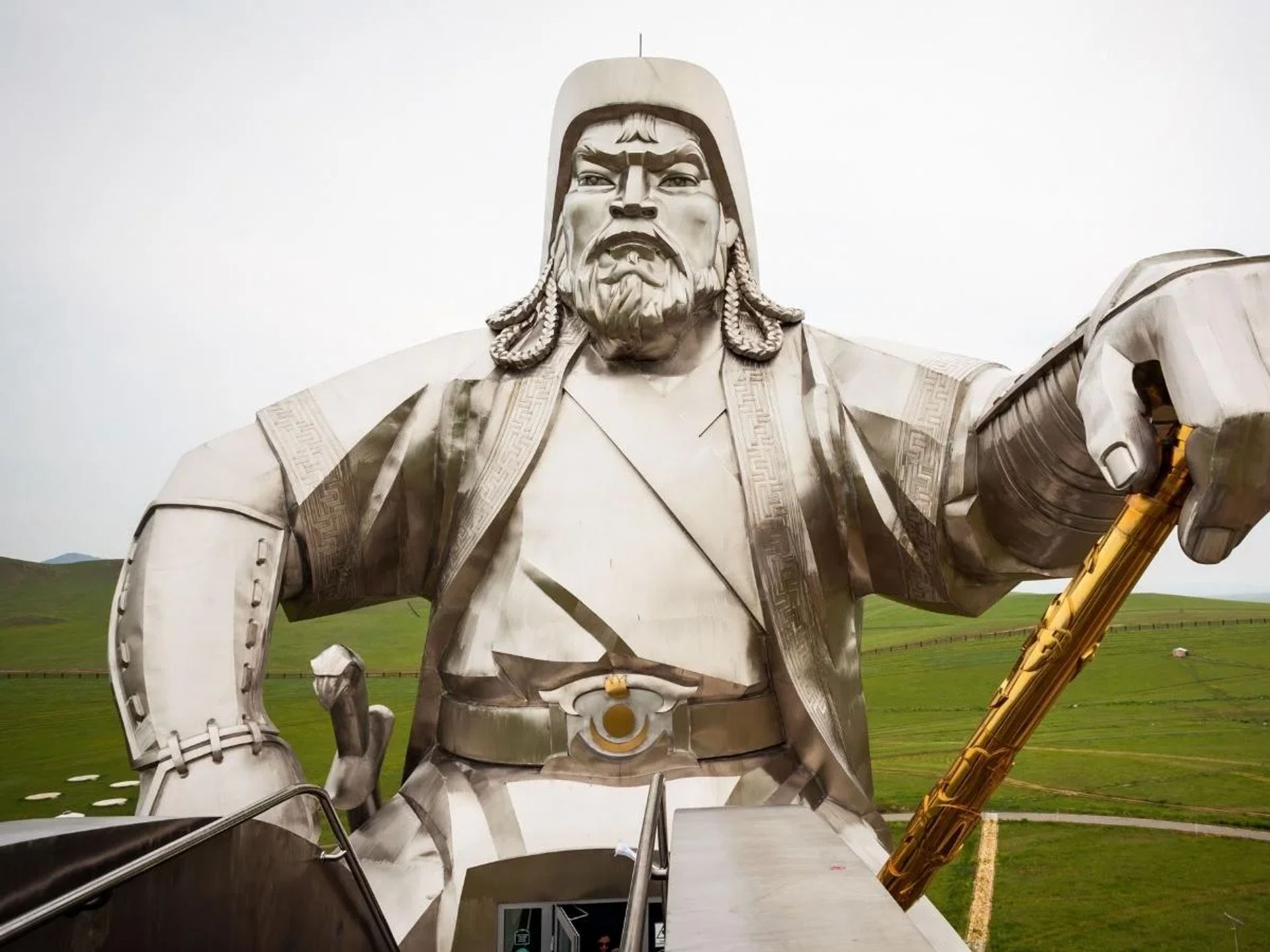
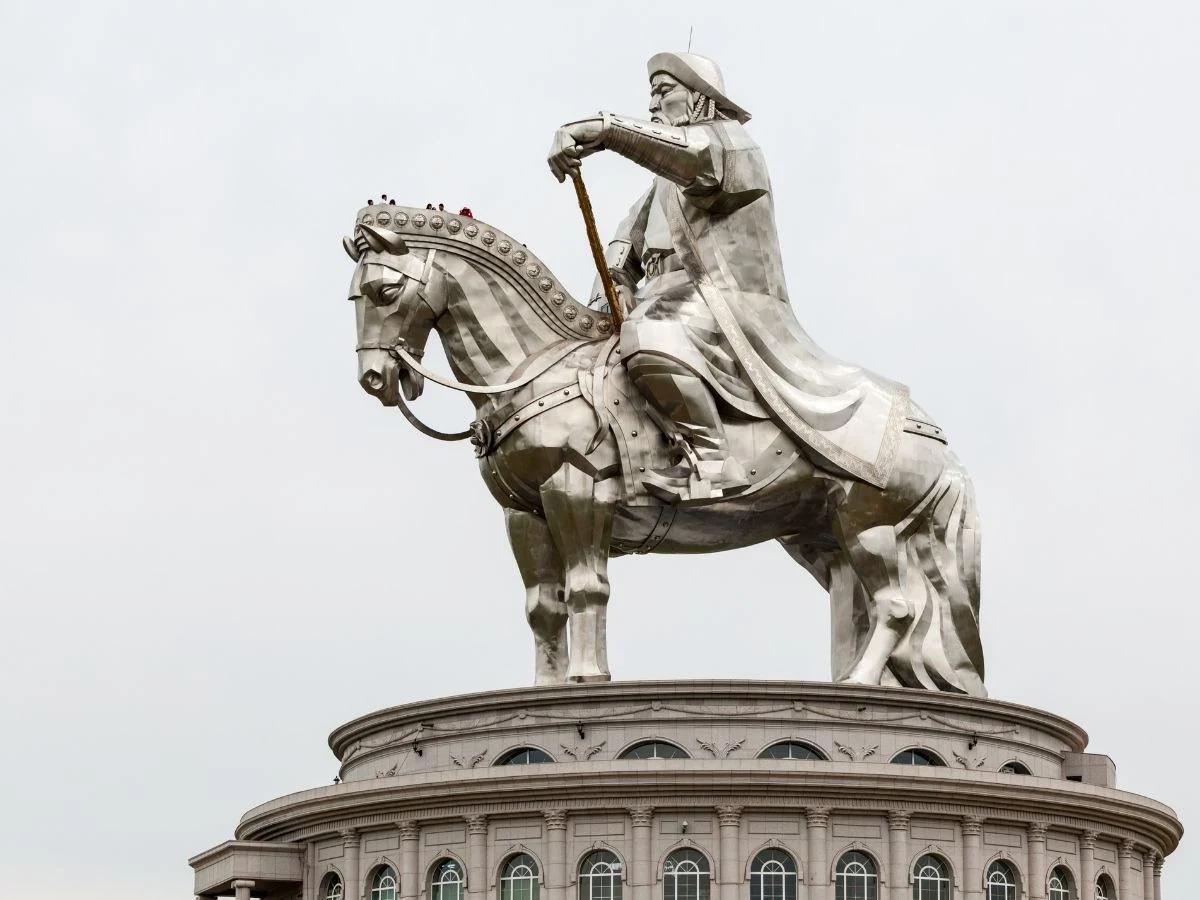
South-east of the capital, a 40-metre steel figure of Chinggis Khan on horseback stands on a hillside overlooking the steppe. It is the world's tallest equestrian statue, a monument whose scale gives some sense of how central this historical figure remains to Mongolian national identity.
Mongolian Culture Facts — Traditions That Have Survived for Centuries
Life in the Ger
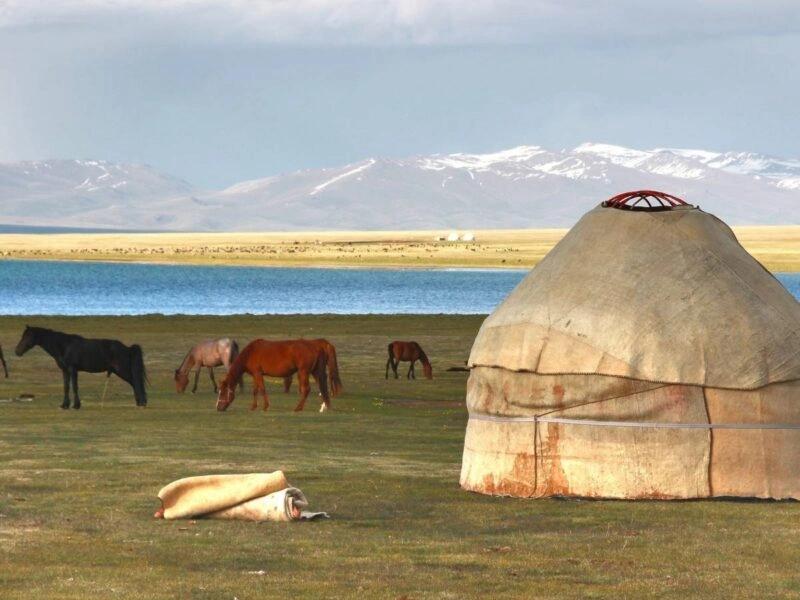
The ger — sometimes referred to outside Mongolia as a yurt — is the traditional dwelling of the nomadic Mongolian people, and it remains in active daily use across the country. A circular frame of wooden lattice is covered with layers of felt and canvas, creating a structure that can be assembled and dismantled in under an hour and carried by camel or horse to the next grazing ground. Inside, the layout follows a logic observed for centuries: the north wall is the place of honour; the east side belongs to the women; the west side is the domain of the men. The door always faces south.
Roughly 30 per cent of Mongolia's population still lives nomadically or semi-nomadically. Many Mongolians who have moved to the capital still maintain deep connections with the countryside, returning for festivals and family gatherings. The cultural traditions around ger life — the etiquette of entering, the placement of objects, the customs around food and drink — are precise and deeply observed, and experiencing them as a guest is one of the genuine pleasures of travel through the Mongolian countryside.
Tibetan Buddhism, Shamanism and the Mongolian Script
Tibetan Buddhism has been the dominant religion of the Mongolian people since the sixteenth century, when the Mongol ruler Altan Khan was converted by Tibetan lamas. Before its arrival, Shamanism — a belief rooted in the spiritual forces of the natural world — was the primary faith of nomadic communities, and traces of it remain woven into Mongolian cultural traditions to this day. The Soviet era suppressed religious practice severely, destroying hundreds of monasteries and forcing monks from their communities. Since 1990, Buddhism has undergone a steady revival across the country.
Alongside religion, Mongolia's written language carries its own distinctive history. The traditional Mongolian script — written vertically, from top to bottom — was derived from the Uyghur script in the thirteenth century and used throughout the Mongol Empire. Under Soviet influence it was replaced with a Cyrillic alphabet, but the Mongolian script has seen growing interest in recent decades and remains a strong source of national pride.
Mongolian Food: Hearty, Simple and Entirely of the Land
Mongolian food is a direct expression of the nomadic lifestyle and the harsh climate in which it developed. Meat — particularly mutton and beef — forms the basis of most traditional dishes. Buuz, steamed dumplings filled with minced meat, are eaten across the country and prepared in large quantities for festivals. Tsuivan is a noodle dish fried with meat and vegetables, while khorkhog, a traditional method of cooking mutton with heated stones inside a sealed pot, is a favourite at outdoor gatherings. Dairy products play an equally important role: airag, fermented mare's milk, is Mongolia's national drink; suutei tsai, or salted milk tea, is consumed daily by many Mongolians; and aaruul, dried curd, is a staple snack across the steppe. It is honest cooking — nourishing, seasonal, and deeply tied to the land.
Naadam Festival — Mongolia's Greatest Celebration
Every July, communities across Mongolia gather for the Naadam Festival, a celebration of the three disciplines at the heart of nomadic life: wrestling, archery, and horse racing. Known as the Three Manly Sports, these competitions have their roots in the military and survival skills of the steppe, and the festival has been held in various forms for centuries. The horse races are particularly remarkable — jockeys are children, and the Mongolian horsemen who train them spend months in preparation, covering vast distances across open country. Attending Naadam away from Ulaanbaatar — in a provincial town on the northern edge of the Gobi — gives a very different experience: the atmosphere is local and unfiltered, the competitions genuine. Our dedicated Naadam Festival tour places you in the heart of that experience, away from the capital crowds.
Eagle Hunting — an Ancient Partnership
In western Mongolia, in the valleys of the Mongolian Altai range, a tradition of hunting with golden eagles has been preserved for centuries by the Kazakh communities of the region — people whose cultural roots reach back to Kazakhstan and the wider nomadic world of Central Asia. Eagle Masters take young birds from the nest and spend years building a working relationship with them, training the eagles to hunt fox and hare across the mountain steppe. The Altai Eagle Festival, held near Ulgii, brings these hunters together each autumn in a display that is as moving as it is extraordinary to witness — and joining it as a small group is something few travellers ever forget.
Throat Singing and the Deel
Mongolia's musical heritage is as distinctive as its landscape. Khöömei, or throat singing, is a technique in which a single performer produces two separate tones simultaneously — a low drone and a high, whistle-like overtone — by manipulating the resonance of the vocal tract. The sounds produced are said to mimic the natural world: wind, flowing water, the calls of birds. UNESCO recognised Mongolian throat singing as an Intangible Cultural Heritage in 2009. Alongside it, the deel — a long robe-like garment fastened at the side and belted at the waist — remains the everyday clothing of rural Mongolia, worn with quiet, unself-conscious pride.
Mongolia Fun Facts — Wildlife, Records and Surprises
Hustai National Park: Home to the Last Wild Horses in the World
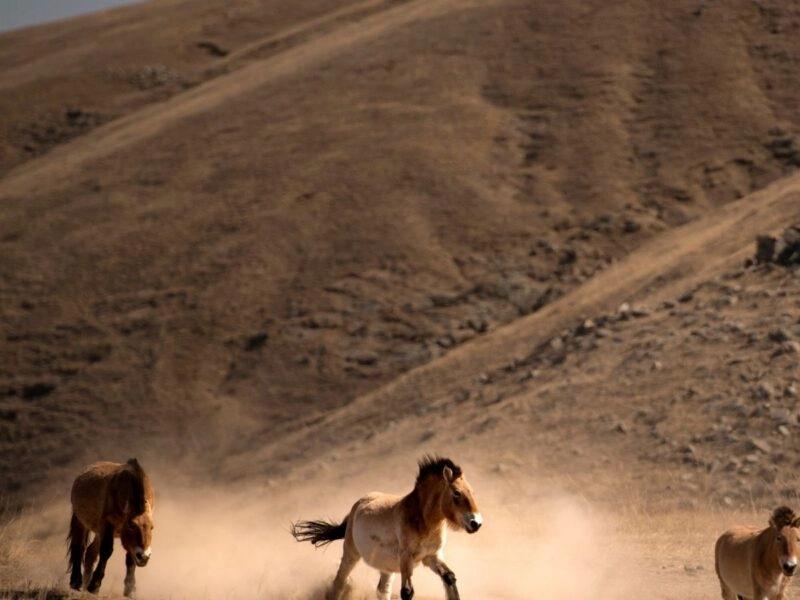
One of the most remarkable Mongolia fun facts concerns the Mongolian horse and its wild ancestor, the Takhi, or Przewalski's horse. Unlike domestic horses, the Takhi has never been tamed — it is the only truly wild horse species remaining on earth, and its Mongolian name means "spirit." By the 1960s it had vanished entirely from the wild, surviving only in zoos and breeding programmes. A dedicated conservation effort brought it back. Today, Hustai National Park west of Ulaanbaatar is home to a growing population of reintroduced Takhi, sharing the steppe with wolves, lynx, red foxes, and steppe gazelles. Seeing them move across the open grassland, unbothered by human presence, is one of the genuine wildlife experiences left in the world.
Bactrian Camels, Snow Leopards and Wildlife Worth Knowing
Mongolia has more horses than people — the horse population rivals the human one, and horses remain a central part of daily life in the countryside. Mongolia is also estimated to be home to a significant share of the world's wild snow leopard population, its remote mountain ranges providing ideal habitat for this elusive and endangered cat. The Snow Leopard Trusthas monitored Mongolia's population for decades and publishes regular field research on their distribution across the Altai. In the Gobi, two-hump camels of the Bactrian breed — the native hump camels of Central Asia — roam the desert plains in both wild and domesticated herds. Mongolia enjoys over 250 sunny days per year, earning its nickname the Land of the Eternal Blue Sky.
Cashmere and the Quiet Economy
Mongolia is one of the world's largest producers of cashmere, a fibre combed from the undercoats of the country's vast goat herds. Tens of millions of goats graze the Mongolian steppe, and the cashmere they produce supplies a significant portion of the global luxury textile market. It is one of those facts that connects the ancient nomadic economy to the modern world in a way that feels entirely Mongolian — understated, practical, and quietly remarkable.
Conclusion
Mongolia is a country that defies easy summary. Its geography alone is staggering — from singing dunes to frozen gorges, from volcanic valleys to glacier-capped peaks. Its history carries the weight of an empire that once changed the shape of the world. And its culture, still lived rather than performed, offers a kind of authenticity that is increasingly rare to find.
The facts about Mongolia are a beginning, not an end. The country reveals itself slowly: in long drives across open steppe, in the warmth of a ger as the temperature drops outside, in the silence that settles over the desert as the Flaming Cliffs turn red at dusk. To plan the right time to go before anything else, our month-by-month travel guide covers weather, festivals, and the seasons that suit different kinds of travel. If Mongolia has moved from interesting to irresistible, the Undiscovered Destinations Mongolia tours covers itineraries into the heart of the country — take a closer look and see where Mongolia could take you.