
Chile stretches over 4,300 kilometres from the driest desert on earth to the glaciers of Patagonia, making it one of South America's most geographically diverse countries. The best places to visit in Chile include the Atacama Desert, Torres del Paine, Chiloé Island, and the volcanic Lake District — each a distinct world. This guide takes you through them all, structured as a journey from north to south, with practical advice on how to see Chile properly.
Chile is one of South America's top destinations, and one of those countries that rewards travellers who pay attention. Stretching over 4,300 kilometres from north to south, it offers unique landscapes that range from the driest desert on earth to the vast glaciers and fjords of Patagonia, taking in volcanic lakes, misty island archipelagos, wine valleys, and Pacific coastline along the way. This travel guide takes you through some of the most incredible places Chile has to offer, structured as a journey from north to south.
For anyone trying to decide on the best places to visit in Chile, the first challenge is simply accepting that no single trip can do the country justice. Most travellers who attempt a month itinerary find that Chile still feels rushed — the distances alone are extraordinary, and each region offers far more depth than a passing visit can reveal. Chile is also a natural companion to Peru and Bolivia on a longer South American journey, and pairs particularly well with Argentina — our combined Argentina and Chile itineraries explore both countries' extraordinary Andean character in depth. Each country offers its own extraordinary character while sharing the great thread of the Andes.
One of the most useful chile travel tips is to treat the country's north and south as separate journeys rather than a single sweep. The Atacama and Patagonia are not just geographically distant — they are climatically, culturally, and visually different worlds. Whether you are arriving from Buenos Aires or flying in directly from Europe, the scale of what Chile offers will quickly become apparent. What follows is a guide to the most extraordinary places to go in Chile, covering the high-altitude Atacama Desert with its geysers and salt lagoons, the volcanic lake country, the island mysteries of Chiloé, and the raw Patagonian wilderness. Whether you are planning your first visit or returning to explore more deeply, Chile offers a level of natural and cultural richness that is genuinely difficult to find anywhere else in South America. The key, above all, is to give it enough time.
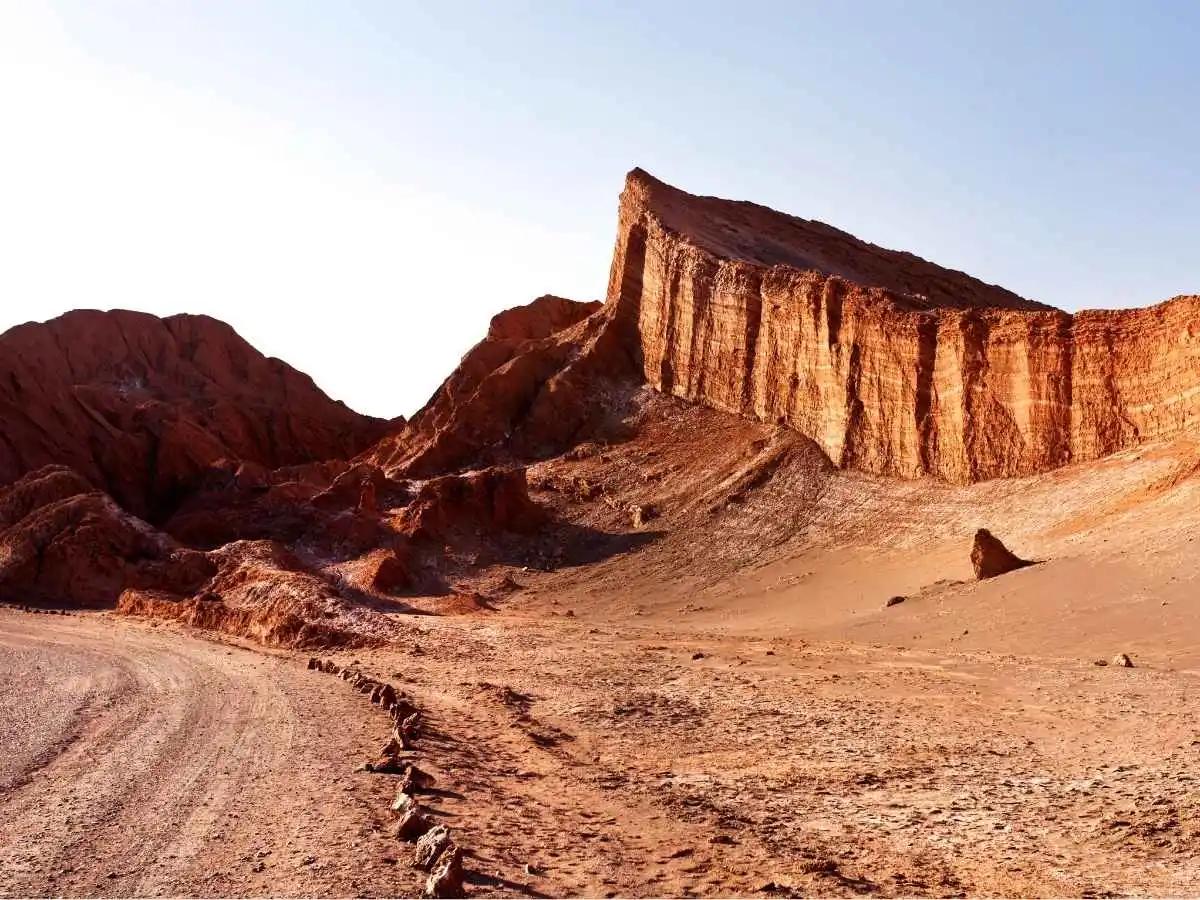
The Atacama Desert: Chile's Otherworldly North
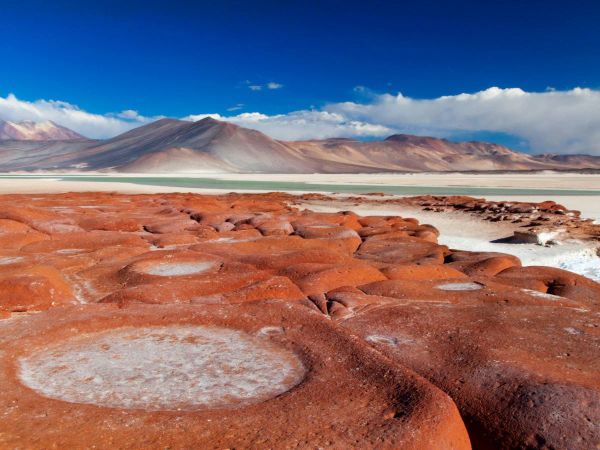
Chile's far north begins at Arica, the country's northernmost city, perched beside the Pacific close to the Peruvian border. From here, heading south through this strikingly remote terrain, the landscape opens into one of the world's most stunning locations — a vast, high-altitude plateau where the air is thin, the light extraordinary, and the silence is the kind that settles into you after a day or two. The Atacama is the driest non-polar desert on earth, and in certain areas it has not rained in recorded history. Yet it is far from lifeless. Flamingos wade through cobalt lagoons. Vicuñas pick their way across ancient lava fields. At dawn, geysers blast columns of steam into a cold Andean sky that turns the world briefly gold.
For travellers seeking great places where the natural world feels genuinely untouched, the Atacama is without equal.
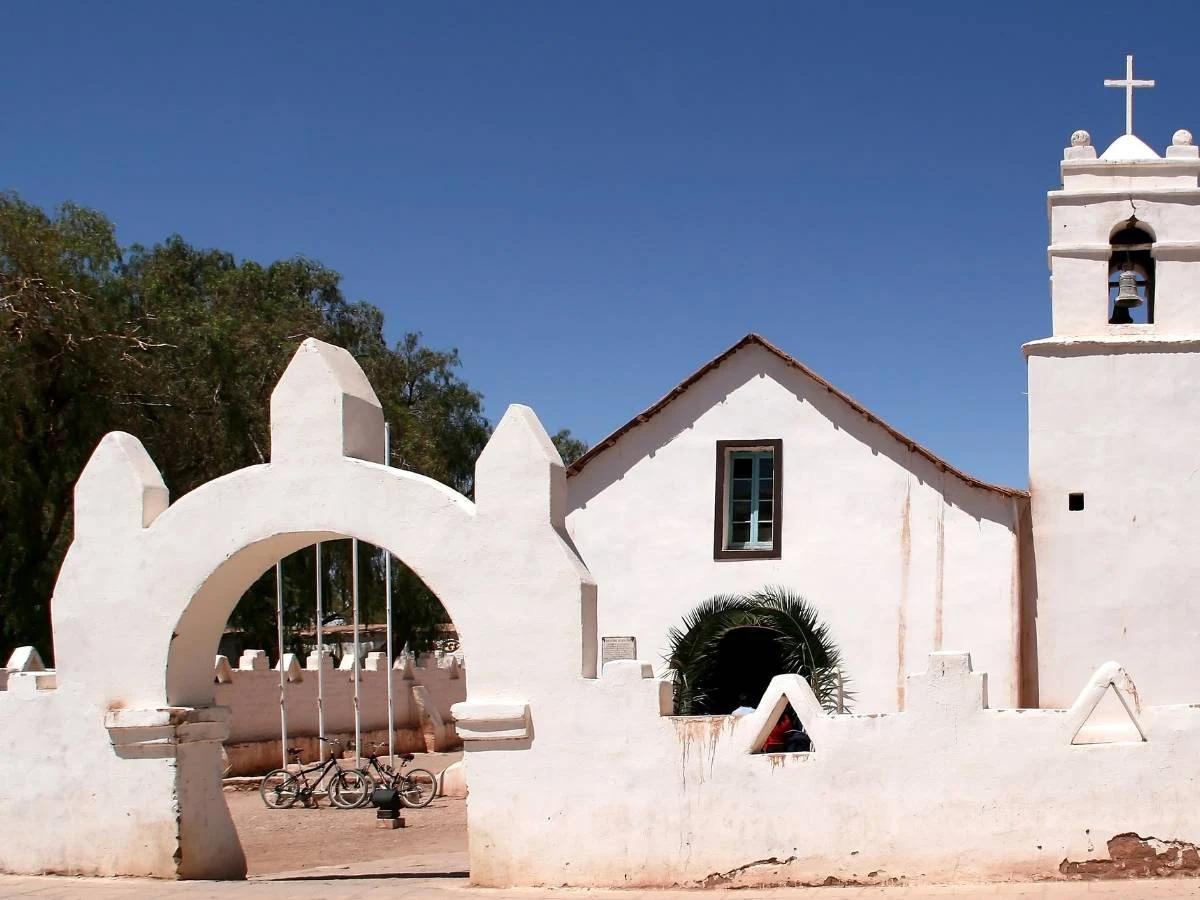
San Pedro de Atacama: The Best Place to Visit in Chile's North
The small adobe town of San Pedro de Atacama sits at 2,475 metres above sea level and serves as the principal gateway to the wider Atacama region. It is a compact, characterful place — its low mud-brick buildings clustered around a whitewashed colonial church and a central plaza shaded by old pepper trees. Hotels in and around San Pedro range from simple guesthouses to boutique desert lodges that make excellent use of the surrounding landscape, and the town itself rewards a day of quiet, unhurried exploration before heading out into the desert.
Beyond the town, the terrain is extraordinary. The perfect volcanic cone of Licancabur rises on the southern horizon, and the pale expanse of the Atacama Salt Flat stretches to the north. San Pedro serves as the hub for guided tours into the desert — to the geyser fields, the salt lagoons, the volcanic craters, and the high-altitude wetlands that make this one of the most remarkable regions in South America. The town is also home to an excellent archaeological museum dedicated to the pre-Columbian Atacameño people who inhabited this region for thousands of years before the arrival of the Inca and, later, the Spanish. The museum holds an important collection of ceramics, mummified remains, and textiles, and provides meaningful cultural context before heading out into the wider arid landscape.
San Pedro has also earned a strong reputation as one of the world's leading destinations for astronomical observation. At over 2,400 metres above sea level, with virtually no humidity and minimal light pollution for hundreds of kilometres in any direction, the Atacama sky at night is extraordinary — a canopy of stars so dense and so close that it genuinely reframes the idea of darkness. Several observatories offer guided evening sessions for visitors, and the experience of standing in the desert under that sky is, for many travellers, the single most memorable moment of their entire journey. The Atacama features as a centrepiece of our Puna and Atacama small-group tour, which combines the Chilean and Argentine high desert in a single itinerary.
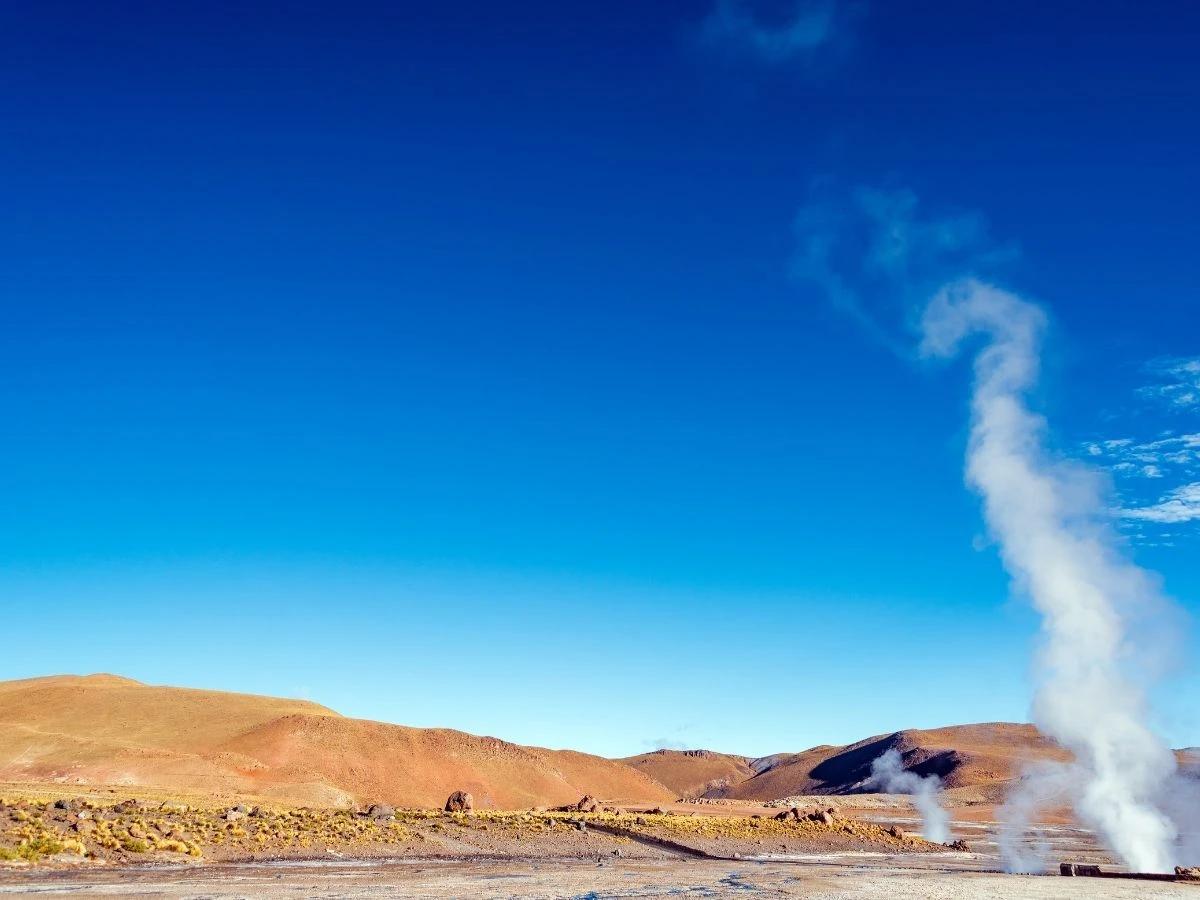
El Tatio: The Geyser Fields of the Andes
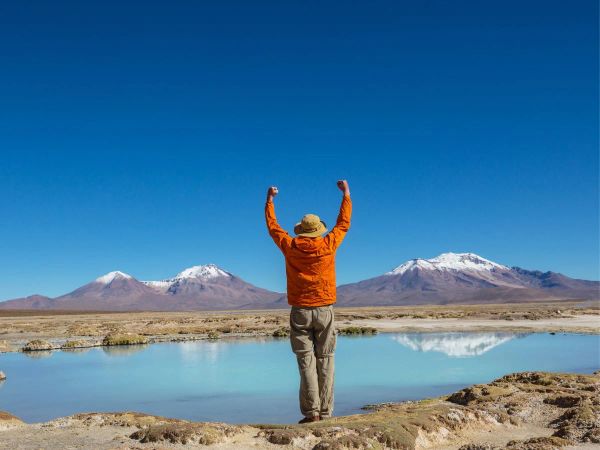
An early departure from San Pedro — typically well before four in the morning — brings visitors to El Tatio just as the sun begins to lift above the Andes. The timing matters. At dawn, with the air temperature still well below freezing, El Tatio's geysers perform at their most dramatic, sending plumes of steam high into the clear Andean sky against a backdrop of snow-dusted volcanic peaks. The contrast of heat and cold, of billowing white steam and hard blue sky, is arresting in a way that is genuinely difficult to describe.
El Tatio sits at around 4,200 metres above sea level and contains over 80 active geysers, making it the largest geyser field in the southern hemisphere and the third largest in the world. The landscape surrounding it is unlike anything else — boiling pools of vivid mineral colour, hissing vents, and salt-crusted terraces spread across a high plateau encircled by volcanoes. It is a geothermal environment of rare intensity, and its scale only becomes apparent as you walk through it, stepping carefully between the steam vents in the sharp early morning air.
By mid-morning, as the temperature rises and the steam begins to thin, the geyser field takes on a quieter character — the landscape itself becoming more visible, its mineral colours deepening in the strengthening light. The return journey to San Pedro crosses a stretch of high Puna plateau offering excellent opportunities to spot vicuñas, rheas, and a variety of Andean birds at close range. It is a long day, but consistently one of the most memorable on any Chile itinerary.
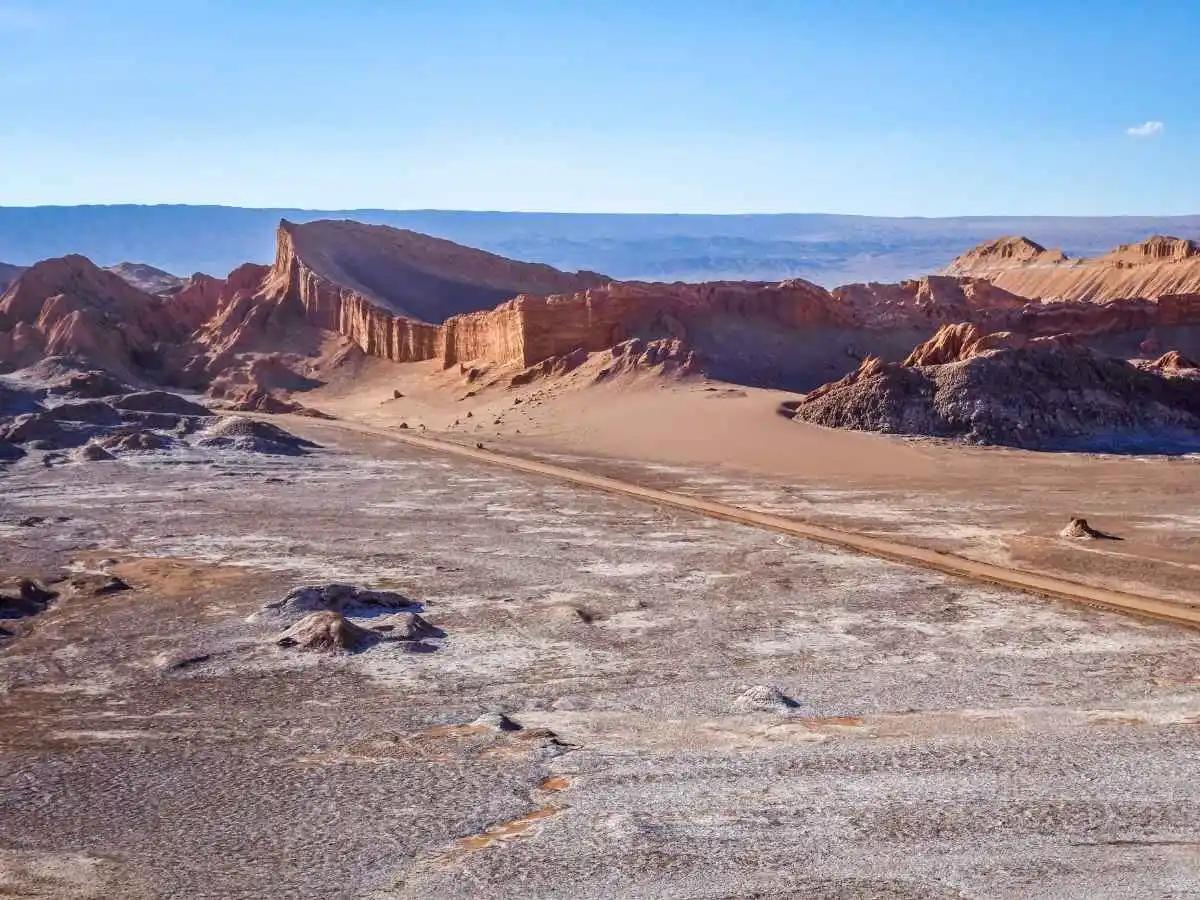
Valle de la Luna and Chile's Salt Mountains
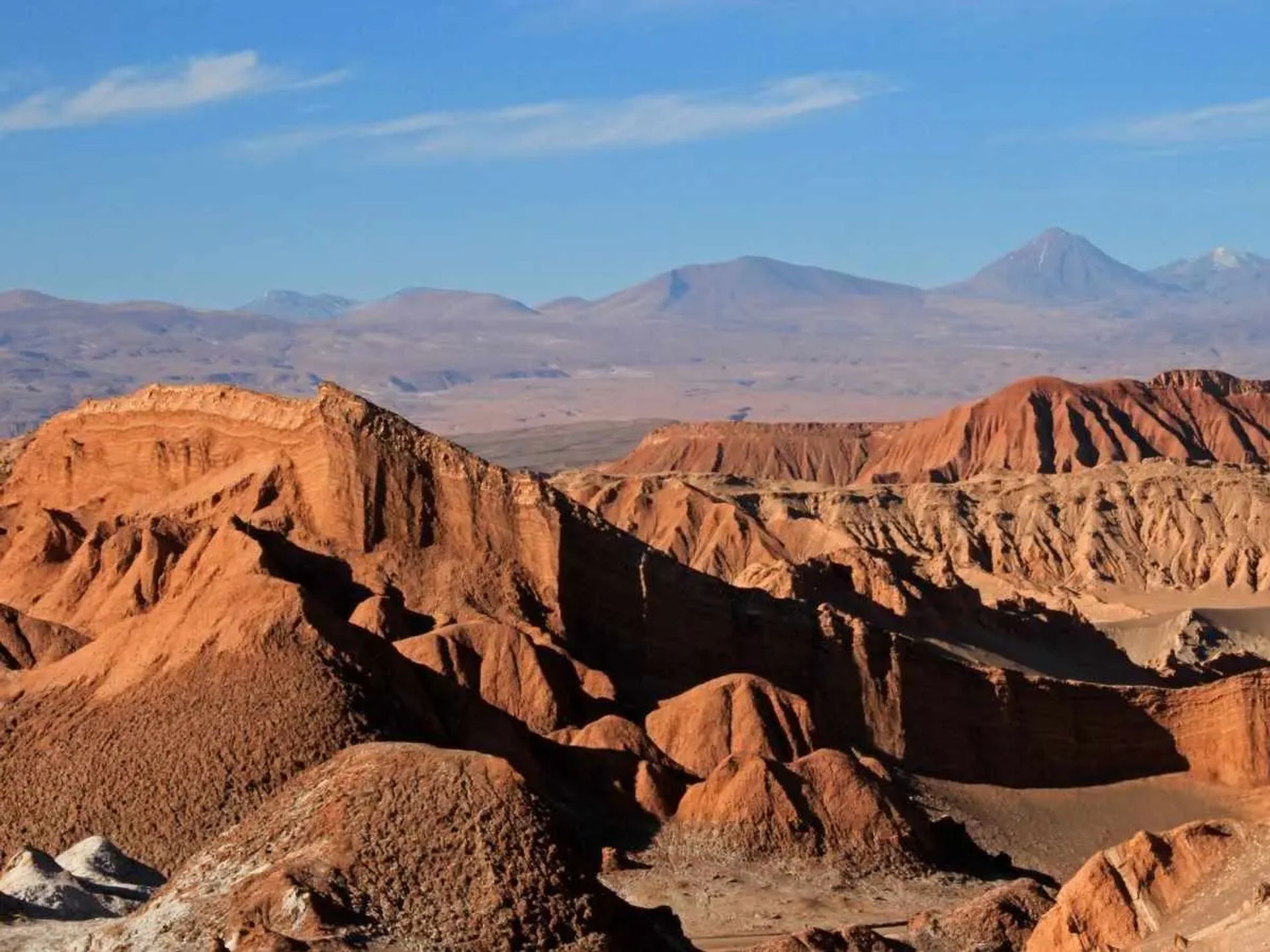
Late afternoon is the time to visit Valle de la Luna — the Valley of the Moon. Carved from the Cordillera de Sal, or Salt Mountains, this extraordinary landscape of wind-sculpted salt and sedimentary rock formations earns its name with ease. The shapes are sinuous and deeply strange, worn into ridges, hollows, and peaks by thousands of years of wind erosion in one of the most arid environments on the planet. Nothing grows here, and nothing moves except the light.
The colours shift as the sun descends: pale ochre deepening to amber, then burnt orange, then a deep red that seems almost impossibly vivid against the darkening sky. At the right moment — the final twenty minutes before sunset — the entire valley turns a shade of gold that photographers consistently describe as unlike anything else in their experience.
The Cordillera de Sal is a geological formation of layered salt, gypsum, and sedimentary rock, pushed upward over millions of years by the immense tectonic forces that built the Andes. Walking through it at sunset, with the wind quiet and the light fading gradually from gold to copper to grey, it is a beautiful place in the truest sense — one that has no need of further adjectives.
Lagunas Miscanti and Miñiques
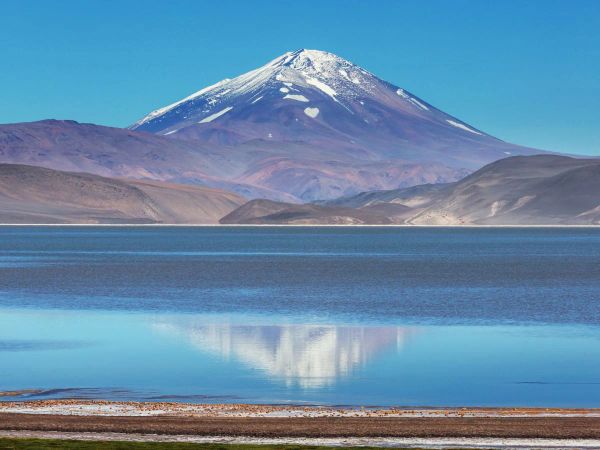
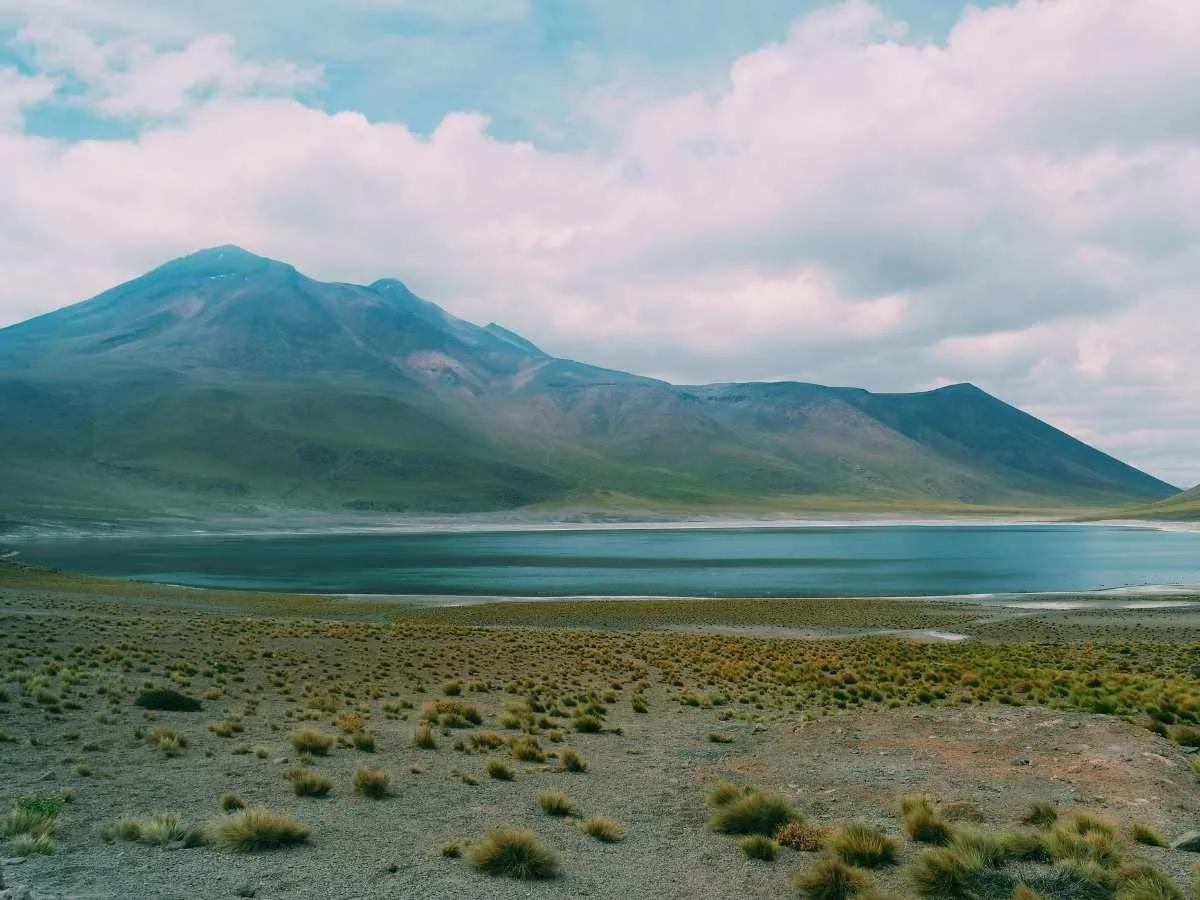
Less visited than El Tatio or Valle de la Luna, the twin high-altitude lagoons of Miscanti and Miñiques are among the most dramatic landscapes in all of northern Chile. Sitting at around 4,200 metres above sea level, these neighbouring lagoons lie in the shadow of two ancient volcanoes of the same names, their dark cobalt water set against a sky of exceptional depth and clarity.
The lagoons are home to all three species of South American flamingo — the Chilean, the Andean, and the James's flamingo, which congregates here in significant numbers. The sight of flamingos at this elevation, wading through mineral-rich water against a backdrop of volcanic peaks reflected in the stillness of the lagoon surface, is one of those images that seems almost too composed to be natural. The surrounding wetland is a protected reserve, and human access is carefully managed to preserve one of the region's most important migratory bird habitats.
Beyond the flamingos, the area supports a broader range of high-altitude Andean wildlife, and the silence and remoteness of the lagoons give them a character that feels genuinely precious. This is off-the-beaten-track Chile at its finest.
Central Chile: Places to Put on Your Itinerary
Not all of what to see in Chile involves desert plateaus or glacial wilderness. From the vibrant capital of Santiago south through volcanic lake country and on to the misty island of Chiloé, the central and southern reaches of Chile offer a very different kind of reward — urban energy, colonial history, outdoor adventure, and some of the country's finest wine. Before reaching the capital, the semi-arid Norte Chico region is home to one of the top places for both viticulture and stargazing on the continent.
The Elqui Valley
The Elqui Valley is a narrow, sun-drenched river valley in the Coquimbo region, around 500 kilometres north of Santiago. Carved between dry Andean hillsides and irrigated by the Elqui River, it is one of Chile's most important pisco-producing areas — pisco being the distinctive South American grape spirit at the heart of the country's drinks culture, from the pisco sours served in bars across the country to the artisan distilleries that open their doors to visitors along the valley floor.
The valley's clear skies have also made it one of the best destinations in South America for astronomical observation, and several observatories offer guided night tours of a sky that rivals even the Atacama for clarity and depth. The principal town of Vicuña is a relaxed and welcoming base, and the Elqui Valley as a whole has a warm, unhurried character that makes it a rewarding detour on the route south.
Santiago: Where to Start Your Chile Trip
Santiago de Chile is one of South America's most underrated capitals. The city sits in a broad valley at around 520 metres above sea level, ringed on clear days by snow-capped Andean peaks that give the Santiago skyline one of the most dramatic natural backdrops of any major city on the continent. On days when the air is clear — more common in winter than summer — the effect is genuinely arresting.
The neighbourhood of Barrio Bellavista draws visitors with its street art, independent restaurants, and lively evening culture, while the Mercado Central — a magnificent cast-iron market hall dating from the 19th century — offers an excellent introduction to Chilean seafood. Cerro San Cristóbal, the large forested hill that rises above the Bellavista neighbourhood, is reached by funicular railway and topped by a white statue of the Virgin Mary visible from much of the city. From San Cristóbal's summit, the views over the Santiago skyline and towards the snow-capped Andes on a clear winter's day are among the finest urban panoramas in South America.
Barrio Italia has emerged in recent years as a focus for independent design and creative industry, and the museums of the city's civic centre — including the Museo Nacional de Bellas Artes and the contemporary MAC — deserve more attention than most visitors give them. Santiago is most often used as a starting point for journeys north or south, including the popular day trip to Valparaíso on the coast, but it rewards two or three days of genuine, unhurried exploration in its own right.
Valparaíso
An hour and a half west of Santiago, the port city of Valparaíso tumbles down a series of steep cerros — hills — to a working harbour that has been shaping the city's character for centuries. The road between the two cities passes through the Casablanca Valley, one of Chile's finest wine-producing regions, known particularly for its cool-climate Sauvignon Blanc, Chardonnay, and Pinot Noir. Stopping at one of the valley's many bodegas before continuing west is a rewarding addition to the journey.
Valparaíso itself is a UNESCO World Heritage Site, recognised for its distinctive urban fabric of painted timber houses, external staircases, and funicular lifts known as ascensores, some of which have been running since the late 19th century. The city's identity was forged by its role as a major Pacific port — for much of the 19th century, one of the most important trading hubs on the South American coast. The opening of the Panama Canal in 1914 stripped Valparaíso of its strategic importance, and the city has spent the century since reinventing itself around art, culture, and the particular energy of a place that has nothing left to prove.
The beach resort town atmosphere of Viña del Mar, immediately north of Valparaíso along the coast, provides a lively counterpoint to Valparaíso's more bohemian character, and the beaches of the Pacific shore here draw Chilean visitors throughout the warmer months. Together, the two cities form one of the most rewarding coastal excursions from the capital.
Valparaíso is not a polished destination. Its streets are uneven, its murals are layered over decades of creative life, and its neighbourhoods shift character between blocks. That is precisely what makes it worth visiting — one of the most distinctive and genuinely atmospheric cities in South America.
Puerto Varas and the Chilean Lake District
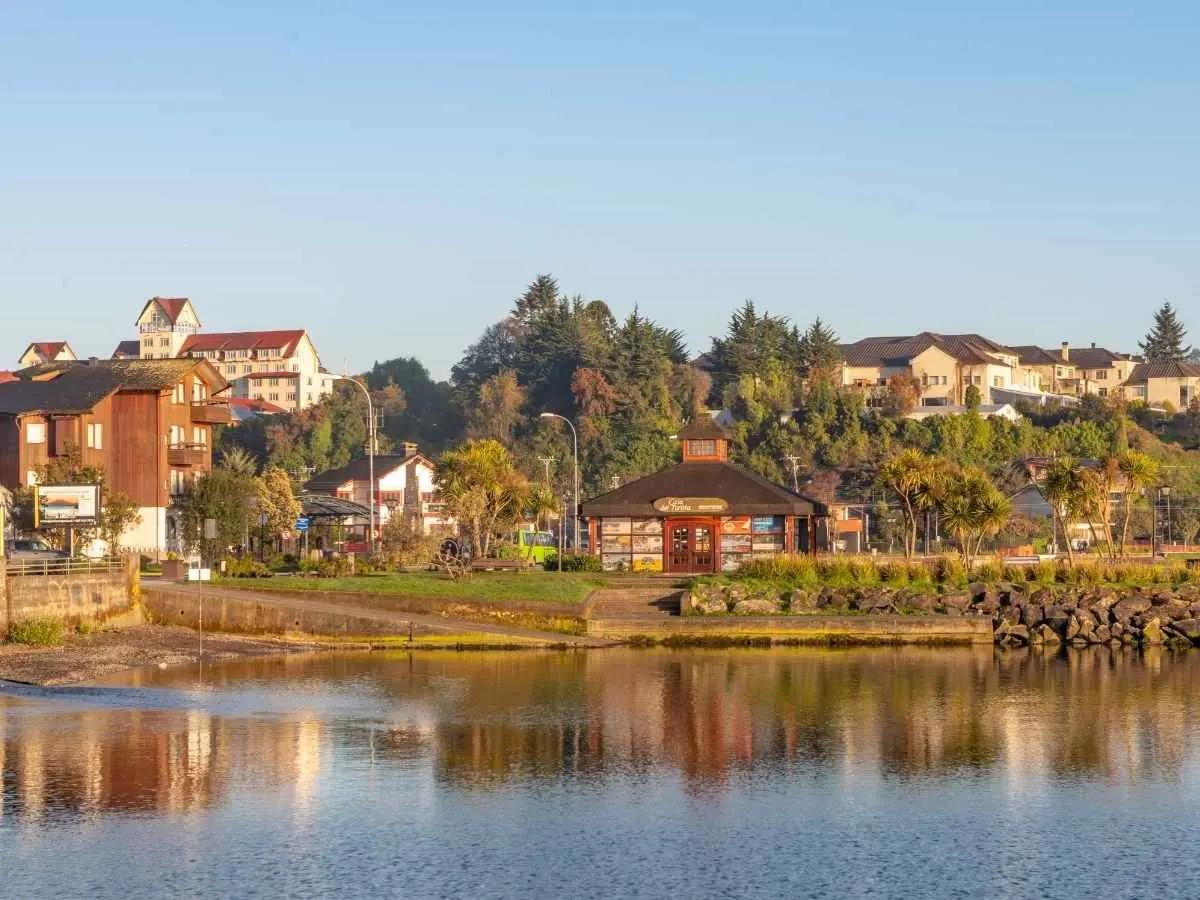
The Lake District occupies the stretch of central-southern Chile between roughly Temuco and Puerto Montt, and it is one of the most scenically rewarding regions in the country. Snow-capped volcanoes rise above mirror-flat lakes, rivers run cold and clear through native forest, and the legacy of the 19th-century German settlers is still visible in the architecture of the towns and the smoked meats and kuchen sold in local bakeries.
Puerto Varas is the most appealing of the Lake District's towns — a compact, attractive place on the southern shore of Lago Llanquihue, Chile's second-largest lake, with the perfect cone of Osorno Volcano reflected in the water on clear days. It serves as a base for a wide range of outdoor activities, from white-water rafting on the Petrohué River to hiking in Vicente Pérez Rosales National Park, Chile's oldest protected area. The surrounding landscape of lakes, ancient forest, and volcanic peaks represents some of the most stunning locations in south-central Chile, far less visited than either the Atacama in the north or Patagonia in the south.
Further north within the Lake District, the Nevados de Chillán ski resort and geothermal complex offers a very different experience — hot springs bubbling from volcanic ground at altitude, and ski runs on Andean slopes that draw visitors from across the country during the winter months. It is a reminder that the Lake District is not only a summer destination.
Villarrica Volcano and the Lake District
The resort town of Pucón sits on the eastern shore of Lake Villarrica beneath one of Chile's most active and most climbed volcanoes. Volcán Villarrica rises to 2,847 metres above sea level and maintains a permanently active lava lake within its summit crater — making it one of the few volcanoes in the world where guided visitors can look directly into molten rock from the rim.
The guided ascent of Villarrica is one of the most sought-after experiences in the Lake District — a physically demanding but technically accessible climb, conducted with crampons and ice axe, that rewards those who reach the top with views stretching across an enormous arc of Andean landscape. Even for those who prefer to stay lower, the volcano dominates the scenery for many kilometres in every direction, and the hot springs, river trails, and kayaking routes around Pucón provide excellent alternatives at valley level. The Lake District as a whole is a destination that deserves far more time than most Chile itineraries allow it.
Chiloé Island: Wooden Churches, Myths, and Misty Shores
The island of Chiloé sits off Chile's Pacific coast in the Los Lagos region, separated from the mainland by a narrow channel and distinguished from almost everywhere else in the country by its distinct cultural identity, its soft Atlantic-feeling mist, and its extraordinary wooden architecture. Chiloé is Chile's second-largest island and has been shaped by centuries of relative isolation into a place that feels quite unlike anywhere else in South America.
The island's Jesuit wooden churches — sixteen of which are collectively a UNESCO World Heritage Site — were constructed without a single nail, using techniques developed from indigenous carpentry traditions and still standing after more than 300 years. The palafito stilt houses of Castro, the island's capital, line the waterfront on timber stilts driven into the tidal mud, their painted facades reflected in the water at high tide. The local mythology is equally vivid — witches, ghost ships, and a richly developed folklore tradition woven into island life for generations. For travellers interested in culture as a reason to travel, Chiloé is one of Chile's most rewarding and least expected destinations.
Easter Island: Chile's Remote Pacific Wonder
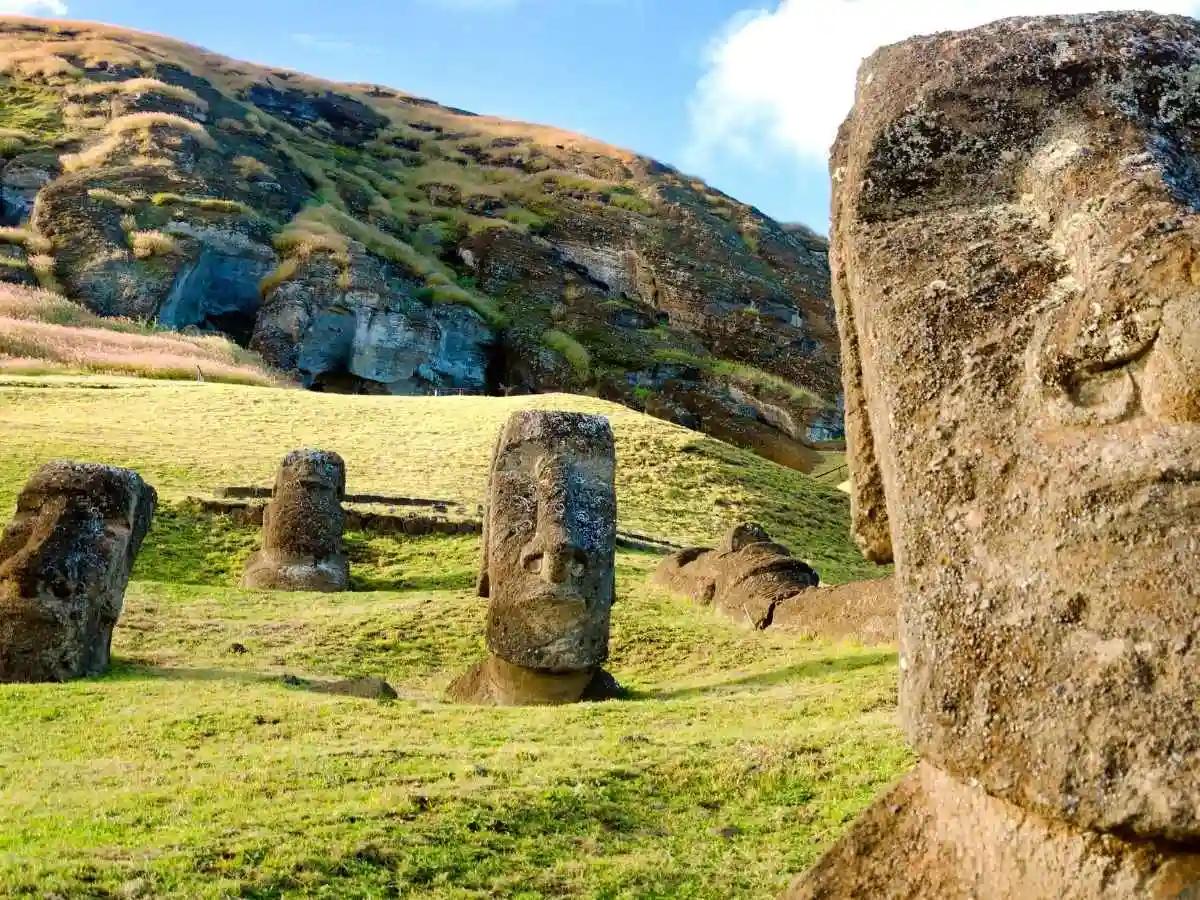
Some 3,700 kilometres off the coast of mainland Chile, in the middle of the Pacific Ocean, Easter Island — known as Rapa Nui in the language of its indigenous people — stands as one of Chile's most extraordinary top destinations and one of the most isolated permanently inhabited places on earth. Administered by Chile since 1888, it is in many respects a world of its own: a small volcanic island of open grassland, ancient craters, and rugged coastline, home to around 7,000 people, and defined above all by the extraordinary stone figures known as moai.
The moai were carved by the Rapa Nui people between roughly the 13th and 17th centuries, and approximately 900 survive across the island in various states of preservation. The most celebrated group — the fifteen restored figures of Ahu Tongariki — stand on a long stone platform facing inland, their backs to the sea, in a composition that remains among the most photographed images in world archaeology. The volcanic quarry of Rano Raraku, where hundreds of unfinished figures lie embedded in the hillside as if abandoned mid-work, offers perhaps the most thought-provoking sight of all.
Easter Island belongs in any serious discussion of what Chile has to offer. It is a destination for those drawn by ancient cultures, remote ocean landscapes, and the still-unresolved questions surrounding how and why its civilisation built — and ultimately toppled — its remarkable stone guardians. The journey here is long, but few travellers who make it leave anything other than changed.
Patagonia: Mountains, Glaciers, and Chile's Wild South
Ask most travellers what first comes to mind when they think of Chile, and the answer will almost certainly be Patagonia. It deserves its reputation. The far south is home to some of the top places for wilderness travel anywhere on the planet — a region of granite peaks, ancient glaciers, vast fjords, and open grassland extending to the horizon under skies of enormous breadth. Among Chile's top attractions, the landscapes of Torres del Paine and the surrounding fjord systems stand entirely apart from anything else the country offers. This is a region on a different scale — wilder, more remote, and more humbling than almost anywhere else on earth. The full detail on what to do and how to plan your time in Patagonia is covered in our dedicated Patagonia glaciers and peaks tour — what follows here is an overview of the key highlights.
Torres del Paine National Park
Torres del Paine is one of those rare places that genuinely matches its reputation. The three granite towers that give the park its name rise almost 2,800 metres from the Patagonian steppe, their near-vertical faces shifting colour with every change in the light — from pale grey at dawn to deep copper in the last moments before dark. Around them, the park contains a complete wilderness of glacial lakes, ancient lenga beech forests, open grassland grazed by guanacos, and mountain panoramas that seem to belong to a larger and more elemental world.
The Grey Glacier is one of the park's most impressive sights — a vast tongue of ancient ice descending from the Southern Patagonian Ice Field, its face cracking and calving in slow motion into the grey waters of Lago Grey. The Cuernos del Paine, the jagged secondary peaks flanking the towers, are arguably even more dramatic in certain lights, their dark metamorphic crowns rising above lighter granite bases. The thundering Salto Grande waterfall and the brilliant turquoise of Lago Pehoé complete a landscape of almost excessive visual richness.
Wildlife in the park is abundant and largely unbothered by human presence. Guanacos graze within metres of the walking trails. Andean condors circle on the thermals above the towers. The Patagonian grey fox is a common and surprisingly bold companion on many of the park's paths. The W and O trekking routes are world-famous, but even a single day of thoughtful exploration is enough to understand why Torres del Paine holds the place it does in the imagination of every traveller who has stood beneath those towers.
Punta Arenas and Tierra del Fuego
The city of Punta Arenas sits on the western shore of the Strait of Magellan in the far south of Chilean Patagonia, and has long served as a gateway to both Antarctic expeditions and the remote wilderness of Tierra del Fuego. It is a wind-battered, end-of-the-world kind of place, with a handsome central plaza, a striking municipal cemetery famous for its elaborate mausoleums, and a strong sense of sitting at the very edge of the inhabited world.
From Punta Arenas, a short boat crossing leads to the Isla Magdalena, home to a colony of over 100,000 Magellanic penguins during the southern summer — one of the largest and most accessible such colonies in the world. The city is also the principal access point for Tierra del Fuego, the archipelago at the very tip of South America — a dramatic, largely roadless territory of fjords, peat bogs, and glaciated mountains shared between Chile and Argentina. The landscape here is raw, unpredictable, and remarkable: a fitting final chapter to any journey through Chile.
Puerto Natales and the Gateway to the South
The town of Puerto Natales sits on the shores of the Última Esperanza Fjord — Last Hope Sound — and serves as the main base for exploring Torres del Paine and the wider Patagonian region. It is a relaxed, outdoors-oriented town built around a long waterfront promenade, with a genuine sense of its own identity that sets it apart from a simple service hub. The light here, particularly in the long Patagonian evenings of the austral summer, is exceptional.
Twenty-four kilometres north of town lies the Milodón Cave, a remarkable natural monument where the bones of the Mylodon darwinii — a prehistoric ground sloth that would have stood over three metres tall when upright — were discovered in the late 19th century in a state of remarkable preservation. The cave itself is enormous, with a vast arched entrance chamber that frames the surrounding forest and mountains like a natural theatre. The discovery contributed to early scientific debate about the survival of large Pleistocene mammals into comparatively recent times, and the site continues to attract both researchers and curious travellers. It is an unexpected and genuinely absorbing stop before heading into the national park.
The Balmaceda and Serrano Glaciers
Beyond the road network, accessible only by boat through the Última Esperanza Fjord, lie the Balmaceda and Serrano glaciers within the Bernardo O'Higgins National Park. The boat journey itself — departing from Puerto Natales — is one of the finest ways to experience the Patagonian landscape in its broader context. The fjord passes beneath steep mountain walls streaked with waterfalls, past estancias where cattle graze on improbably green hillsides, and through a wilderness of Patagonian birdlife that includes black-necked swans, steamer ducks, and the occasional Andean condor banking silently overhead.
The Balmaceda Glacier descends from a high peak directly to the water's edge, its pale blue ice face rising sheer from the surface of the fjord. The Serrano requires a short hike through native Patagonian forest to reach its lookout point — a walk brief enough to be accessible but memorable in its surroundings. Both glaciers offer a close encounter with the Southern Patagonian Ice Field that is more intimate and considerably less crowded than many of the better-known glacier experiences available further south.
On the return journey, ancient glacial ice is broken from the water around the Serrano and used in a tradition that has become something of a Patagonian institution — floating in a glass of whisky on the deck of the boat, with the mountains retreating behind you and the long southern light settling into the kind of evening that makes it difficult to go inside.
A Country Worth Exploring Properly
Chile does not do things by halves. From the alien stillness of the Atacama Desert to the raw, wind-driven wilderness of Patagonia, it is a country that rewards travellers who are willing to look beyond the obvious and give their journey the time it deserves. The sights covered in this guide represent some of the finest the country has to offer, but they are far from the whole story — behind every salt flat and every glacier is a layer of history, culture, and natural life that reveals itself only gradually, to those with the patience to wait for it.
Chile is also a country that changes the longer you travel through it. The stark volcanic north and the glaciated south feel like different worlds, connected by a central region of wine valleys, lake districts, and island archipelagos that add further dimensions to a country already difficult to summarise. It is not a destination to rush — and it should be high on the list for your next trip to South America.
The best way to experience Chile is slowly, with the right guide and a genuine desire to understand what you are looking at. Whether you are drawn north by the geysers and the flamingos, or south by the towers of granite rising above ancient ice, the country will not disappoint.
If you are ready to discover Chile the way it deserves to be seen, speak with the team at Undiscovered Destinations — small group experts who have been exploring the world's most extraordinary places since 2004.