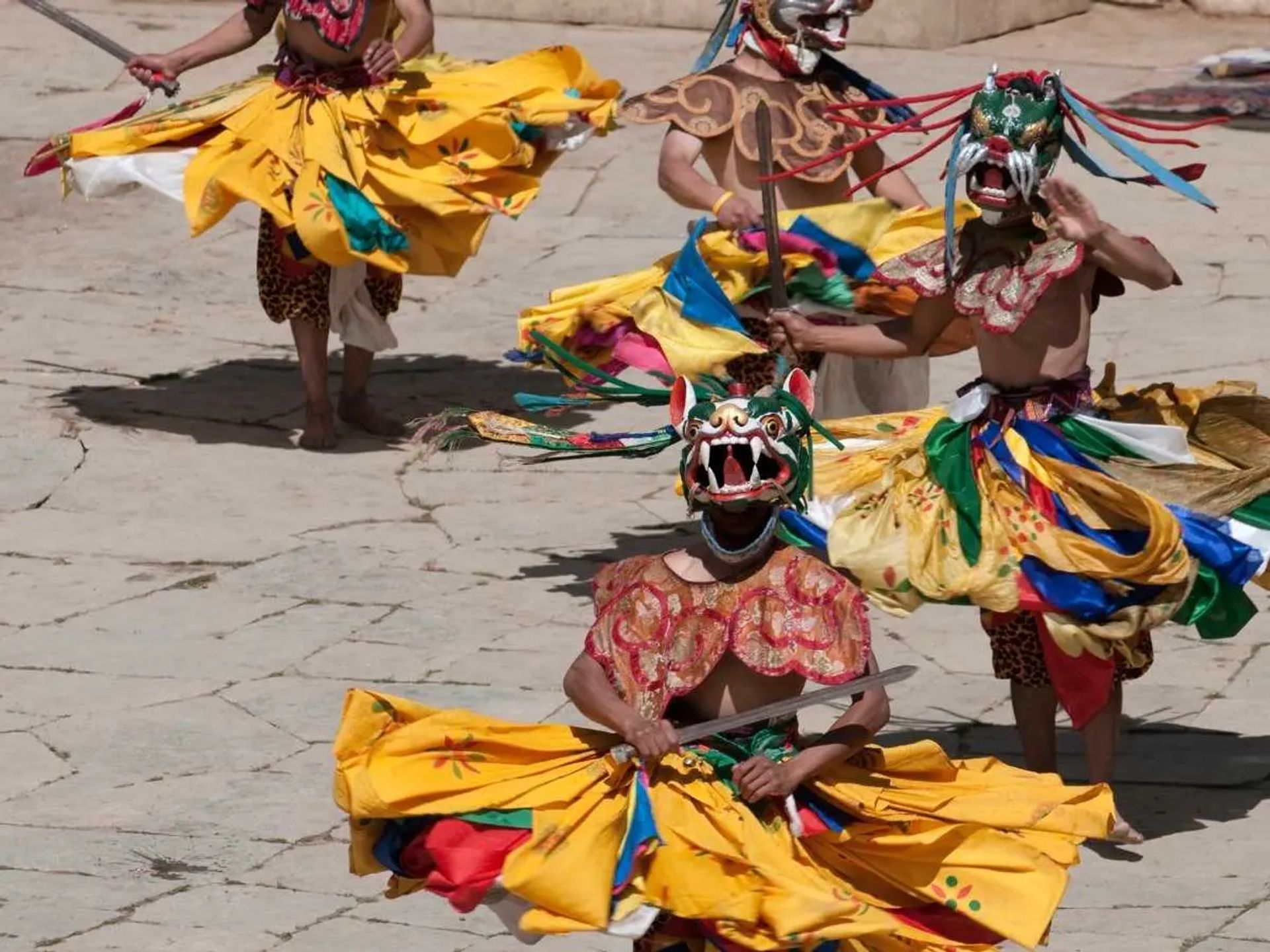

Before the masks appear, you hear them. The crash of cymbals carries across the open courtyard of the dzong, followed by the low drone of long horns and the steady beat of ceremonial drums. Then the figures emerge: their carved wooden masks painted in vivid reds, golds, and blacks, robes of heavy brocade spinning as they take their first deliberate steps. Around them, monks in crimson robes watch in silence. So do hundreds of local families, elderly grandmothers with prayer beads in hand and children pressing forward for a closer view.
This is a Bhutan festival. Not a show arranged for visitors, but a living act of devotion that has taken place in this Himalayan kingdom for centuries. Bhutan, known as the Land of the Thunder Dragon, is one of the few places on earth where colourful festivals remain at the very centre of public life. For a fuller picture of what life and travel here actually looks like, our complete Bhutan travel guide covers everything from visas and entry to cultural essentials. For Bhutanese people, these gatherings are far more than cultural events. They are expressions of faith, community, and a Bhutanese identity that stretches back through centuries of Buddhist tradition.
This guide to festivals in Bhutan covers four distinct celebrations that together span the Bhutan festival calendar from spring through winter. It also introduces the key festivals that sit outside the main tourist circuit, explains the sacred tshechu tradition at the heart of Bhutanese culture, and offers practical guidance for planning a visit.
What Is a Tshechu? Bhutan's Sacred Festival Tradition Explained
The Origins and Meaning of the Tshechu
The word tshechu Bhutan travellers most often encounter translates simply as "the tenth day" — a reference to the tenth day of the lunar month on which many of these celebrations fall. Tshechus are rooted in Bhutanese history stretching back to the 8th century, when Guru Rinpoche, also known as Padmasambhava, brought Tantric Buddhism to the kingdom. His influence remains so deeply embedded in Buddhist culture here that the annual festival tradition held in his name continues today much as it has for hundreds of years.
Each tshechu is organised at the district level, centred on the local dzong or monastery, and calculated according to the Buddhist calendar, which follows lunar cycles rather than the Gregorian year. Tshechus serve a dual purpose. They are acts of collective worship and pilgrimage, but they are also great social gatherings. For people living in remote highland valleys, a tshechu is one of the few moments in the year when the wider community comes together, making it a central thread in Bhutanese life across every generation.
What Happens During a Tshechu
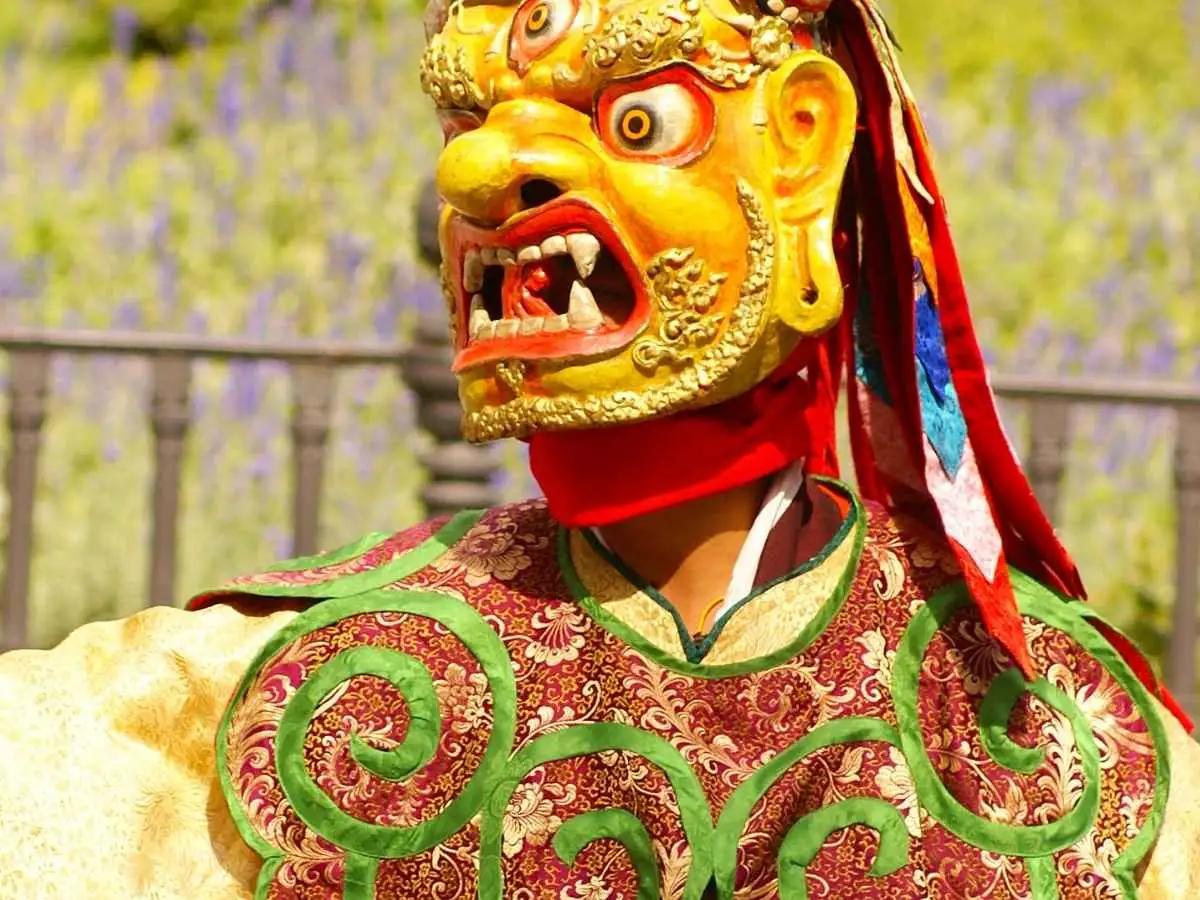
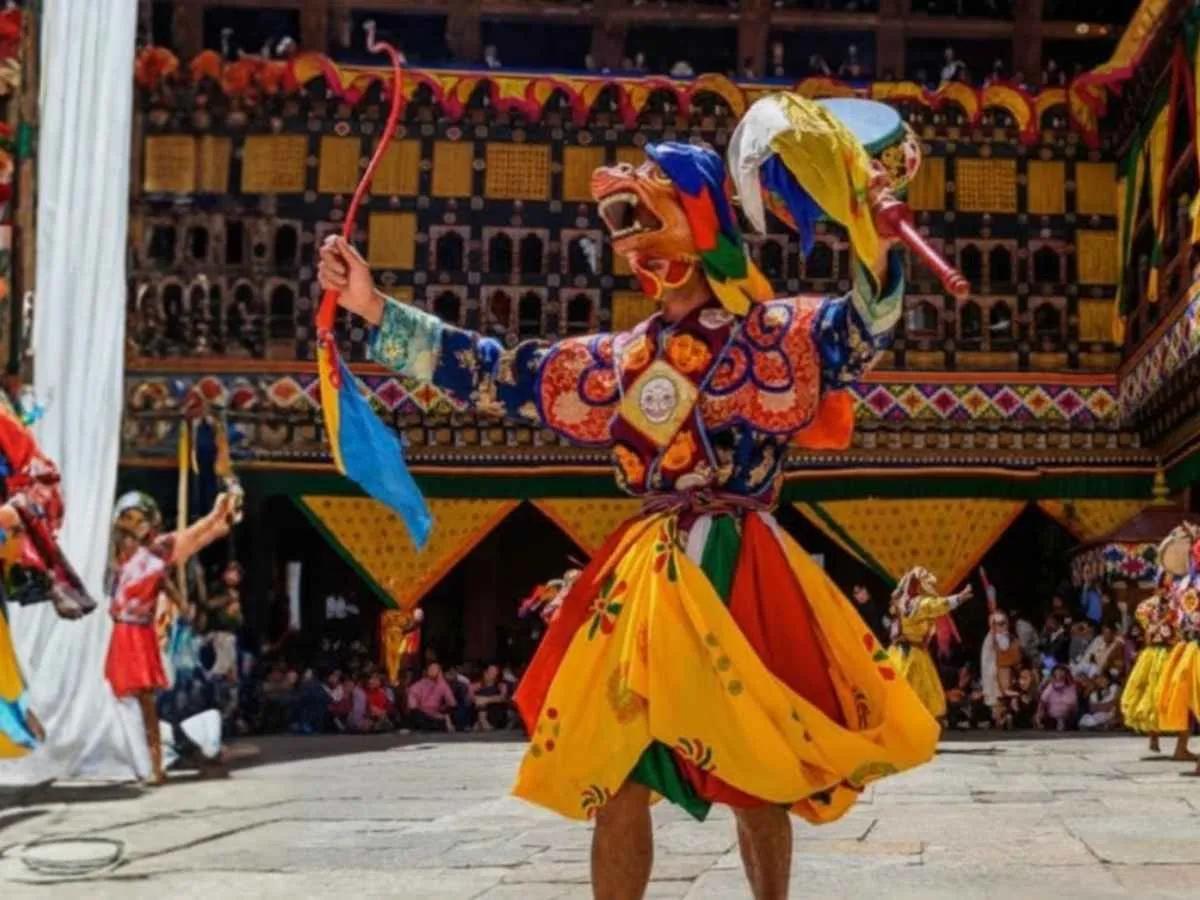
The visual centrepiece of any tshechu is the cham, or masked dance. Performed by trained monks and religious dancers, cham is far more than entertainment. Each dance is a sacred narrative drawn from Bhutanese folklore, depicting events from the life of Guru Rinpoche, the triumph of good over evil, or the judgement of souls after death. The performers wear elaborate costumes and large carved masks representing deities, protective spirits, animals, and demons. As they move through the courtyard in sequences of precise ritual choreography, the crowds watch with genuine reverence.
One figure stands apart: the Atsara, a sacred clown dressed in red with an exaggerated mask, who weaves between the dancers and engages the audience with humour. Far from irreverent, the Atsara carries deep spiritual symbolism and is considered an important part of the ceremony's meaning.
On the final morning of a tshechu, the thongdrel is unfurled. This is a vast embroidered silk thangka, sometimes many metres in height, depicting Guru Rinpoche and his manifestations. Witnessing the thongdrel is considered an act of great spiritual merit, and devotees travel considerable distances to be present for the brief time it remains visible. It is one of the most profound experiences Bhutan has to offer.
Not every festival in Bhutan follows the tshechu format. Some, including the Ura Festival and the Tangbi Mani, have their own distinct character and rhythm.
The Four Festivals at the Heart of a Bhutan Festival Tour
These four celebrations span the Bhutan festival calendar from late winter through autumn, each offering a different experience of Bhutanese cultural and spiritual life.
Punakha Tsechu — Bhutan's Sacred February Festival
The Punakha Tsechu takes place in February or March, set within the extraordinary Punakha Dzong at the confluence of the Pho Chu and Mo Chu rivers. Built in 1637, this dzong served as Bhutan's administrative and spiritual capital for centuries, and attending a festival within its whitewashed walls and gilded courtyards is to feel the full weight of that history.
Visitors arriving in Punakha at festival time often find themselves at the centre of two overlapping events. The Punakha Drubchen, a three-day event held in the days immediately before the Punakha Tshechu, commemorates a 17th-century Bhutanese military victory over Tibetan forces who attempted to invade the kingdom. The ceremony includes a dramatic re-enactment featuring the Bhutan army in period dress, recreating the historic battle across the dzong grounds. It is one of the most visually powerful sequences on the Bhutanese festival calendar, and one that pairs beautifully with a broader look at what to do across the kingdom beyond the main festival sites.
The Punakha Tshechu itself is considerably more intimate than the headline events at Paro and Thimphu. The crowds are largely local, the atmosphere is unhurried, and the sense of genuine community participation is strong. Monks perform the cham dances in the inner courtyard while villagers dressed in their finest traditional dress gather on the surrounding steps and balconies.
Ura Festival — Bumthang's Most Intimate Celebration
The Ura Festival is held in April or May in the village of Ura, the most remote of Bumthang's four sacred valleys. Bumthang is widely regarded as the spiritual heartland of Bhutan, a region of ancient temples, pilgrimage routes, and deeply rooted Buddhist tradition, and the Ura Festival reflects this character fully.
Unlike the larger tshechus, Ura draws very few international visitors. The celebration is connected to the tradition of the great treasure-revealer Pema Lingpa, and the rituals carry a quality of devotion that is difficult to find at better-known festivals. Villagers carry sacred relics through the lanes of the village in procession, masked dances are performed in the open air against a backdrop of mountain scenery, and the entire community takes part. As an intimate festival experience, it offers genuine access to Bhutanese life in a way that more popular events cannot always provide. Timing this visit alongside an itinerary built around central Bhutan gives the valley the days it deserves.
Tangbi Mani — An Autumn Blessing Ceremony in the Spiritual Heartland
The Tangbi Mani takes place in September in central Bhutan, within the Bumthang valley. Its character differs from a tshechu in an important way. Rather than cham dances and a thongdrel display, this is primarily a Mani ceremony, centred on the collective recitation of sacred Buddhist texts and the offering of prayers for the wellbeing of the community. Butter lamps are lit, monks chant through the night, and local families gather in an atmosphere of quiet devotion.
Bumthang is also home to several other celebrated festivals for those with time to explore the valley. The Jakar Tshechu, held at the imposing Jakar Dzong in the Chokhor Valley, is a unique festival in its own right, bringing together communities from across the district for a multi-day gathering that combines cham performances with the distinctive atmosphere of this ancient central Bhutan stronghold. The Nimalung Tshechu at Nimalung monastery and the Domkhar Tshechu in Domkhar village in the Chumey Valley both offer similarly absorbing experiences, drawing local devotees to sites that remain largely unknown to outside visitors.
Because the Tangbi Mani falls outside the main tshechu season and receives almost no attention in mainstream travel writing, it remains one of the least visited significant festivals in Bhutan. Sharing the experience alongside local villagers rather than alongside other tourists gives this ceremony an authenticity that is very hard to replicate.
The Black-Necked Crane Festival — When Wildlife and Culture Share the Valley
In November, something extraordinary happens in the Phobjikha Valley. Hundreds of black-necked cranes, having spent the summer months on the high Tibetan plateau, make their annual migration south over the Himalayan mountains and descend into this vast glacial valley at 2,900 metres. Their arrival has been welcomed by local communities for generations, and the annual Black-Necked Crane Festival reflects the deep connection between Bhutanese spiritual life and the natural world.
The festival takes place in the courtyard of Gangtey Gompa, one of Bhutan's oldest monasteries and a striking landmark at the edge of the valley. There are official ceremonies, folk dances performed by schoolchildren in traditional dress, local food stalls, and the Black-Necked Crane Information Centre, where visitors can learn about the birds' remarkable migration and observe them through high-quality lenses across the open valley floor. It is unlike any other festival in Bhutan: part cultural celebration, part conservation event, held in one of the most spectacular landscapes in the kingdom.
The Main Festivals of Bhutan: Paro and Thimphu Tshechus in Context
No overview of the main festival of Bhutan would be complete without acknowledging the two popular festivals that draw the greatest number of pilgrims and visitors each year.
Paro Tshechu — Dawn, Devotion, and the Sacred Thongdrel
The Paro Tshechu is held in March or April within the walls of Rinpung Dzong in the Paro Valley and is widely considered the most spectacular festival in the country. The thongdrel, unfurled at dawn on the final morning before the heat of the day requires it to be rolled away, is a sight of genuine power. Thousands gather in the pre-dawn darkness for this moment. The scale of the Paro Tshechu, the setting of the dzong, and the quality of the cham performances make it the festival most visitors think of first when Bhutan comes to mind. The Paro Valley also holds some of Bhutan's most celebrated walking routes — the approach and conditions for Taktsang monastery are covered in detail separately.
Thimphu Tshechu — September and October in the Capital
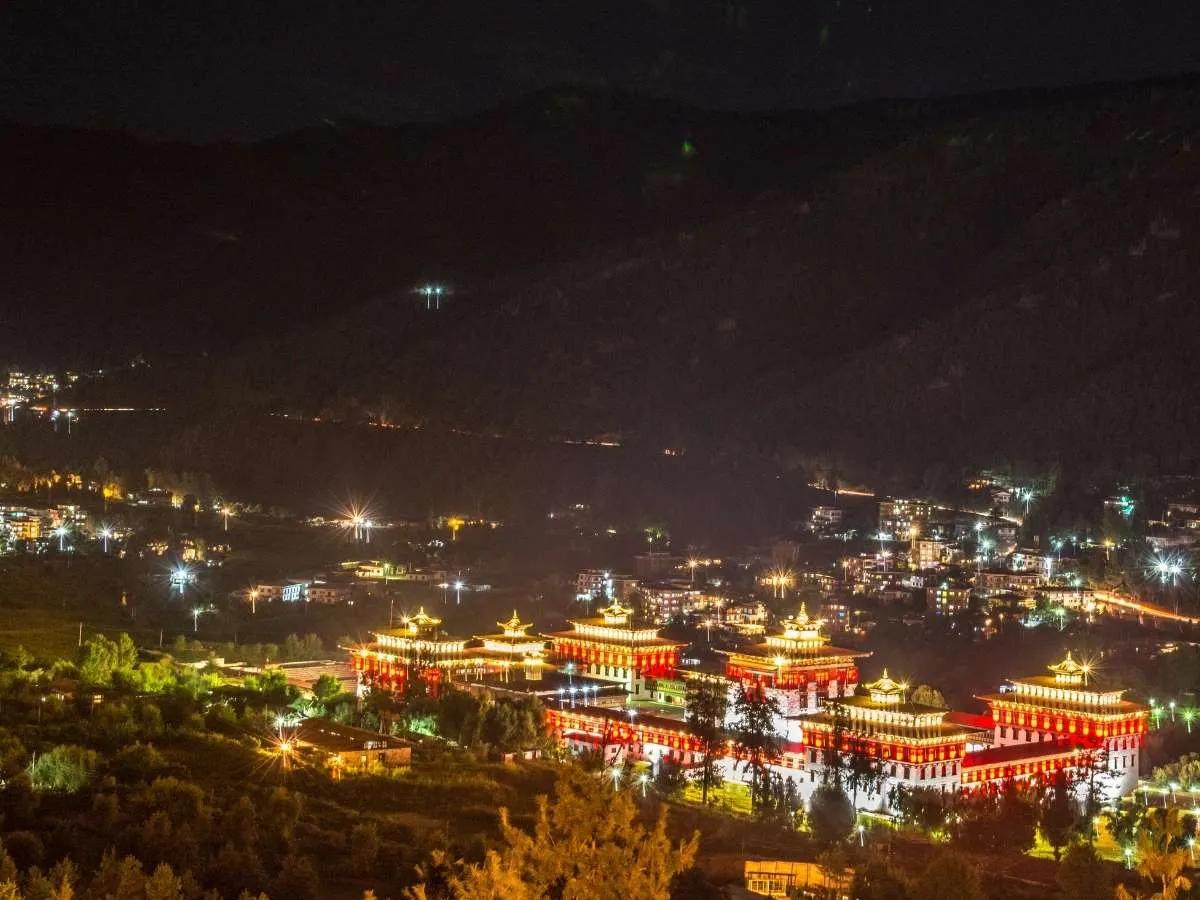
The Thimphu Tshechu, held in September or October at Tashichho Dzong in the capital, is the largest tshechu in Bhutan and the most accessible for first-time visitors. It is typically preceded by the Thimphu Drubchen, a ceremonial gathering held in the days before the tshechu begins, which adds further depth to the festival period for those who time their visit carefully. Set in the heart of the city, the Thimphu Tshechu combines all the elements of a traditional tshechu with a scale and energy that reflects the capital's status as the national centre.
Both festivals are outstanding. However, because they attract significant international visitor numbers, they offer a different quality of experience to smaller celebrations such as Ura or Tangbi Mani.
Using the Bhutan Festival Calendar to Plan Your Trip
The Bhutan festival calendar spans the full year, though most major celebrations fall during spring and autumn when the mountain weather is at its most stable. Understanding which months suit different travel styles is worth doing before committing to a festival-timed departure. The Punakha Tsechu falls in February or March, the Ura Festival in April or May, the Tangbi Mani in September, and the Black-Necked Crane Festival in November. The Paro and Thimphu Tshechus also fall in spring and autumn respectively.
The Haa Summer Festival and Other July Celebrations
July brings a different kind of celebration to western Bhutan. The Haa Summer Festival takes place in the Haa Valley, a remote region near the Tibetan border, and offers a vivid introduction to nomadic Bhutanese culture. Over several days, visitors experience traditional archery competitions, highland cooking, folk dancing, and displays of traditional dress. It sits outside the main festival circuit and attracts few international travellers, making it one of the more distinctive options on the Bhutanese cultural calendar.
Beyond the headline events, the full Bhutanese calendar holds a remarkable number of celebrations that rarely appear in standard travel coverage. In spring, the Gomphu Kora Festival draws thousands of pilgrims to eastern Bhutan, gathering at the sacred Gomphu Kora temple in the Trashigang district for one of the most spiritually charged events in the country. Also in spring, the Rhododendron Festival celebrates the blooming of Bhutan's national flower across high-altitude landscapes. In Ura, the Matsutake Mushroom Festival in September or October marks the harvest of the prized matsutake, an important part of the local economy and an unusual window into rural life in the valley. October brings the Royal Highland Festival in Laya, a celebration of yak herder culture and highland traditions established to support remote communities in the north of the country. December sees the Druk Wangyel Tshechu at the Druk Wangyel Chorten on the Dochu La Pass, an annual festival founded by the royal family to honour those who have served the kingdom.
Bhutan festival dates are calculated according to the Bhutanese calendar, which follows lunar cycles rather than the Gregorian year, so precise dates shift annually and should always be confirmed before booking. All flights into Bhutan arrive at Paro International Airport, most commonly routed via Delhi or Kathmandu in Nepal, and specialist tour operators will have up-to-date festival calendars available at the time of enquiry.
All visitors to Bhutan travel with a licensed Bhutanese tour operator, and a visa is required. Most specialist operators arrange the visa as part of the tour package. Festival-timed departures fill quickly, so booking at least six months in advance is strongly advisable.
What to Expect as a Festival Visitor
Bhutan's festivals take place within active sacred spaces, and the most important thing a visitor can bring is genuine respect. Dress modestly, covering shoulders and knees, and follow the guidance of your local guide on where to stand and when to move. Photography is generally welcomed, though it is courteous to ask before photographing monks or individuals at close range during ritual moments.
Arrive early. The most atmospheric parts of any festival, including the thongdrel display and the opening dances, often take place in the early morning before the main crowd gathers. Carry layers for cold mountain starts, even in spring, and bring water for longer festival days.
The Atsara figures may approach visitors in the crowd, which is entirely part of the festival's communal spirit. Accept it as the welcome it is intended to be.
Conclusion
Bhutan's festivals are not performances arranged for outsiders. They are living acts of devotion, community, and continuity that express a Bhutanese identity shaped by centuries of Buddhist faith and mountain life. From the spring courtyards of Punakha Dzong to the quiet lanes of Ura village and the crane-filled skies above Phobjikha, each celebration offers something genuinely rare in modern travel: the experience of being present not as a spectator of culture, but as a welcome guest within it. If you are ready to time your journey around Bhutan's extraordinary festival calendar, explore our small-group Bhutan festival departures and find the date that fits your season.