
The Perfect 2-Week Argentina Itinerary: From Buenos Aires to the Andes
A 2-week Argentina itinerary has to work harder than most trip plans, simply because Argentina is the eighth largest country on earth. Two weeks sounds generous until you look at a map and realise that Buenos Aires sits closer to Miami than it does to some of Argentina's own southern glaciers. The good news is that a 2-week Argentina itinerary doesn't need to chase the whole country. It needs one strong, connected route that rewards the time you actually have, and it deliberately skips over how you get here, since your international flights into Buenos Aires are a separate booking from everything that follows.
This guide sets out one of the best ways to spend those two weeks: a loop from Buenos Aires up into the Andean north-west, across the border into Chile's Atacama Desert, and back through wine country to the capital. It is a proper Argentina adventure built on contrast, from colonial cities to salt flats so wide they look like snow, and from crowded tango bars to villages where you may genuinely be the only visitors around.
Is Two Weeks Enough for Argentina?
Most first-time visitors try to string together Buenos Aires, Patagonia, Iguazu Falls and Mendoza in one trip. On paper it looks achievable. In practice, the distances involved mean you would spend more days in airports than at any single destination, and the trip ends up feeling like a series of departure lounges rather than a journey.
A smarter 2-week Argentina itinerary picks one region and goes deep rather than wide. The route in this guide relies on a single domestic flight from Buenos Aires to Salta, which takes around two hours and fifteen minutes, and everything after that is covered by road. That one flight is what makes fourteen days feel unhurried rather than rushed.
Altitude is the other factor worth planning around early. Much of this route sits above 2,000 metres, with some stretches climbing past 4,000 metres. It rarely causes serious problems, but it is worth easing into the altitude before pushing higher, and it shapes the pace of the whole trip more than distance alone.
Buenos Aires: Where the Trip Begins and Ends
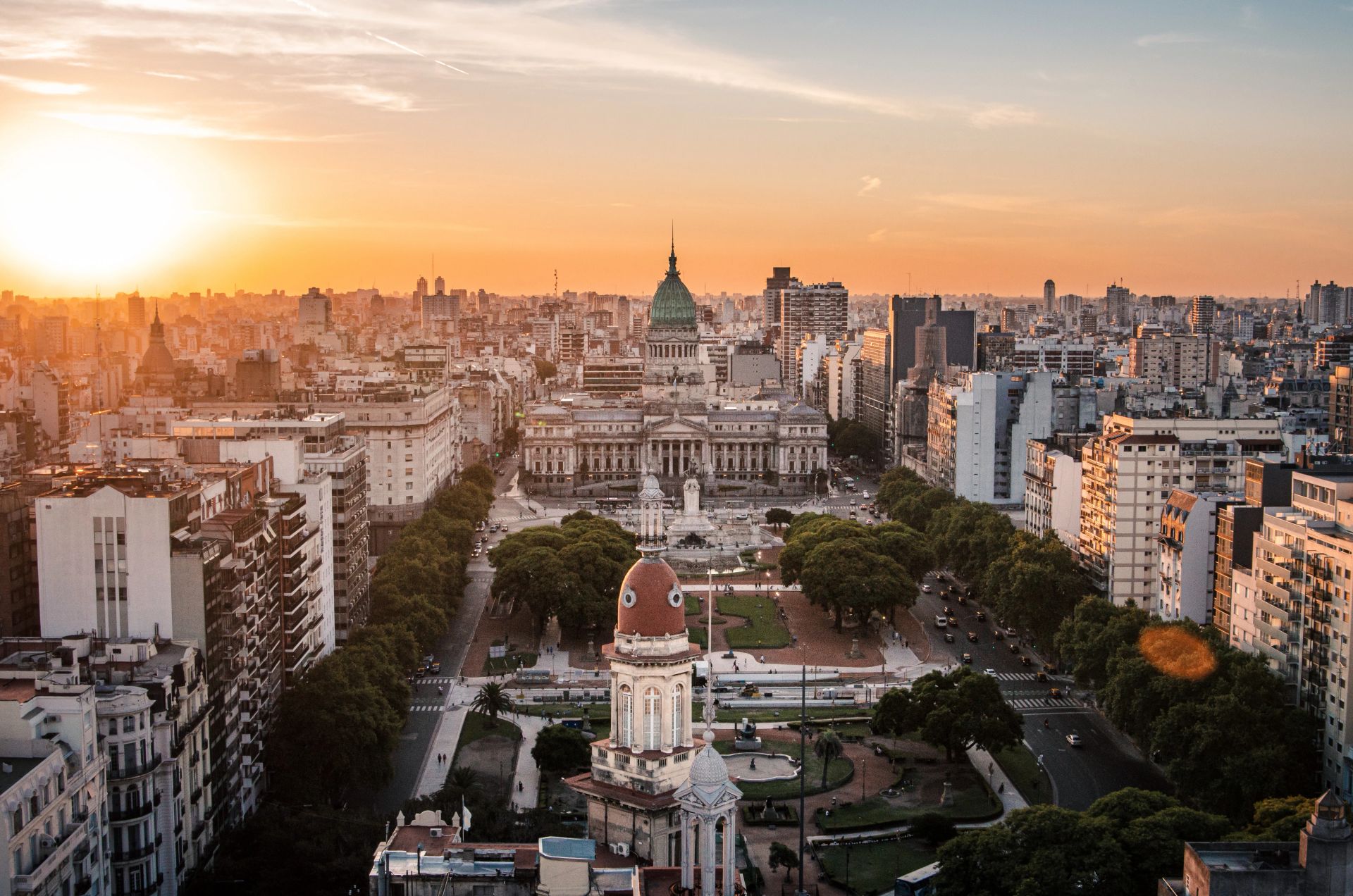
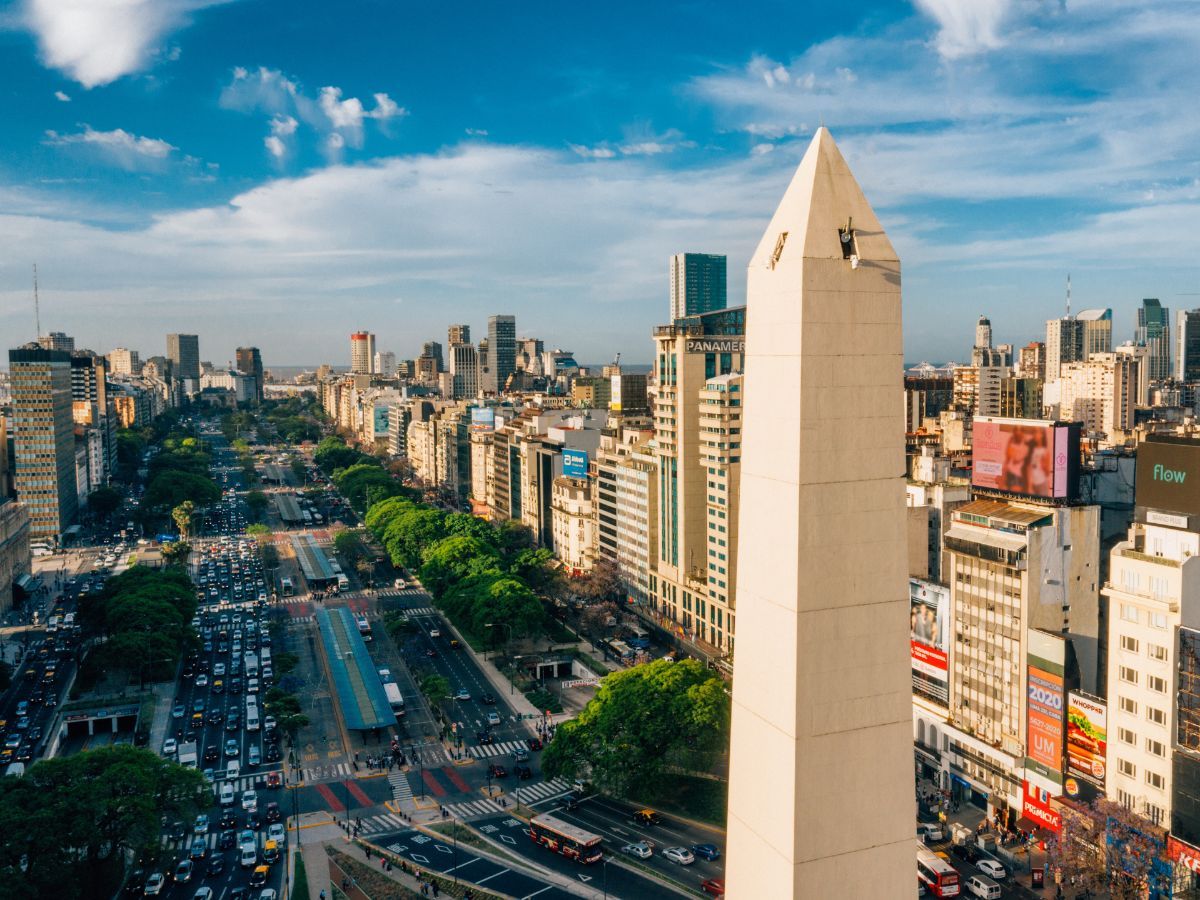
Buenos Aires was founded in 1580 and is home to over a third of Argentina's entire population, which explains why it feels less like a single city and more like several cities stitched together. Give yourself a couple of days in Buenos Aires, covered in full in our Buenos Aires city guide, before the trip properly begins, and save a little time at the end too.
A free walking tour or a half-day city tour is an easy way to get orientated on your first morning, taking in Plaza de Mayo, the historic square ringed by the Casa Rosada and the cathedral. From there, San Telmo is the oldest neighbourhood, full of antique stalls and the sound of tango drifting out of old doorways. La Boca is louder and brighter, known for the painted houses of Caminito Street. Recoleta is grander still, home to elegant avenues and a cemetery where some of the country's most famous historical figures are buried. Palermo, and especially the boutiques and restaurants of Palermo Soho, is worth a stroll too, particularly in the evening. At weekends, the city takes on a different rhythm entirely, with San Telmo's antiques market in full swing and the gaucho market at Mataderos drawing crowds to watch traditional horsemanship and folk performances from across the country.
Culture runs deep here too, as our Argentina culture guide explores in more detail. Buenos Aires has around 57 museums, including the Museo de Arte Latinoamericano de Buenos Aires, still known locally as MALBA, home to one of the more significant collections of Latin American art on the continent. The Colón Theatre is worth seeing even from the outside, since it is one of the world's most acoustically admired opera houses, and its programme runs well beyond opera into orchestral and chamber music most weeks. If you land with a spare evening at the start of your trip, a tango show with dinner is a fitting way to ease into the city before the Andes take over. Travellers with an extra day sometimes add the ferry to Colonia, with a bus on to Montevideo if you fancy a proper day trip into Uruguay.
Getting Around: Small Group Tours, 4WD Vehicles and Local Guides
The practicalities of this route are worth understanding before you go, since the northern stretches work quite differently from a city break in Buenos Aires. Tours through this region typically run in small groups, capped at a maximum of around 12 travellers, which keeps things manageable on narrow mountain roads and in villages with only a handful of guesthouses.
The flight north to Salta is usually operated by Aerolíneas Argentinas, the national carrier, and once you land the whole character of the trip changes. Long stretches through the Puna and the Atacama are covered by 4WD vehicle, and this section is very much a road trip through high desert rather than a scheduled tour. It is common to have a local tour leader and driver for the Argentine section, with a separate Chilean guide taking over once you cross the border. Accommodation is generally comfortable, with private bathrooms throughout, although the one night spent in the remote village of Tolar Grande is noticeably more basic, simply because it is the best available option in a settlement this isolated. WiFi is often available at overnight stops and even in some vehicles, though speeds are rarely fast and reliability cannot be guaranteed this far from anywhere.
Salta and the Quebrada de Humahuaca
From Buenos Aires, fly north to Salta, a city in the far northwest of Argentina that still carries a strongly Hispanic feel through its whitewashed colonial buildings and wrought iron balconies. Old Andalusian houses line the streets of the historic centre, their tiled roofs and thick walls brightened by scarlet and fuchsia geraniums, and a recent restoration of the old city has added new restaurants without stripping away the atmosphere. Spend some time walking the Main Plaza before visiting the Museum of High Altitude Archaeology, known locally as MAAM.
The museum holds one of the most remarkable archaeological finds in South America. In 1999, researchers discovered an Inca sanctuary high on the Llullaillaco volcano, containing the extraordinarily well preserved bodies of three children who had been part of a ritual sacrifice, along with more than a hundred gold and silver ceremonial objects buried alongside them. You don't need to add Peru to the trip to get a real sense of Inca history, though a rail journey from Buenos Aires to Lima is worth considering if you'd rather continue on than turn back; the high Andes here hold plenty of their own.
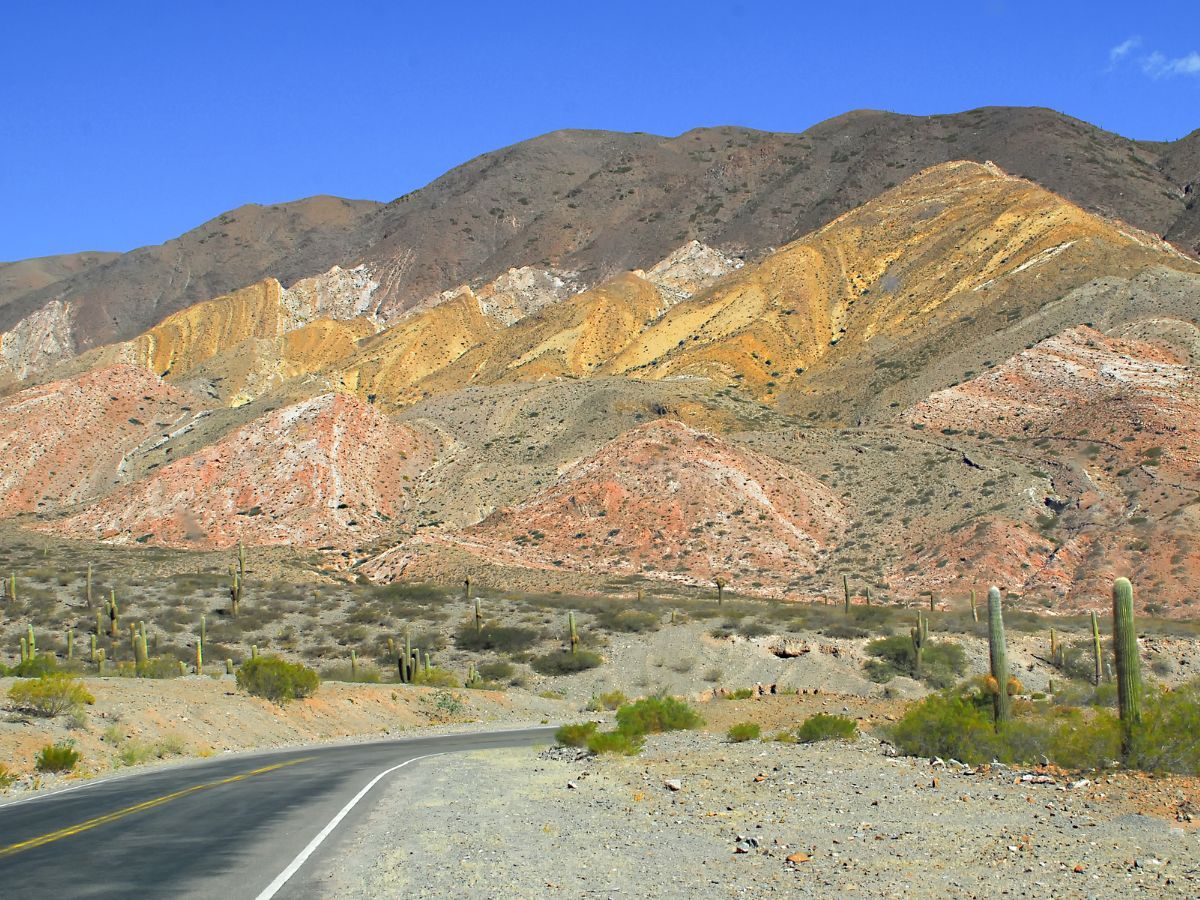
From Salta, head into the Quebrada de Humahuaca, a long valley running towards the Bolivian border, also covered on our Argentina, Chile and Bolivia explorer tour. Its coloured mountains and old villages make it one of the most photographed landscapes in northern Argentina. Purmamarca, Tilcara and Humahuaca each have their own craft market and food stalls selling regional specialities, and this stretch of the route is where you cross fully into high Andean territory.
Crossing the Andes into Chile's Atacama Desert
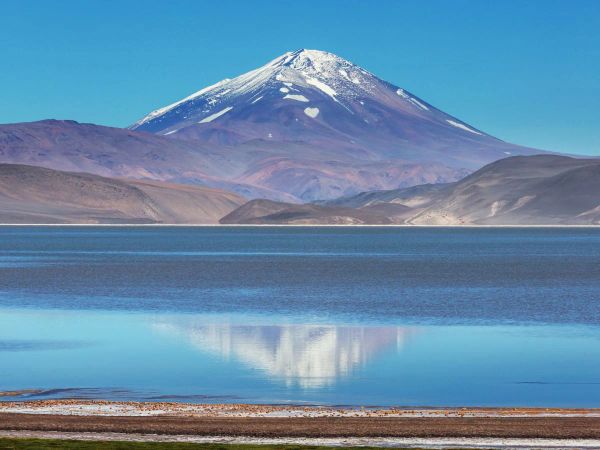
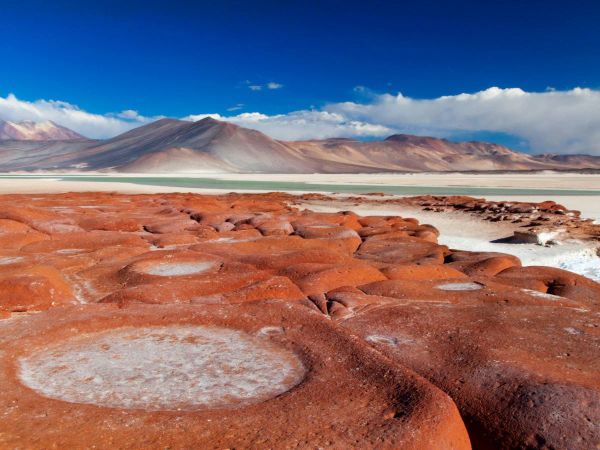
This is where a well-planned Argentina and Chile itinerary earns its reputation. The road out of Purmamarca climbs steadily across the Puna Plateau, passing the Salinas Grandes, a salt flat stretching across more than 30,000 acres, and the small town of Susques, whose church dates back to 1598.
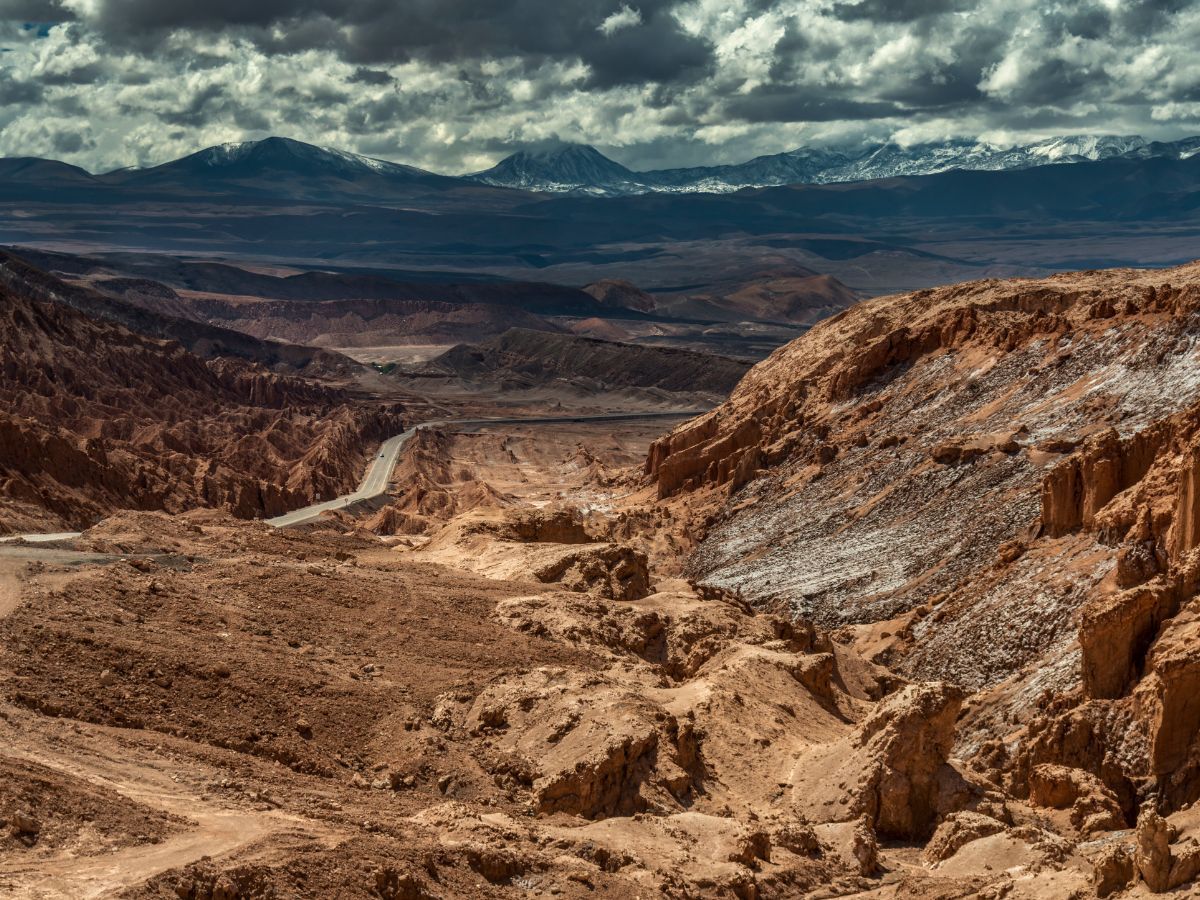
The border crossing itself sits at the Jama Pass, one of the highest points on the entire route. From there, the road drops sharply towards San Pedro de Atacama in Chile, arriving as the sun sets over the perfectly cone shaped Licancabur volcano. The whole stretch has an otherworldly quality, with desert labyrinths, clay formations and pumice fields giving the impression that you have wandered onto another planet entirely, broken only by the occasional herd of llamas or vicuñas.
Give yourself an early start at some point for El Tatio, the largest geyser field in the southern hemisphere and the third largest anywhere in the world, with over eighty active geysers steaming against the cold morning air. Save an evening, too, for sunset at Valle de la Luna, where eroded rock formations genuinely do resemble another planet, and where the silence is as memorable as the scenery.
The Remote Puna Plateau
Back across the border into Argentina, the route continues deeper into the Puna towards Tolar Grande, one of the most isolated villages on earth. Nearby, the Ojos del Mar are blue sinkholes discovered in 2009 to contain a rare living colony of stromatolites, among the oldest forms of life on the planet.
From Tolar Grande, the road crosses the vast Arizaro salt lake towards Antofalla, a tiny oasis village still home to around sixty people, sustained entirely by a natural spring in the middle of the desert. A little further on, Antofagasta de la Sierra is a larger settlement of around 800 people, its name meaning roughly "place where the sun shines," and it sits surrounded by volcanic peaks that dominate the horizon in every direction. Nearby, the green field of Vega Colorada and the valley of Calalaste are among the best places on the whole route to spot wild camelids, alongside suris, the local Andean ostrich, and wild donkeys grazing at altitude.
El Peñón makes a good base for exploring the Cerro Galán caldera, one of the largest volcanic calderas in the Andes, and for visiting Campo de Piedra Pómez, a pumice landscape carved by a volcanic explosion so powerful that its ash cloud has been compared to that of a nuclear detonation, later shaped further by the region's relentless wind. Nearby, Laguna Grande Reserve is a genuine highlight. This high altitude saline lake becomes home to more than 19,000 Puna flamingos each spring, representing around a quarter of the entire known population of the species. Few places in Argentina offer wildlife on this scale in such total silence, and it is worth building in enough time here rather than rushing through.
Altitude and Fitness: What This Route Actually Demands
It is worth being honest about what a trip like this asks of you physically, since the Puna and Atacama sections sit consistently higher than most travellers are used to. The maximum altitude reached on this route is over 4,800 metres above sea level, and the highest point you are likely to sleep at is around 3,500 metres.
None of this requires athletic fitness, and the walking involved tends to be short rather than strenuous. That said, a reasonable level of everyday fitness makes the trip considerably more enjoyable, since the effects of thinner air are noticeable even on gentle walks. There is no camping anywhere on this route, but you will need to be able to carry your own luggage at some of the smaller hotels and guesthouses, particularly in villages like Tolar Grande and El Peñón where porters simply aren't available.
Cafayate Wine Country and the Calchaquí Valleys
The landscape softens considerably as the route drops towards Cafayate, capital of Argentina's northern wine region and famous for its Torrontés white wine. Along the way, the Quilmes Ruins are one of the most significant pre-Inca archaeological sites in the country, with a history stretching back centuries before Spanish arrival and a story tied closely to the eventual fall of the Quilmes people.
Beyond Cafayate, the Quebrada de las Conchas gorge cuts through 55 kilometres of sedimentary rock formations that took roughly a hundred million years to form. The road joins Ruta 40 here, one of the most famous and longest roads anywhere in the world, running past small ranches, vineyards and giant coloured mountains on its way towards Molinos. Close by, the Quebrada de las Flechas is an eerie desert of quartz ash and mud, the result of some 500 million years of geological history. The route continues through Molinos and Cachi before entering Los Cardones National Park, named for the thousands of giant cactus plants that cover its red desert floor.
The Journey Back to Buenos Aires
Eventually, the road leads back to Salta for a short flight to Buenos Aires, roughly two hours in the air. However you choose to pace the earlier legs, it is worth keeping a final evening free in the capital, whether that means a proper parrilla dinner or one last walk through Recoleta before heading home.
What to Pack for the Andes and the Atacama
Because this route moves between city streets, high desert and near-freezing mornings at altitude, packing well matters more than it might on a typical two-week holiday, and it's worth cross-checking against the best time to visit Argentina before you finalise your list. A few essentials worth bringing along:
- Layered clothing, rainwear, a warm hat and sunglasses for sudden shifts in temperature and altitude
- Comfortable walking shoes or boots, plus sandals or similar for travelling days
- A camera and binoculars for the wildlife and landscapes along the way
- A basic first aid kit, insect repellent, sunscreen and a refillable water bottle
- Optional extras such as walking poles, a torch and a small waterproof dry bag for dusty or wet conditions
None of this needs to be specialist mountaineering kit. It is closer to what you would pack for a demanding hiking holiday than an expedition.
Tipping and Other Practicalities
Tipping is discretionary throughout Argentina and Chile, but it is customary on a guided route like this one. A common guide is around £5 per person per day for a tour leader and around £3 per person per day for a driver, adjusted up or down depending on group size and how the trip has gone.
Visa requirements for Argentina and Chile can vary depending on your nationality, and the rules do change from time to time, so it is worth checking current guidance close to your travel dates rather than relying on anything you read months in advance. Our Argentina travel safety guide is a good companion read alongside the latest visa rules. This is one area where a quick check with the relevant embassy or your tour operator will save any last-minute surprises.
Adapting This Route for 10 Days
If your trip is closer to an Argentina itinerary for 10 days rather than a full fortnight, the section to shorten first is the deep Puna stretch around Tolar Grande and El Peñón. Several of these legs involve seven hours or more on the road, and trimming this section alone can save two to three days without losing the trip's core identity.
Keep Salta, Purmamarca, the Chile crossing and Cafayate intact if you can. Together they form a complete story in themselves, running from colonial cities to salt flats to wine country, and they compress far more comfortably than the remote Puna villages, which reward unhurried time rather than a rushed pass through.
Choosing the Best Argentina Itinerary for You
There is no single best Argentina itinerary, only the one that matches what you actually want from the trip . Our guide to the best places to visit in Argentina is a good place to start comparing. This Andean and Atacama route suits travellers drawn to landscapes, history and a genuine sense of remoteness.
Patagonia, El Calafate and El Chaltén for Glaciers and Wildlife
If wildlife and glaciers matter more to you than desert scenery, a trip built around our Patagonia glaciers and peaks tour is an equally strong alternative, just a different journey entirely. It typically centres on El Calafate, the gateway to the Perito Moreno Glacier, where a network of walkways stretching around five kilometres gives close-up views of the ice face. Both the glacier and the peaks further north sit within Los Glaciares National Park, among the interesting facts about Patagonia worth knowing before you go. El Chaltén is the usual base for exploring on foot, with trails leading out to Fitz Roy and Cerro Torre, including the classic hike to Laguna de los Tres, which ends within sight of Fitz Roy itself.
Further along the coast, wildlife-focused travellers sometimes centre a trip on Península Valdés instead, known for its orcas, penguins and southern right whales, though this is a separate itinerary again rather than an extension of the route above. Whichever wildlife draws you, checking the best time to visit Patagonia first will shape which animals you're likely to see.
Iguazú Falls for Waterfalls and Rainforest
Travellers chasing waterfalls often build a trip instead around Iguazú Falls, a UNESCO World Heritage site since 1984 made up of around 275 individual falls spread across a wall of rainforest. Most visitors base themselves in the Argentine town of Puerto Iguazú, which sits closest to the falls, though the Brazilian side, reached from across the border, gives a wider panoramic view of the same cascades.
Mendoza for Wine Country
If it's Argentinian wine that draws you in, wine lovers tend to centre their time on the Mendoza wine region instead, which produces around 70 per cent of Argentina's wine and anchors one of the great wine regions of South America. Even a few nights in Mendoza give you time for a vineyard lunch and a proper look at Malbec country.
None of these replace the route in this guide, and neither does a fourth option worth a mention: Córdoba, further east, where estancia stays and horse riding offer a gentler, ranch-based alternative. They simply show that "best" depends entirely on what draws you to Argentina in the first place, and any of these make for solid itinerary ideas if this particular route doesn't fit your dates.
Conclusion
Two weeks in Argentina will never cover the whole country, and trying to force it usually means seeing less of everything rather than more. The route through Buenos Aires, Salta, the Atacama crossing and Cafayate gives you a complete, connected two-week itinerary instead: cities, deserts, wildlife and wine, without a single wasted travel day. If you're looking to experience this route without the hassle of organising every detail yourself, you can explore the Puna and Atacama on a small group tour.
It won't stretch as far as Rio de Janeiro, and it doesn't need to, since folding in another country is exactly the kind of over-ambitious planning this guide has been steering you away from. If this has felt like the perfect trip, or at least the start of your dream trip to Argentina, discover more Argentina tours from the team at Undiscovered Destinations before you start packing.