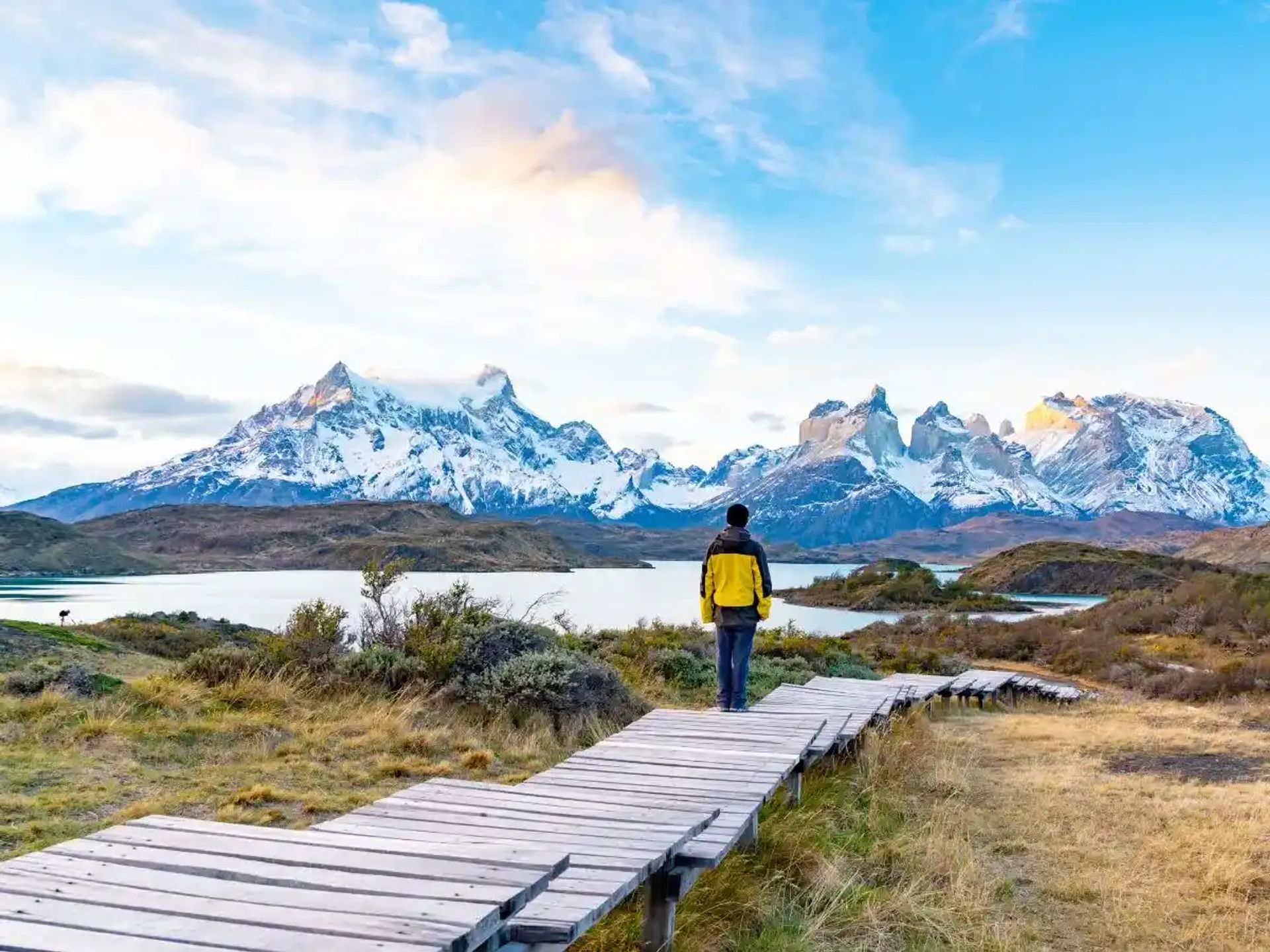

Patagonia is one of those places that everyone recognises from a photograph long before they can point to it on a map. Jagged granite peaks, blue-tinted glaciers, and windswept plains have made it a shorthand for wild, untouched nature. But behind the postcard image sits a region shaped by ancient geology, strange history, and a climate that behaves like nowhere else on Earth. Here are the Patagonia facts that explain why it has earned its place on so many bucket lists.
Where Is Patagonia? A Region Split Between Argentina and Chile
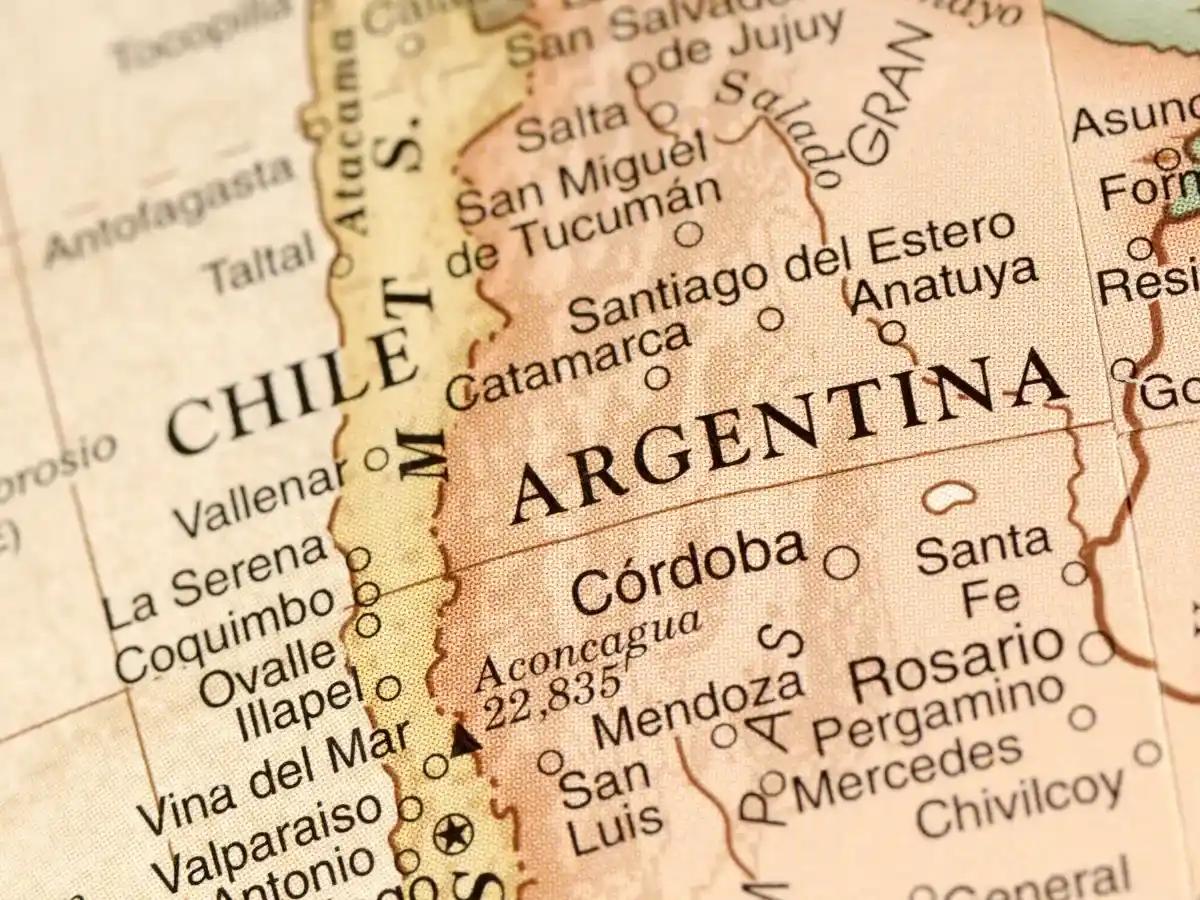
Patagonia is not a country of its own. The Patagonia region is a vast area shared by Argentina and Chile, with roughly ninety per cent of its land falling on the Argentine side and the remainder in Chile. There is no single official border marking where Patagonia begins, which makes it as much an idea as a place: the wild, sparsely populated south of South America.
The two sides feel noticeably different from one another. On the Argentine side, the land opens into dry, windswept steppe running for hundreds of kilometres beneath the Andes. Cross into Chile, and the landscape switches almost instantly to a maze of fjords, rainforest, and glaciers, carved by the same mountain range but shaped by very different weather rolling in from the Pacific. Even locals sometimes describe the two sides as feeling like entirely separate countries, despite sharing the same mountain spine down their length.
A Region Larger Than Many Countries
Despite fewer than two million people calling it home, Patagonia covers over one million square kilometres. That makes it larger than many countries, and more than four times the size of the United Kingdom, yet its population density is among the lowest anywhere on the planet. Long stretches of Patagonian steppe pass without a single town, broken only by distant mountains or a lone estancia.
Argentina's Patagonian Provinces
Argentine Patagonia, sometimes called eastern Patagonia for its Atlantic-facing plains, is divided into several provinces. In northeastern Patagonia sits Río Negro Province, home to the lake resort town of Bariloche. Further south lies Santa Cruz Province, where El Calafate and El Chaltén sit close to the Andes mountains, with Río Gallegos serving as the provincial capital near the Atlantic Ocean. In the southern portion of the region, Tierra del Fuego Province takes in Ushuaia and the islands beyond. Most journeys through Argentine Patagonia begin and end in the gateway city of Buenos Aires, the country's capital, from where domestic flights connect travellers south.
Chile's Southern Regions
Across the Andes, western Patagonia is spread across several Chilean regions, each facing the Pacific Ocean along its length. Heading south from the capital, Santiago, the Los Ríos Region and the Araucanía Region mark the approach to Patagonia proper, an area of volcanoes and lakes shaped by volcanic eruptions long before glaciers take over further south.
Further down the coast, the port city of Puerto Montt and the Chiloé Archipelago, known for its wooden churches and folklore, act as gateways into the fjords beyond. The Magallanes Region, further south again, contains Punta Arenas, the largest city in Chilean Patagonia, along with Torres del Paine National Park. Beyond these towns, much of the south is made up of rural areas: farms, fishing villages, and small ports scattered along the coastline.
How Patagonia Got Its Name
The name Patagonia has a curious, slightly unbelievable origin story, and it is tied to the same voyage that gave the region several of its other names.
The Legend of the Giants
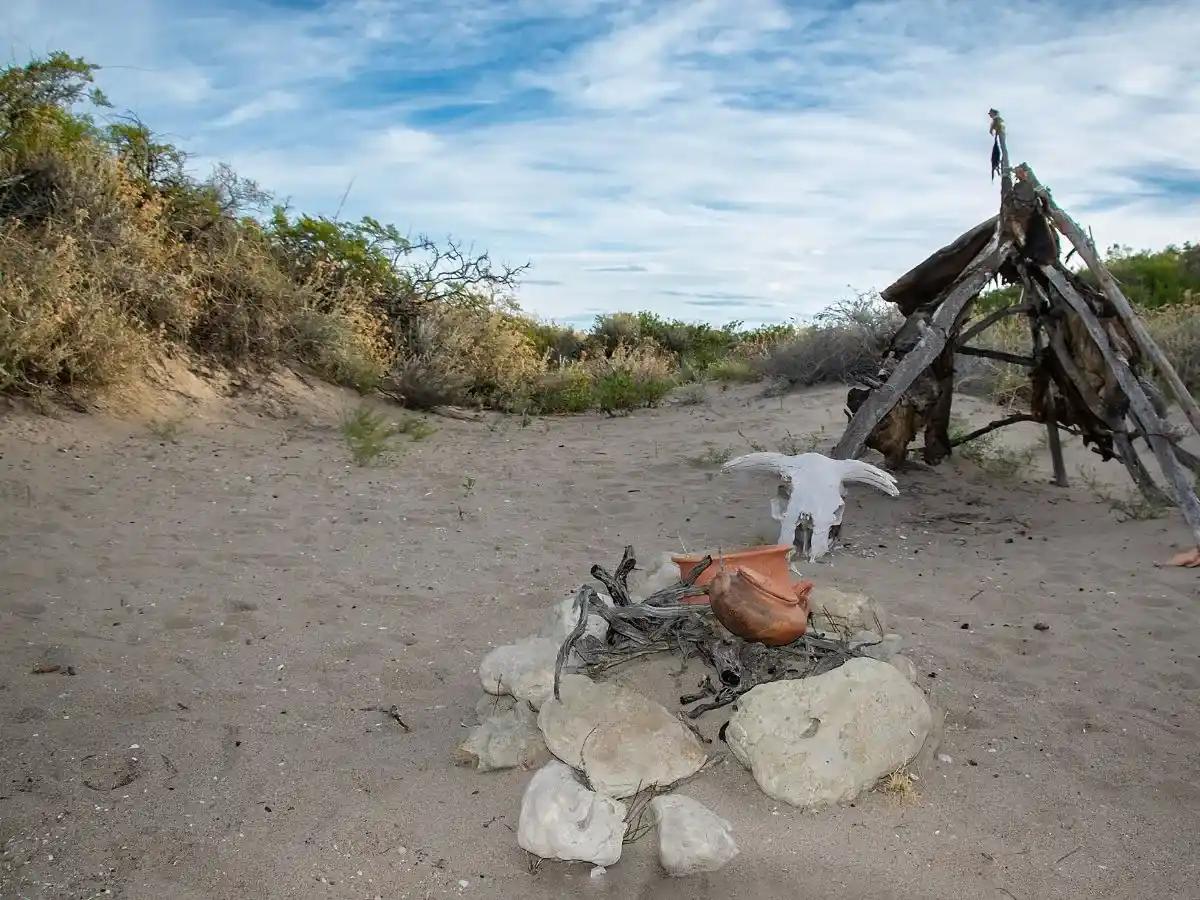
In 1520, the explorer Ferdinand Magellan became the first European to set foot in the region. He and his crew encountered the Tehuelche people, whose footprints in the sand appeared enormous. Magellan's men described them as giants, standing far taller than any European they had met. The tale grew with each retelling, and early maps marked the area as the land of the Patagonian giants.
From Myth to Map
The word Patagonia comes from "Patagones", the name Spanish explorers gave to the Tehuelche based on that first encounter. The giants turned out to be ordinary people, simply well built and wrapped in bulky guanaco-skin boots that made their prints look oversized. The name stuck anyway, and centuries later it still carries a whiff of myth and adventure. That same voyage also gave the southern tip of the continent its other well-known name: sailors spotted fires burning along the coastline, lit by local people, and named the island Tierra del Fuego, or land of fire.
The Fictional Giant Behind the Name
One theory traces the name further back than Magellan's voyage itself. Decades earlier, a Spanish chivalric novel called Primaleón introduced a monstrous giant named Patagón, said to hail from Paphlagonia, an ancient Greek region on the northern coast of what is now Turkey. Magellan is thought to have read the story before setting sail, and when his crew met the tall, sturdily built Tehuelche people, the name Patagón may have come easily to mind. Whether myth, misremembered geography, or simple coincidence, the connection has endured for exactly the same reason as the giants themselves: it is too good a story not to repeat.
The Failed Spanish Outposts of the Strait
Spain tried to make its claim on the region permanent not long after Magellan's voyage. In 1584, the explorer Pedro Sarmiento de Gamboa founded two fortified outposts along the Strait of Magellan, intended to guard the passage against English and other rival ships. Battered by cold, relentless wind, and thin soil that yielded almost no food, both settlements collapsed within two years. Survivors from one starved so badly that English sailors who later found the ruins renamed it Puerto del Hambre, or Port Famine, a name that has stuck ever since.
The People of Patagonia
Long before any of these explorers arrived, Patagonia already had a population shaped by the same demanding land.
Patagonia's Indigenous Peoples
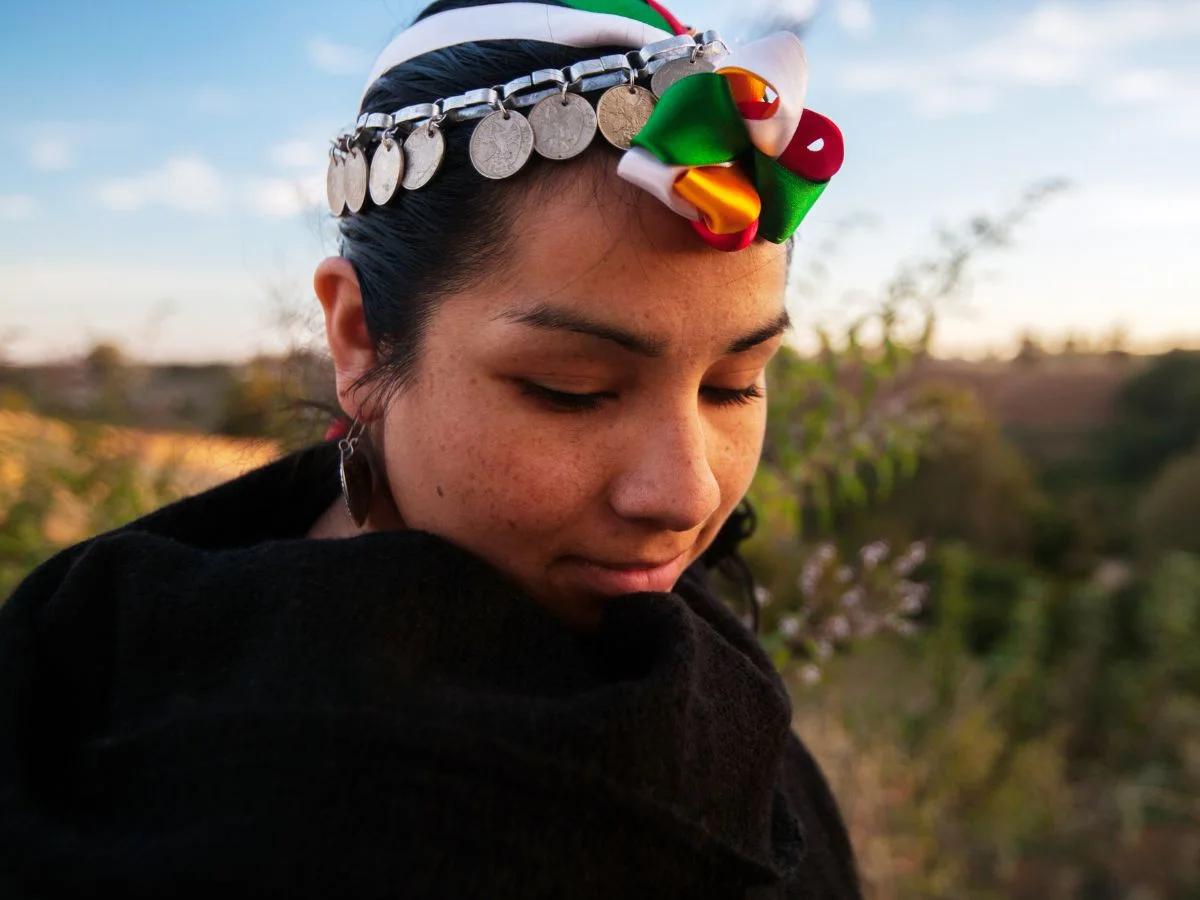
Indigenous tribes such as the Tehuelche and the Mapuche had adapted to Patagonia's tough, ever-changing conditions long before Europeans set foot on its shores, moving across the steppe on foot long before horses reshaped their way of life. Their knowledge of the land, from safe river crossings to reliable hunting grounds, later helped explorers and settlers survive in a place that gave little room for error. Today, the region's indigenous people continue to shape its culture and place names, many of which still carry their original Tehuelche or Mapuche roots.
The Patagonian Welsh
Argentine Patagonia is also home to an unlikely pocket of Welsh culture. In 1865, 153 Welsh settlers arrived by ship in the Chubut Valley, hoping to build a community where the Welsh language and culture could survive undisturbed. They found conditions far harsher than promised, arriving in a semi-arid landscape closer to the Patagonian desert than the green valleys they had been told to expect. Despite the early hardship, their settlement grew into the town of Rawson, now the capital of Chubut province, and the Welsh language is still spoken and taught there today - one of the many living traditions explored in our deep dive into Argentina's culture.
A Land Shaped by Ancient Geology
Patagonia's dramatic landscape is not a coincidence. It is the result of forces that have been at work for hundreds of millions of years.
The Gondwana Connection
Around 180 million years ago, South America formed part of the supercontinent Gondwana, alongside what is now Africa, India, Antarctica, and Australia. When Gondwana broke apart, South America drifted thousands of kilometres westward to its current position, carrying the geological building blocks that would eventually become the Andes and the Patagonian steppe.
The Patagonian Ice Cap
That geological history left behind the Patagonian Ice Cap, one of the largest reserves of fresh water outside the polar regions and, after the ice sheets of Antarctica and the Arctic, one of the largest continuous extensions of ice anywhere on Earth. It feeds almost one hundred glaciers across the region, carving valleys and filling turquoise glacial lakes as it slowly moves. Where the ice meets the lower valleys, it leaves behind moraine ridges and milky, sediment-rich rivers, a visible reminder of just how much of Patagonia's landscape has been sculpted by ice rather than water alone.
Dinosaur Fossils Beneath the Steppe
The same plateau that stretches across Argentine Patagonia has given up more than wind-scoured rock. Beneath the Patagonian desert, palaeontologists have uncovered the remains of some of the largest animals ever to have walked the earth. In 2014, an Argentine researcher named Diego Pol, working with a team from Chubut's Museo Paleontológico Egidio Feruglio, helped excavate the bones of Patagotitan mayorum, a plant-eating giant estimated at around 37 metres long and roughly 70 tonnes. The dinosaur takes its name directly from the region where it was found, a fitting tribute to a landscape that seems built on a grand scale in every sense.
What Is Patagonia Famous For?
Ask most travellers what Patagonia is famous for, and three natural landmarks tend to come up before anything else. One of the most popular ways to experience it is on a day trip from El Calafate, the gateway to the glacier that made this region world-famous.
The Perito Moreno Glacier
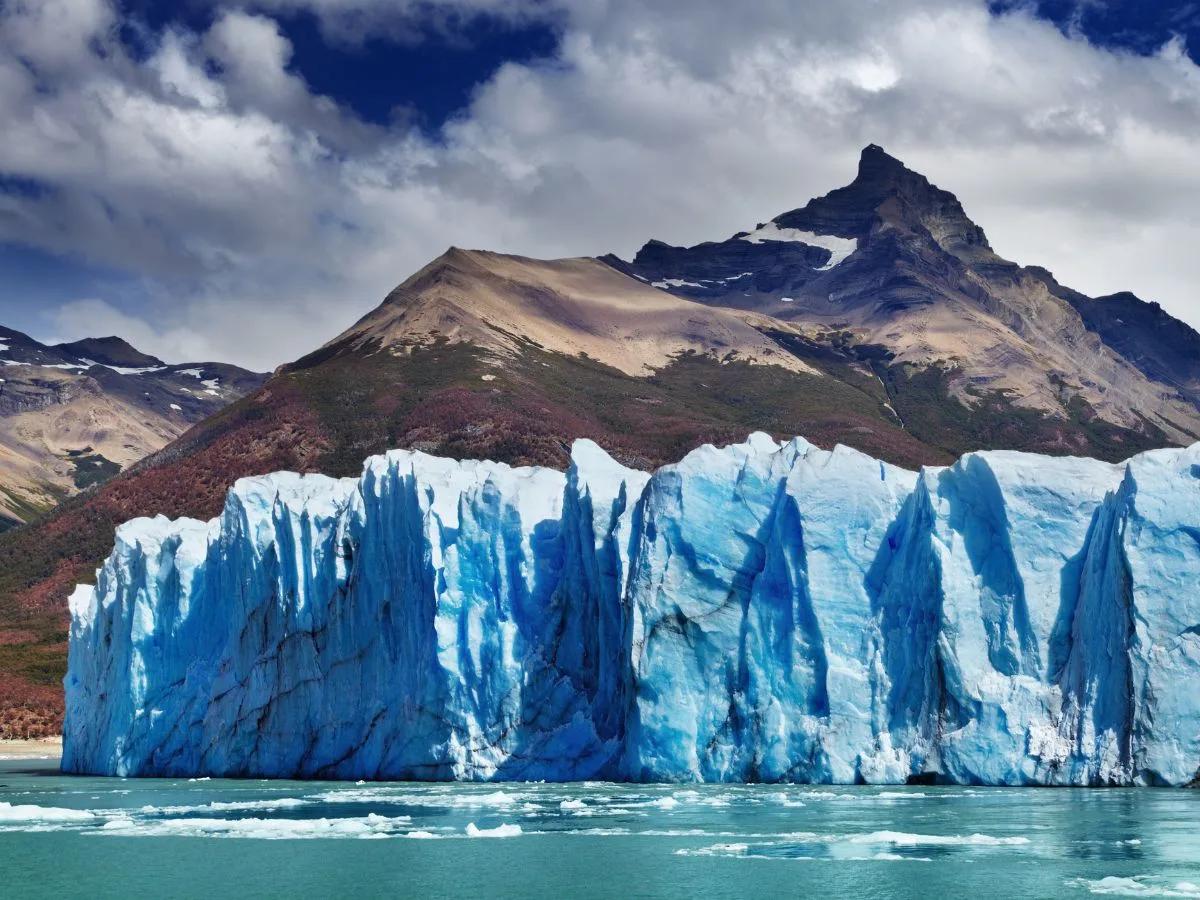
The Perito Moreno Glacier, close to the town of El Calafate, is a signature Patagonia landmark and one of the very few glaciers in the world still advancing rather than retreating. It sits within Los Glaciares National Park, a UNESCO World Heritage Site named for the glaciers that dominate its landscape.
Visitors can walk a network of viewpoints just a short drive from town, watching enormous chunks of ice calve into the milky blue water below with a sound like distant thunder, a spectacle covered in more detail in our Perito Moreno visitor guide.
The Granite Spires of Fitz Roy and Cerro Torre
Further north, within the same national park, near the small trekking town of El Chaltén, the peaks of Fitz Roy and Cerro Torre rise almost vertically from the Patagonian steppe. These twin granite spires are considered among the most technically demanding climbs on the planet, and their jagged silhouettes have become one of the most recognisable images of the entire region. Trails leading towards their base pass through forest and open valleys, offering some of Argentina's best places to explore on a day walk, without requiring any climbing experience at all.
Torres del Paine National Park
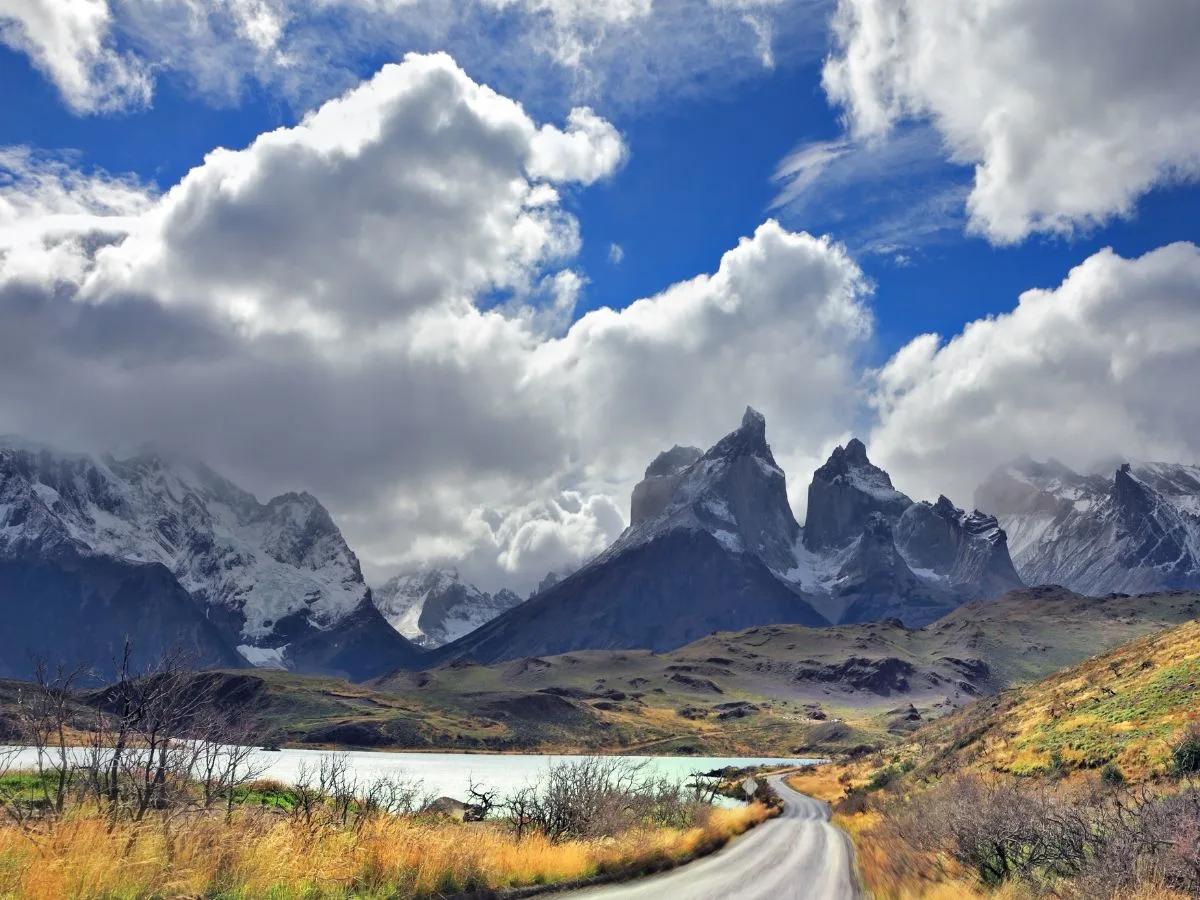
Across the border in Chile, Torres del Paine National Park protects over 225,000 hectares of mountains, glacial lakes, and forest, and has been recognised as a UNESCO Biosphere Reserve since 1978. More than 400 bird species have been recorded within its boundaries, and its three granite towers, the "torres" that give the park its name, are as iconic to Chilean Patagonia as Fitz Roy is to the Argentine side.
Wildlife Found Nowhere Else
Patagonia's isolation has allowed its wildlife to thrive largely undisturbed.
Guanacos, Condors and the Patagonian Steppe
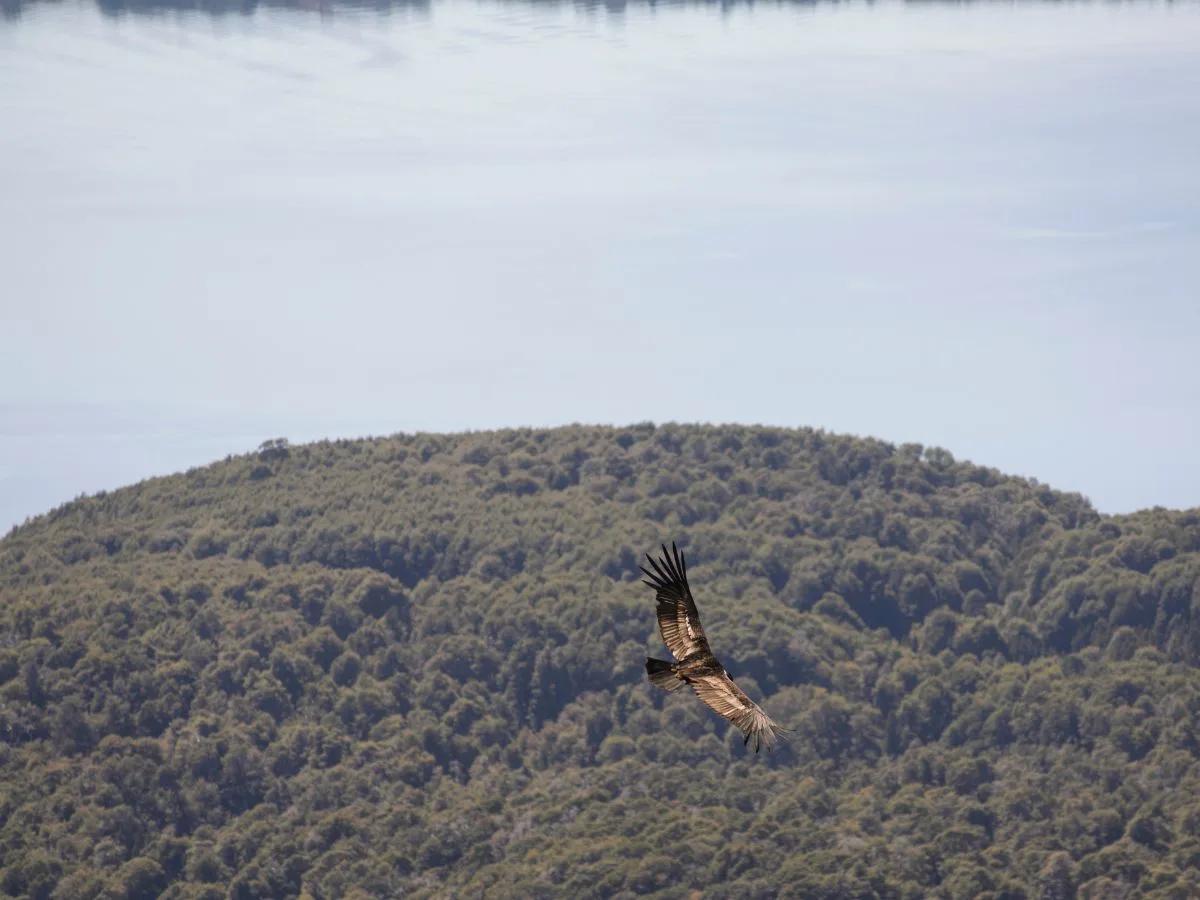
The guanaco, a wild relative of the llama, grazes across the open steppe in herds, often watched from above by Andean condors gliding on wingspans of up to three metres. The lesser rhea, a flightless bird related to the ostrich, is another familiar sight moving quickly across the grassland. All three have adapted to a landscape with little shelter from wind or weather, and spotting them is one of the simple pleasures of travelling through the region.
Whales, Penguins and Coastal Wildlife
Along the Atlantic coast, the waters off Patagonia are among the best places in the world to see southern right whales, which gather to breed and calve in sheltered bays each year. Further south, the region's fjords and channels support colonies of sea lions and seabirds that draw wildlife enthusiasts from around the globe, while penguin colonies line stretches of coastline further to the north and further out again in the South Atlantic, on the Falkland Islands. For many visitors, these wildlife encounters end up as vivid a memory as any glacier or mountain, simply because so much of it happens in the wild, without fences or enclosures in sight.
A Climate of Extremes
Patagonia's weather is famous for being almost impossible to predict.
Four Seasons in One Day
It is often said that Patagonia has four seasons in a single day, and travellers quickly learn why. Bright sunshine can give way to sudden rain, hail, or biting cold within the space of an hour, even during the height of summer, which is why knowing when to visit Patagonia matters as much as packing the right layers.
Among the Windiest Places on Earth
The wind is arguably Patagonia's defining feature. Somewhat counterintuitively, it blows harder in summer than in winter, sweeping unbroken across the steppe from the Pacific with nothing to slow it down until it meets the Andes. It shapes everything from the region's stunted, wind-bent trees to the way travellers plan their days outdoors, with many walks and boat trips built around calmer morning conditions. Locals treat it less as a nuisance and more as a fact of daily life, and most towns across the region are built with sheltered, low-slung buildings that take the worst of it into account.
To the End of the World: Ushuaia and Tierra del Fuego
At the far edge of these southern lands lies a place that markets itself, quite literally, as the end of the world.
The World's Southernmost City
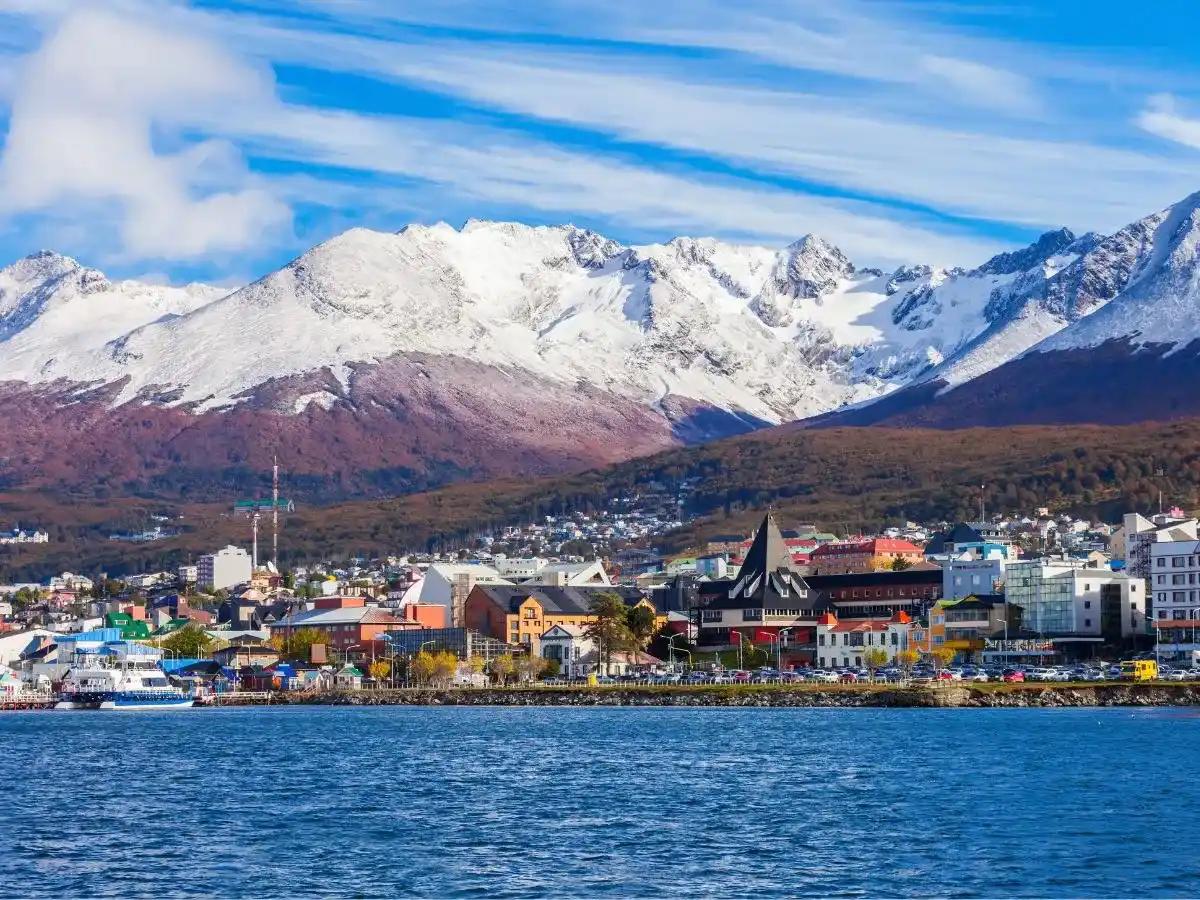
Ushuaia holds the title of the world's southernmost city, tucked between the Andes and the Beagle Channel on the island of Tierra del Fuego. Its surrounding Tierra del Fuego National Park, established in 1960, protects a striking mix of sub-Antarctic forest, mountains, and coastline, along with archaeological sites left behind by the region's earliest inhabitants.
Gateway to Antarctica
Because Ushuaia sits closer to Antarctica than almost anywhere else on Earth, it has become the main departure point for Antarctic voyages. South of Tierra del Fuego, the Atlantic and Pacific give way to the Southern Ocean, the cold ring of water encircling Antarctica. Sailing the Beagle Channel from here, named after the ship that once carried Charles Darwin along this coastline, and passing colonies of cormorants and sea lions along the way, feels like standing at the very edge of the map.
Conclusion
Patagonia earns its bucket-list reputation not through any single landmark but through the sheer weight of its extremes: ancient geology, a name born from a myth about giants, glaciers that defy the usual rules, and a climate that keeps everyone guessing. Reading about these facts is one thing, but standing beneath Fitz Roy or watching Perito Moreno calve into the water below is another experience entirely. If Patagonia has made it onto your list, Undiscovered Destinations can help turn that list into an itinerary, with guided tours of Argentina designed to reach the parts of this wild region that most visitors never see. The only real question left is where in Patagonia to start.