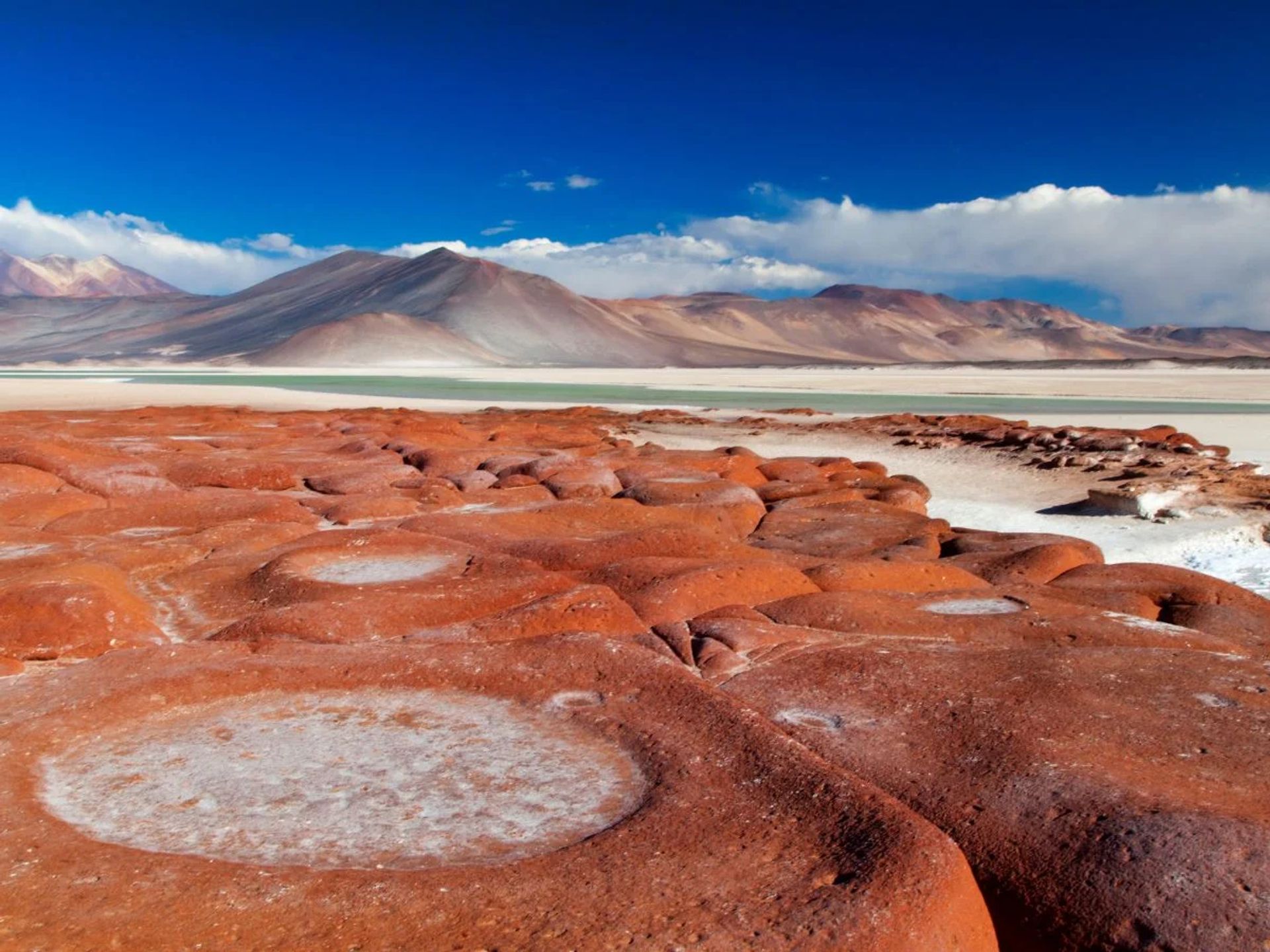

Stretching across northern Chile between the Pacific coast and the Andes Mountains, the Atacama Desert is one of the strangest and most beautiful landscapes on the planet. It holds the title of the driest non-polar place on Earth, and in places it has gone decades without a drop of rain. That extreme dryness, combined with high altitude and near-constant sunshine, has shaped a world of salt flats, geysers, volcanoes and star-filled skies that feels closer to another planet than our own. It is little wonder that NASA has used parts of the desert to test technology destined for Mars, and there is no shortage of things to do in the Atacama Desert once you see it for yourself.
Most visits begin in the small town of San Pedro de Atacama, sitting at around 2,400 metres above sea level and ringed by volcanoes. From here, some of the continent's most beautiful places are all within easy reach, from bubbling geyser fields at dawn to flamingo-filled lagoons high on the altiplano. Here is what to do once you arrive, along with some practical detail on when to go, how to get there, and what to expect from a landscape unlike almost anywhere else on Earth.
Why the Atacama Desert Is Worth the Journey
The Driest Place on Earth
Some parts of the Atacama receive barely any rainfall at all, and certain weather stations here have recorded years without measurable rain. This lack of moisture, paired with clear skies and high altitude, is what gives the desert its otherworldly colours and its reputation as one of the harshest yet most photogenic places on the planet.
A Landscape That Looks Like Mars
The comparison to Mars is not just a marketing line. Scientists have used the Atacama's red soil, volcanic rock and near-total absence of vegetation to trial rover technology before it was sent to the red planet. Walking across some of the desert's flatter basins, it is easy to see why. The ground cracks into strange patterns, the colours shift from ochre to deep rust, and there is barely a plant in sight.
When to Visit the Atacama Desert
Two Very Different Seasons
The Atacama sits so far from any moderating ocean influence, and so high above sea level, that it swings between two distinct patterns. During the southern hemisphere summer, from around December to February, daytime temperatures climb comfortably while nights stay mild by desert standards. This is also the period locals call the Bolivian winter, when brief afternoon storms can roll across the high plateau to the east, occasionally affecting roads near the Bolivian border. Winter months, from June to August, bring the coldest nights, frequently dropping well below freezing, but they also bring some of the clearest and driest skies of the year.
Hot Days, Freezing Nights
Whatever month you travel, expect a dramatic swing between day and night. Thin, dry air holds onto very little heat once the sun goes down, so a warm, sunny afternoon in San Pedro de Atacama can give way to a bitterly cold evening within a couple of hours. Packing in layers matters more here than almost anywhere else in South America.
Getting to the Atacama Desert
Flying via Calama
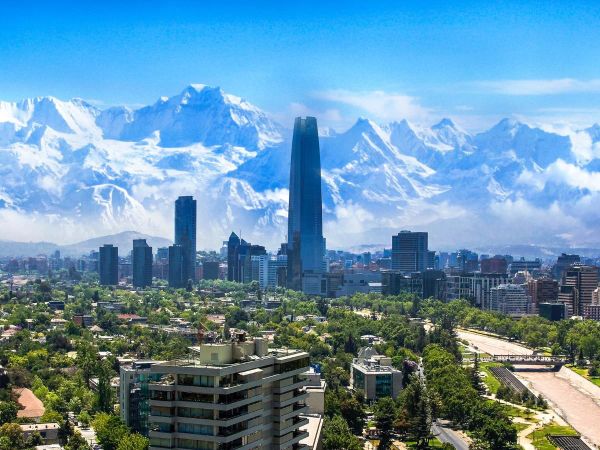
The main gateway to the region is Calama airport, which receives domestic flights from Santiago in around two hours. From Calama, it is a further drive of roughly 100 kilometres, around ninety minutes, across open desert to reach San Pedro de Atacama itself.
A Long Way from Anywhere
It is worth remembering just how remote this corner of Chile is. San Pedro de Atacama sits more than 1,500 kilometres north of Santiago, and considerably further still from Chile's Patagonian region in the far south. For travellers approaching overland, the drive itself becomes a memorable road trip through some of the most beautiful scenery in South America. For many, that isolation is precisely the point.
Watch El Tatio Geysers at Sunrise
The Largest Geyser Field in the Southern Hemisphere
El Tatio is home to more than 80 active geysers, making it the largest geyser field in the southern hemisphere. Sitting at around 4,200 metres, the field is at its most dramatic just after sunrise, when the freezing morning air turns the rising steam into thick white columns that catch the early light. Temperatures at this altitude can drop well below zero before dawn, so warm layers are essential.
Getting There from San Pedro de Atacama
Reaching El Tatio means a very early start, usually leaving San Pedro de Atacama in the dark so as to arrive before sunrise. The drive climbs steadily through the Andean foothills, and the change in scenery from town to high plateau is part of the experience in itself. It makes for a long day trip in total, often paired with an afternoon visit to Valle de la Luna once the temperature climbs.
Preparing for the Altitude
A Steep Climb in a Short Space of Time
San Pedro de Atacama itself sits at a manageable 2,400 metres, but many of the desert's best sights, including El Tatio and the high lagoons of the altiplano, climb well above 4,000 metres. That is a significant jump in a short space of time, and it is worth taking seriously.
Simple Steps That Make a Difference
Resting on the first day, drinking plenty of water, eating light meals and avoiding alcohol until you have acclimatised all help t
he body adjust. Locally, coca leaf tea is a popular and widely available remedy for mild altitude discomfort. None of this needs to be complicated, but a little caution in the first day or two makes the rest of the trip far more enjoyable.
Explore Valle de la Luna and the Cordillera de Sal
Sunset Over the Moon Valley
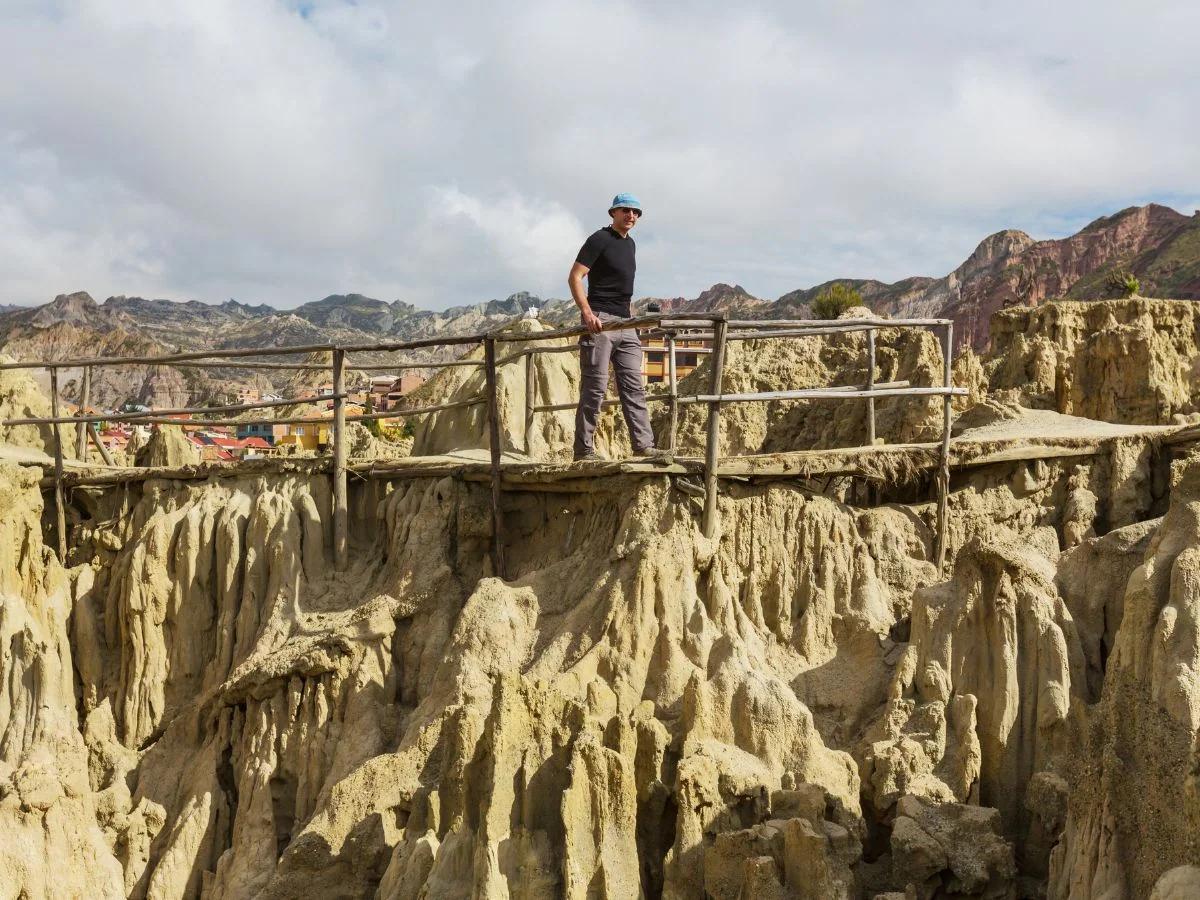
Valle de la Luna, or Moon Valley, is named for its pale, cratered landscape of wind-carved rock and sand. Its dunes and ridges glow gold and pink as the sun sets, forming one of the desert's more unique landscapes and one of the most popular spots in the region for photography. The valley sits within the wider Cordillera de Sal, or Salt Mountain Range.
Salt Mountains and Ancient Seabeds
The Cordillera de Sal was once part of an ancient seabed, pushed upward over millions of years by movement in the Earth's crust. Wander through it and you will find layers of salt and gypsum folded into the rock, a striking reminder that this bone-dry desert was once submerged beneath the sea.
Marvel at Licancabur Volcano and the High-Altitude Lagoons
The Perfect Cone of Licancabur
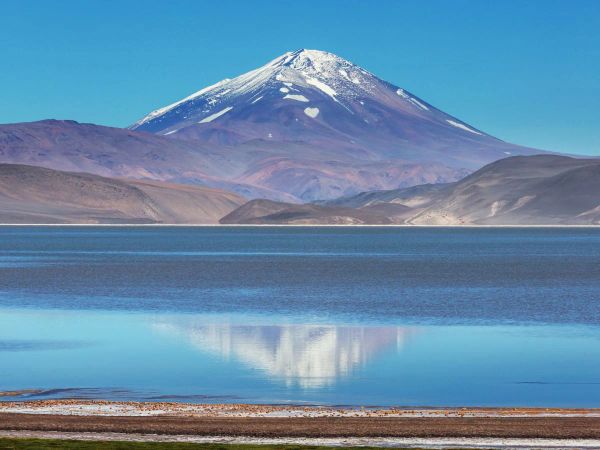
Few volcanoes are as photogenic as Licancabur, whose almost perfectly symmetrical cone rises above the desert on the border with Bolivia. It is visible from much of the surrounding altiplano, and travellers arriving in San Pedro de Atacama at sunset often catch their first glimpse of it lighting up in shades of orange and pink.
Miscanti and Miñiques: Flamingo Lagoons of the Altiplano
Higher still, a cluster of altiplanic lagoons sit among the volcanic peaks, among them the twin lakes of Laguna Miscanti and Laguna Miñiques at around 4,200 metres, their dark blue waters home to three species of flamingo: the James, the Chilean and the Andean. Together, these Miscanti and Miñiques lagoons rank among the most memorable sights in the region.
Explore the Salar de Atacama's Lagoons
Floating in Laguna Cejar
Closer to San Pedro de Atacama, a handful of smaller lagoons within the Salar de Atacama carry such a high concentration of salt and minerals that swimmers float almost without trying, much like the Dead Sea. Laguna Cejar, often simply called the Cejar lagoon, is the best known of these, one of several turquoise lagoons dotted across the salt flat, its still, mineral-heavy water reflecting the surrounding desert and distant volcanoes.
Laguna Chaxa and the Flamingo Reserve
Laguna Chaxa, sometimes referred to simply as the Chaxa lagoon, sits within the Los Flamencos National Reserve on the salt flat's edge, and is one of the most reliable spots in the region to watch flamingos feeding in shallow, mineral-crusted water against a backdrop of distant volcanoes.
Sunset at Laguna Tebinquinche
Further out across the salt flat, Laguna Tebinquinche is a shallow, mirror-like lagoon reached via a small wooden mirador built out over the salt crust, known for reflecting the surrounding volcanoes at sunset, when the still water turns the whole scene a deep orange and pink.
Try Sandboarding and Other Adventure Activities
Dune Boarding in Valle de la Muerte
Valle de la Muerte, or Death Valley, is a short drive from San Pedro de Atacama and home to dunes that climb to roughly 200 metres in places. Strapping on a board and sliding down is one of the more adrenaline-fuelled ways to experience the desert, and it needs no previous experience, just a willingness to fall over a few times.
Hiking Through Canyons and Gorges
Away from the dunes, the desert hides pockets of green in its canyons, where narrow rivers cut through steep rock walls. These gorges are a good option for travellers who want a gentler pace, with easy scrambling and shade a welcome change from the open desert sun.
Stargaze Under Some of the Clearest Skies on Earth
Why the Atacama Is an Astronomer's Paradise
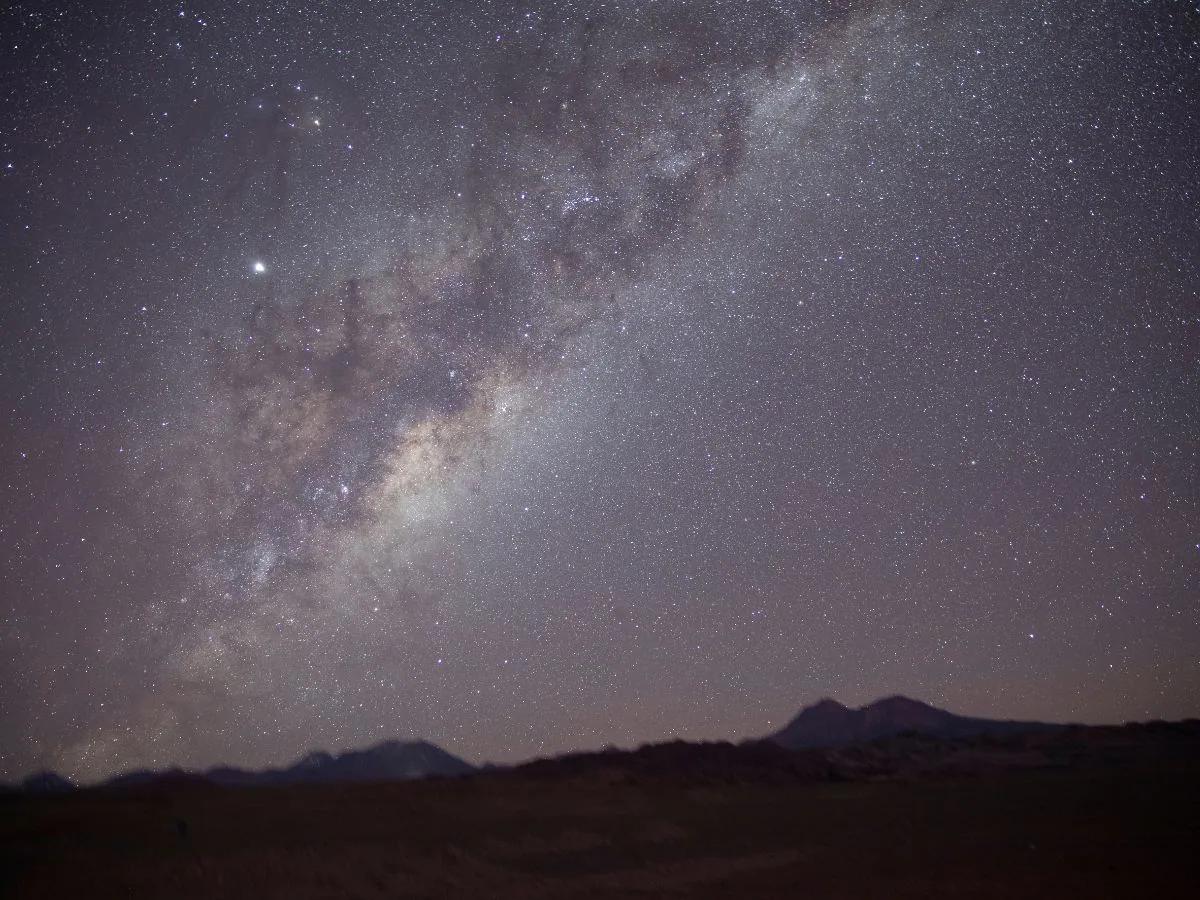
Between its high altitude, extremely low humidity and almost total absence of light pollution, the Atacama offers some of the clearest night skies anywhere on Earth. It is one of the reasons the region hosts a significant share of the world's professional observatories, drawn here to study everything from nearby planets to the edges of the visible universe.
Visiting an Observatory
A number of observatories in the region welcome visitors for a guided astronomy tour or stargazing tour, where astronomers point out planets, star clusters and the thick band of the Milky Way overhead. Even without a telescope, simply lying back on the desert floor after dark reveals more stars than most travellers will have ever seen at once.
Discover San Pedro de Atacama's Andean Culture
Atacameño Heritage and Archaeology
Long before it became a tourist hub, this region was home to the Atacameño people, whose descendants still live here today. San Pedro's small museum holds pre-Columbian artefacts and archaeological finds that trace thousands of years of life in one of the world's harshest environments, offering useful context before heading out into the landscape itself.
Life in the Desert's Main Town
San Pedro de Atacama itself is worth a slow wander, with its whitewashed adobe church, dusty streets and a steady rhythm of life that has adapted to the extremes around it. Cafes and craft stalls line the main street, and it makes a relaxed base between the desert's more dramatic excursions.
Village Life in Machuca
A Handful of Adobe Houses
On the road towards El Tatio, the tiny settlement of Machuca appears almost without warning, a cluster of adobe houses and a small stone church surrounded by nothing but open desert. Only a few families live here permanently, tending llamas on the sparse grazing land nearby.
A Brief but Memorable Stop
It is not a place that needs hours of your time, but a short pause here, warming up with something hot from one of the handful of local stalls, offers a glimpse of a way of life that has continued largely unchanged for generations, in stark contrast to the more polished tourism infrastructure of San Pedro de Atacama itself.
Tasting Andean Food and Drink
Quinoa, Llama and Mountain Staples
Food in the Atacama draws heavily on Andean staples that have sustained communities here for centuries. Quinoa appears in soups and stews, llama and alpaca meat feature on many local menus, and dishes such as pastel de choclo, a baked sweetcorn and meat pie, are common comfort food after a long day in the desert.
Pisco and Coca Tea
A pisco sour, Chile's signature grape-brandy cocktail, is worth trying at least once, while coca leaf tea remains the local answer to altitude discomfort and is served without fuss in most cafes around San Pedro de Atacama.
What to Pack for the Desert
Layers Above Everything Else
Given the huge swing between scorching afternoons and freezing nights, layers matter more than any single item of clothing. A warm hat, gloves and a proper insulated jacket are essential for early starts at El Tatio, even if the same afternoon calls for little more than a T-shirt.
Sun and Ground Protection
Strong sunscreen, sunglasses and a wide-brimmed hat are non-negotiable at this altitude, where UV exposure is far higher than at sea level. Sturdy, closed footwear will serve you far better than sandals once you are scrambling over volcanic rock or sliding down a sand dune.
Atacama Desert Tours in Chile: What to Expect
Guided Small Group Excursions
Most visitors experience the Atacama's highlights through organised day tours from San Pedro de Atacama, typically run in small groups with a local guide who knows the routes, altitudes and timings needed to follow a well-tested itinerary and catch each sight at its best. A number of tour operators run these excursions, and it is worth trying to book tours in advance during busier months.
Choosing the Right Trip Length
Because the desert's key attractions are spread across such a wide and remote area, from the high altiplano lagoons to the salt flats near town, joining a guided group tour rather than navigating independently is usually the safest and most practical way to see it all without missing the sights that matter most. Most travellers find that three or four nights makes for an ideal stay, enough time to cover the highlights without feeling rushed, and a good local guide makes all the difference to a smooth Atacama adventure.
Conclusion
The Atacama Desert rewards travellers willing to trade comfort for wonder, from sunrise geysers and salt-carved valleys to flamingo lagoons and skies thick with stars. It is a landscape that keeps surprising you, often within the same single day. Join Undiscovered Destinations on a guided small group journey through the Atacama, with guaranteed departures already in place. Get in touch and all that is left for you to do is turn up and look up.