
Ask most people about the things Argentina is famous for and the same three answers tend to come back: tango, steak, and football. Those things are true, and they matter deeply to how the country sees itself. But they only tell part of the story. Beyond the cafes of Buenos Aires lies a country of diverse landscapes: glaciers, painted mountains, ancient ruins, and salt flats that stretch further than the eye can follow.
Even its name has a story behind it. Officially called the Argentine Republic, or República Argentina in Spanish, the country takes its name from the Latin argentum, meaning silver, after early explorers hoped to find riches along the Río de la Plata, the River of Silver on which Buenos Aires now stands. Argentina spans nearly the whole length of South America, bordered by Chile to the west and Bolivia and Paraguay to the north, and that scale is part of why its fame is so hard to sum up in a single sentence.
This article looks at both sides of this amazing country: the icons everyone already knows, and the far less familiar places that reward a closer look.
Tango and Argentina's Cultural Soul
Tango is probably the first thing that comes to mind when Argentina is mentioned, and for good reason. It carries the country's history in every step, and it still shapes daily life in ways visitors notice almost immediately.
The Birth of Tango in Buenos Aires
Tango began in the working-class neighbourhoods of Buenos Aires in the late 1800s, born from a mix of European immigrant music, especially from Italy and Spain, African rhythms, and local storytelling traditions. Early tango was played on simple instruments, but it was the arrival of the bandoneon, a type of accordion brought over by German traders, that gave the music its distinctive, mournful sound. From there it grew from dockside bars into something the whole world recognises. In 2009, UNESCO added tango to its list of Intangible Cultural Heritage, officially recognising it as a cultural treasure shared by Argentina and neighbouring Uruguay. Today, dancers still perform in the plazas of San Telmo, full orchestras play at grand old theatres, and milongas, the informal social dances held across the capital, keep the tradition alive night after night.
Football and National Pride
Football runs almost as deep. Argentina has produced some of the finest players the sport has ever seen, from Diego Maradona's mercurial brilliance in the 1980s to Lionel Messi, born in the city of Rosario, who inspired the country's third World Cup win in 2022. Match days can bring entire cities to a standstill, with rival clubs such as Boca Juniors and River Plate drawing fierce local loyalty that spans generations. It is less a hobby here than a shared national language, one that connects strangers in a way few other things can.
A Nation Built on Beef and Wine
Food and drink shape daily life in Argentina just as strongly as culture does, and both have earned the country a reputation that reaches well beyond South America.
The Asado and Argentinian Meat Culture
The asado, a slow-cooked barbecue shared among family and friends, sits at the centre of Argentine social life. Argentina has long been known for some of the highest beef consumption rates in the world, a habit rooted in its vast cattle-grazing plains known as the Pampas, the backbone of the country's agriculture, stretching out from Buenos Aires towards the horizon in every direction. A proper asado can take hours, with different cuts of meat cooked slowly over wood or charcoal rather than rushed over a hot flame. Sharing a meal here is rarely a quiet affair; it is a ritual built around conversation, patience, and good company, often lasting long into the evening, alongside empanadas, small pastries filled with meat, cheese, or vegetables, found everywhere from family kitchens to roadside stalls.
Mendoza: Malbec and Argentina's Wine Tours
Wine tells a similar story. Argentina has become one of the world's most respected wine producers, and the Mendoza region, at the foot of the Andes, is responsible for around 70 percent of the country's total output. Vineyards here sit at some of the highest altitudes used for wine-making anywhere in the world, fed by snowmelt from the Andes Mountains rather than rainfall. Malbec, in particular, has become the grape most associated with Argentine wine, prized for its rich colour and full body. Wine tours through Mendoza's vineyards remain one of the most popular reasons travellers give for coming to Argentina in the first place.
Mate: Argentina's National Drink
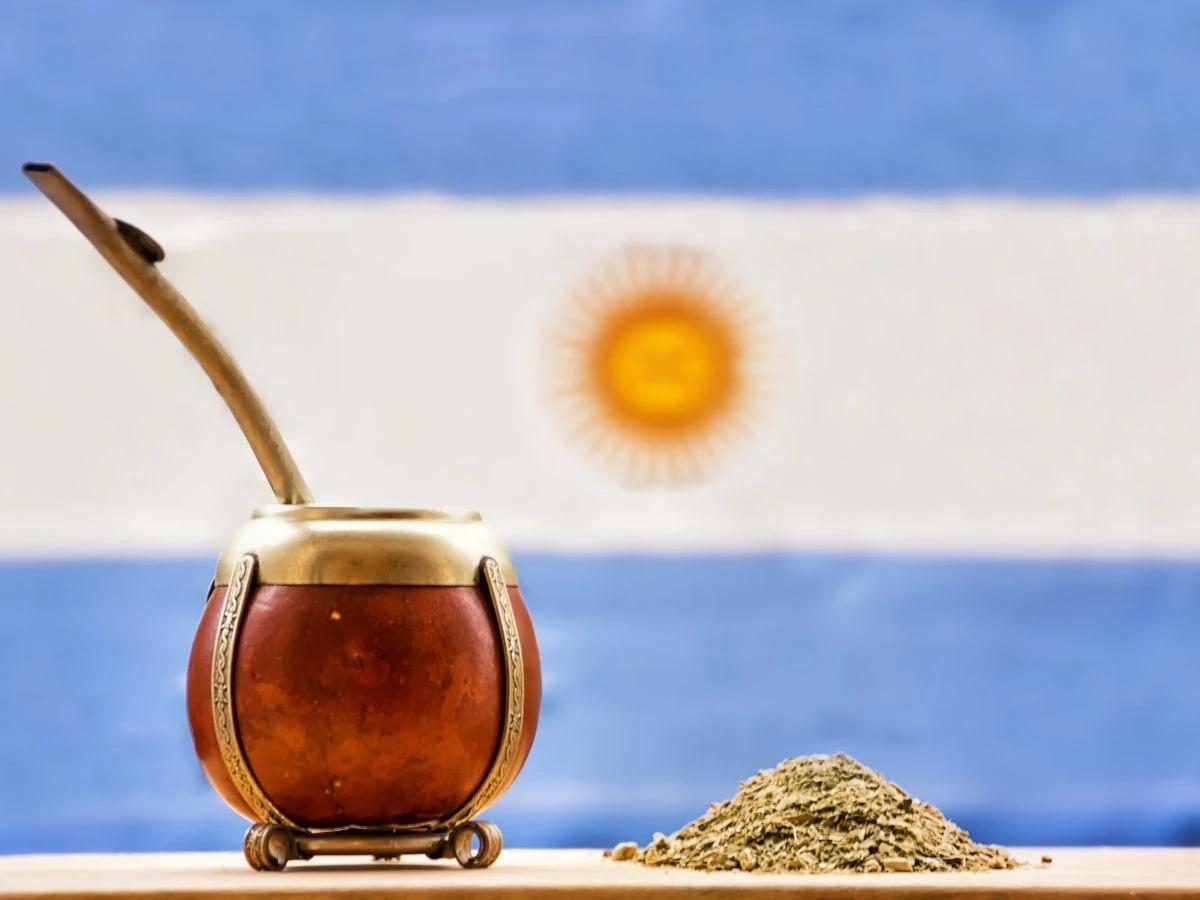
Alongside beef and wine sits a quieter but equally important tradition: mate. This bitter, herbal tea is sipped from a hollowed gourd through a metal straw called a bombilla, and it is rarely drunk alone. Sharing a mate, passing the same gourd from person to person, is a small daily ritual that says a lot about how Argentines value time spent together. Walk through any park in Buenos Aires and you will likely see groups sitting in circles with a flask of hot water close by, refilling the gourd as the conversation carries on.
Buenos Aires — Famous Places to Start Any Journey
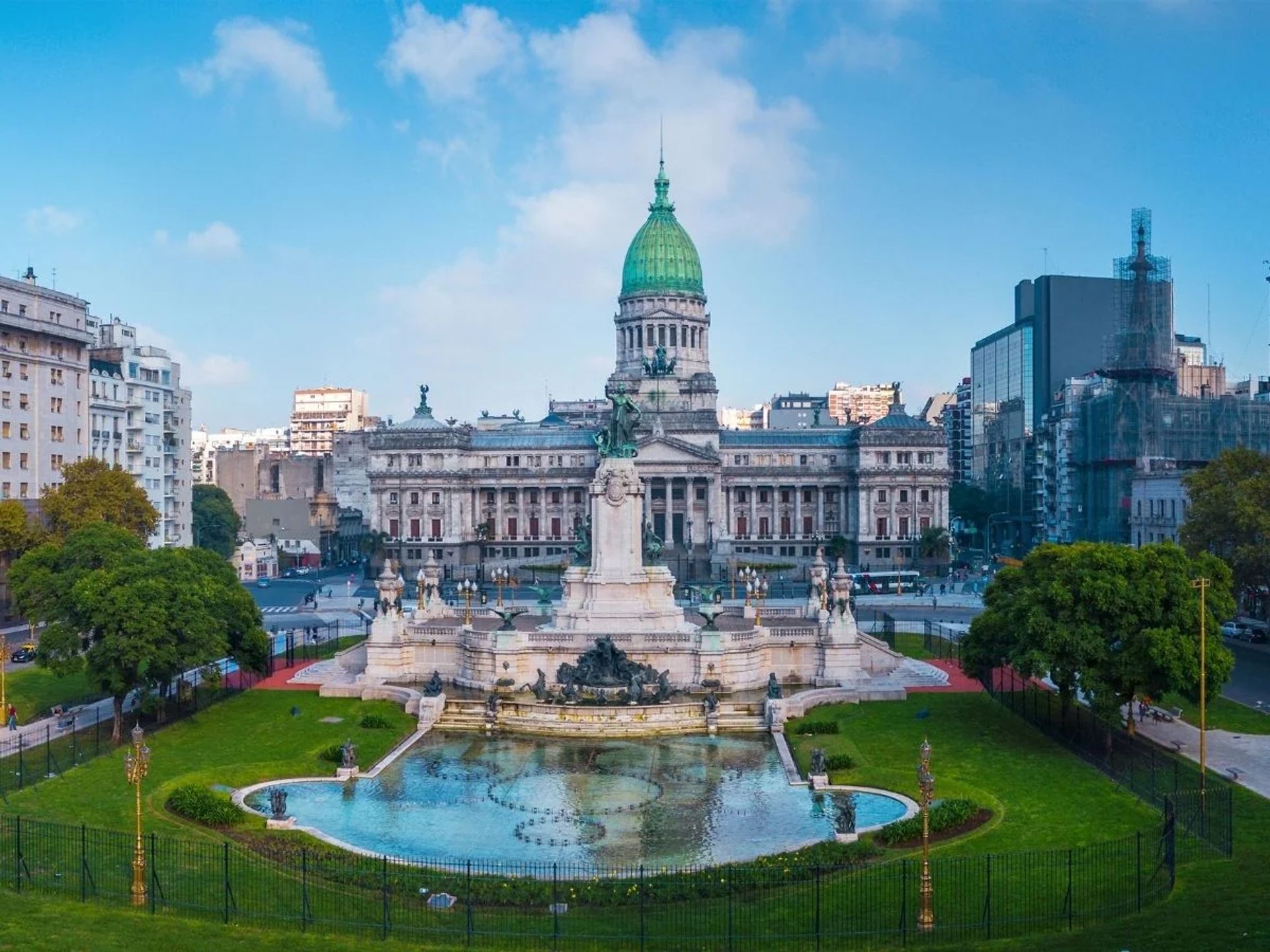
Most journeys through Argentina begin in Buenos Aires, and it is easy to see why. Founded in 1580, the city has grown into the largest in South America, home to more than a third of the country's population, and its energy rarely lets up, day or night.
Colonial Architecture and Historic Plazas
The city's older quarters still carry traces of that long history. Colonial buildings, wide boulevards, and grand public squares sit alongside a lively modern culture that never seems to slow down. Buenos Aires is home to 57 museums, ranging from grand private art collections to smaller spaces preserving traditions found across Latin America, from ornate silverwork to 19th-century fashion. The Colón Theatre, one of the city's grandest landmarks, is an opera house celebrated worldwide for its finely balanced acoustics, drawing classical music lovers to concerts and recitals held throughout the year.
San Telmo, La Boca and Recoleta
Each neighbourhood has its own personality. San Telmo is known for its antiques market and cobbled streets, where stallholders sell everything from old clocks to vintage postcards, priced in Argentine pesos, the country's official currency. La Boca is famous for the brightly painted houses along Caminito, a magnet for street artists and photographers since the neighbourhood's dockworker origins. Recoleta, meanwhile, is home to elegant architecture and a historic cemetery where Eva Perón, widely known as Evita, and other notable figures are laid to rest. Together, these districts show just how many famous places sit within a single city.
Mataderos and the Gaucho Tradition
Away from the more famous tourist trail, the Mataderos market offers a different side of Buenos Aires life. Local folk groups perform songs from towns across the country, and gauchos demonstrate traditional horsemanship skills that date back generations. It is a reminder that beneath the city's cosmopolitan surface, older rural traditions are still very much alive.
Iguazu Falls: South America's Most Powerful Waterfalls
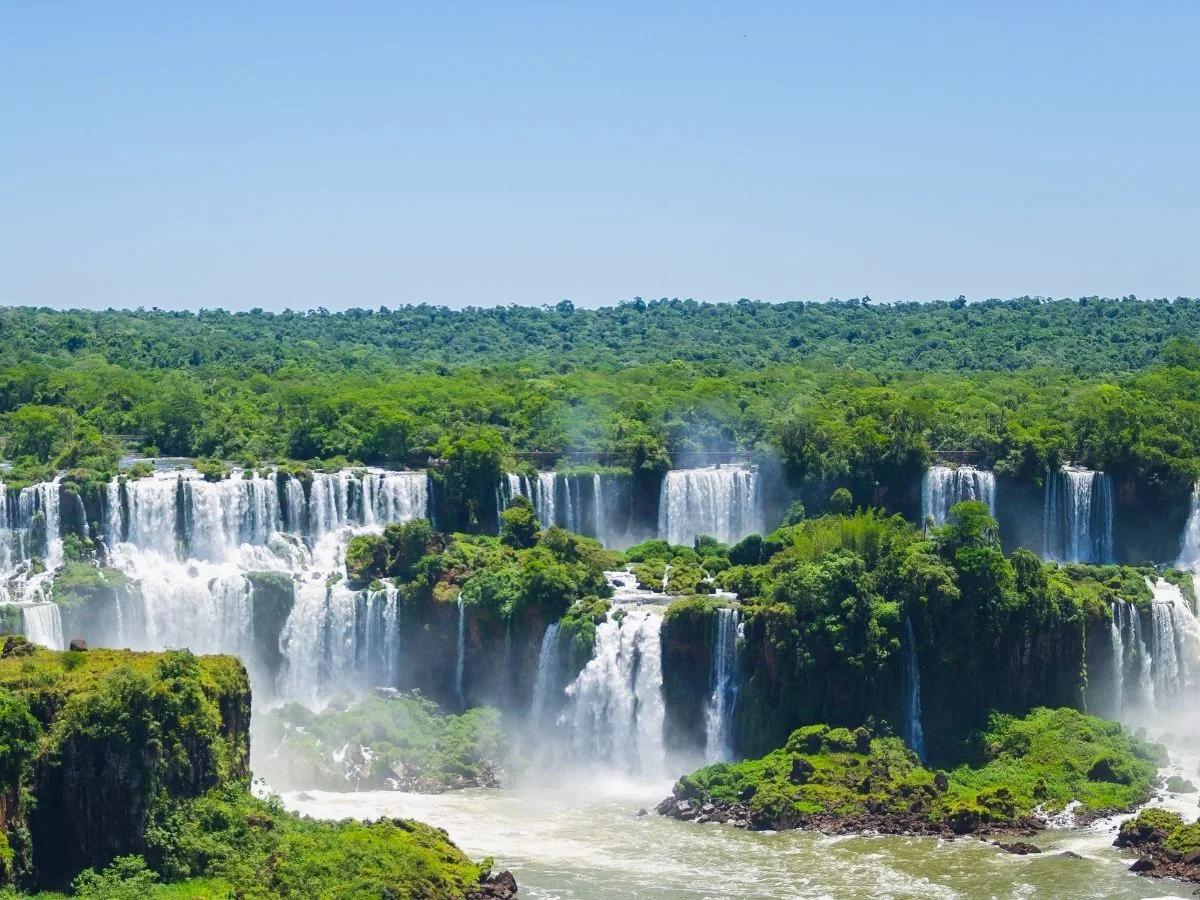
Tucked into the subtropical corner of northeast Argentina, Iguazú Falls are among the most striking natural sights on the entire continent. Straddling the border between Argentina and Brazil, the falls are made up of an estimated 275 individual cascades spread across nearly three kilometres of the Iguazu River, surrounded by dense rainforest.
The Argentine side of the falls sits within Iguazú National Park, a UNESCO World Heritage Site recognised for both its scale and its surrounding biodiversity. Its most dramatic section, the Devil's Throat, sends huge volumes of water crashing into a deep, mist-filled gorge, a sight powerful enough to be heard long before it comes into view. For many visitors, it stands alongside Buenos Aires and Patagonia as one of the true symbols of what makes Argentina worth exploring.
The Wild Icons of Patagonia
Travel south and Argentina changes completely. This is where the country's fame for dramatic landscapes really takes hold, and where distances between towns are measured in hours rather than minutes.
Perito Moreno Glacier
The Perito Moreno Glacier, roughly 80 kilometres from the town of El Calafate in Argentina's Santa Cruz province, is one of the most visited natural sights in the whole of South America. Unlike many glaciers around the world, it remains relatively stable rather than retreating, which is part of what makes it such a popular destination. A network of walkways stretching around five kilometres allows visitors to watch enormous chunks of ice crack and fall into the water below, a sight and sound that few forget.
Fitz Roy and the Peaks of El Chaltén
Further north, the town of El Chaltén sits beneath Mount Fitz Roy, one of Patagonia's most recognisable peaks. Well-marked trails lead walkers past glacial lakes such as Laguna Torre and Laguna de los Tres, climbing through forest before opening out onto views of the jagged granite spires above. Full-day routes offer close-up views of the mountain that experienced climbers travel from across the world to attempt, and the walk to Laguna de los Tres in particular is considered one of the finest day hikes in the whole of Patagonia.
Ushuaia: Activities and Trips to the End of the World
At the very tip of the continent lies Ushuaia, widely recognised as the world's southernmost city. Sitting on the edge of the Beagle Channel and framed by the Martial Mountains, it feels like the edge of the map. Popular activities here include short trips into Tierra del Fuego National Park, which protects a mix of sub-Antarctic forest and coastline, and boat excursions along the Beagle Channel that pass islands crowded with cormorants and sea lions. Ushuaia is also the main departure point for Antarctic cruises, with ships leaving the port to cross the Drake Passage toward the icy peninsula beyond. Further out into the South Atlantic lie the disputed Falkland Islands, known in Argentina as the Islas Malvinas, a reminder of just how far this coastline reaches into the ocean.
Argentina's Hidden Icons in the Far Northwest
While Patagonia draws plenty of attention, Argentina's northwest remains one of its best-kept secrets, home to Inca heritage every bit as rich as neighbouring Peru's, yet far less visited by comparison.
Salta's Colonial Streets and High-Altitude Archaeology
Salta blends Spanish colonial architecture with a growing food and culture scene. Its old town still carries a distinctly Hispanic feel, with whitewashed walls, tiled roofs, and wrought-iron balconies lining streets built long before the country's independence. The city's Museum of High Altitude Archaeology, known locally as MAAM, holds one of the region's most remarkable discoveries: in 1999, archaeologists uncovered an Inca sanctuary high in the Andes near the Llullaillaco volcano, along with more than 100 gold and silver artefacts placed alongside three remarkably preserved children from a ritual burial. Few places in Argentina offer such a direct link to its pre-colonial past.
The Painted Mountains of Purmamarca and Humahuaca
North of Salta, the towns of Purmamarca and Humahuaca sit inside the Quebrada de Humahuaca, a long valley that runs close to the northern border of Argentina and Bolivia, famous for its colourful, striped mountains, formed over millions of years of shifting sediment. The valley was named a UNESCO World Heritage Site in 2003, recognised for both its striking geology and its long history as a trade route linking the Andes with the lowlands. Local craft markets fill the streets of both towns, offering woven textiles and handmade goods that reflect centuries of Andean tradition.
The Ancient Ruins of Quilmes
Nearby, the Quilmes Ruins mark what is considered one of the most significant pre-Inca archaeological sites in the region. The settlement tells the story of a community that resisted Spanish colonisation for decades before its eventual fall to the Spaniards, a history that still shapes how the site is remembered and visited today.
Cafayate's Vineyards and the Quebrada de las Conchas
South of Salta, the town of Cafayate is regarded as the capital of Argentina's northern wine region, best known for producing Torrontés, a fragrant white wine rarely found in the same quality anywhere else in the world. The drive there passes through the Quebrada de las Conchas, a gorge of sedimentary rock formations shaped over a hundred million years, its red and ochre walls rising sharply on either side of the road. Together, the wine and the scenery make this one of the northwest's most rewarding detours.
Famous Places for Wildlife and Natural Wonders
Argentina's fame is not only about people and places. Its wildlife and natural landscapes are just as remarkable, particularly at altitude, where conditions can feel closer to another planet than anywhere else on this one.
Biodiversity Across Argentina's Landscapes
From subtropical forest in the north to icy tundra in the south, Argentina supports an unusually wide range of plant and animal life for a single country, shaped by its huge stretch of latitude and dramatic changes in altitude. Condors soar above mountain passes, guanacos and wild donkeys graze across high plateaus, and dense forest gives way within a matter of hours to salt desert and bare rock.
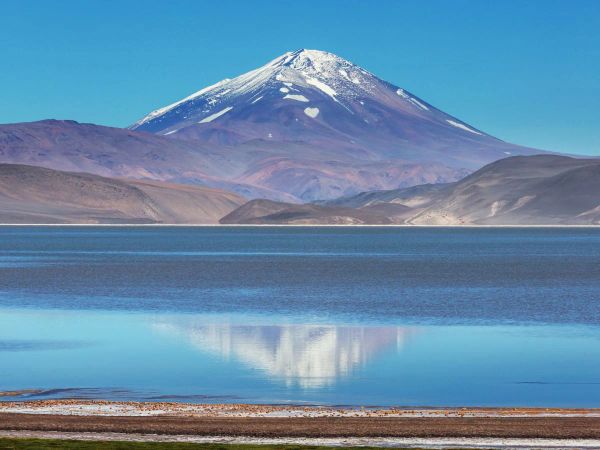
The High Desert Landscapes of the Puna
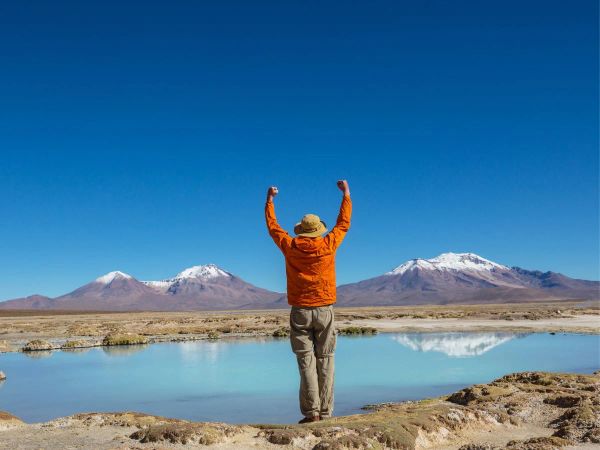
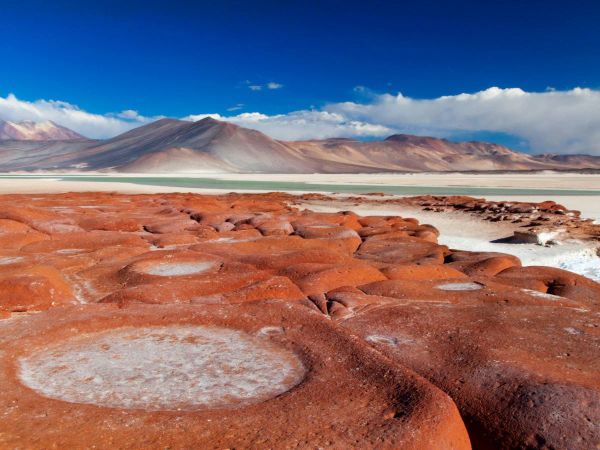
In the far northwest, the Puna plateau offers landscapes unlike anywhere else in the country. Salt flats stretch for tens of thousands of acres, dotted with volcanic peaks and eroded rock formations that have earned comparisons to the surface of Mars. Around the remote village of Tolar Grande, researchers have even found living stromatolites, some of the oldest life forms on Earth, thriving in shallow blue pools within the salt flats. It is a landscape that feels genuinely untouched, and one that few travellers to Argentina ever get to see.
Flamingos of the High Andean Lagoons
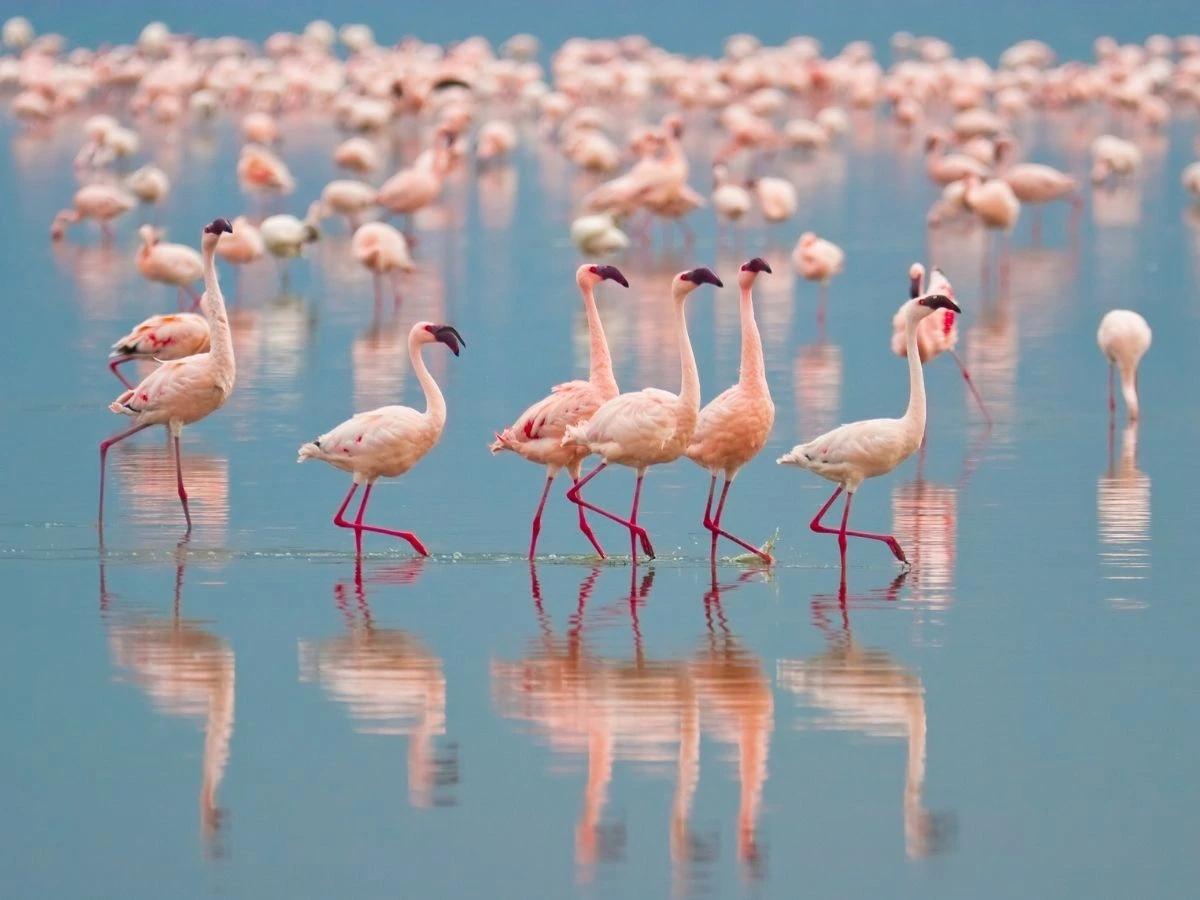
High in the Puna plateau, the Laguna Grande Reserve becomes a vital gathering point for Puna flamingos (also called James's flamingos) each year, hosting more than 19,000 birds — around a fifth of the entire known population of the species. Watching thousands of pink birds against a backdrop of salt flats and volcanic peaks is a reminder that Argentina's fame extends well beyond its cities, into some of the wildest and least visited corners of the country.
Conclusion
Argentina's fame rests on more than tango, steak and a handful of postcard shots. For every dancer in a San Telmo doorway, there is a condor circling above a Puna salt flat few travellers ever see. For every glass of Malbec in Mendoza, there is a plate shared at a market in Humahuaca, where the mountains themselves are striped in colour. What makes Argentina famous is really an invitation: to see the obvious icons, then keep going until the crowds thin out and the country starts to feel like your own discovery. Ready to see the Argentina beyond the obvious? Join Undiscovered Destinations on a small group tour through Patagonia's glaciers and peaks, or head north for a small group adventure across the Argentine Northwest — and go further than the guidebooks do.