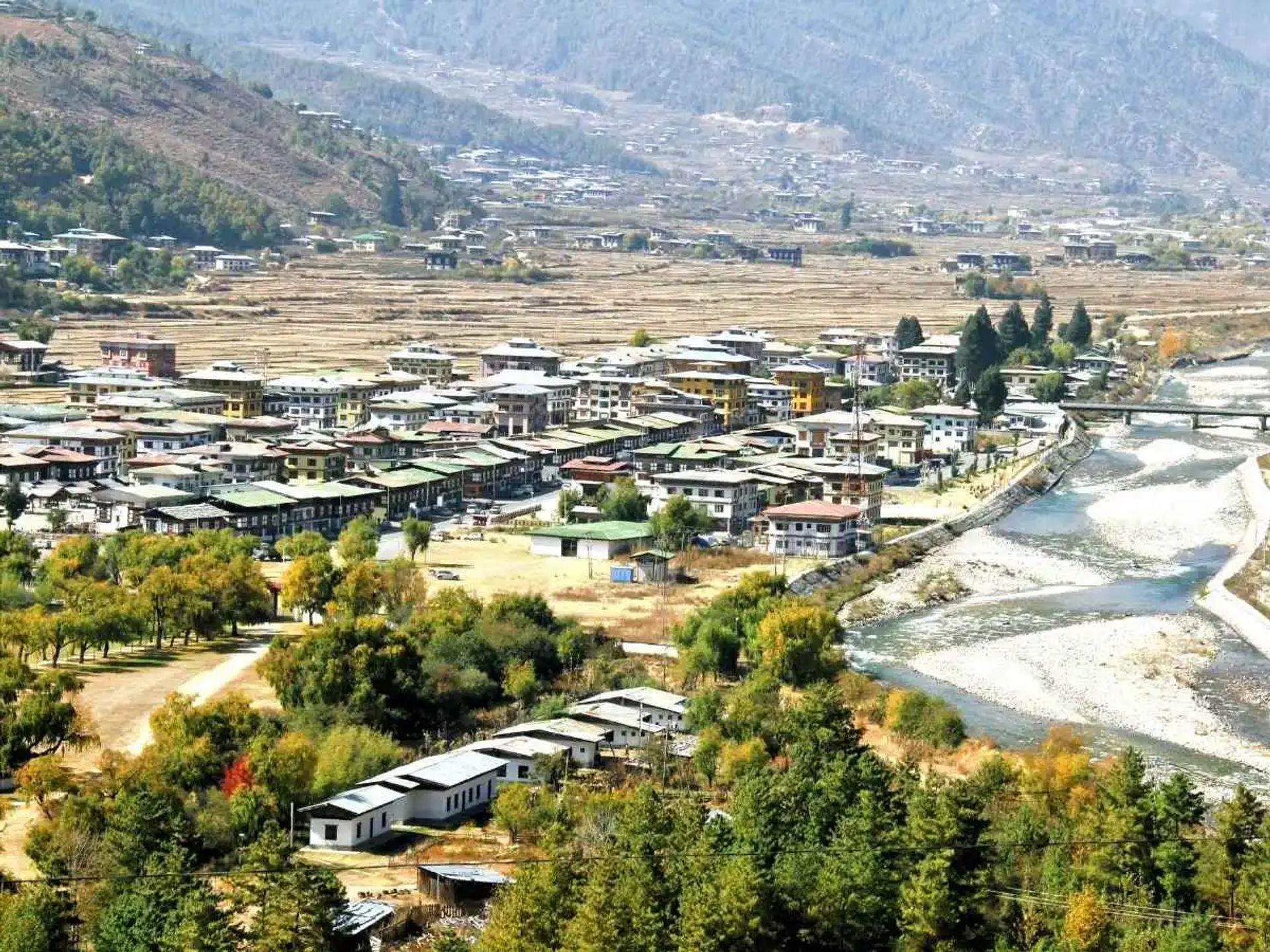

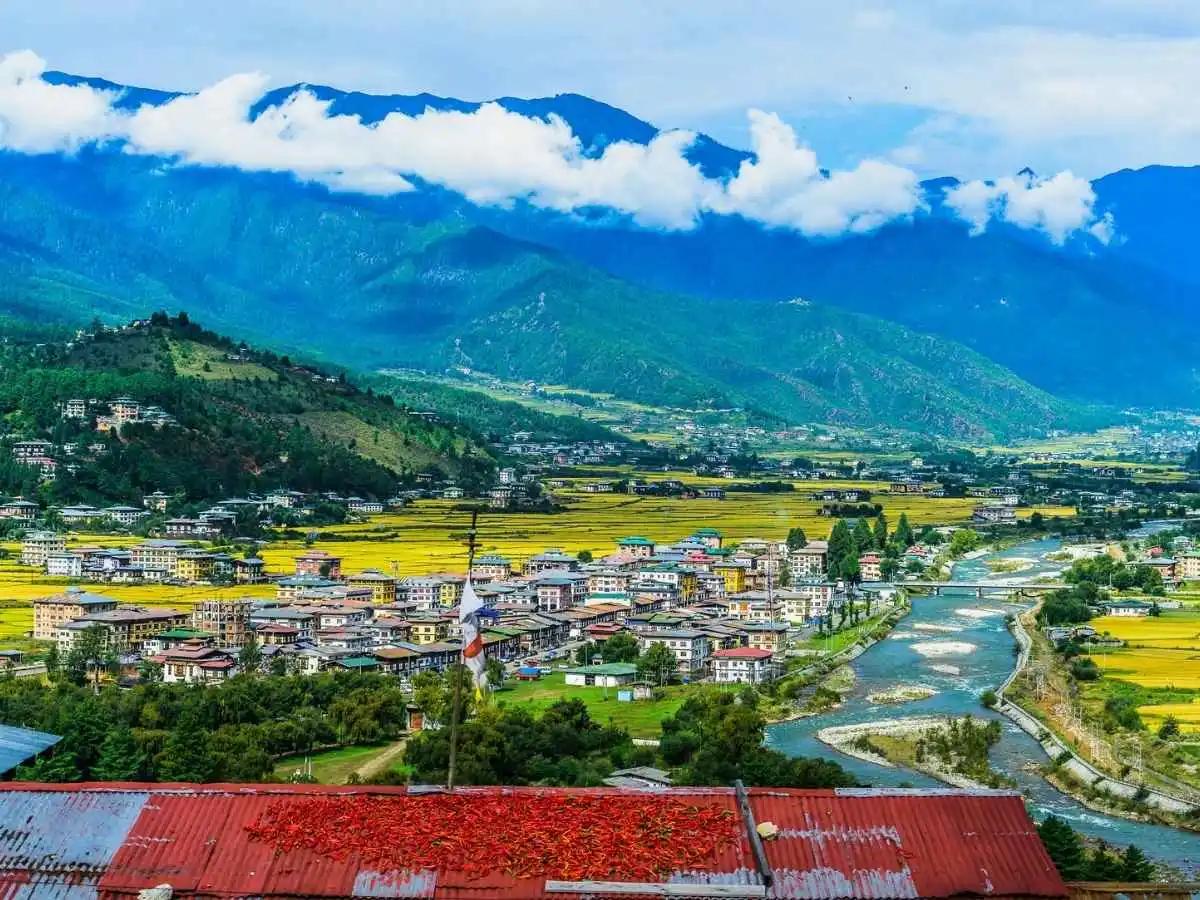
Thimphu, sometimes spelled Thimpu, does not feel like most capital cities, and working out the best things to do in Thimphu starts with letting go of that comparison altogether. Set among the foothills of the eastern Himalayas, there are no skyscrapers, no motorways, and famously, no traffic lights. Instead, you will find a small city tucked into a river valley, ringed by pine-covered hills, where monks in crimson robes walk past shopfronts and almost everyone, from schoolchildren to shopkeepers, wears traditional dress. Buildings rise no higher than a handful of storeys, and even the newest constructions are required to carry traditional Bhutanese features, such as carved wooden windows and painted eaves, so the skyline never strays too far from its roots. It is a great place to begin any first visit to Bhutan.
For many travellers arriving in Bhutan, Thimphu is treated as a brief stop on the way to somewhere else, a place to sleep off jet lag before heading further into the mountains. That is a mistake. Spend a day or two here and you will find some of the country's most rewarding tourist places, from towering statues and hilltop temples to a lively weekend market that says more about daily life in Bhutan than any guidebook can. Thimphu is also the easiest place in the country to get a first sense of what makes Bhutan so different from anywhere else you will have travelled before, making it one of the essential things to do in Bhutan
This guide covers the best things to do in Thimphu, along with a good deal of practical and cultural context to help you make sense of your visit.
A Brief History of Thimphu
Thimphu has not always been Bhutan's capital. That role belonged for centuries to Punakha, a town further into the valleys that served as the seat of government thanks to its milder climate and strategic position. Thimphu took over as the official capital in the early 1960s, as Bhutan began to open up and modernise, and the city has grown steadily ever since. Today it is home to something in the region of 100,000 people, around 15 per cent of Bhutan's entire population, making it easily the largest urban centre in the country, even though it would count as a modest-sized town almost anywhere else.
What makes Thimphu's history interesting for visitors is how recent much of its development has been. Many of the buildings, roads, and institutions you will see today did not exist a generation ago, and older residents can often recall a city that was little more than a scattering of farmhouses around Tashichho Dzong. That relatively short history helps explain why Thimphu still feels so connected to rural Bhutan, even as glass-fronted cafes and clothing shops appear along its main streets.
Thimphu Sightseeing: Why the Capital Feels Unlike Any Other City
A City With No Traffic Lights
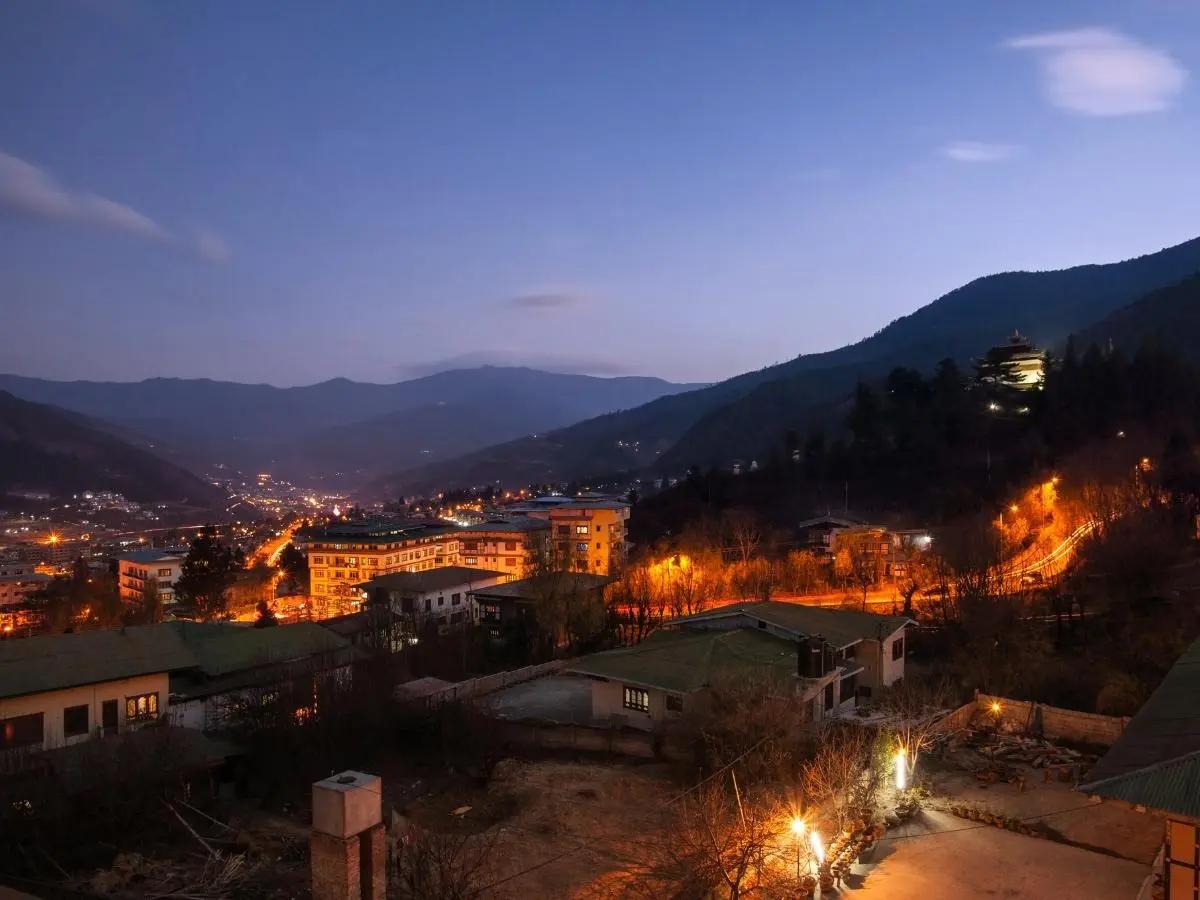
Thimphu is often described as the only capital city in the world without a single set of traffic lights. A set was installed some years ago at a busy junction near the city centre, but locals disliked it so much that it was removed within days. Traffic is instead directed by a white-gloved police officer standing in a small ornate booth at the main roundabout, waving cars through with slow, deliberate movements that have become something of a tourist attraction in their own right. It is a small detail, but it tells you a great deal about the pace of life here. Bhutan has chosen, quite deliberately, not to rush, and Thimphu's traffic system is one of the clearest, and most charming, expressions of that choice.
Getting Your Bearings
Thimphu city is small enough to explore on foot in a couple of days. There are enough places in Thimphu to fill a few unhurried days, particularly if you enjoy a mix of temples, markets, and quiet walks. The main street, Norzin Lam, runs through the centre and is lined with shops selling handicrafts, textiles, and everyday goods, along with a growing number of cafes and restaurants aimed at both locals and visitors. Most of the city's main sights sit within a short drive of each other, spread across the valley floor and the hills above it, so a visit rarely involves long transfers between attractions. Because Bhutan requires visitors to travel with a licensed guide, under rules set by the Tourism Council of Bhutan, your time in Thimphu will usually be arranged as part of a longer trip, often continuing on to Punakha or looping back through Paro. This makes Thimphu less of a standalone destination and more of a gateway, though it is a gateway well worth lingering in, and a broader guide to planning a Bhutan trip is worth a look before you go further.
Understanding Gross National Happiness in Thimphu
Bhutan is well known for measuring its progress through Gross National Happiness rather than economic output alone, a concept introduced in the 1970s by the Fourth King, Jigme Singye Wangchuck, and one that is deeply rooted in the culture of Bhutan, as set out by Bhutan's GNH Commission. The idea is not simply a marketing slogan; it shapes real policy decisions, from environmental protection to strict building regulations, and its effects are visible throughout Thimphu. Advertising hoardings are limited, neon signage is largely absent, and even modern office blocks are required to include traditional Bhutanese architectural details in their design.
For visitors, the result is a capital city that looks and feels noticeably calmer than most. There is little of the visual clutter you might expect in a fast-growing Asian city, and even Thimphu's newest neighbourhoods retain a distinctly Bhutanese character. Keeping Gross National Happiness in mind as you walk around the city adds an extra layer of understanding to everything from the architecture to the unhurried pace of daily life, and to Bhutanese culture more broadly.
Top Attractions in the Spiritual Heart of Thimphu
Buddha Dordenma
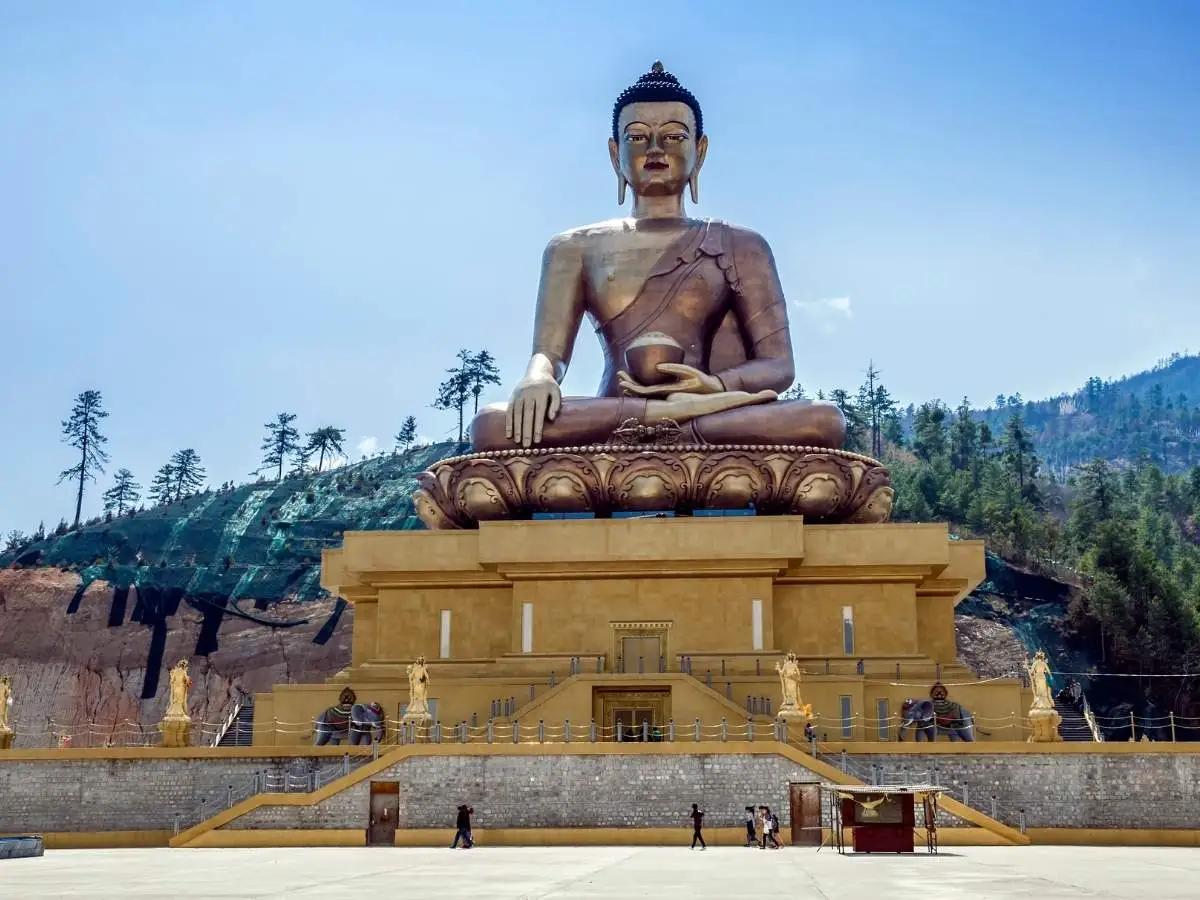
High on a hillside above the city sits the Buddha Dordenma statue, a huge bronze figure coated in gold that towers over the valley below. The statue itself is enormous, and its base contains a hall holding around 125,000 smaller Buddha statues, each cast in bronze and gilded, an almost overwhelming sight once you step inside. It was built to mark the 60th anniversary of the Fourth King's reign, and its scale is intended to reflect the significance of the occasion.
Visiting early in the day, before the light gets too harsh, gives you the best views back down over Thimphu and the surrounding hills, with the whole valley spread out beneath the statue's gaze. It is one of the most striking sights in the whole of Bhutan and a fitting introduction to the country's deep Buddhist heritage, as well as a useful orientation point, since much of Thimphu can be picked out from the viewing platform at its base.
Changangkha Lhakhang and the Hike from Kuensel Phodrang
From the Buddha Dordenma, which sits within the Kuenselphodrang Nature Park, a pleasant hike through forests of blue pine and rhododendron leads to Changangkha Lhakhang, a temple perched on a hilltop overlooking the valley. This is one of Thimphu's oldest temples, believed to date back several centuries, and it remains an active place of worship rather than a museum piece. Local devotees arrive throughout the day to turn the prayer wheels and circle the building, and it is common to see parents bringing newborn babies here to receive a blessing and a name from the resident monks.
Inside, look out for the detailed wall paintings and shelves of religious scriptures, some written in gold ink, which give a sense of the craftsmanship that goes into even a relatively modest Bhutanese temple. The walk itself takes around ninety minutes at an easy pace and is a lovely way to see the valley from above, passing quiet, wooded paths that feel a world away from the city streets below.
National Memorial Chorten
Down in the city, the National Memorial Chorten is one of Thimphu's most visited landmarks. Built in memory of the Third King, who died in 1972, it has become a focal point of daily religious life rather than simply a monument to a past ruler. Arrive in the morning and you will see locals of all ages walking slowly around the monument, spinning prayer wheels and murmuring mantras, while elderly residents settle onto benches to chat and watch the world go by.
The chorten's golden spire and white walls make it one of the most photographed buildings in the city, but its real value lies in the ritual around it. It is a quiet, moving scene, and one of the best places in the city to understand how central Buddhist practice remains to everyday Bhutanese life, even amid the growing modern city around it.
Dechen Phodrang Monastery, Thimphu's Monastic School
On a hillside to the north of the city, Dechen Phodrang, meaning "Palace of Great Bliss," has a long and layered history. The site began life as a fortress in the thirteenth century and served for a time as Thimphu's original dzong, before being converted into a monastery in the eighteenth century. Since 1971 it has operated as a monastic school, where several hundred young monks follow an eight-year course of study in Buddhist philosophy, ritual, and language.
Visitors who are able to look inside will find some notable historical treasures, including twelfth-century wall paintings and a statue of Zhabdrung Ngawang Namgyal, the unifier of Bhutan. It is a working monastery rather than a tourist site, so visits are generally brief and quiet, timed around the monks' daily routine.
The National Folk Heritage Museum
For a sense of how ordinary Bhutanese families lived before Thimphu grew into a capital, the National Folk Heritage Museum is well worth a stop. Housed in a genuine rammed-mud and timber farmhouse more than 150 years old, the museum sits among paddy fields, kitchen gardens, and a working watermill on the edge of the city.
Inside, household tools, cooking equipment, traditional clothing, and food storage techniques are laid out much as they would have been used a century ago, spread across the farmhouse's traditional floors. Demonstrations of weaving, archery, and traditional cooking are sometimes arranged for visitors, helping to showcase Bhutan's rural traditions and giving a far more grounded picture of how ordinary Bhutanese people lived than any of the city's grander monuments. The museum also runs its own small folk heritage museum restaurant, serving traditional Bhutanese food, so it is easy to combine a visit with lunch.
Cheri Monastery, a Hike Beyond the City
About 15 kilometres north of Thimphu, at the far end of the Thimphu valley, Cheri Monastery marks the spot where Zhabdrung Ngawang Namgyal, the founder of Bhutan as a unified state, established the country's first monastery in 1620. The Zhabdrung spent three years in retreat here and later founded Bhutan's first monastic order at the site, which remains an active teaching and retreat centre today.
Reaching it involves a short drive to the roadhead at Dodeyna, followed by a steep hour-long hike up through forest, rewarded at the top with sweeping views back down the valley. It is a quieter, more contemplative stop than the temples closer to the city, and a good option for anyone keen to add another hike to their visit.
Zilukha Nunnery Above Tashichho Dzong
On a hillside above Tashichho Dzong, Zilukha Nunnery, also known as Drubthob Goemba, is one of the few places in Bhutan where you can see nuns rather than monks going about their daily routine. It was founded in 1976 by Rikel Jadren, considered an emanation of Thangthong Gyalpo, a revered lama originally from Tibet who is credited with building Bhutan's iron bridges.
More than seventy nuns live and study here, following a disciplined routine of prayer, meditation, and scripture study. The nunnery plays an important role in giving Bhutanese women access to a religious education historically reserved for men, and a quiet visit here offers a different perspective on Bhutanese culture from the more visited monasteries nearby.
The Thirteen Traditional Arts and Bhutan's Living Craft Schools
Bhutan recognises thirteen traditional arts and crafts, known collectively as Zorig Chusum, ranging from painting and woodcarving to embroidery and papermaking. Thimphu is home to schools dedicated to preserving these skills, where young Bhutanese train for several years to master techniques that have barely changed in centuries. Visiting one, where it can be arranged, offers a fascinating look at painstaking work such as thangka painting, in which intricate Buddhist scrolls are created using natural pigments and brushes made from animal hair. It is a world away from mass production, and a reminder of how much value Bhutan places on preserving traditional Bhutanese culture and cultural heritage alongside its modern development.
Markets and Craft Traditions
The Weekend Market
If your visit falls at the right time, the Thimphu Weekend Market is not to be missed. Running from Friday evening through to Sunday, it draws farmers and traders from across the surrounding valleys, who set up stalls selling everything from chillies and cheese to bamboo baskets, dried fish, and betel nut. The riverside setting adds to the atmosphere, with produce laid out in neat piles along the banks of the Wang Chu river, also spelled Wang Chhu.
It is one of the few places in the city where you can wander freely and strike up conversations with local traders, many of whom are happy to explain what they are selling and how it is used in Bhutanese cooking. It offers a far more honest picture of daily life than any museum, and it is a highlight for many visitors precisely because it feels unstaged. Go with a little time to spare and let yourself get pleasantly lost among the stalls.
Thimphu Handicraft Market and the National Textile Museum
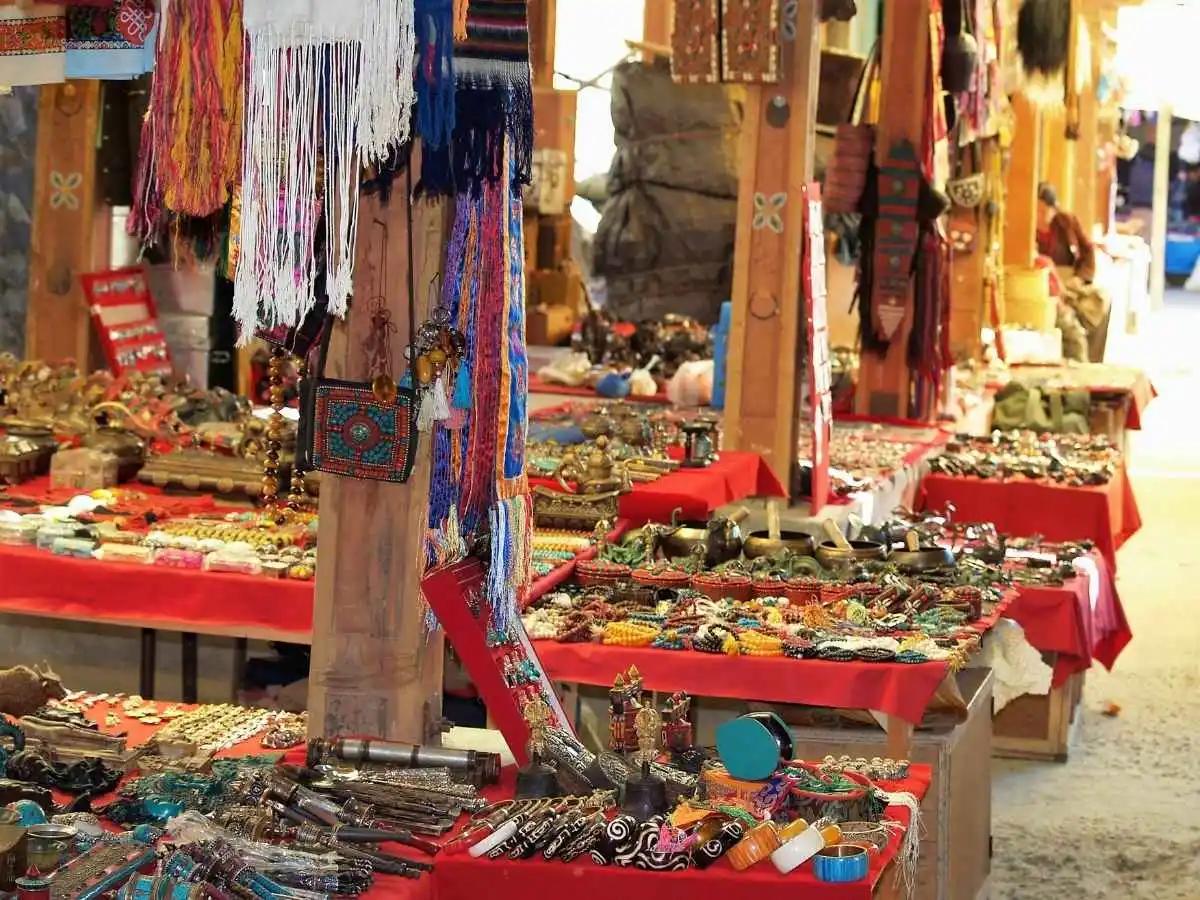
For a closer look at Bhutanese craftsmanship, the Thimphu Handicraft Market, also known as the Craft Bazaar, is worth a visit. Its stalls are run by local handicraft shops selling genuinely homemade items rather than imported souvenirs, from woven textiles to hand-carved wooden bowls, prayer flags, and small religious items. Prices are generally fixed rather than heavily negotiated, and buying here is a good way to support small-scale local producers directly.
Nearby, the National Textile Museum houses an impressive collection of traditional weaving, showcasing the intricate patterns and techniques that Bhutanese weavers have preserved for generations. Textiles carry real social meaning in Bhutan, historically used to indicate status, region, and occasion, and this small museum is a good place to understand why a finely woven kira or gho can take months of work and represent a genuine family heirloom.
Jungshi Handmade Paper Factory
Just outside the city centre, the Jungshi Handmade Paper Factory offers an insight into one of Bhutan's lesser-known traditional crafts. Established in 1990 to keep a centuries-old skill alive, the factory produces traditional paper, known as desho, from the bark of the Daphne and Dhekap trees using methods that have barely changed over generations. Historically, this paper was used for religious scriptures and official documents.
Watching the process today, from boiling and pulping the bark to pressing and drying the sheets by hand, is a quietly fascinating stop. The factory also sells notebooks, cards, and stationery made on site, which make for a more distinctive souvenir than most.
Bhutan Postal Museum
Housed on the ground floor of Thimphu's General Post Office, the Bhutan Postal Museum tells the surprisingly engaging story of the country's postal history across several small galleries. Its best-known draw is the chance to create your own personalised stamps, using your own photograph set against an image of the Tiger's Nest Monastery, which can then be used to post a genuine postcard home.
It has become a popular keepsake among many tourists, and a playful, inexpensive change of pace from temples and markets.
Bhutanese National Dress and Everyday Life
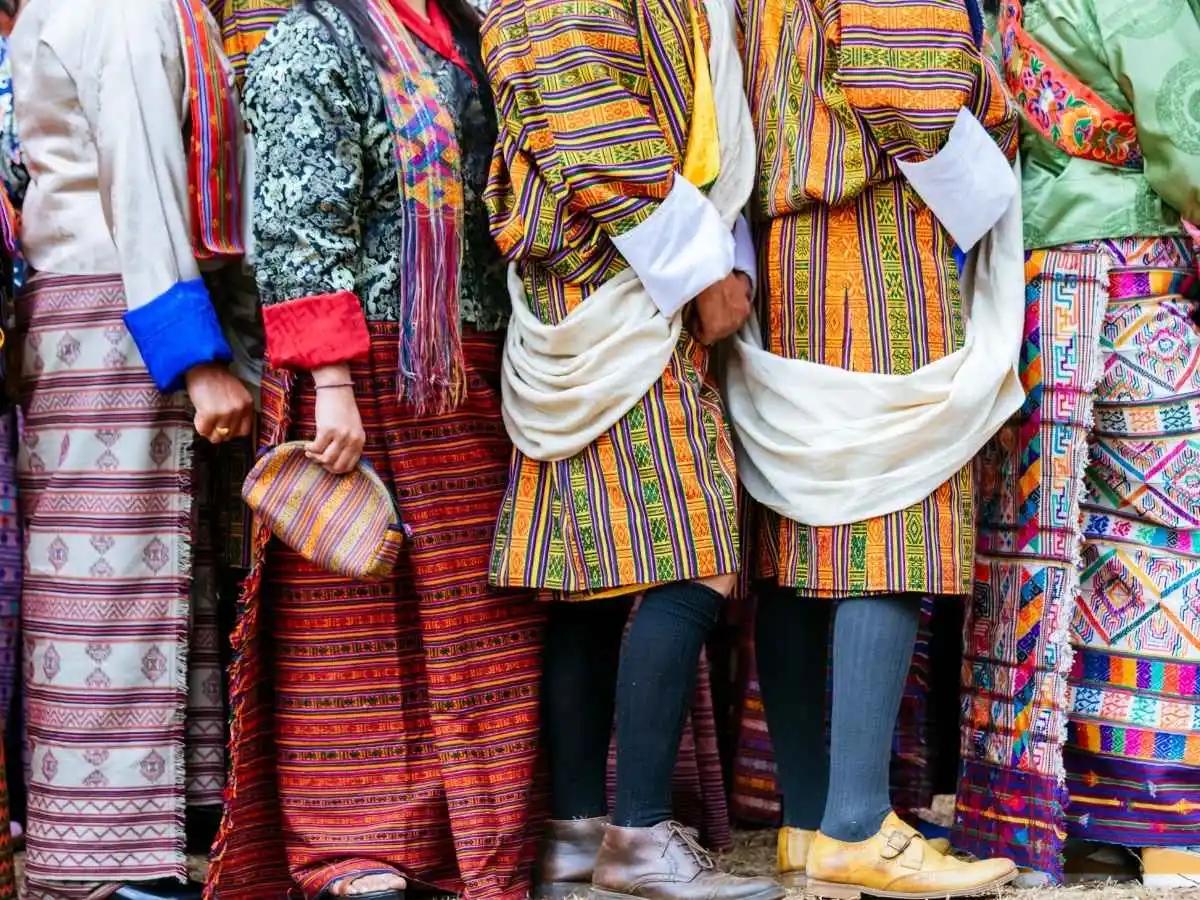
One of the first things visitors notice in Thimphu is how many people wear traditional dress as a matter of course, rather than for festivals or photographs. Men wear a knee-length robe called a gho, tied at the waist with a cloth belt known as a kera, while women wear an ankle-length dress called a kira, often paired with a jacket. National dress is not simply a cultural nicety; it is a legal requirement in government offices, schools, and temples, and most Bhutanese wear it comfortably as part of daily life rather than as a costume.
Colours and patterns can carry meaning too, tied to cultural traditions that historically reserved certain scarves and sashes for particular ranks or occasions. For visitors, seeing national dress worn so naturally across the city, from office workers to schoolchildren, is one of the more memorable and quietly striking aspects of a visit to Thimphu, and a good conversation starter with your guide if you would like to understand more about it.
Food and Drink in Thimphu
Bhutanese food is not something most visitors know much about before arriving, and Thimphu is a good place to put that right. The national dish, ema datshi, is a simple but memorable combination of chillies and melted cheese, usually served with red rice, a slightly nutty variety grown at altitude across Bhutan. Other dishes worth trying include momos, steamed dumplings filled with meat or vegetables, and phaksha paa, a hearty pork dish cooked with dried chillies and radish.
Thimphu has a growing number of restaurants catering to visitors, ranging from simple local eateries to smarter establishments serving both Bhutanese and international menus, so there is no need to worry if the spice levels of traditional dishes feel a little intense at first. To drink, try suja, a salted butter tea that takes some getting used to but is deeply woven into Bhutanese hospitality, or ara, a home-distilled spirit often made from rice or maize. Druk beer, brewed locally, is a more familiar option for those who prefer something simpler at the end of the day.
Wildlife Around Thimphu
Meeting the Takin at Motithang Takin Preserve
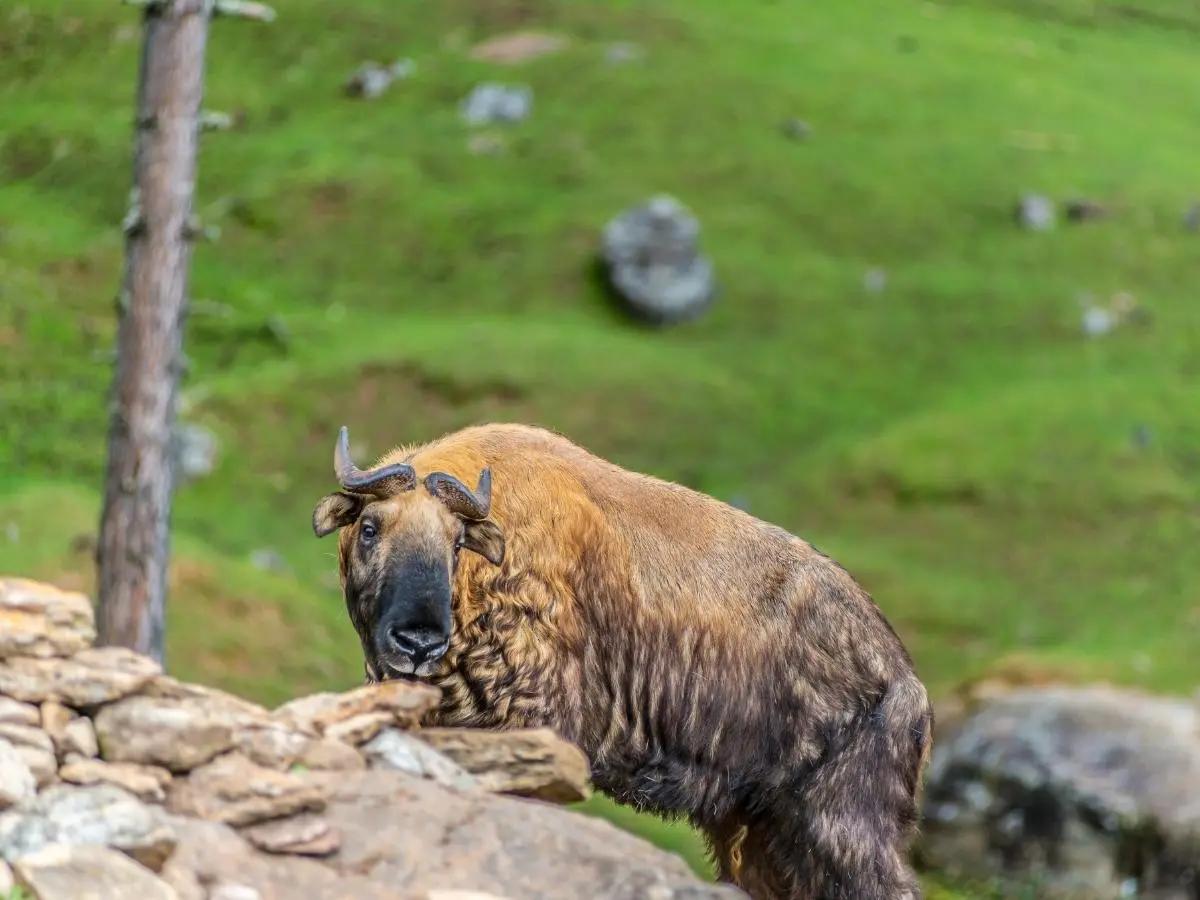
Bhutan's national animal, the takin, is a strange looking creature, part goat and part cow, and something you are unlikely to have seen before. Legend has it that the animal was created by the "Divine Madman" Lama Drukpa Kuenley, who fused the bones of a goat and a cow to satisfy a crowd demanding he perform a miracle. Whatever the truth of the story, the resulting animal, shaggy, stocky, and faintly comical, has become a genuine symbol of Bhutanese identity.
The Motithang Takin Preserve gives you a chance to see these unusual animals up close, in a large forested enclosure not far from the city centre that was originally established as a mini zoo before being converted into a dedicated wildlife reserve for an animal classified as vulnerable by the IUCN. It is a relaxed, low-key stop that works well between the temples and the markets, and a nice change of pace if you have spent the morning visiting religious sites.
Sangaygang Viewpoint
For a wider view over the whole valley, Sangaygang viewpoint sits on the hillside near the Buddha Dordenma and offers a sweeping panorama across Thimphu and the surrounding mountains. It is a popular spot with local visitors as well as tourists, particularly in the late afternoon when the light softens over the valley, and is a good place to simply pause and take in the scale of the landscape you have been exploring.
The Royal Botanical Garden
A little further from the centre, at Serbithang, the Royal Botanical Garden offers a gentler, greener side to a Thimphu visit. Bhutan's only dedicated botanical garden, it was established in 1999 and now holds several hundred species of native plants across around 32 acres of grounds. It makes a peaceful contrast to the temples and markets elsewhere in the city, and reaching it involves either a short taxi ride or a pleasant walk from Babesa, through scenery that gives a good sense of the forested hills surrounding Thimphu.
Thimphu's Dzong Attractions and Bhutanese Architecture
Tashichho Dzong
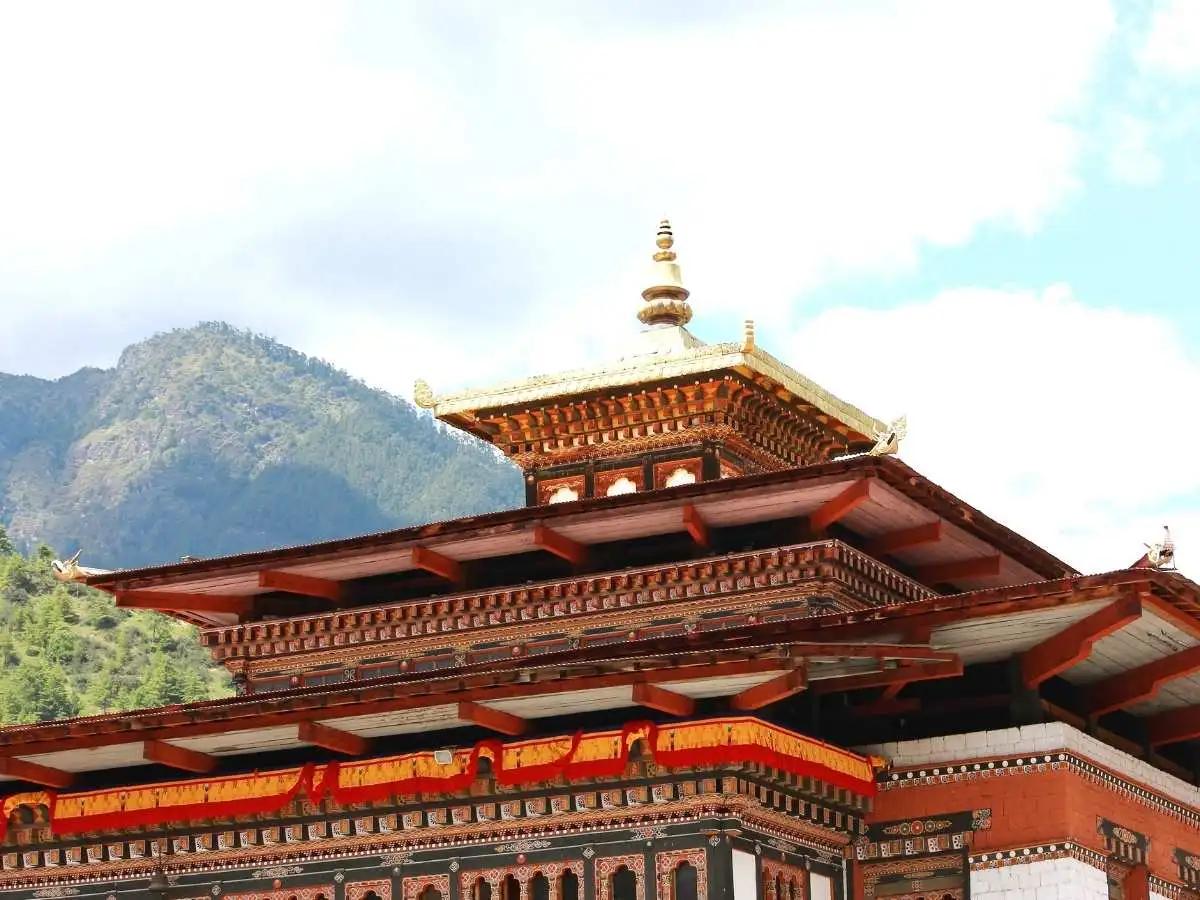
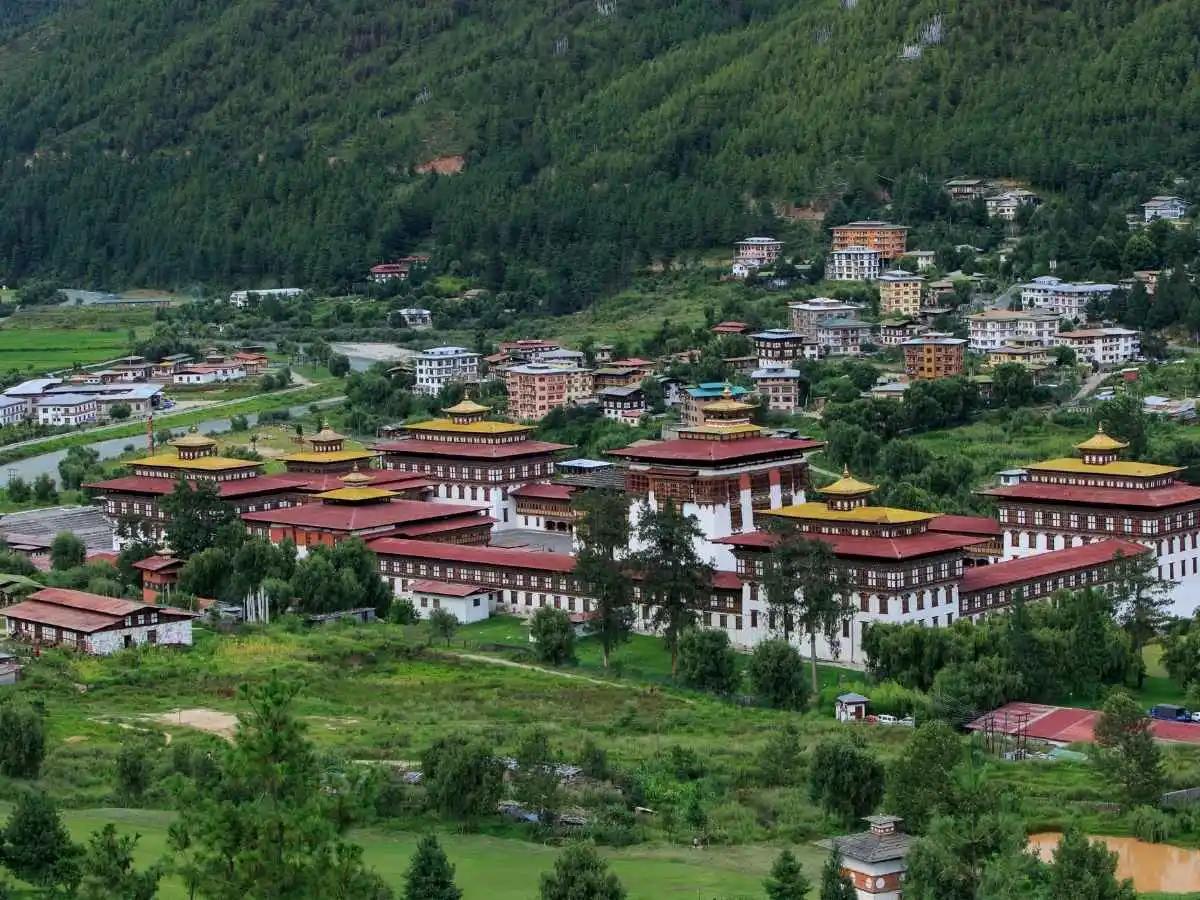
Even if it is not part of your itinerary, it is worth keeping an eye out for Tashichho Dzong, sometimes written Trashi Chhoe Dzong, the fortress-like complex that houses the central monastic body and government offices, including the throne room of the King. Dzongs like this one are among the most distinctive buildings in Bhutan, combining thick whitewashed walls with ornate wooden galleries and pitched roofs built in a Tibetan style, without the use of nails, according to traditional methods. Tashichho Dzong is a particularly fine example of the style, especially when seen in the early evening light, when its whitewashed walls catch the last of the sun against the darkening hills behind.
Each autumn, the dzong hosts one of Bhutan's most important festivals, the Thimphu Tsechu, also known as the Thimphu Tshechu Festival, when locals gather in their finest clothes to watch masked dances performed by monks, telling stories from Buddhist mythology through colour, music, and movement, and it's possible to time a visit around it with a Bhutan small-group festival tour. Many visitors simply admire the dzong from outside as they pass through the city, and it remains one of the most photographed buildings in the country regardless of whether you are able to step inside.
Semtokha Dzong, Bhutan's Oldest Fortress
A short distance south of the city, Semtokha Dzong, sometimes spelled Simtokha Dzong, holds the distinction of being the oldest dzong in Bhutan still standing in its original form. Built in 1629 by Zhabdrung Ngawang Namgyal, the founder of Bhutan as a unified state, it was the first structure in the country to combine both religious and administrative functions under one roof, a template that shaped every dzong built afterwards.
Perched on a ridge overlooking the Thimphu valley, it is known for some of the oldest and most beautifully preserved wall paintings in Bhutan, along with a courtyard lined with slate carvings depicting saints and philosophers. For anyone interested in where Bhutan's distinctive dzong architecture began, this is the place to see it.
Sport, Royalty, and Modern Thimphu
Changlimithang Stadium
Changlimithang Stadium sits on the site of a decisive battle fought in 1885, which secured the position of Ugyen Wangchuck as ruler and led to his coronation as Bhutan's first Druk Gyalpo, or Dragon King, a title still used for the country's monarch today. The current stadium was built in 1974 for the coronation of the Fourth King and later refurbished ahead of the coronation of the Fifth.
As Bhutan's national stadium, it regularly hosts football and other sporting events, and the adjoining archery ground is one of the best places to watch Bhutan's national sport in action, complete with the singing and dancing that traditionally accompanies a good shot.
The Royal Palace at Dechencholing
A few kilometres north of the city centre, Dechencholing Palace has served as a royal palace since it was built in 1953 by the Third King, Jigme Dorji Wangchuck. Set among willow trees and ornamental ponds, the palace is built entirely in traditional Bhutanese style and remains home to several members of the royal family, though it is not generally open to visitors.
Even seen only from the road, it is a reminder of how closely royal life in Bhutan remains tied to tradition, rather than sitting apart from it.
Where to Stay on Guided Tours in Thimphu
Accommodation in Thimphu ranges from simple guesthouses to comfortable mid-range hotels, and increasingly, a handful of more polished boutique properties aimed at international visitors. Most hotels used by tour operators offer private bathrooms, reliable hot water, and a standard of comfort that many first-time visitors find better than expected, given Bhutan's reputation as a remote destination. Because Bhutan operates a guided tourism model, accommodation is generally arranged as part of your overall trip rather than booked independently, which takes a good deal of the guesswork out of where to stay.
Practical Tips for Thimphu Sightseeing
Money and Costs
Bhutan's currency is the Ngultrum, which is pegged to the Indian Rupee, and Indian Rupees are often accepted alongside local currency in shops and markets. ATMs are available in Thimphu, though it is sensible to carry some cash for smaller purchases, particularly at markets and craft stalls. Credit cards are accepted in some of the larger hotels and shops but are far less reliable outside the capital, so plan accordingly if you are continuing on to more rural parts of the country.
Temple Etiquette
Bhutan takes its religious sites seriously, and a few simple rules will help you visit respectfully. Cover your shoulders and knees, remove your shoes before entering temple buildings, and always walk clockwise around chortens and religious monuments. Photography inside temples is generally not permitted, so keep your camera for the courtyards and views outside. Avoid pointing your feet towards a shrine or a monk, and try to take offered items with both hands as a mark of respect, a small gesture that is always well received.
When to Go
Thimphu is pleasant to visit for most of the year, but the clearest skies and most comfortable temperatures come in spring, from March to May, and autumn, from September to November. Fewer clouds during these months mean better views of the surrounding hills and a much higher chance of clear mountain scenery on the drive in and out of the valley. These seasons also coincide with some of Bhutan's most important festivals, including the Thimphu Tsechu in autumn.
If you are travelling in the cooler months, add a proper jacket and gloves for evenings, along with a hat for both sun and wind, since conditions in the valley can shift quickly once cloud rolls in off the surrounding peaks. If you're unsure what to pack for your trip, our guide to the best time to visit Bhutan explains the seasonal weather and what to expect throughout the year. A small daypack is worth having for the temple walks and market visits, where you will want your camera, water, and a spare layer close to hand rather than left behind in the car.
Getting There and Around
Most visitors reach Thimphu by flying into Paro, home to Bhutan's only international airport, with connecting flights typically routed through regional hubs such as Bangkok in Thailand, Delhi, or Kathmandu, before continuing by road through the Paro and Thimphu river valleys. The drive takes around an hour and passes some lovely scenery along the way, including glimpses of traditional farmhouses and terraced fields. Thimphu itself sits at an altitude of around 2,320 metres, noticeably higher than most European cities, so it is worth taking the first day gently while you adjust.
Roads within Bhutan have improved considerably in recent years, though you should still expect the odd rough patch, particularly outside the main towns. Within Thimphu itself, most sights are close enough together that a short drive or a gentle walk will get you between them with ease. Mobile coverage is generally reliable in the city, though it becomes patchier once you head into more rural valleys, so it is worth downloading any maps or information you might need before you set off each day.
What to Pack
Layers are the key to packing well for Thimphu, since mornings and evenings can feel considerably cooler than the middle of the day, even outside the depths of winter. A warm jumper or light fleece is useful year-round, alongside comfortable, sturdy shoes for the walks between temples and viewpoints. A scarf or shawl is handy for covering shoulders when visiting religious sites, and a reusable water bottle will serve you well, since tap water is not considered safe to drink without treatment.
If you are travelling in the cooler months, add a proper jacket and gloves for evenings, along with a hat for both sun and wind, since conditions in the valley can shift quickly once cloud rolls in off the surrounding peaks. A small daypack is worth having for the temple walks and market visits, where you will want your camera, water, and a spare layer close to hand rather than left behind in the car.
Combining Thimphu With the Rest of Your Bhutan Tour
Thimphu works best as part of a longer journey rather than a destination in isolation. Many itineraries continue west to Paro, home to the extraordinary Tiger's Nest Monastery hike, which clings to a cliff face high above the valley floor, or east over the Dochu La pass towards Punakha, Bhutan's former capital, with its dramatic dzong set at the meeting point of two rivers. Travellers with more time sometimes continue further still, into the remote central valleys of Bumthang, considered the spiritual heartland of the country, or to time their trip around one of Bhutan's many regional festivals. Most Bhutan tour packages combine Thimphu with at least a few nights in Paro and Punakha, and some travellers extend the trip further still by combining Bhutan with Nepal, pairing Thimphu's temples with the medieval cities of the Kathmandu Valley for a longer Himalayan journey.
Because distances in Bhutan are often measured in hours of mountain driving rather than straightforward kilometres, having a guide who understands the roads, the pace, and the practicalities of each region makes a genuine difference to how comfortably a trip like this comes together. If you're planning your journey, our Bhutan itinerary guide provides helpful advice on routes, timings, and what to expect before you travel. Thimphu, with its blend of accessible sights and deeper cultural context, is the ideal place to begin.
Ready to See Thimphu for Yourself?
Thimphu rewards travellers who give it time rather than rushing through on the way to somewhere else. Its temples, markets, and quiet corners reveal a country still firmly rooted in its own traditions, even as it changes slowly around the edges, one carved window frame and one traditional festival at a time. Undiscovered Destinations has been running small group tours to Bhutan since 2004, with no compulsory single supplements and a locally appointed guide who knows the country inside out. If Thimphu has caught your imagination, let it be the start of a much bigger journey through the Land of the Thunder Dragon.