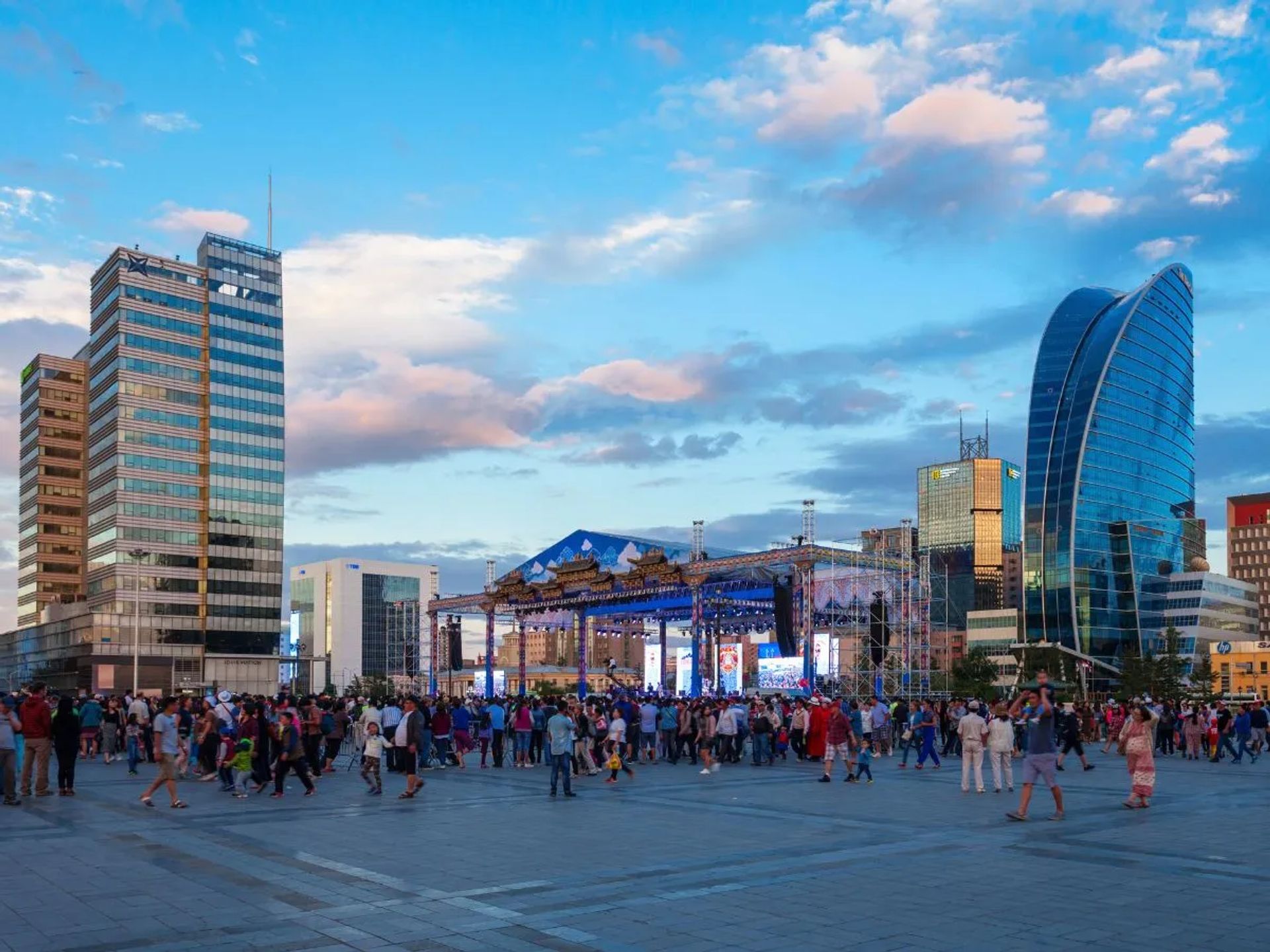

Most visitors to Mongolia treat Ulaanbaatar, the country's capital city, as a place to pass through. Some travellers still know it by its old Russian-derived name, Ulan Bator, and many arrive here on the overland route from Beijing before heading straight out to the Gobi Desert or the open steppe as quickly as they can. That is a mistake. Set in central Mongolia on the banks of the Tuul River, Ulaanbaatar carries the weight of a turbulent history, a living Buddhist tradition, and an evening scene that few travellers plan for. Give the city two or three days rather than a rushed afternoon, something a good choice of hotels in the centre makes easy, and it earns its place as the first proper chapter of a Mongolian adventure rather than a stop to get through.
Treat this guide as a loose Ulaanbaatar city tour, covering the attractions that matter most for a first visit: the monasteries and palaces that survived a difficult twentieth century, the history held in the city's central square and hillsides, the festival that briefly turns the capital into the centre of national attention, the day tours within easy reach, everyday local life, and what the capital has to offer once the sun goes down. It goes well beyond typical sightseeing, and each section works equally well as a standalone half-day out.
Buddhist Monasteries and Temples to Visit in Ulaanbaatar
Buddhism has shaped Mongolia for centuries, and Ulaanbaatar is the best place in the country to see what remains of that history.
Gandan Khiid (Gandantegchinlen) Monastery
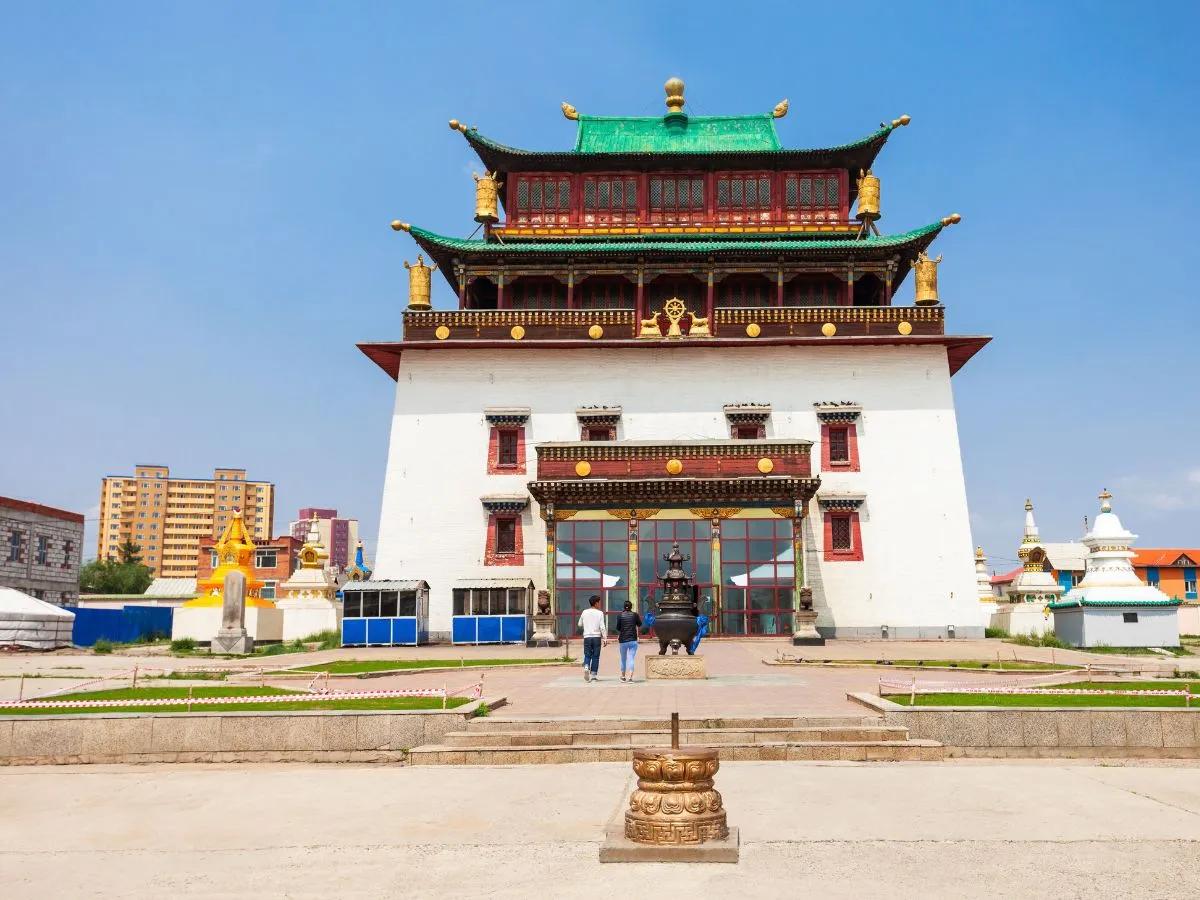
Gandan Khiid, often shortened to Gandan Monastery and known in full as Gandantegchinlen Khiid, is the largest working monastery in Mongolia and the natural starting point for understanding the country's religious past. In the late 1930s, Mongolia's Soviet-backed government carried out a brutal campaign against organised religion. Somewhere between 700 and 1,000 monasteries were destroyed across the country, and around 18,000 monks were executed, imprisoned, or forced to give up their vows. Gandan Khiid was closed in 1938, but reopened in 1944, and it remains one of the few monasteries from that era still standing. Inside its main hall stands a towering 26-metre gilded statue of Migjid Janraisig, a depiction of the bodhisattva of compassion that locals often simply call the monastery's Buddha statue, rebuilt after the original was melted down during the purges. Monks still gather here for daily prayers, and visitors are welcome to watch quietly from the edges of the hall. The monastery is a short taxi ride from the city centre and is typically open to visitors daily during daylight hours, with a small entry fee.
Choijin Lama Monastery
A short distance away, Choijin Lama Monastery offers a quieter counterpoint. No longer an active place of worship, it now functions as a museum, its temples preserved almost exactly as they were left. The complex was built between 1904 and 1908 for Luvsan Haidav, the sitting Choijin Lama, younger brother of the Bogd Khan and Mongolia's official state oracle, and the buildings have survived remarkably intact ever since. The collection of ceremonial masks and religious art gives a good sense of the artistry that once filled monasteries across the country, and because it draws fewer visitors than Gandan Khiid, it is a calmer place to spend half an hour.
Winter Palace of the Bogd Khan
South of the city centre, the Winter Palace of the Bogd Khan tells a different side of Ulaanbaatar's religious story. Built between 1893 and 1903, it was the residence of the 8th Bogd Jebtsundamba Khutuktu, Mongolia's highest Buddhist authority, who also became the country's theocratic ruler after declaring independence from Qing China in 1911. His rule as both spiritual leader and head of state lasted until 1924, when Mongolia was declared a socialist republic. The palace complex became the basis of the country's first national museum in 1926, and its collection of more than 8,000 objects, including gifts from foreign dignitaries and the Bogd Khan's own possessions, remains largely intact today. It is one of only a handful of historic buildings in the city to have escaped destruction during the religious purges that followed, making it a rare survivor alongside Gandan Khiid.
Historical Sites and Museums in Ulaanbaatar
Ulaanbaatar's history is not confined to museum walls. Much of it is written into the streets, squares, and hillsides themselves.
Sükhbaatar Square
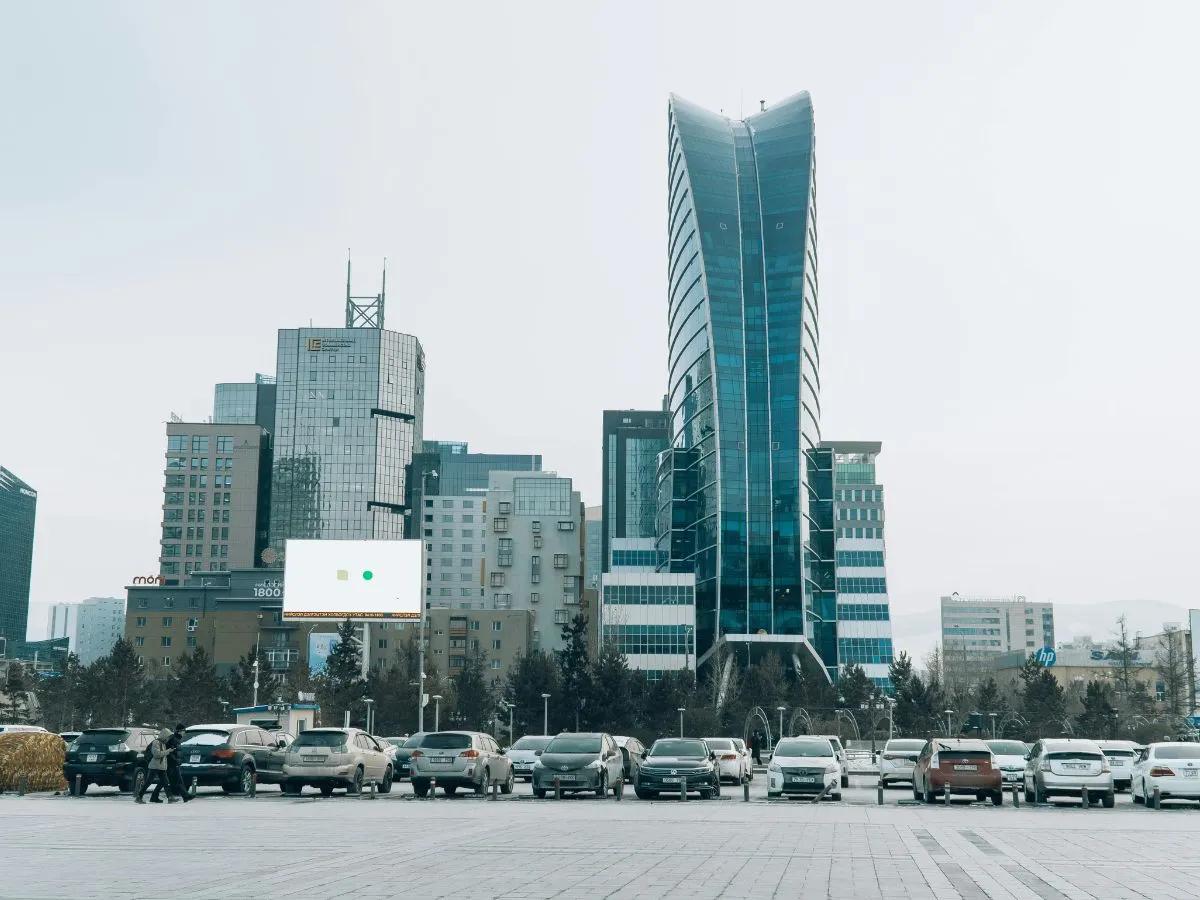
Sükhbaatar Square is the symbolic heart of the capital, and its name honours Damdin Sükhbaatar, who declared Mongolia's independence here on 11 July 1921. A bronze statue of him on horseback still stands at the centre of the square. Decades later, the same open space hosted the peaceful protests of 1990 that helped usher in Mongolia's transition to democracy. Today the square is framed by government buildings and modern glass towers, a visible reminder of how quickly the city has changed in a single lifetime.
National Museum of Mongolia
For an overview of Mongolian history, the National Museum of Mongolia is worth setting aside a couple of hours for. Its collection runs from the country's earliest nomadic tribes through the era of Chinggis Khan and into the twentieth century, tracing Mongolia's turbulent history from empire to Soviet satellite state to the democracy it is today. It is a useful stop before heading out to the Mongolian countryside, since much of what the museum explains in exhibits becomes visible later in ger camps, monasteries, and open grassland.
Chinggis Khaan National Museum
For a more focused, and considerably more modern, telling of the same story, the Chinggis Khaan National Museum opened in the heart of the city in October 2022 and is now the largest museum of its kind in Asia. Spread across 11,000 square metres, it houses more than 10,000 exhibits, over 85 per cent of them original, including thirteenth-century archaeological finds and high-precision replicas gathered from collections in 14 countries. The building's facade carries the seals of the five great khans of the Mongol Empire, and its roof is topped with a falcon statue referencing the legend behind Chinggis Khan's given name, Temüjin. It is an ambitious, well-funded counterpart to the older National Museum of Mongolia, and worth visiting alongside it rather than instead of it.
International Intellectual Museum
For something more unexpected, the International Intellectual Museum, tucked away in the city centre, is one of Ulaanbaatar's most surprising stops. Founded in 1990 as Mongolia's first privately owned museum, it houses more than 11,000 puzzles, games, and chess sets gathered from over 130 countries, including a collection of Mongolian puzzle chess sets recognised in the Guinness World Records for the largest such collection anywhere. Many of the puzzles descend from a traditional Mongolian logic-puzzle style, and visitors are encouraged to pick pieces up and try to solve them rather than simply look. It is an easy addition to a day otherwise built around heavier historical sites.
Zaisan Hill Memorial
For a different perspective on the city's history, and on the city itself, climb the steps to Zaisan Hill Memorial on Ulaanbaatar's southern edge. Built in the early 1970s to mark the friendship between Mongolia and the Soviet Union, the circular monument combines colourful mosaics with Soviet-era sculptures, together depicting Soviet support for Mongolian independence in 1921, the defeat of Japanese forces on Mongolia's border in 1939, and scenes from Soviet space exploration. At its centre stands a statue of a Soviet soldier holding a flag. Beyond the monument's own history, the real draw is the view: from the top of the hill, the whole of Ulaanbaatar spreads out below, with the mountains that ring the city visible in the distance.
Naadam Festival's Opening Ceremony
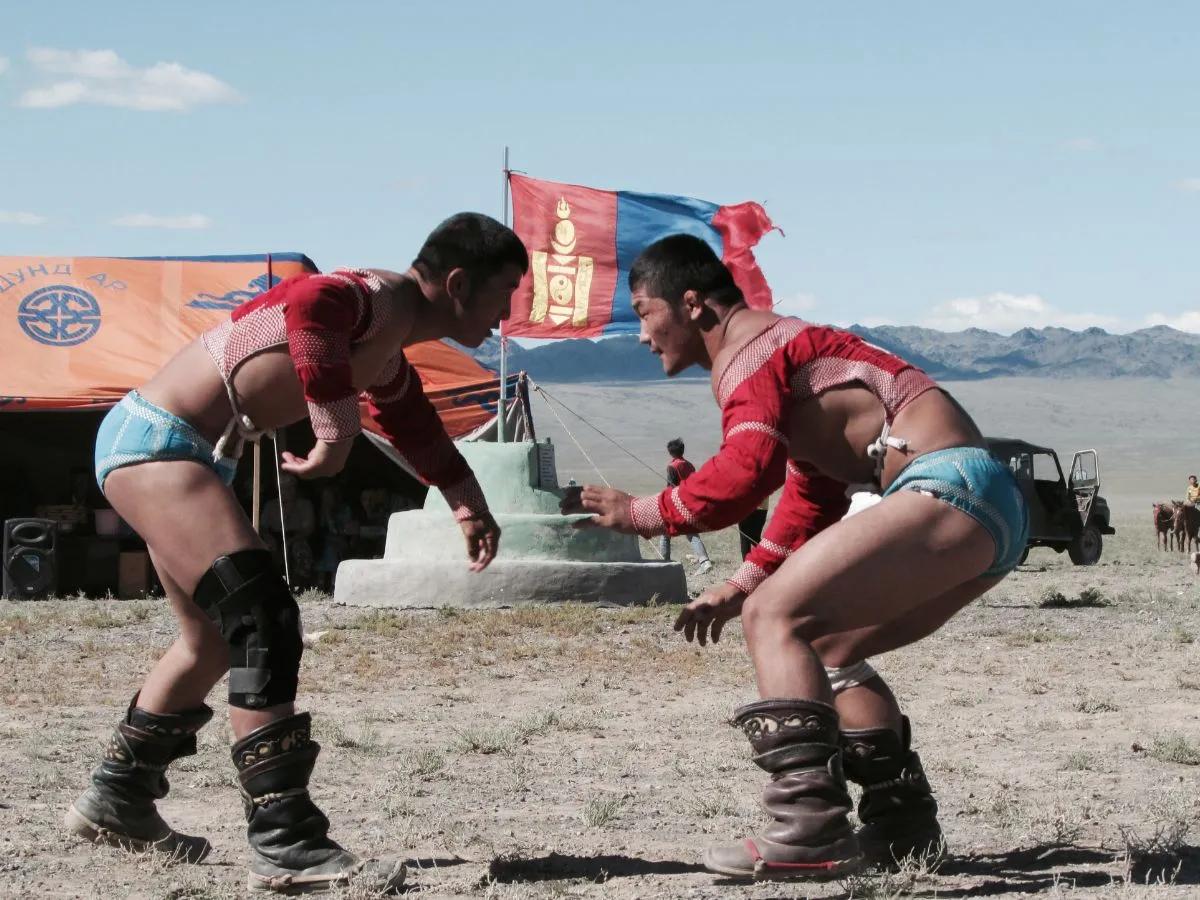
Anyone visiting in mid-July should try to time their trip around Naadam, Mongolia's national festival and one of the most important dates on the country's calendar. Naadam runs from 11 to 13 July each year, marking the anniversary of the 1921 revolution, and Ulaanbaatar hosts the official opening of Mongolia's Naadam Festival. The celebrations begin with a State Flag Procession, which travels from the Government Palace at Sükhbaatar Square to the National Sports Stadium, a 60,000-seat arena built in 1958 specifically to host the modern Naadam Games. The opening ceremony itself, which starts around 11am on 11 July, includes a military procession, a mounted cavalry display, and the formal presentation of the nine white horse-tail banners that symbolise Mongolian sovereignty, before wrestling, archery, and horse racing, the festival's Three Manly Sports, get underway. The stadium can be crowded and the atmosphere intensely touristy, which is why many travellers prefer to experience Naadam in a smaller provincial town, one of several stops on the festivals of Mongolia, but for anyone in the capital at the right time, the opening ceremony is a spectacle worth seeing at least once.
Day Trips From the Capital
Some of the most memorable sights near Ulaanbaatar, and some of its most popular attractions, are not within the city at all, but make for an easy day tour a short drive away.
The Chinggis Khaan Equestrian Statue
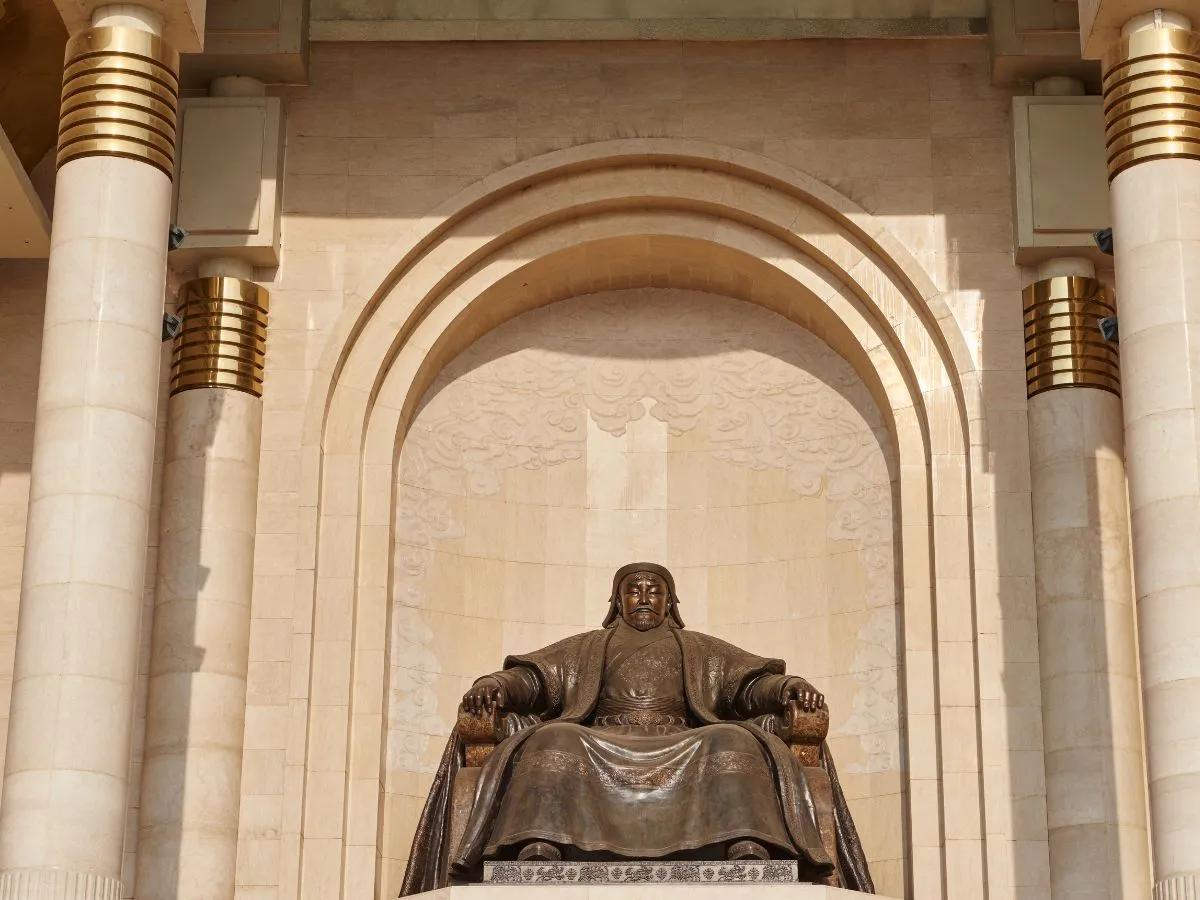
About 54 kilometres east of the city, at Tsonjin Boldog, stands the Chinggis Khaan Equestrian Statue, the largest equestrian statue in the world. Built in 2008 to mark the 800th anniversary of the founding of the Mongol Empire, the statue rises 40 metres into the air and is built from 250 tonnes of gleaming stainless steel. Its base, shaped like a visitor centre, is ringed by 36 columns representing the 36 khans who ruled after Chinggis Khan. Visitors can climb inside the horse's neck for a close-up view across the surrounding steppe, a striking contrast to the statue's polished, modern surface. It's roughly an hour's drive from Ulaanbaatar, making it an easy half-day trip with time to visit the on-site museum as well.
Hustai National Park
A little further from the city, Hustai National Park protects one of Mongolia's great conservation successes: the Takhi, or Przewalski's horse, the only truly wild horse species left on earth. Once extinct in the wild, the Takhi has been reintroduced to Hustai through a long-running breeding programme, and small herds of Hustai's wild Przewalski's horses can often be spotted grazing across the park's rolling grassland. It is a rewarding half-day trip for anyone who wants a taste of the open landscape before travelling further into the country.
Gorkhi-Terelj National Park
Closer to the city than Hustai, Gorkhi-Terelj National Park lies around 55 kilometres northeast of Ulaanbaatar and makes an easy half-day or full-day escape into the mountains. Its best-known feature is Turtle Rock, a granite formation shaped by wind and weather erosion into an uncanny resemblance to a turtle, standing around 24 metres high. Walking trails wind through pine forest and alpine meadow, past rock formations and small rivers, with the Khan Khentii mountains as a backdrop throughout. It is popular with visitors and Ulaanbaatar residents alike, and gives a first taste of the wider top things to do in Mongolia beyond the capital.
Manzushir Monastery
On the southern slopes of Bogd Khan Mountain, within easy reach of the city, the ruins of Manzushir Monastery offer a quieter, sadder counterpart to the day's bigger sights. Founded in 1733 as the seat of a reincarnated Bodhisattva of Wisdom, it grew over two centuries into a complex of 21 temples housing around 500 monks, before being destroyed in 1937 during the same purges that closed Gandan Khiid, with 53 monks executed. Restoration began after Mongolia's 1990 democratic revolution, and the surviving temple, museum, and scattered foundations now sit within a protected mountain reserve, reached by an easy walking trail that makes it a popular half-day trip for anyone wanting a mix of history and hiking.
Where to Shop and Eat in Ulaanbaatar
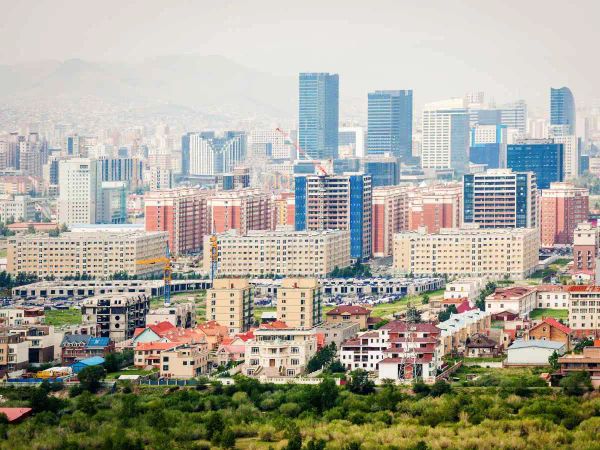
Away from its monuments, Ulaanbaatar is a genuinely lived-in city of modern nomads and lifelong urbanites alike. It is home to around 1.7 million people, close to 45 per cent of Mongolia's entire population, and that concentration gives it an energy that the rest of the country, with its vast open distances, simply does not have.
Narantuul Market and Shopping
The State Department Store, in the centre of the city, combines souvenir shops with places to browse for cashmere, traditional crafts, and everyday goods under one roof. Mongolian cashmere in particular is worth seeking out here: the country produces around 40 per cent of the world's raw cashmere, second only to China, and quality tends to be both better and considerably cheaper than in shops back home. For something livelier, head to Narantuul Market, the city's sprawling open-air market known locally as the "black market," where stalls sell everything from clothing to household goods and saddlery. Wandering through it for half an hour gives a far better sense of daily life than any museum can.
Mongolian Food
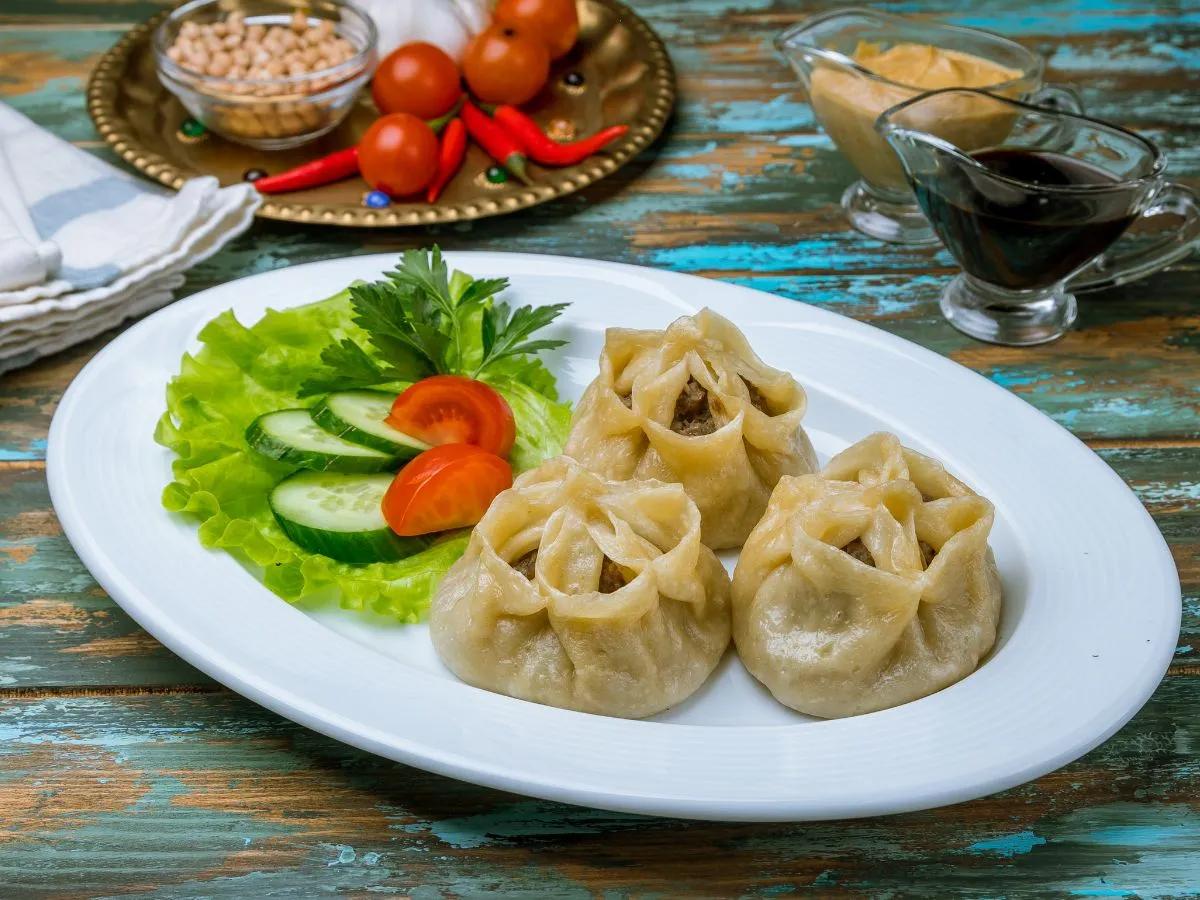
Mongolian cuisine is hearty and built around meat, particularly mutton, reflecting the nomadic lifestyle that has shaped Mongolian people's diet for centuries, in which dairy and livestock have always mattered more than vegetables. Dumplings such as buuz and khuushuur are found everywhere and make an easy, filling lunch, while khorkhog, meat slow-cooked with hot stones inside a sealed pot, is worth seeking out for a proper taste of countryside cooking without leaving the city. For something more unusual, some restaurants and market stalls still serve airag, fermented mare's milk, a drink with a long history in nomadic Mongolian life and a taste that takes most first-time visitors by surprise. Alongside the traditional options, Ulaanbaatar's café culture has grown quickly in recent years, with independent coffee houses and a small but genuine vegetarian and vegan scene now scattered around the city centre.
Things to Do in Ulaanbaatar at Night
This is the part of Ulaanbaatar most guides skip over, which is a shame, because the city changes noticeably once the sun sets.
A Traditional Cultural Performance
The best introduction to Mongolian culture after dark is a traditional performance combining khöömei, or throat singing, with the morin khuur, the horse-head fiddle, and folk dance. Khöömei is remarkable to hear in person: a single singer produces two or three distinct tones simultaneously, a technique recognised by UNESCO as part of the Intangible Cultural Heritage of Humanity since 2009. Several venues around the city stage nightly shows aimed at visitors, and it remains one of the most memorable ways to spend an evening in the capital.
Seoul Street: Live Music and Late-Night Dining
Beyond traditional performance, Ulaanbaatar has a small but lively live music scene, much of it centred on Seoul Street, a strip of bars, pubs, and live music venues near the State Department Store that has become the city's main nightlife corridor. Jazz venues along and around the street offer food, drink, and a set most nights of the week. Many restaurants in Ulaanbaatar stay open late, and increasingly serve dishes that blend Mongolian ingredients with international styles, a sign of how quickly the capital's food scene has developed.
Mongolian National Art Gallery and Evening Culture
For a quieter evening, Ulaanbaatar's art scene is worth exploring after dark. Galleries such as the Mongolian National Art Gallery and smaller independent spaces around the city often stay open into the evening, and several host openings, talks, or small performances timed for after-work visitors. Karaoke is also a genuinely popular local pastime rather than just a tourist novelty, with private-room venues found throughout the city centre. Between the two, there is a version of an Ulaanbaatar night out for almost every taste.
Sükhbaatar Square After Dark
Sükhbaatar Square is worth revisiting once evening falls. Lit up and quieter than during the day, it takes on a different character, the surrounding government buildings and monuments standing out against the night sky. It is a simple, free way to end an evening in the city, and a great place to reflect on how much history sits within a single square.
Conclusion
Ulaanbaatar rewards travellers who give it more than a single afternoon. Its monasteries and palaces carry the weight of a turbulent religious history, its museums and monuments trace a story that runs from nomadic tribes to Chinggis Khan to the Soviet era and beyond, and its evenings offer a side of the city that few visitors plan for, with live music, traditional performance, and a capital that feels entirely different once the sun sets. Seen properly, Ulaanbaatar is not a gateway to be rushed through on the way to the Gobi. It is the first chapter of a much bigger Mongolian story. For those who want to see where that story leads, Undiscovered Destinations' small group tours to Mongolia continue the journey out into the steppe and desert beyond, with the capital as a fitting place to start. Many travellers extend their adventure further into the country with Gobi Desert tours, exploring Mongolia’s vast landscapes, remote communities, and iconic desert scenery.