
By the time most travellers reach Luang Prabang, they have already spent days following the Mekong River north through Laos. The road, or more often the river, winds through forested hills, past small villages where life has changed very little over the years, before the jungle finally gives way to gold rooftops and quiet, tree-lined streets. This is Laos' former royal capital, and it remains the country's spiritual heart, and the essential stop for anyone visiting Laos for the first time. Sitting at the point where the Nam Khan River meets the Mekong, Luang Prabang is a UNESCO World Heritage town built from a rare mix of gleaming temple roofs, ageing French provincial buildings, and a population drawn from many different ethnic groups.
There is plenty here for a first-time visitor to see, from waterfalls and river caves to some of the finest temples in South East Asia. But the city also rewards those who look past the obvious list of sights and spend time with its quieter, more personal traditions. A morning market, a family kitchen, a small ceremony in a nearby village. These are the moments that tend to stay with people long after the photographs of temple roofs have been filed away. This guide brings both sides of Luang Prabang together, from the well-known highlights to the experiences that rarely make it onto a standard sightseeing list.
This Luang Prabang travel guide is designed to help you build your own Luang Prabang itinerary, whether you are booking a single day tour to the waterfalls or planning a longer stay. A few practical travel tips are worth bearing in mind before you go: accommodation ranges from simple guesthouses to a handful of luxury hotels, so booking your hotel in advance is sensible in high season, and it helps to pace your days around the quieter early mornings rather than trying to fit in every one of the city's activities at once. For more practical advice before you go, see our first-time Laos travel tips.
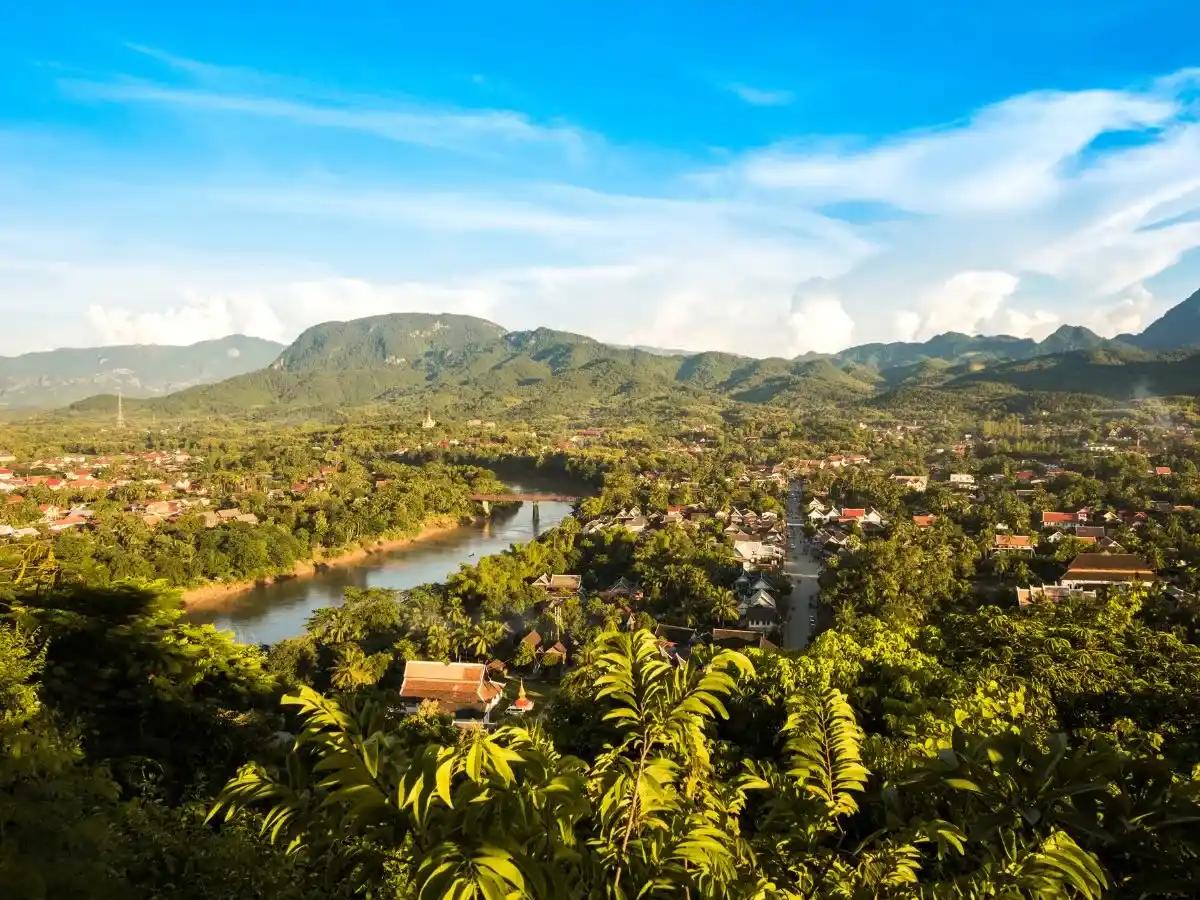
Where the Nam Khan River Meets the Mekong: Why Luang Prabang Feels Different
Laos is a country still finding its way onto most travellers' maps, and Luang Prabang sits at the centre of that story. Many visitors arrive here after time spent further north, in the hill tribe region of Luang Namtha, where hill tribes including the Akha, Hmong and Khmu people keep their own customs, dress and language alive, largely away from outside influence. Villages in this region still weave cloth by hand, trade in local markets, and follow farming rhythms that owe little to the modern world. It is a striking contrast to what follows.
The Mekong itself is often the route in. For many, the slow boat journey begins close to the border with Thailand, and can last two full days downstream, passing unspoilt forest, small riverside settlements, and the occasional elephant working alongside its handler on the riverbank. Along the way, many boats stop at old riverside villages, giving passengers a glimpse of daily life along the water before the journey continues towards Luang Prabang.
That journey matters. It is part of what makes this small city feel so different from the rest of South East Asia when you finally arrive. Luang Prabang does not shout for attention the way that some regional capitals do. There is little in the way of high-rise development, aggressive traffic or neon signage. Its charm builds slowly instead, through calm mornings, warm light on old buildings, and the quiet routines of daily life that carry on much as they always have. Many visitors describe the feeling of arriving here as being lulled into a gentler pace almost immediately, and it is not hard to see why. The graciousness of the city's residents, coupled with the setting between two rivers and beneath forested hills, gives Luang Prabang an atmosphere that is genuinely hard to find elsewhere in the region.
For anyone planning a longer trip through Laos, it is worth remembering that Luang Prabang works best as part of a bigger picture rather than a stand-alone stop — see our guide to top places to visit in Laos to see how it fits into a wider itinerary. Pairing time in the city with the hill tribe regions of the north gives a much fuller sense of what makes this country so rewarding to explore slowly.
Most journeys to this ancient capital begin in Vientiane, Laos' low-key capital city further downstream — worth a stop in its own right for the best things to do in Vientiane — though plenty of travellers arrive instead via regional hubs such as Bangkok or Chiang Mai in neighbouring Thailand, both well connected by direct flights. Backpackers exploring wider Southeast Asia often add Luang Prabang onto a longer route that also takes in Vang Vieng, further south in Laos, or continues into Cambodia, echoing the route of our Laos and Cambodia tour. However you arrive, the change of pace on reaching Luang Prabang is part of the appeal.
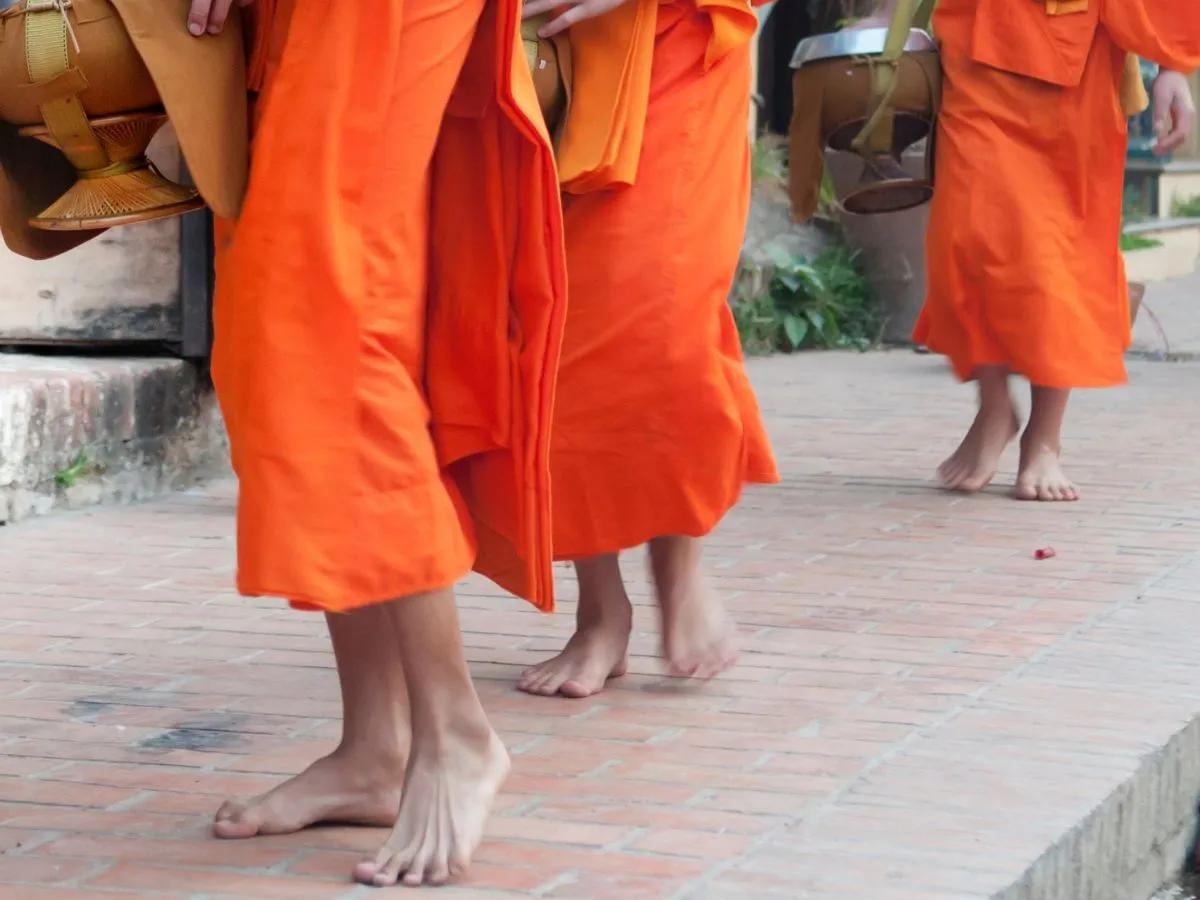
Witnessing the Sai Bat Alms-Giving Ceremony Before Breakfast
For many visitors, the single most memorable thing to do in Luang Prabang happens before breakfast. Each morning at dawn, as the sky is only just beginning to lighten, long lines of Buddhist monks in burnt orange robes walk barefoot through the streets of the city to collect rice and small offerings from local people. This is known as Sai Bat, and it has taken place in Luang Prabang for centuries, forming one of the clearest, most visible expressions of Buddhist life anywhere in Laos.
Local residents, many of them elderly women, kneel or sit on low stools along the pavement with baskets of sticky rice prepared specially for the occasion. As the monks pass in silence, small portions are placed into their alms bowls, one after another, in a rhythm that has barely changed for generations. There is no announcement, no performance, and very little noise beyond the soft shuffle of bare feet on stone.
Sai Bat is a living religious practice, not a show staged for visitors, so it is worth taking a little care when watching. Keep a respectful distance rather than crowding the monks' path, and resist the urge to walk alongside them for a better photograph, particularly when other tourists are gathered nearby. If you do take pictures, avoid using flash, and try not to interrupt the procession as it passes. Handled with care, this quiet, dawn ritual offers a rare and moving window into everyday Buddhist life in Laos, and it is often the single experience travellers mention first when asked about their time in the city.
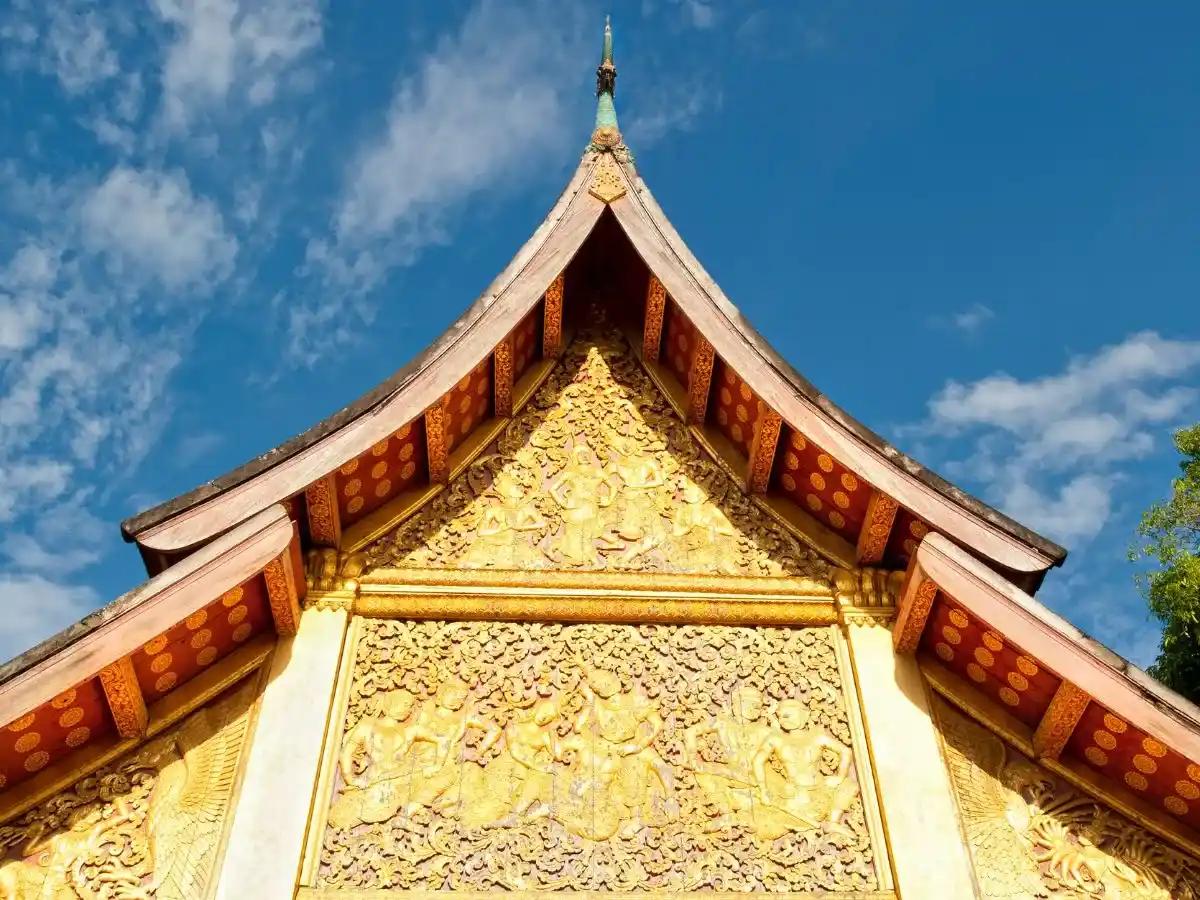
What to See When You Travel Through Luang Prabang's Temples and Old Town
Once the sun is fully up and the alms procession has finished, the rest of Luang Prabang begins to stir, and it becomes easy to see why the city earned its UNESCO World Heritage status. Its Buddhist temples sweep low and close to the ground in the classic Lao style, layered in tiers and decorated with gold leaf, intricate mosaics and detailed woodwork, while the streets around them are lined with fading French colonial villas, small cafes serving good coffee and fresh bread, and family-run shops selling everything from silk scarves to fresh fruit. It is, by any measure, a perfect place to spend a slow morning.
If you only step inside one temple during your visit, most travellers head to Wat Xieng Thong, sometimes known as the Golden Tree Monastery and occasionally written simply as Xiengthong. Built in the 1560s under King Setthathirath, it is widely considered one of the finest surviving examples of classical Lao architecture, and ranks among the most amazing temples in the region. Carved wooden pillars support its sweeping, multi-tiered roof, and a striking mosaic tree of life decorates the rear wall, made from thousands of small pieces of coloured glass set into black lacquer.
Away from Wat Xieng Thong, the city holds many temples beyond its most famous one, some of the most beautiful temples found anywhere in Laos, many still active as working monasteries where young novices study alongside older monks. Wandering between them, and through the Old Town more generally, is one of the simplest and most rewarding things to do in Luang Prabang, and a popular spot for both tourists and locals out for an evening stroll. Narrow lanes lead past teak shophouses, colonial mansions with faded shutters, and quiet courtyards where washing hangs between the trees. The Mekong is rarely far from view, glimpsed at the end of a street or from a small riverside terrace close to the centre of town. There is no need to plan a route through the Old Town in any great detail. It is an easy, unhurried place simply to wander, stopping wherever something catches your eye, and letting the layered history of French colonial rule and centuries-old Buddhist tradition unfold at its own pace.
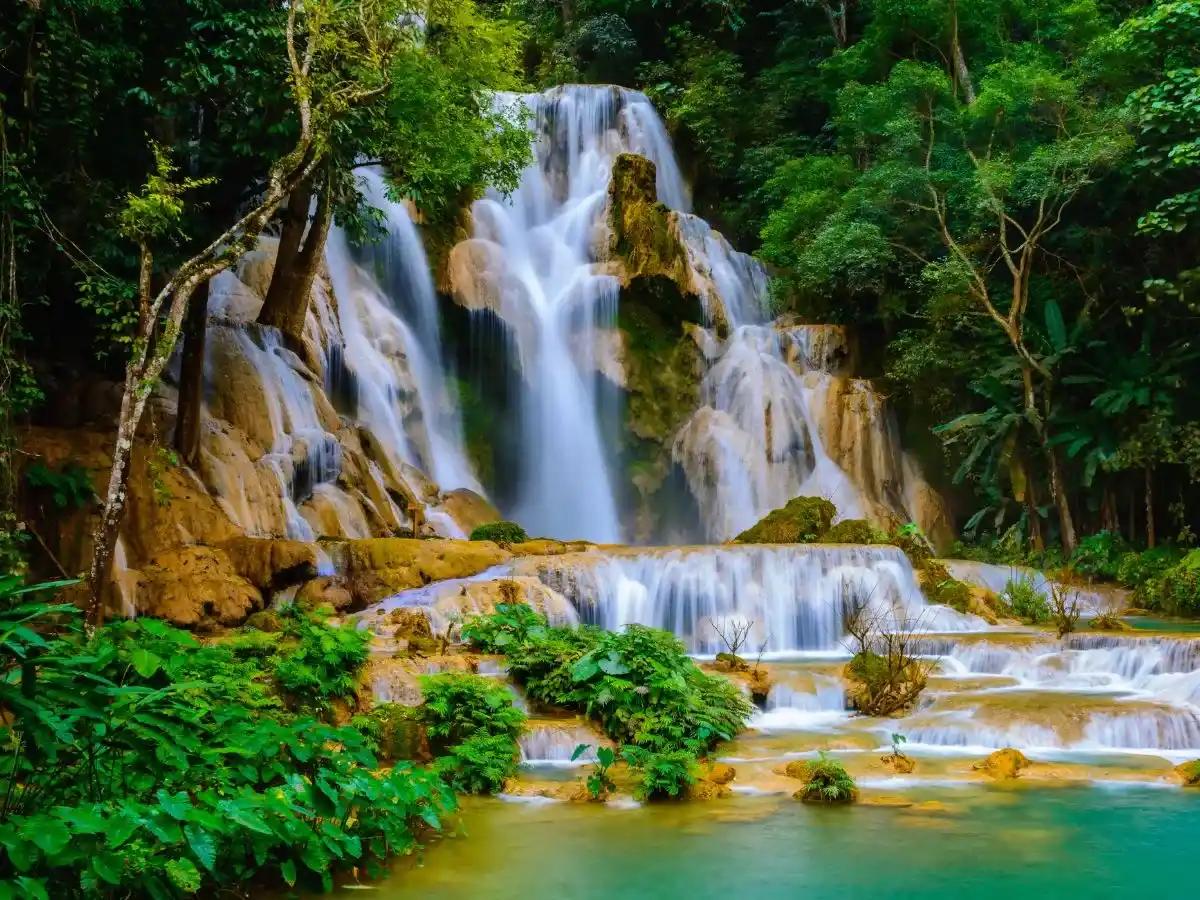
Kuang Si Waterfall, the Living Crafts Centre and the Sun Bear Refuge
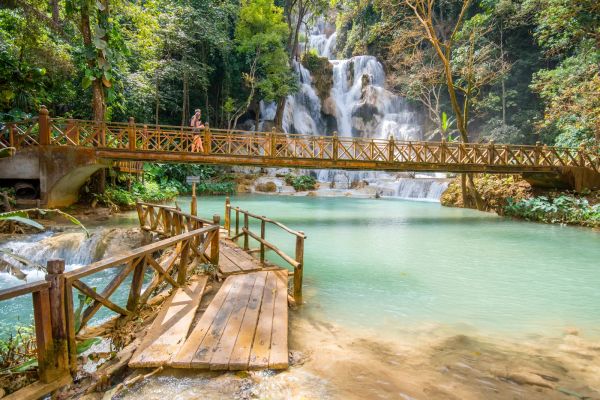
A short drive from town, on the outskirts of Luang Prabang, Kuang Si Falls is one of the things to see in Luang Prabang that few visitors skip, and it is easy to understand why once you arrive. Turquoise-blue water tumbles down through a series of terraced pools set into thick jungle, cool enough for a proper swim on a hot afternoon and striking enough to photograph from almost any angle. Wooden walkways and simple paths lead visitors up alongside the main cascade, past smaller pools where locals and tourists alike cool off, towards a taller waterfall further up the hillside for those who want to walk a little further.
On the way to the falls, many visits include a stop at the Living Crafts Centre, where local weavers demonstrate traditional techniques passed down through generations of Lao families. Looms are set up in open-sided workshops, and visitors can watch cotton and silk threads being turned into intricate patterned cloth by hand, a slow and skilled process that modern factory production has largely replaced elsewhere. It is a genuine chance to see Lao textile work up close, away from the souvenir stalls that sell the finished product back in town, and to appreciate just how much time and skill goes into even a small piece of woven fabric.
Near the entrance to Kuang Si sits a sanctuary for sun bears rescued from poaching and the illegal wildlife trade. Raised walkways let visitors watch the bears moving through a natural, forested enclosure, climbing, foraging and resting much as they would in the wild, while information boards explain the conservation work being carried out to protect the species and the threats it continues to face across the region. For many visitors, particularly those travelling with children, this stop ends up being just as memorable as the waterfall itself.
Beyond the Waterfalls: A Taste of Rural Life at the Buffalo Dairy Farm
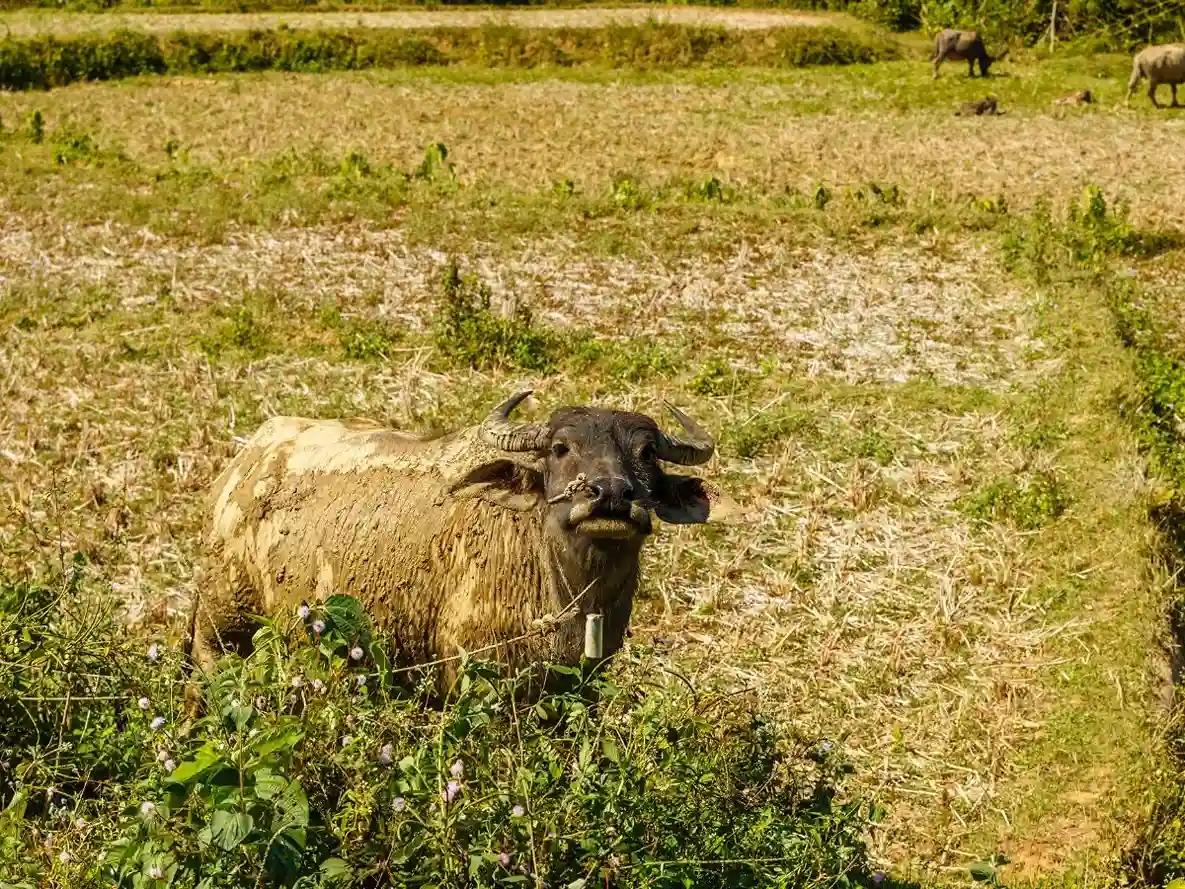
On the return journey from the falls, often timed around lunch, the Buffalo Dairy Farm offers a gentle change of pace after a busy morning of swimming and sightseeing. Run with a strong focus on sustainable local farming, the farm produces dairy products, including cheese and ice cream, from water buffalo milk, an ingredient much more common across South East Asia than in British kitchens.
Visitors can walk among the herd, learn a little about how the farm supports local food producers, and sample some of what is produced on site, often served with fresh fruit or local coffee. It is a low-key, easy-going stop rather than a headline attraction, but it offers a useful contrast to the temples and waterfalls that dominate most days in Luang Prabang, and a chance to see a side of the local economy that rarely appears in guidebooks.
Cruising the Mekong River to the Pak Ou Caves
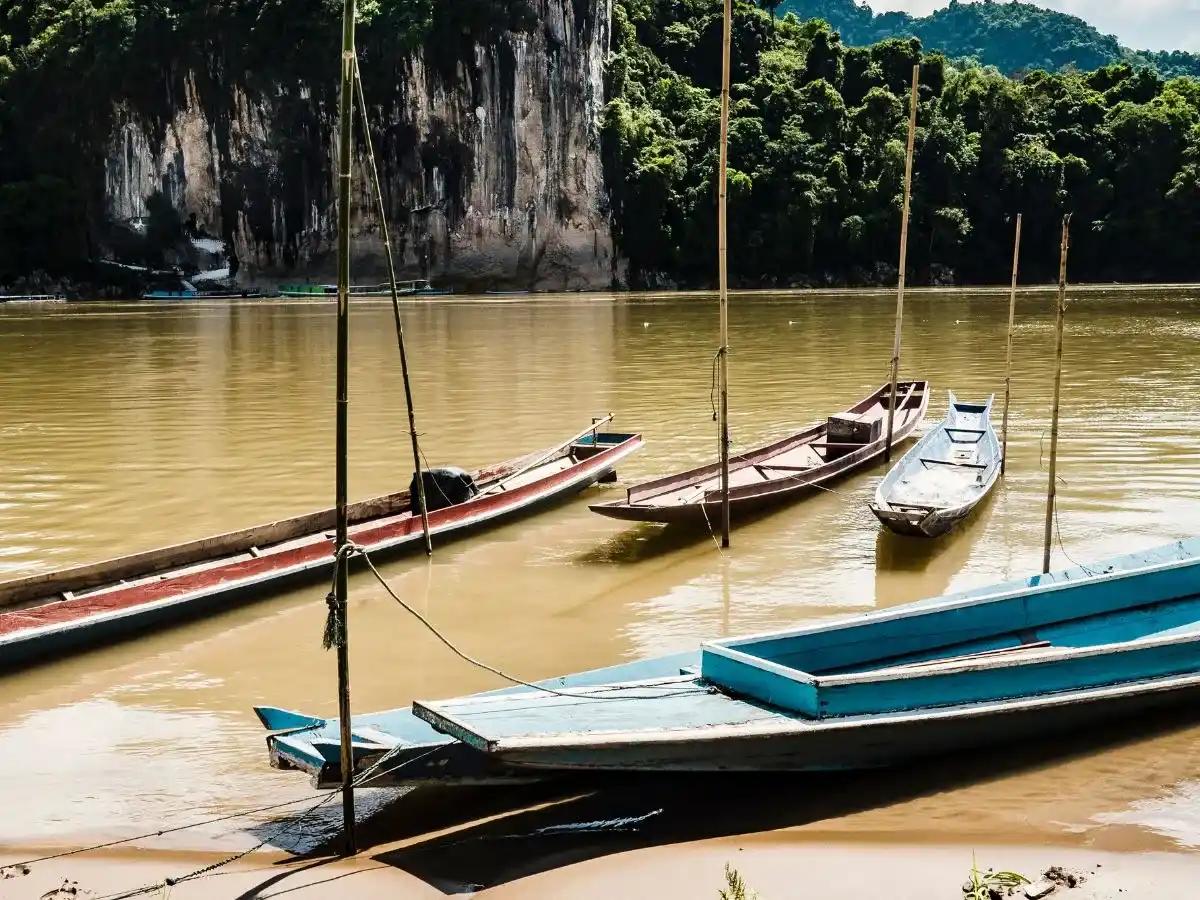
No visit to Luang Prabang feels complete without time spent on the river itself, and a cruise upstream to the Pak Ou Caves is one of the best ways to experience it. The boat journey follows the Mekong past unspoilt forest and small riverside villages, with fishermen tending nets from narrow wooden boats and, on quieter stretches, the occasional elephant working alongside its mahout close to the water's edge.
The caves themselves sit within limestone cliffs rising directly from the river, and have served as an important pilgrimage site for centuries. Two main caverns, one lower and easily reached from the water, the other higher up and reached by a steep flight of steps, hold thousands of small gold-lacquered Buddha statues left behind by worshippers over hundreds of years. Some are tiny, barely the length of a finger, while others stand considerably taller, and together they create a scene that photographs struggle to do justice to.
The boat ride back downstream, often taken as the light begins to soften in the late afternoon, is a good opportunity to slow down properly, watching river life drift past from the comfort of the deck rather than rushing straight on to the next stop.
Cultural Immersion Beyond the Guidebook
The sights covered so far appear on most lists of things to do in Luang Prabang, and rightly so. But some of the richest experiences here happen away from the main attractions altogether, in the homes and villages just outside the city, where visitors are welcomed in a far more personal way.
A Morning Market Visit and Home-Cooked Meal by the River
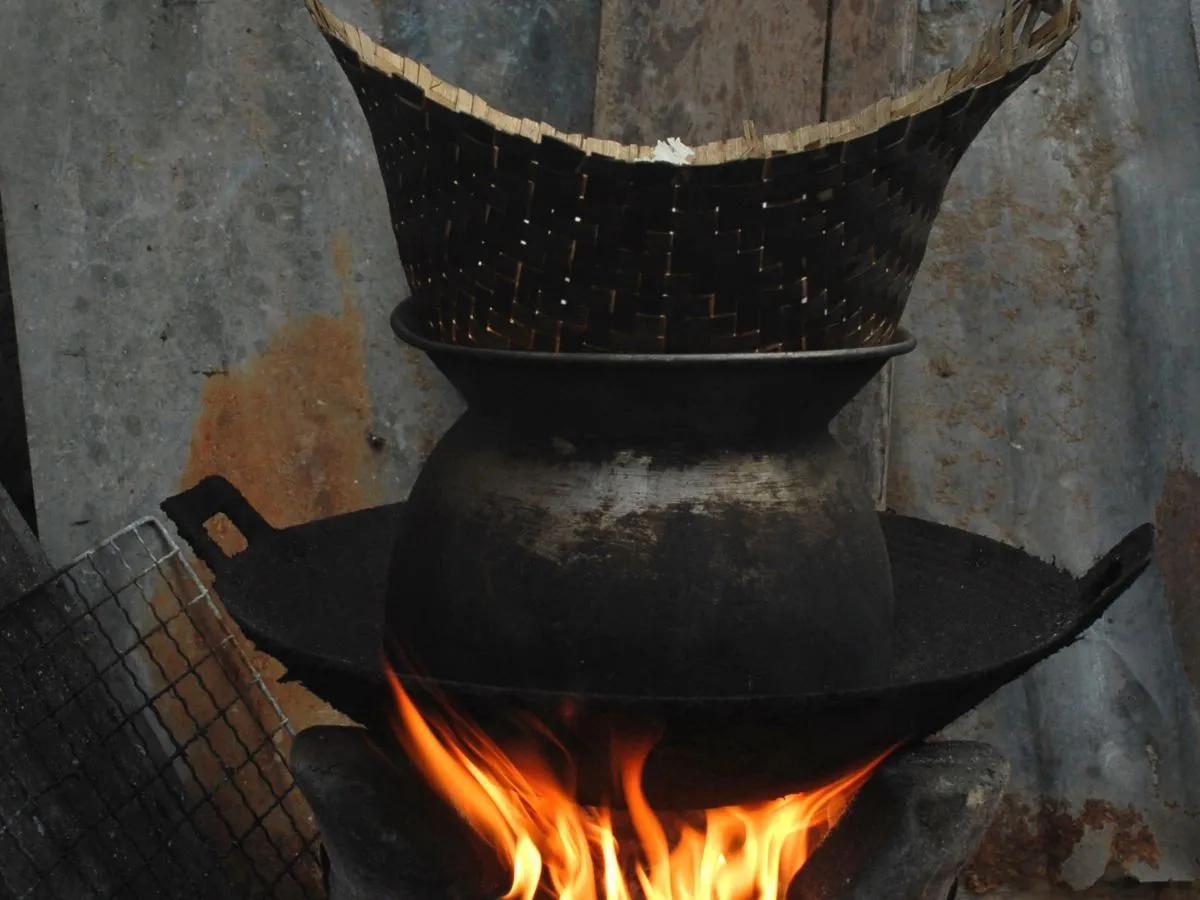
A visit to a local morning market, followed by a simple cooking lesson in a family home, is one of the best ways to understand Lao food beyond what appears on a restaurant menu, and a genuine introduction to Laotian culture through its local food. Markets here are lively, colourful places, stalls piled high with herbs, river fish, sticky rice and vegetables that may be unfamiliar to a British visitor, and a good guide can explain what is on offer and how it is typically used in Lao cooking.
From the market, the lesson usually continues across the river to a family home, where visitors are welcomed by local villagers before working alongside a home cook to prepare regional specialities, dishes built around fresh herbs, chillies, fermented fish sauce and sticky rice, alongside staples such as khao piak sen, a warming Lao noodle soup, rather than the heavier, more familiar flavours found in some neighbouring cuisines. Cooking in someone's actual kitchen, rather than a purpose-built cooking school, adds a warmth to the experience that is hard to replicate. Once the cooking is done, the meal is eaten together, often followed by a slow cruise back down the river as the afternoon light changes over the water.
The Baci Ceremony in the Village of Ban Mano
In the small village of Ban Mano, visitors can take part in a private Baci ceremony, a Lao tradition intended to bring good luck, health and friendship to those involved. Led by the village chief, known locally as the Nai Ban, the ceremony brings together a small group of villagers around a low table decorated with flowers, candles and other symbolic offerings.
During the ceremony, villagers gently tie white cotton cords around each guest's wrists, one after another, while offering quiet blessings for safe travels and good fortune. The cords are traditionally left in place for several days afterwards, a small physical reminder of the ceremony long after the visit has ended. It is a gentle, deeply personal custom, carried out in the same way it has been for generations, and one that leaves a genuinely lasting impression on most visitors who experience it. Unlike many of the city's better-known sights, the Baci ceremony is rarely written about in detail, yet it is often the moment travellers remember most clearly once they are home.
Mount Phousi, the Royal Palace Museum and Luang Prabang Night Market
Back in the centre of town, a handful of classic things to do in Luang Prabang round out most visits, best enjoyed as the day begins to wind down. The former Royal Palace, now open to the public as the Royal Palace Museum, sits at the foot of Mount Phousi and is worth knowing about even if it is not part of every itinerary, its collection offering a glimpse into Laos' royal history. Within the palace grounds stands Haw Pha Bang, a smaller, gilded temple built to house the golden Buddha image after which the city is named.
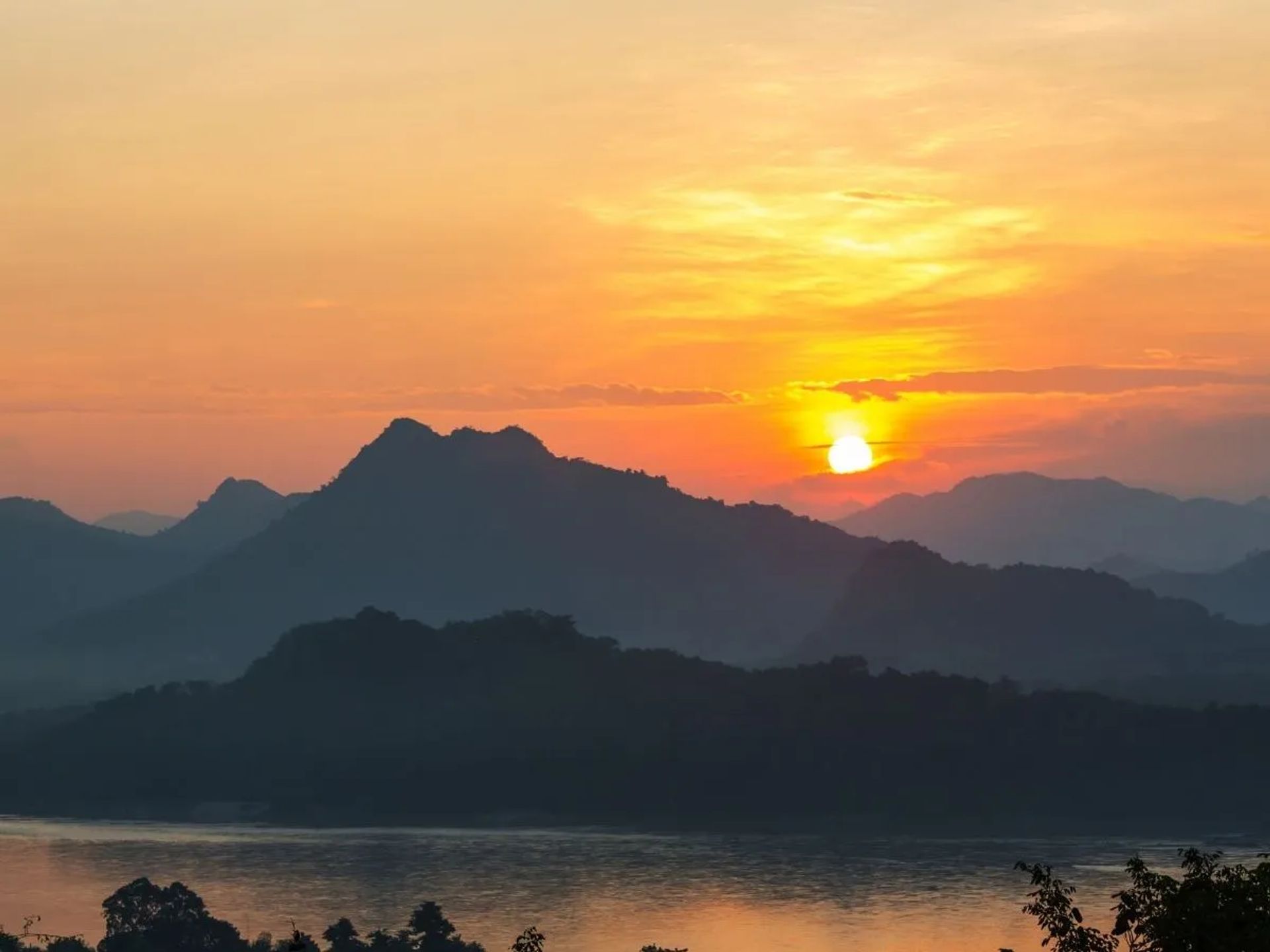
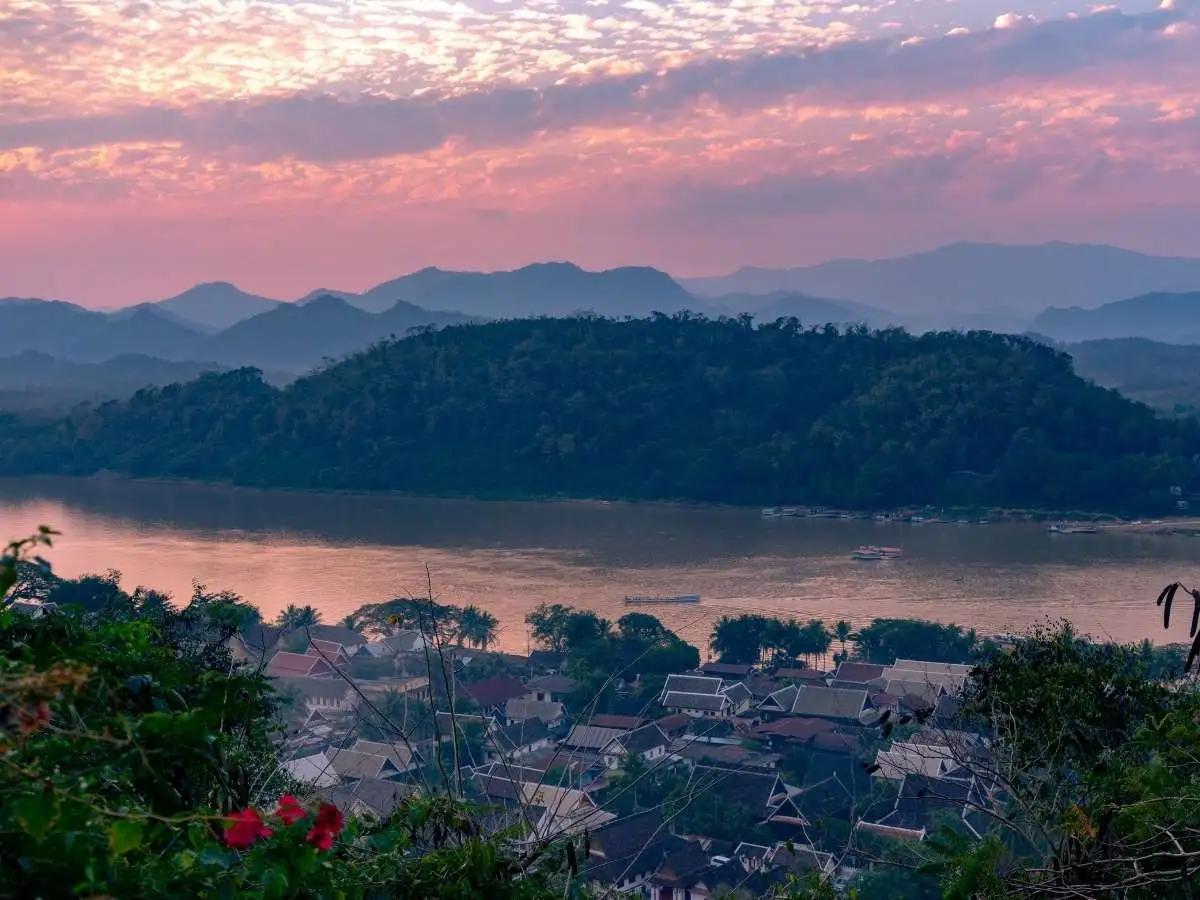
Mount Phousi rises directly from the middle of the city, with several hundred stone steps leading up through the trees to a small stupa at the summit, said to date from the early nineteenth century. The climb itself is short, generally taking no more than twenty or thirty minutes, though the heat and humidity can make it feel longer than it is. The reward at the top is a wide, uninterrupted view over Luang Prabang's golden rooftops, the winding Mekong beyond, and the forested hills that surround the city on every side. Arriving an hour or so before sunset is popular for good reason, as the light softens and the temples below begin to glow.
As dusk properly falls, the city's main street, Sisavangvong Road, transforms into the busy, colourful Luang Prabang Night Market, stretching between the Royal Palace Museum and Mount Phousi itself. Stalls line the road selling handwoven textiles, silverwork, paper lanterns and other local crafts, alongside food stalls offering grilled skewers, sticky rice and other Lao street food specialities. It is a relaxed, unhurried way to end the day, whether you are hunting for a specific souvenir or simply enjoy wandering and people-watching as the stalls light up one by one.
Bringing It All Together for Your Next Trip
Luang Prabang rewards visitors who take their time with it. The city's best-known sights, from the turquoise pools of Kuang Si Falls to the hushed procession of the alms-giving ceremony, sit comfortably alongside quieter, more personal traditions, a home-cooked meal shared with a local family, or a Baci blessing tied gently around your wrist in a small village outside town. Together, these experiences build a far fuller picture of Lao culture than any single day trip could offer on its own, and pair naturally with our wider guide to the best things to do in Laos. It is often the smaller, less publicised moments that visitors find themselves returning to in memory long after the trip has ended.
Undiscovered Destinations builds small group tours through Laos, including our Secret Heart of Asia journey, that bring these experiences together in one thoughtfully paced route, travelling from the hill tribe villages of the remote north, down the Mekong River by boat, to the temples, waterfalls and family kitchens of Luang Prabang itself. Let your next journey begin where the river runs quietest, and Laos reveals its golden, unhurried heart.