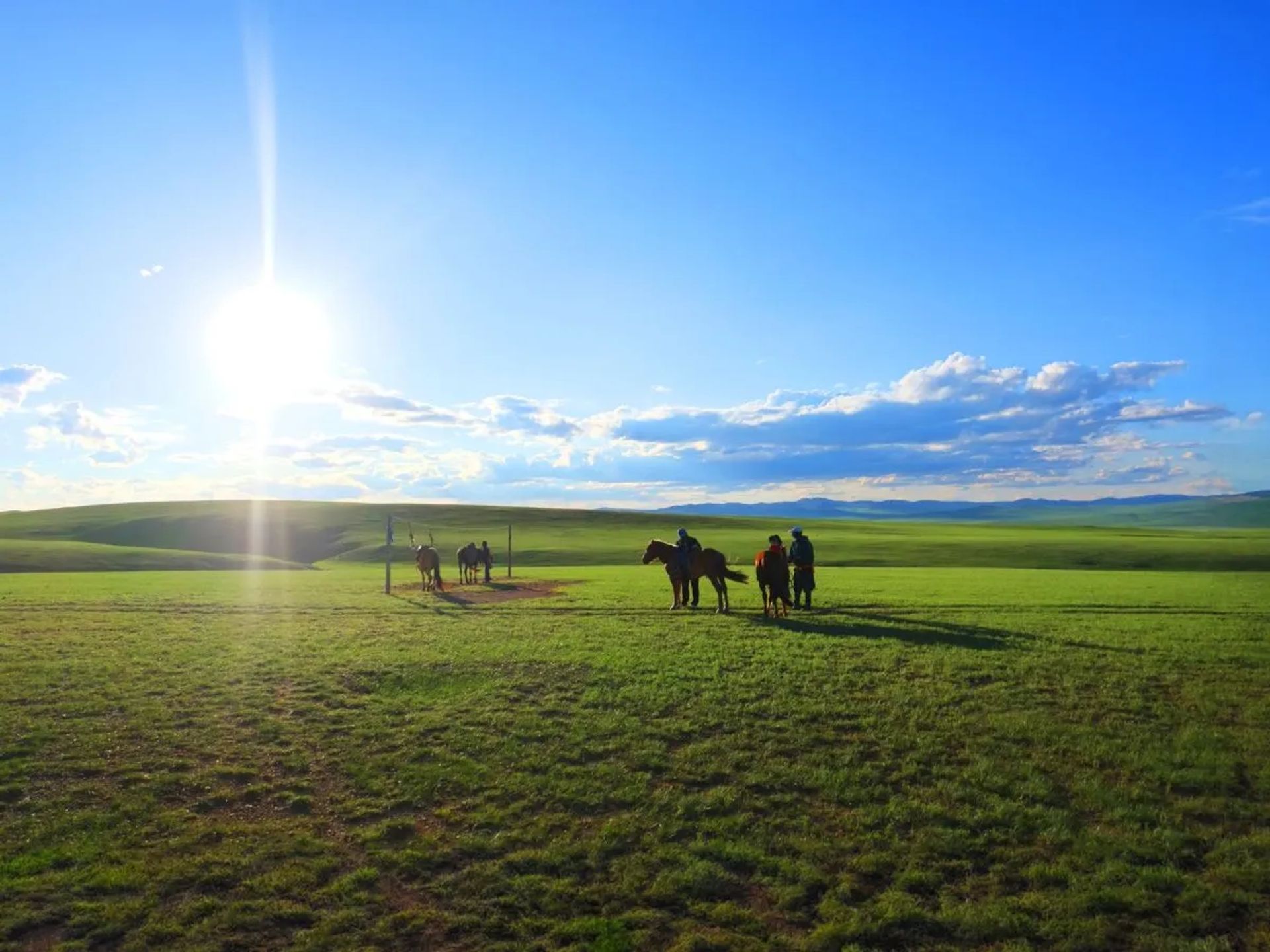

Ask someone about culture in Mongolia and they will likely picture a horse, a white felt tent, and an awful lot of empty grassland. They are not far wrong. But Mongolian culture is richer and stranger than a single postcard image can hold. It is a culture built on movement, sound and sky rather than buildings and borders. It is monks chanting inside a candlelit monastery, wrestlers grappling under a hot July sun, and a golden eagle lifting off a hunter's gloved arm in the shadow of snow-capped mountains. It is also traffic, coffee shops and a young generation glued to their phones in a city of over a million people. This guide looks past the old stereotypes to show what life in Mongolia actually looks and feels like today.
What Does Mongolia Look Like? The Land That Shaped a Culture
From Steppe to Desert: A Country of Extremes
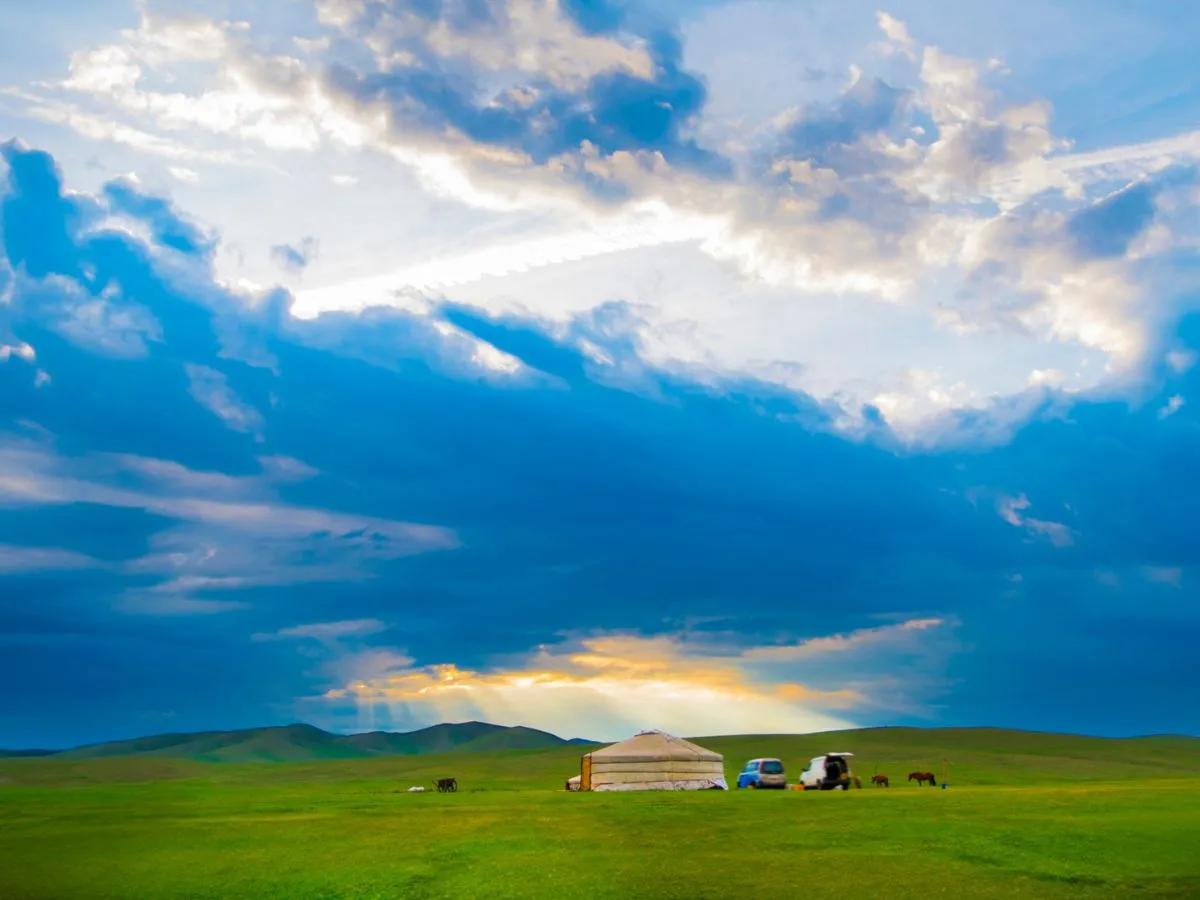
Mongolia is a vast, landlocked country wedged between Russia and China, roughly the same size as Western Europe. Yet it holds one of the lowest population densities on Earth. In the east, open steppe rolls on for miles. In the south, the Gobi Desert stretches out in dozens of different forms, from rocky plains to soft sand dunes. In the west, the Altai Mountains rise into snow-capped peaks marked with ancient rock carvings. In the north, thick forests and quiet lakes fill the Khangai Mountains. Few countries pack so much variety into one map.
The Land of the Eternal Blue Sky
Mongolians often call their home the Land of the Eternal Blue Sky, and it is easy to see why. Clear skies stretch endlessly over the steppe, broken only by distant hills or a lone ger. This vastness is not just scenery. It shaped the nomadic culture that still defines Mongolia today, where families move with the seasons rather than settle in one place. For inspiration on where this landscape can take you, see our guide to the best places to visit in Mongolia.
The Nomadic Heart of Mongolian Lifestyle
Life Inside the Ger
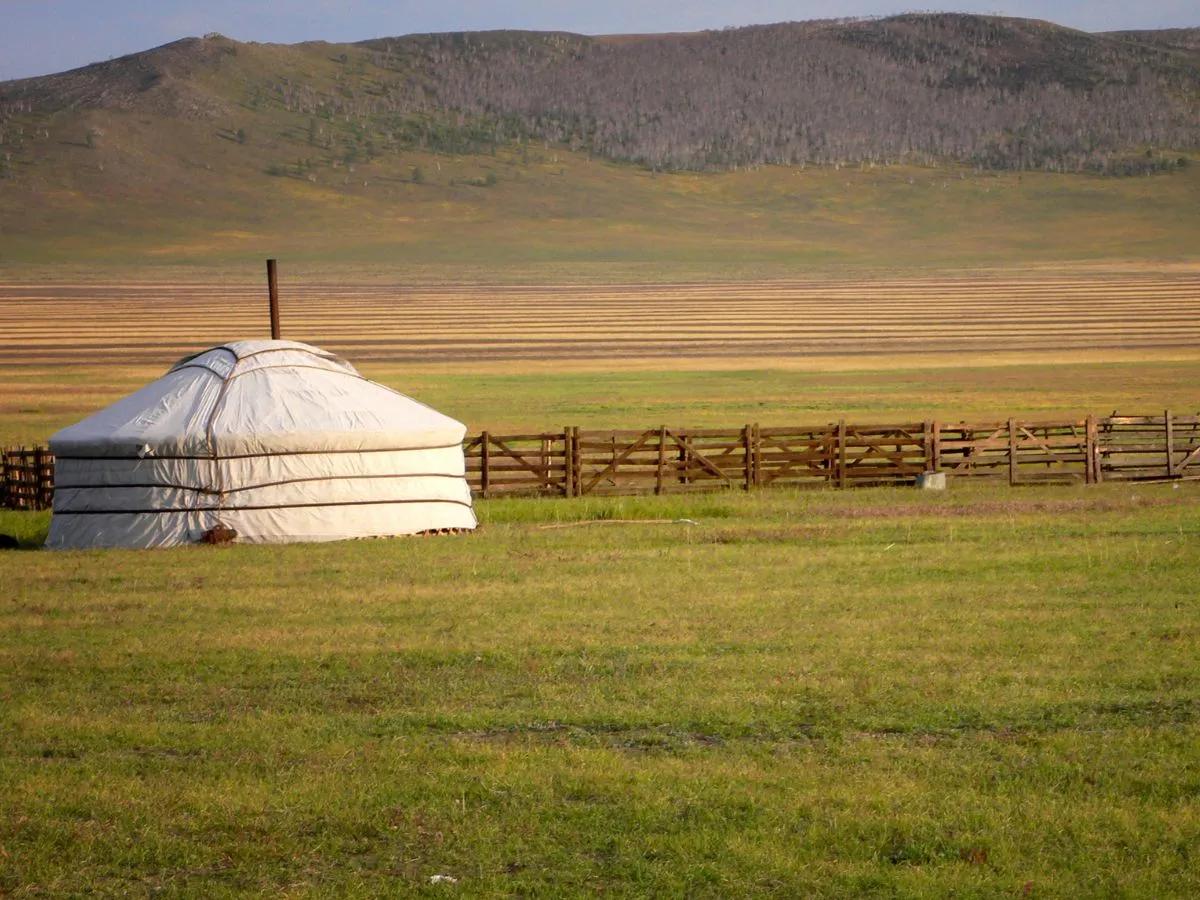
At the centre of Mongolian lifestyle sits the Mongolian ger, a round tent made of wooden lattice, felt and canvas. Layers of felt provide adequate warmth even through the harshest winters, while the whole structure can be packed up and moved within hours, suiting a life spent following good grazing land. Inside, the round wooden crown at the top is more than a smoke hole. Many Mongolians see it as a path for spirits to pass between the ger and the sky above.
Horses, Herds and the Nation of Five Animals
Mongolians sometimes describe themselves as the nation of five animals: horses, camels, cattle or yaks, sheep and goats. Mongolian nomads move these animals across the steppe depending on the time of year. Horses hold a special place above the rest. An old Mongolian saying puts it simply: a Mongol without a horse is like a bird without wings. Riding skills are often learned before a child can properly read. Beyond the herds, wild Przewalski's horses, once extinct in the wild, have been successfully reintroduced at Hustai National Park, a short drive from Ulaanbaatar.
Religion and Spiritual Traditions of Mongolia
Buddhism and Shamanism Side by Side
Tibetan Buddhism has shaped Mongolian spiritual life since the sixteenth century, and it remains the country's main religion today. Yet older shamanist beliefs never fully disappeared. Many Mongolians still practise ovoo worship, one of several rituals that involve walking around sacred stone cairns and leaving small offerings for safe travel and good fortune. The two belief systems sit comfortably side by side rather than competing with one another.
Sacred Ulaanbaatar: Gandan Monastery
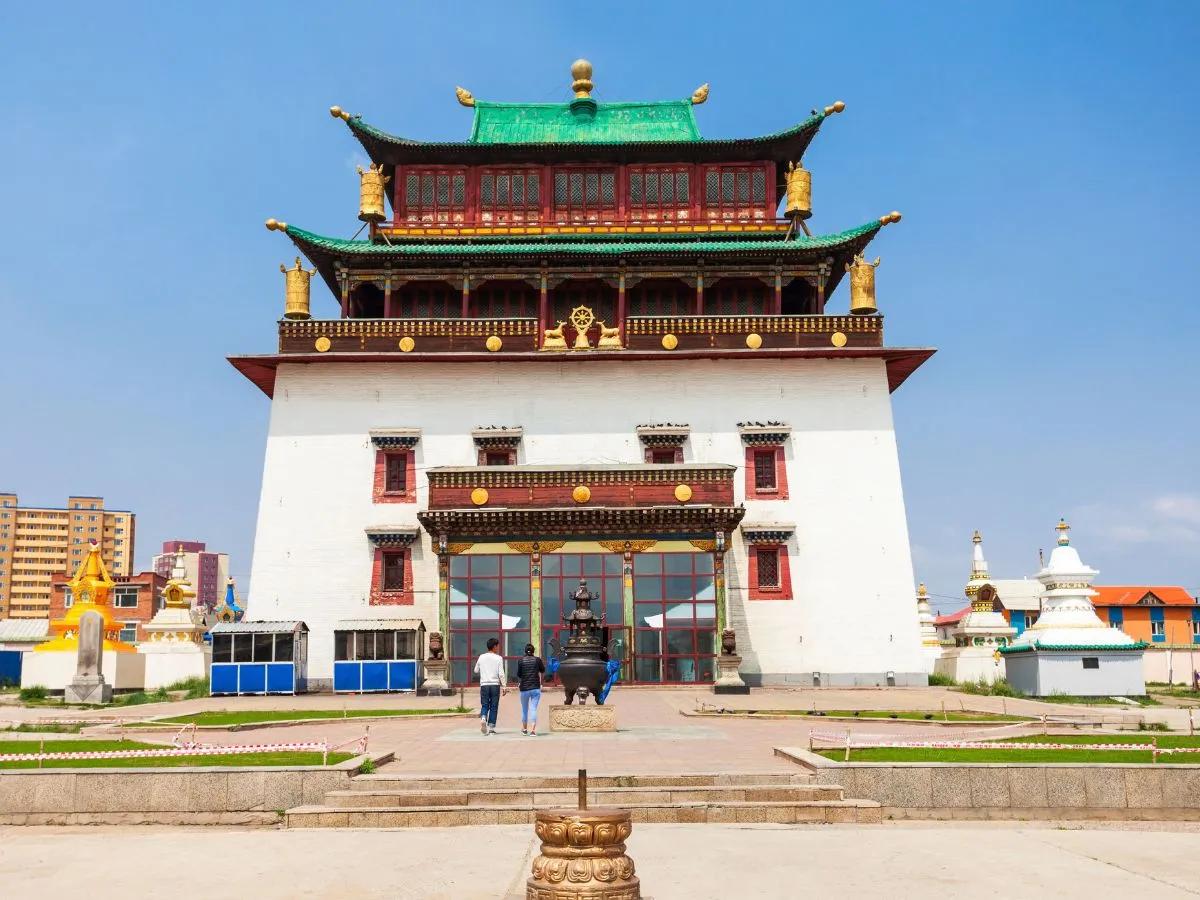
In the capital, Gandantegchinlen Monastery, commonly known as Gandan, stands as the country's largest and most important religious complex. Visit in the morning and you may catch lamas gathered for chanting ceremonies, their low voices filling the temple halls. Elsewhere in the country, monasteries such as Erdene Zuu near Kharkhorin, in the Orkhon Valley, a UNESCO World Heritage cultural landscape and Mongolia's oldest surviving Buddhist site, tell a similar story of faith enduring through hardship. Together, they offer some of the clearest windows into how religion still shapes daily life in modern Ulaanbaatar and beyond.
Naadam: Mongolia's Greatest Cultural Festival
The Three Manly Sports and Traditional Clothing
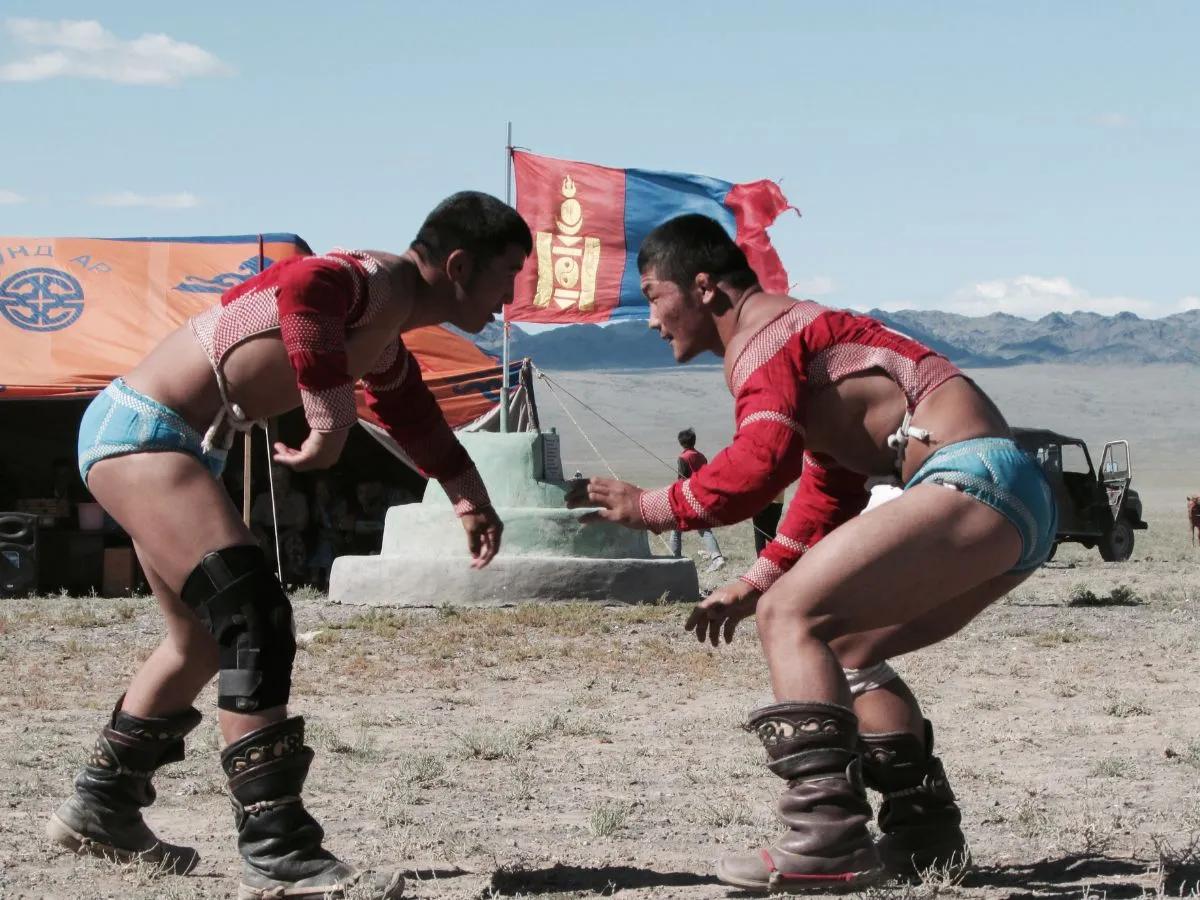
Every July, timed to coincide with what many consider the best time to visit Mongolia, the country turns its attention to Naadam, a festival believed to be at least a thousand years old and and recognised by UNESCO as part of humanity's intangible cultural heritage. It's one of the liveliest festivals of Mongolia celebrated throughout the year. At its heart are the Three Manly Sports: wrestling, archery and horse racing. Wrestlers in traditional dress compete before large crowds, archers aim at distant targets, and children as young as five race horses across the open steppe. Naadam is one of the clearest examples of traditions of Mongolia still thriving in everyday life rather than being kept for museums.
Experiencing Naadam Away From the Crowds
The Naadam celebrations in Ulaanbaatar draw huge crowds and can feel more like a tourist show than a local event. Our Naadam Festival tour heads instead to a provincial town such as Arvaikheer, where jockeys prepare their horses in nearby encampments the day before racing begins. Here, Naadam feels like exactly what it is: a community celebration passed down through generations, rather than a performance staged for visitors.
The Eagle Hunters of Western Mongolia
An Ancient Kazakh Tradition
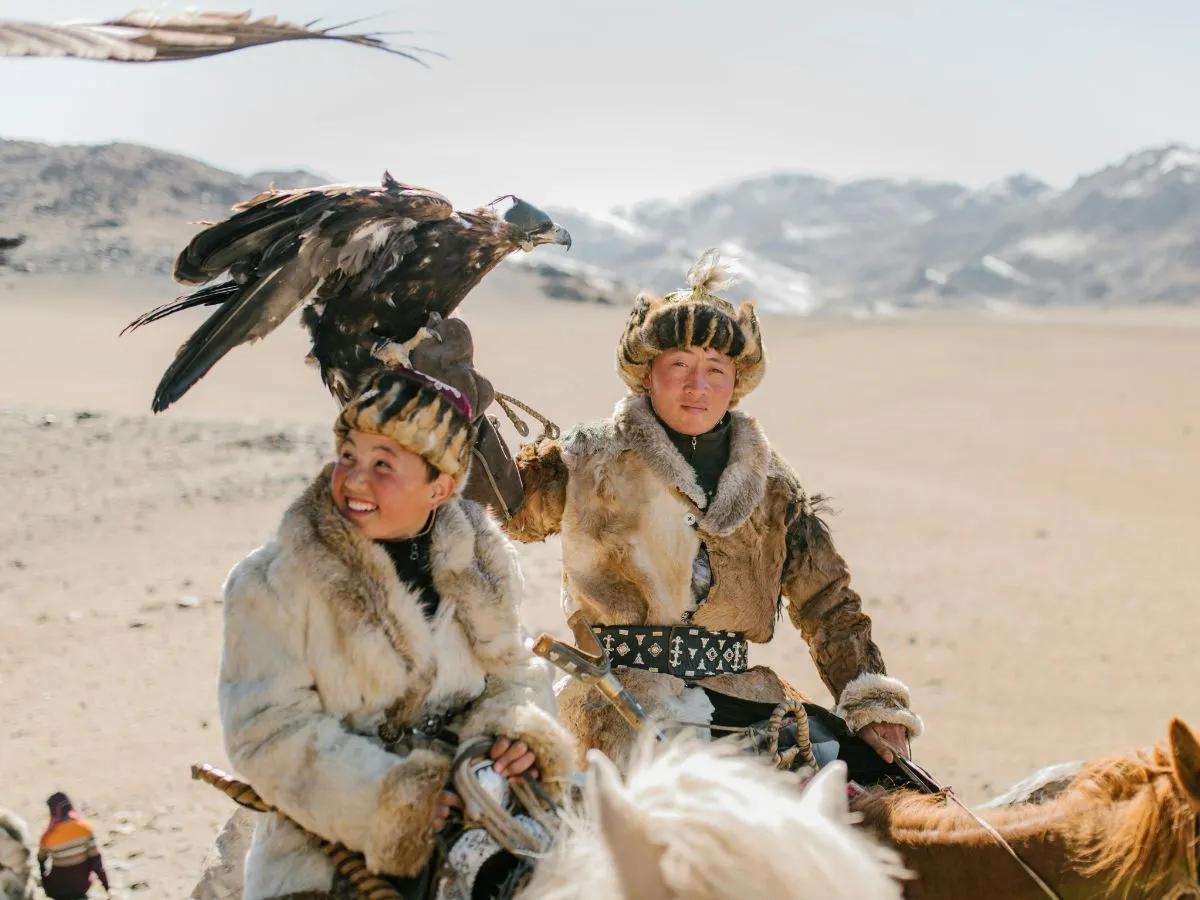
In the far west of Mongolia, the Kazakh community, the country's largest non-Mongol ethnic group, keeps alive one of its strongest nomadic traditions: eagle hunting. Hunters raise golden eagles from a young age, training them to work together on hunts across the open steppe. The skill is passed from parent to child, refined over many years of patience and trust between hunter and bird.
The Altai Eagle Festival at Tolbo Lake
Each year, this tradition is celebrated at our Altai Eagle Festival tour, held near the shores of Tolbo Lake against the dramatic backdrop of the Altai Mountains. Competitors dress in traditional attire and demonstrate skills refined over centuries, calling their eagles down from rocky outcrops in front of watching crowds. Visiting an eagle hunter's household afterwards, sharing tea and conversation, often leaves a deeper impression than the festival itself — one of many memorable experiences to have in Mongolia beyond the obvious sights.
Modern Mongolia: Where Ancient and Contemporary Collide
Ulaanbaatar's Blend of Old and New
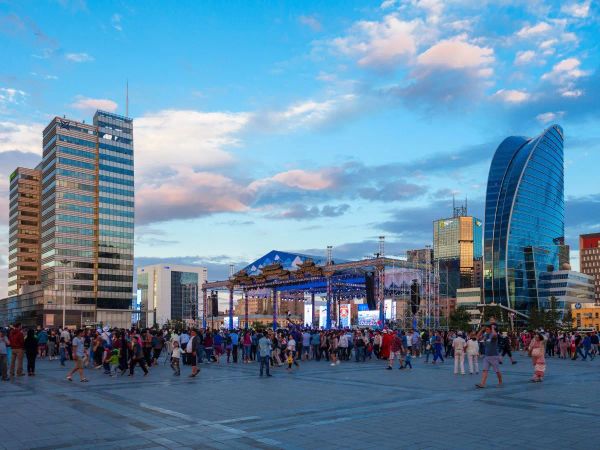
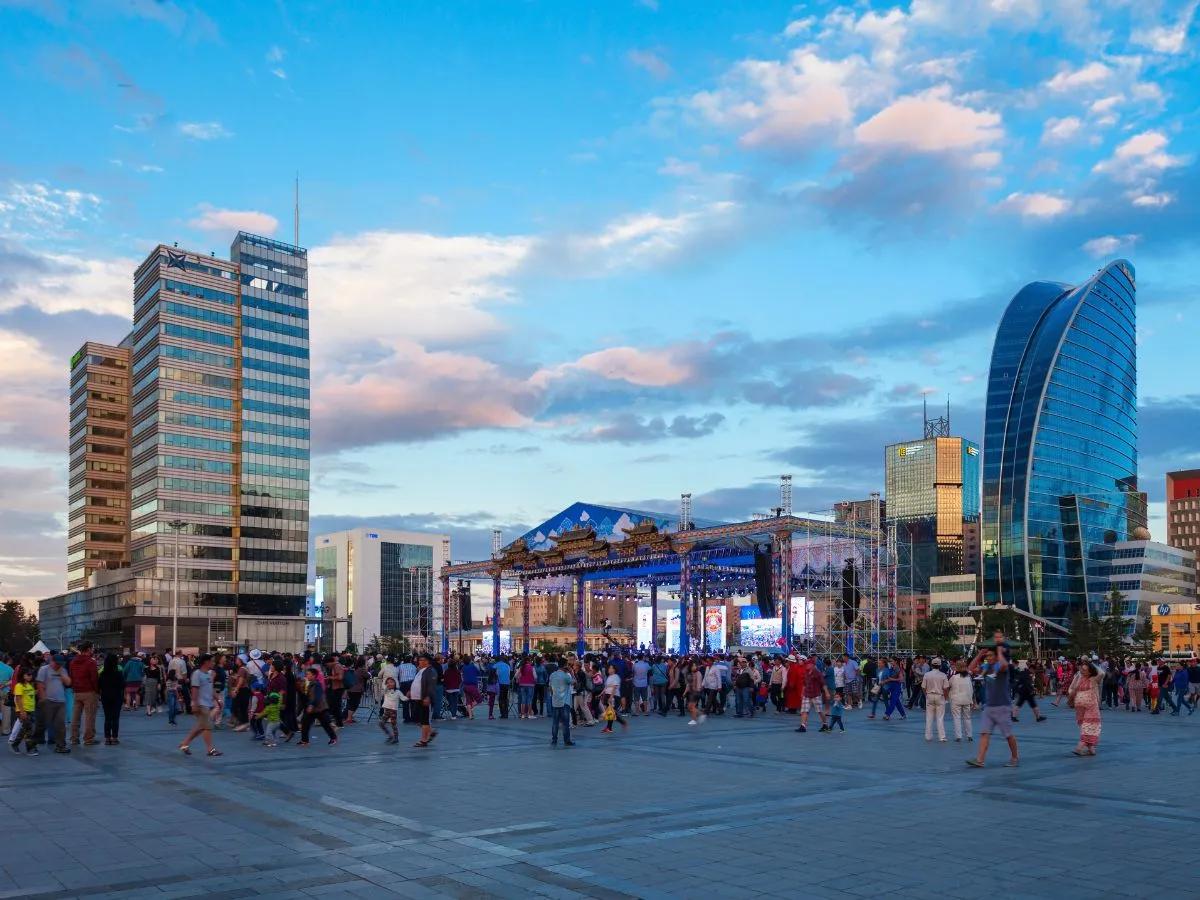
Modern Mongolia is perhaps best understood in Sukhbaatar Square, the symbolic heart of Ulaanbaatar. Here, glass office buildings sit beside traditional monuments, and locals gather much as they always have, even as the skyline changes around them. It is a fitting symbol for a country balancing old customs with new ambitions.
Mongolia's Path to a Modern Nation
Modern Mongolia carries an extraordinary weight of Mongolian history behind it. In the thirteenth century, Genghis Khan united the country's warring nomadic tribes and built the Mongol Empire, which grew into the largest contiguous land empire the world has ever seen, reaching as far west as parts of modern-day Turkey. Khan, the Mongolian word for ruler, became a title carried by generations of his descendants, including his grandson Kublai Khan. Much of what is known about this era comes from The Secret History of the Mongols, the founding work of Mongolian literature, written in the Mongolian language in the century after Genghis Khan's death. That empire is long gone, but its cultural heritage still shapes how Mongolians see themselves today. For more on this, see our round-up of fascinating facts about Mongolia.
Mongolia only began its transition to a modern, democratic nation in 1990, when the Mongolian government held the country's first free, multi-party elections after decades of communist rule. A new constitution followed in 1992, opening the door to a market economy. Today's Mongolia is digitally connected and increasingly urban, yet its deep-rooted traditions remain firmly in place.
Everyday Life in Mongolia Today
Rural Nomadic Life Versus City Life
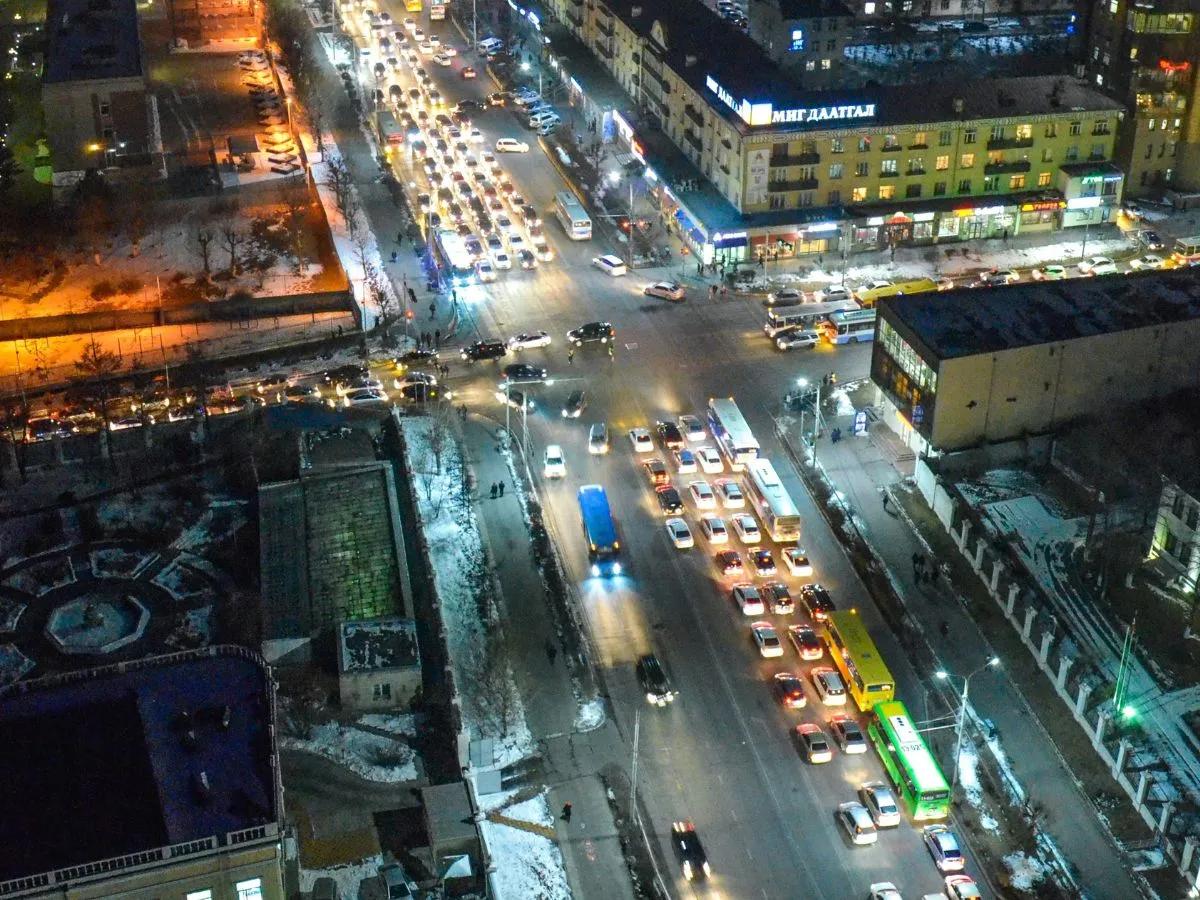
Life in Mongolia today often means choosing between two very different rhythms. In the countryside, herder families still follow a nomadic lifestyle, rising with the animals, moving camp with the seasons and measuring the day by the sun rather than the clock. In Ulaanbaatar, life moves closer to any other capital city, with busy roads, growing suburbs and a fast-paced working week. Both versions of Mongolian life exist at the same time, often within the same family.
Hospitality, Customs and Traditions of Mongolia
Hospitality runs deep through Mongolian customs and the wider traditions of Mongolia. Guests are welcomed warmly, often offered traditional food such as mutton dumplings, or a bowl of milky tea, within moments of arriving. A few points of etiquette are worth knowing before you visit. The head is considered sacred, so avoid touching anyone's head or hat. Feet are considered the least clean part of the body, so keep them off furniture and away from doorways. Small gestures like these go a long way toward showing respect.
Music, Art and Craft in Mongolian Culture
Throat Singing and the Horse-Head Fiddle
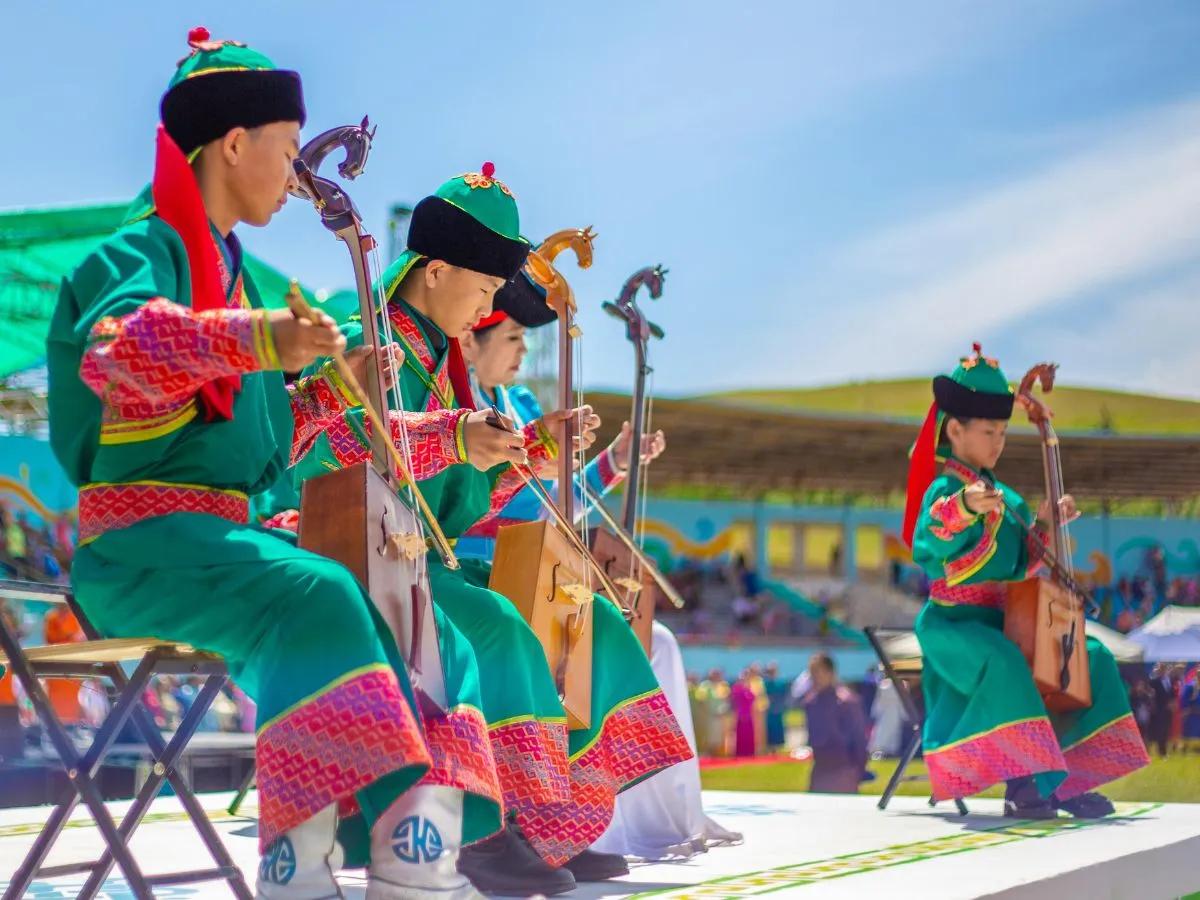
Few examples of traditional music capture Mongolian culture quite like khoomei, or throat singing, in which a single performer produces more than one note at once. It is often paired with the morin khuur, a two-stringed horse-head fiddle said to have been carved in memory of a beloved horse. Traditional cultural performances in Ulaanbaatar bring both together alongside folk dance, offering visitors a rare chance to experience them firsthand.
Long Song and Traditional Games
Alongside throat singing sits the long song, a style recognised by UNESCO in 2005, in which each syllable is stretched out far beyond its usual length. Away from music, many Mongolians still play games using shagai, the ankle bones of sheep or goats, used both for simple games and for fortune telling passed down through family generations.
Mongolian culture is not a museum piece. It is a living, breathing thing, carried on horseback across the steppe, sung into the night air as khoomei, and renewed every July at Naadam. It is monks chanting at dawn in Gandan Monastery, and a few streets away, city life humming through Sukhbaatar Square. It is a golden eagle lifting off a hunter's arm in the shadow of the Altai Mountains, a skill passed down for generations and still very much alive today. Reading about this culture is one thing. Sitting inside a ger as a herder pours you salted milk tea, or standing trackside as thundering hooves announce a Naadam winner, is quite another. Take a look at our Mongolia tours direct. If Mongolia's blend of ancient tradition and modern life has caught your imagination, Undiscovered Destinations can take you there in person, in a small group led by those who know the country best. Let curiosity be the only visa you need.