
India Tailormade - Big Cats and Small Kingdoms
What this journey is about
Discover a very different side of India on this fascinating tailormade journey from the historic streets of Delhi through the wildlife-rich landscapes of Rajasthan and Gujarat. Combining celebrated cultural treasures with some of India's most rewarding and less-visited wildlife destinations, this itinerary offers an exceptional opportunity to experience the country's extraordinary diversity.
Beginning in Delhi, the journey heads south to Ranthambore National Park, one of India's best-known tiger reserves, before travelling to the atmospheric Blue City of Jodhpur and the magnificent Mehrangarh Fort. From here, the route leaves the traditional tourist trail, travelling through the Aravalli Hills to the former Rajput estate of Bhenswara, where rural communities, wildlife and the outside chance of leopard sightings provide a very different experience of Rajasthan.
Crossing into Gujarat, the landscape changes dramatically. The vast salt flats of the Little Rann of Kutch provide a sanctuary for the endangered Asiatic wild ass and an astonishing variety of birdlife, while historic Gondal and Junagadh reveal the legacy of India's former princely states.
The wildlife focus continues in Gir Forest National Park, the last remaining home of the Asiatic lion, followed by the extraordinary Jain pilgrimage centre of Palitana and the grasslands of Velavadar National Park, famed for its blackbuck and impressive concentrations of birds of prey.
Throughout the journey, carefully selected heritage properties and safari lodges provide a memorable sense of place, from former royal residences to atmospheric camps in the wilderness.
This is an itinerary for travellers who want to look beyond India's famous monuments and discover its wildlife, landscapes, living traditions and lesser-known cultural heritage.
Planned by Mark Huggins
Every tailor-made journey is shaped by a single UD specialist from first conversation to homecoming — the same person who plans your route is the one you speak to throughout.
A starting point
Everything below is a template — dates, pace, accommodation level and activities can all be tailored when you speak to your specialist. Tap any day to open it.
01 Arrive Delhi
Arrive in Delhi, India's vibrant capital and a city where centuries of history sit alongside the energy and bustle of modern India. Today is the official arrival day and there are no scheduled activities, allowing you to settle into your hotel and relax after your journey.
Delhi
Delhi is really two cities in one. Old Delhi, once the capital of Mughal India, is a fascinating maze of bazaars, mosques and historic monuments, while New Delhi was created by the British as the imperial capital in the early 20th century. The contrast between the narrow, crowded streets of Old Delhi and the broad avenues and monumental buildings of New Delhi provides a fascinating introduction to India's extraordinary history.
02 Delhi to Ranthambore National Park - Approximate journey time 5 hours by train
After breakfast, meet our local representative for a tour briefing at 09:00 in the hotel lobby. There will then be some free time to explore the area around the hotel and perhaps browse some of Delhi's lively bazaars before lunch.
Later, board the Janshatabdi Express for the journey to Sawai Madhopur. The air-conditioned train provides a comfortable way to travel south, while the changing countryside offers an interesting glimpse of rural India. On arrival at Sawai Madhopur, you will be met and transferred to your hotel.
You are now on the doorstep of Ranthambore National Park, one of India's most celebrated tiger reserves.
Ranthambore National Park
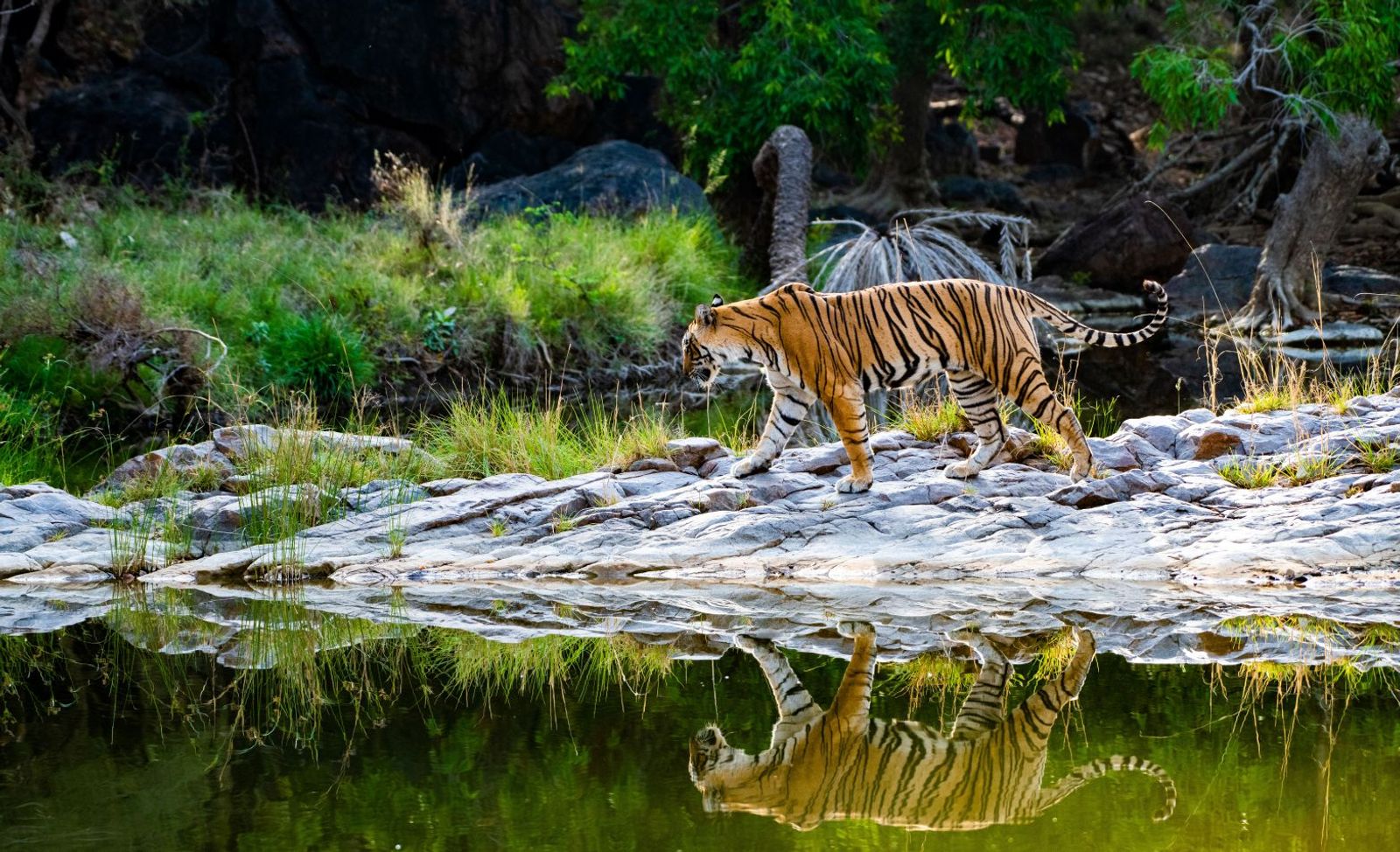
Once the private hunting reserve of the Maharajas of Jaipur, Ranthambore became part of India's Project Tiger programme in the 1970s. The park's relatively open landscape can make wildlife easier to spot than in densely forested reserves. Tigers are the headline attraction, but Ranthambore is home to an impressive range of wildlife including sambar deer, chital, nilgai, wild boar, langur monkeys, crocodiles and an abundance of birdlife. Tiger sightings can never be guaranteed, but the anticipation of encountering one of India's most iconic animals is an integral part of the Ranthambore experience.
03 Ranthambore National Park
Today is devoted to exploring Ranthambore National Park, with both a morning and afternoon shared jeep safari.
The early morning safari usually begins at around 06:00, when the cooler temperatures and soft light provide excellent conditions for wildlife viewing. Later in the afternoon, return to the park for a second safari, normally beginning at around 14:00. Each safari generally lasts three to four hours, although exact timings vary according to the season and local conditions. The park's dry forests, grasslands, lakes and rocky outcrops provide habitat for a diverse range of species. Your safari guides will be alert for signs of tiger activity; while also helping you appreciate the wider ecosystem. Whether or not a tiger appears, the experience of travelling through this evocative landscape in search of wildlife is one of the highlights of the journey.
04 Ranthambore to Jodhpur
There is an opportunity for a final early morning safari in Ranthambore, beginning at approximately 06:00. After breakfast, return to the hotel before transferring to the railway station for your journey westwards to Jodhpur. The train journey provides a fascinating opportunity to watch the landscape change as you travel towards Rajasthan's arid western regions. Arrive in Jodhpur during the evening and transfer to your hotel.
Jodhpur – The Blue City
Known as the Blue City, Jodhpur is one of Rajasthan's most atmospheric destinations. Its old quarter is dominated by the colossal Mehrangarh Fort, while a sea of blue-painted houses spreads beneath its walls. Founded in 1459 by Rao Jodha, Jodhpur was the capital of the princely state of Marwar and developed as an important centre of trade on the edge of the Thar Desert. Today, the city combines magnificent historic architecture with colourful bazaars, traditional crafts and an energetic street life.
05 Jodhpur to Bhenswara - Approximate driving time 3 hours
Begin the day with a visit to the magnificent Mehrangarh Fort, one of India's great historic monuments. Rising dramatically above Jodhpur from its rocky hilltop, the fort commands exceptional views across the Blue City and surrounding desert landscape. After exploring the fort, descend through the atmospheric streets of the old city, where narrow lanes, colourful shops and traditional businesses provide an insight into everyday life in Jodhpur.
After lunch, leave the city behind and drive towards the Aravalli Hills in south-western Rajasthan. The landscape becomes increasingly rural, with hills, rocky outcrops, sand dunes and dry river valleys providing a fascinating contrast to the bustling cities. Your destination is Bhenswara, where you stay in a former Rajput country estate that has been transformed into a characterful heritage hotel.
Mehrangarh Fort
Mehrangarh, meaning 'Majestic Fort', is an extraordinary example of Rajput architecture. Massive walls rise from the rocky outcrop, protecting a series of ornate courtyards, palaces and chambers decorated with intricate stonework, carved screens and colourful details. From the ramparts, there are unforgettable views across Jodhpur's blue-painted houses.
06 Exploring Bhenswara
Today offers an opportunity to experience a more intimate and rural side of Rajasthan. The area surrounding Bhenswara is home to pastoral communities whose traditional way of life remains closely connected to the surrounding countryside. A village jeep excursion provides an opportunity to meet local people and gain an insight into rural life, while the surrounding countryside is also surprisingly rich in wildlife. Possible sightings include antelope, wild boar, langur monkeys and a variety of birds. The rocky landscape also provides habitat for leopard, and the family who run the property have an excellent knowledge of the local wildlife. As the day draws to a close, stop at a suitable viewpoint to enjoy the changing colours of the landscape with a traditional masala chai and biscuits.
After dark, head out on a night drive in search of leopard. These elusive cats are notoriously difficult to find, so sightings cannot be guaranteed, but searching for them beneath the Rajasthan night sky is an exciting experience in itself.
Bhenswara
Bhenswara lies among the southern reaches of the Aravalli Hills, where the landscape forms a fascinating transition between Rajasthan's hills and the Thar Desert. The region remains relatively untouched by mainstream tourism and provides an opportunity to experience a more traditional side of rural India. Your heritage accommodation is a family-owned Rajput estate, whose owners have a particular passion for the region's wildlife, birds and communities.
07 Bhenswara to Mt. Abu - Approx. driving time 4 hours
Today the landscape changes once again as you travel south towards Mount Abu, Rajasthan's only hill station. The final section of the journey climbs through winding mountain roads into the wooded Aravalli Hills, providing a refreshing contrast to the arid landscapes encountered earlier in the journey. On arrival, visit the magnificent Dilwara Jain Temples, renowned for their exquisite marble craftsmanship. After lunch, explore the Mount Abu Wildlife Sanctuary, where the higher-altitude environment supports different flora and fauna from the plains. Later, enjoy the sunset from one of the area's scenic viewpoints before continuing to your hotel.
Mount Abu
Situated at approximately 1,200 metres above sea level, Mount Abu is a green and wooded oasis in otherwise arid Rajasthan. The former hill station was a favoured summer retreat for Maharajas and colonial officials, and its cooler climate remains popular with visitors from neighbouring Gujarat. The town surrounds the picturesque Nakki Lake, while the surrounding hills offer forests, viewpoints and varied birdlife.
Dilwara Temples
The Dilwara Temples are among the finest examples of Jain architecture in India. Their apparently simple exteriors conceal extraordinarily intricate marble interiors, with delicate carvings covering pillars, ceilings and decorative panels.
08 Mount Abu to the Little Rann of Kutch - Approx. driving time 4 - 5 hours
Cross the border into Gujarat today, entering a very different landscape.
The Little Rann of Kutch is a remarkable seasonal wilderness. During the monsoon, much of the region is flooded; as the waters recede, they leave behind immense expanses of salt flats, marshland and dry grassland. This unusual environment provides a sanctuary for one of India's most distinctive mammals – the Asiatic wild ass.
On arrival, settle into your safari-style accommodation near Dasada before visiting nearby villages. The local communities are renowned for their traditional crafts, particularly intricate embroidery decorated with colourful patterns and small mirrors.
Little Rann of Kutch
The word rann means salty desert, and the landscape certainly lives up to the name. The Little Rann stretches across thousands of square kilometres, forming a remarkable mosaic of salt flats, marshes and thorn scrub.It is also one of India's most important wildlife areas, providing a refuge for the Asiatic wild ass, Indian wolf, desert fox and numerous bird species. At sunset, the enormous flat horizon can appear almost otherworldly.
09 Exploring the Little Rann of Kutch
Wildlife viewing begins early this morning with a dawn safari into the Little Rann.
The wetlands and salt flats support an extraordinary variety of birdlife, particularly during the cooler months. Depending on conditions, species may include flamingos, pelicans, cranes, storks, stilts, plovers, wheatears and birds of prey.
Return to the lodge for breakfast before relaxing during the hottest part of the day.
Later, head out once again on an afternoon safari in search of the Asiatic wild ass.
These elegant, sandy-coloured animals are the signature species of the Little Rann, while the surrounding grasslands and scrub provide habitat for Indian wolf, desert cat, striped hyena, jackal and fox. If time permits, there may also be an opportunity to see traditional salt production before returning to the lodge.
10 Little Rann of Kutch to Junagadh & Gondal - Approx. driving time 5 - 6 hours
Leave Dasada and continue south through Gujarat towards Junagadh. The historic town is known for its atmospheric old quarter and the imposing Uparkot Fort, whose history stretches back more than two thousand years. Travel by tuk-tuk to the walled citadel and explore its ancient gateways, ramparts and atmospheric passages. From the elevated fortifications, enjoy views across the town and surrounding countryside. The wooded landscape is also an excellent habitat for birds of prey. If time permits, there may be an opportunity to visit nearby Buddhist caves before continuing to Gondal.
In Gondal, visit the 18th-century Naulakha Palace, whose private museum contains an interesting collection of royal artefacts. Tonight's accommodation is itself part of the experience, as you stay within a former royal estate.
Gondal
Gondal was once an independent princely state ruled by a succession of progressive Maharajas. The town retains elegant palaces, tree-lined streets and impressive public buildings, providing a fascinating insight into the world of India's former princely states.
11 Gondal to Gir Forest National Park Approximate driving time: 2½ hours
Begin the morning with a visit to the hotel's Royal Garages, home to an impressive collection of vintage vehicles once belonging to the Maharaja.
Continue by road to Gir Forest National Park, the last remaining natural habitat of the Asiatic lion. After checking in and relaxing during the hottest part of the day, head into the park during the afternoon for your first game drive. The main objective will be to locate the magnificent Asiatic lion, although the park supports a wide range of other wildlife and bird species.
Gir Forest National Park
Gir is unique in the wildlife world as the last stronghold of the Asiatic lion. The dry deciduous forest, grasslands and seasonal rivers provide habitat for lions, leopard, hyena, wild boar, sambar, chital and nilgai, together with an impressive variety of birds. The late afternoon is often an excellent time for wildlife viewing as temperatures begin to fall and animals become more active.
12 Gir Forest to Palitana Approximate driving time: 4–5 hours
There is an optional early morning safari today for those wishing to make a final attempt to see wildlife in Gir. Alternatively, enjoy a leisurely morning at the lodge, perhaps relaxing among the mango and lemon groves, enjoying the views from the rooftop terraces or visiting the rustic bird hide. Later, depart for Palitana, one of the most important centres of Jain pilgrimage in India.
Palitana
Palitana is dominated by Shatrunjaya Hill, whose summit is covered with an extraordinary collection of Jain temples. For followers of Jainism, this is one of the faith's most sacred sites. The temples are reached by a long flight of stone steps climbing the hillside.
13 Palitana & Shatrunjaya Hill
An early start is essential today to avoid the heat as you undertake the ascent of Shatrunjaya Hill. Thousands of steps lead upwards towards the extraordinary temple complex, and the climb itself is an important part of the pilgrimage experience.As you ascend, you are likely to encounter white-clad Jain pilgrims making their own journey towards the summit. At the top, the densely packed marble temples form an extraordinary architectural landscape, while the views across the surrounding countryside and towards the Gulf of Cambay are equally impressive. Allow time to explore the temple complex and appreciate the extraordinary craftsmanship before beginning the descent.
A note about the climb
The ascent is physically demanding, involving approximately 3,800–4,000 steps and an elevation gain of around 500 metres. Travellers with significant pre-existing medical conditions should not undertake the climb without appropriate medical advice. Porters may be available locally to carry visitors in a dolli or swing chair, at additional cost. Please carry plenty of drinking water and dress respectfully. Shorts, short skirts and uncovered shoulders are not appropriate. Cameras are not permitted from the beginning of the steps.
14 Palitana to Velavadar National Park Approximate driving time: 2½ hours
Leave Palitana after breakfast and travel through the open plains of Gujarat.
The landscape gradually changes to thorn scrub and grassland as you approach Velavadar National Park, also known as Blackbuck National Park. After arriving at the lodge and enjoying some time to relax, embark on an afternoon safari.
Velavadar National Park
Velavadar is a very different wildlife environment from Ranthambore and Gir. The park's vast open grasslands are particularly famous for their blackbuck, elegant Indian antelope with distinctive spiral horns. The area also supports Indian wolf, striped hyena, jackal, fox and jungle cat. Birdwatchers will be particularly interested in Velavadar's spectacular concentrations of raptors. The park is renowned as one of the world's most important roosting areas for harriers, and sightings of birds of prey can be exceptionally rewarding.
15 Velavadar National Park to Ahmedabad - Approx. driving time 3 hours
Enjoy a leisurely breakfast before departing Velavadar and travelling by road to Ahmedabad, Gujarat's largest city. This afternoon, enjoy a sightseeing tour in the old quarter of Ahmedabad. On arrival, you will be transferred to your hotel.
16 Departure
At the appropriate time, transfer to the airport for your onward flight.
Your trip, your way
This tailormade journey can be started on any date subject to availability. The accommodation on the tour is of a comfortable standard , often using heritage properties with lots of character. Safaris take place on a shared basis in the parks and reserves although on request it is possible to upgrade your safari to an exclusive private arrangement.
Typically included and not
Included
- Airport transfers
- Accommodation
- Transport by road and rail
- Services of dedicated driver
- Services of local English speaking guides
- Meals as per the itinerary
- Entrance fees
- National Park fees and permits
Not included
- International Flights - contact us for a quotation
- Meals not mentioned in the itinerary
- Travel insurance
- Items of a personal nature
- Tips for driver and local guides
- Any optional activities
Start planning your India Tailormade - Big Cats and Small Kingdoms
Tell Mark Huggins when you'd like to go, how long for, and any specifics that matter. Typical reply within 24 hours, no enquiry fee, no pressure.
Start planning your trip